






Can ancient Herculaneum scrolls buried by Mount Vesuvius surrender their lost Greek Epicurean philosophical writings without crumbling into ash? In 79 C.E., volcanic heat turned the Villa of the Papyri library into brittle charcoal, prompting retired inventor Douglas Seiler to bake homemade rolls inscribed with lines from Star Wars to test new scans. Reporting on September 16, 2026, in PLOS ONE, Seiler’s team proved that minuscule lead concentrations allow X-ray tomography to expose hidden letters clearly. [1, 2]
Why Herculaneum Scrolls Defied Decipherment
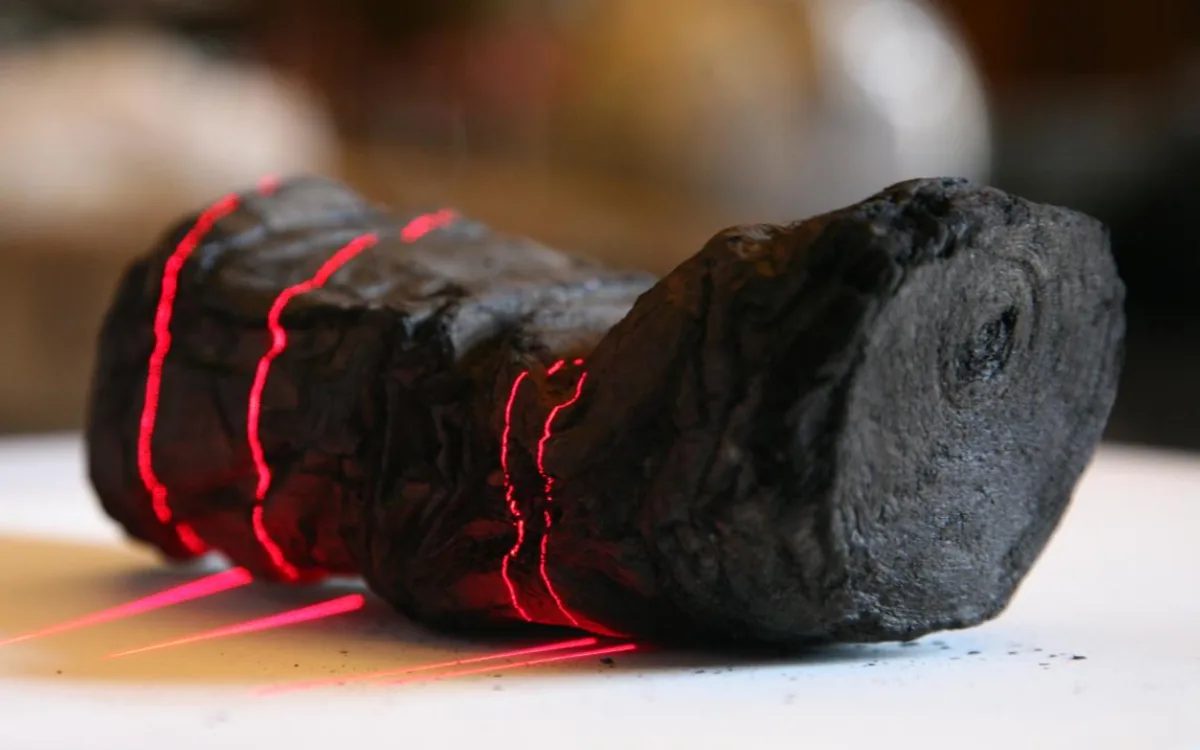
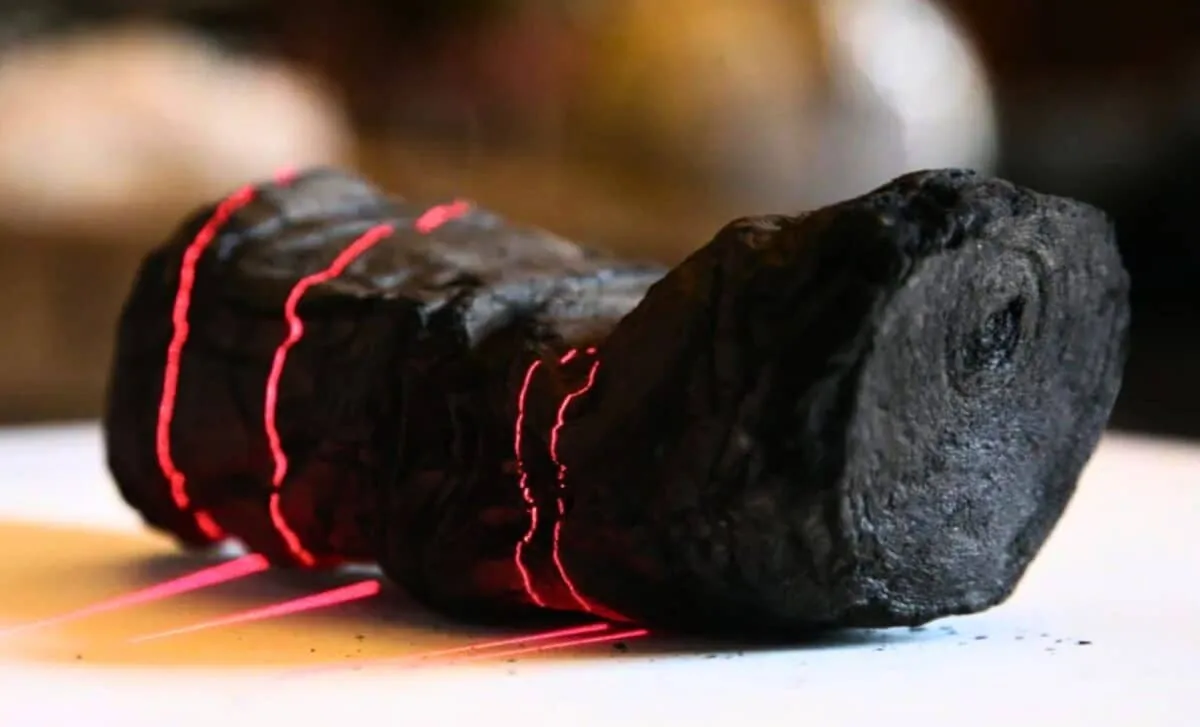
The Villa of the Papyri in the ancient Roman resort town of Herculaneum was buried beneath 70 feet of volcanic material when Mount Vesuvius erupted in 79 C.E. Scholars believe the palatial residence belonged to the father-in-law of Julius Caesar within the ancient Herculaneum Villa, housing roughly 1,800 papyrus rolls and fragments that represent the only intact library surviving from classical antiquity in Ancient Rome [2, 3]. Instead of burning to ash in the oxygen-starved debris, the rolls baked into brittle, blackened charcoal. The carbonized husks trapped centuries of Greek literature, including philosopher Plato burial records, within fused layers that snap at the slightest touch.
Early attempts to slice the rolls open with knives or soften them with chemical baths destroyed invaluable portions, reducing ancient Greek Stoic thought to black powder [3, 5].
Physical unrolling proved devastating. Following the scrolls’ discovery in 1752, excavators attempted mechanical peeling, but when unrolling mostly produced heaps of ash, Italian authorities halted the destructive efforts. The deeper technical impasse stems from fundamental physics. Both the papyrus plant fibers and the traditional ancient ink were formulated from carbon, meaning conventional hospital X-ray imaging registers almost no physical contrast between the script and its charred background. While historians trace the historical development of paper and papyrus across ancient civilizations, reading closed Herculaneum scrolls demanded finding a contrasting chemical marker that could differentiate ink deposits from surrounding charcoal [1, 3].
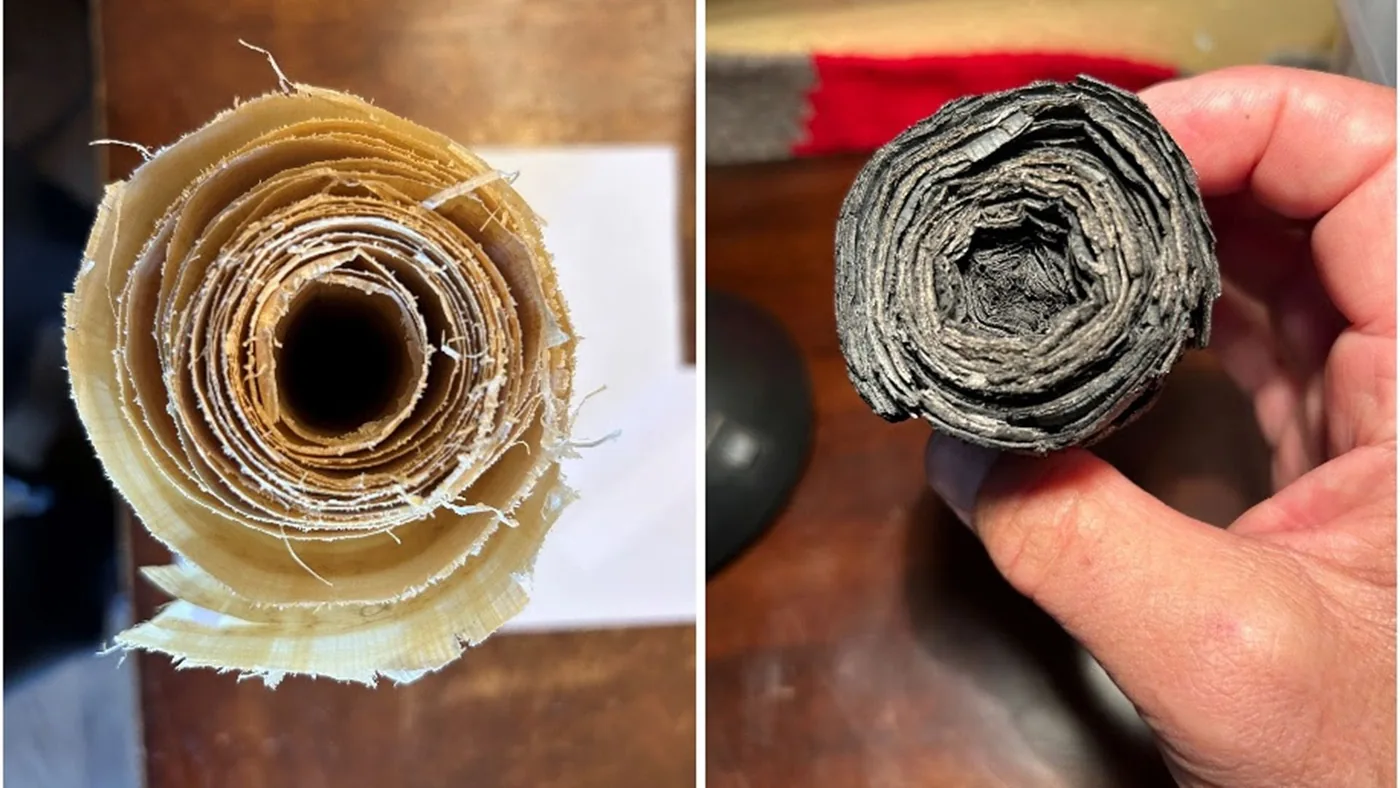
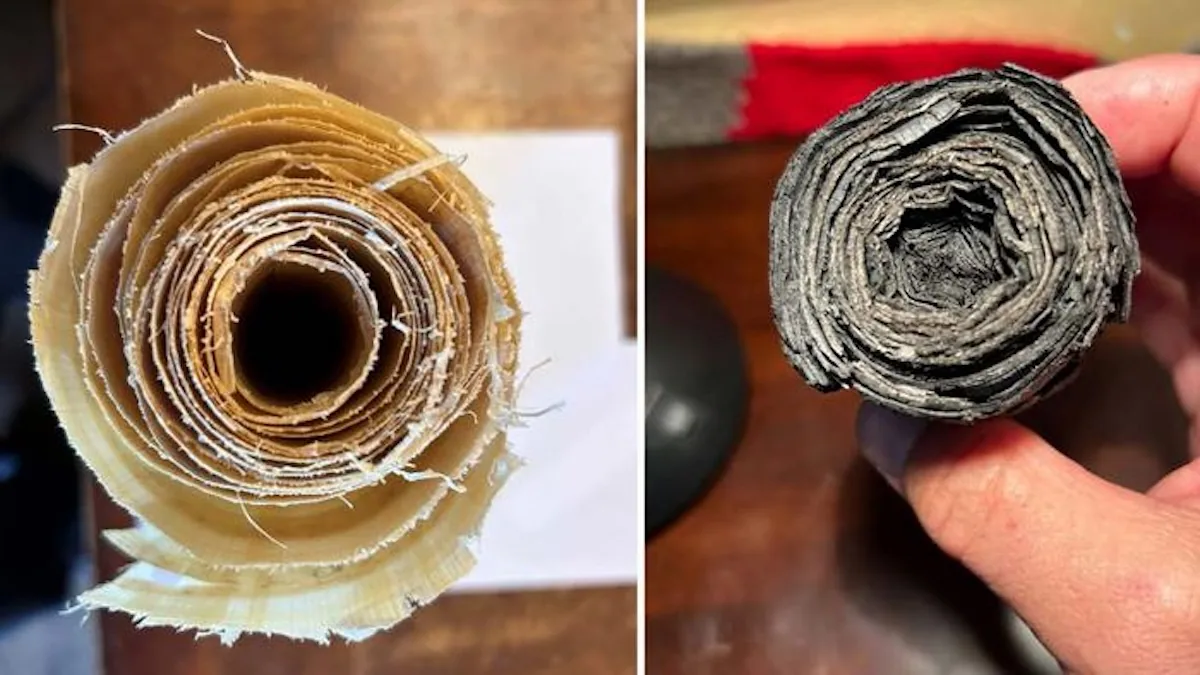
Homemade Scrolls Replicate Ancient Charcoal
Douglas Seiler, a retired inventor working with the Berkeley Space Sciences Laboratory and Berkeley SETI, hypothesized that mineral additives in ancient writing fluids might provide the missing optical contrast. Sourcing authentic papyrus sheets and reed pens from Egypt, with traditional lampblack ink imported from Japan, Seiler set out to fabricate modern physical models of ancient manuscripts. He collaborated with retired University of California, Berkeley chemists David Kreimer and Elena Kreimer, former manager of the College Chemistry Microanalytical Facility [3].
With the Kreimers’ guidance, Seiler added calibrated amounts of lead nitrate to the Japanese carbon ink to create samples with varying lead concentrations. Seiler then asked friends’ high school children to inscribe the fresh papyrus using Egyptian reed pens, copying lines from the Bible, the 1960s television series The Outer Limits, and Star Wars. Archaeologist Leah Packard-Grams and Jesse Obert of UC Berkeley’s Archaeological Research Facility subsequently scanned the newly inscribed rolls using X-ray fluorescence to confirm the exact elemental distribution across every stroke [3].
Seiler rolled the inscribed papyrus tightly and placed it inside a semi-sealed steel container designed with minimal oxygen to prevent combustion. He baked the container inside a high-temperature furnace, scorching the papyrus into fragile charcoal. The process accurately reproduced how Herculaneum scrolls were baked into brittle rolls when the Herculaneum Library was inundated in 79 C.E. [1, 3]
How Lead Ink Responds to X-Rays
To examine the fragile mock artifact without disturbing its delicate internal folds, Seiler enlisted physicist Jacob Michael LaManna at the Center for Neutron Research at the National Institute of Standards and Technology in Gaithersburg Maryland. LaManna jury-rigged a mounting stand for the charred roll and rotated the specimen within a laboratory X-ray beam. The resulting X-ray tomography (computed tomography producing three-dimensional volumetric reconstructions) recorded thousands of penetrating cross-sectional slices [1, 3]. Because lead atoms possess a substantially higher atomic mass than carbon, they absorb up to 25 times more X-ray radiation than charred plant fibers [3].
That dramatic difference in attenuation generated striking visual contrast. In the computed tomographic reconstructions, lead-spiked lettering appeared as luminous white strokes against the dark background of the charred papyrus. The script lit up brightly. Seiler and LaManna established that lead concentrations as low as 25 micrograms per square centimeter could be readily detected through this imaging setup, as reported by Ground News and Eurasia Review [3, 6].
Can conservators identify which preserved rolls warrant expensive beamline sessions? A portable, handheld X-ray fluorescence scanner can non-destructively detect lead traces in burned rolls within minutes. Curators in Naples, Paris, and Oxford can screen intact rolls before transport, giving researchers a reliable method to identify which Herculaneum scrolls will yield legible scans [1, 3].

Battery Software Unrolls Fragile Layers
Capturing thousands of digital tomographic slices provides the three-dimensional internal data, but reading continuous prose requires flattening the distorted layers. LaManna shared the dataset with Michael Cyrus Daugherty, a postdoctoral fellow at NIST who had designed specialized software to unwrap CT scans of cylindrical lithium-ion batteries (the tightly coiled internal electrodes known as jelly rolls). Daugherty quickly recognized that the concentric spirals of a rolled battery closely resembled the wound layers of an ancient papyrus roll [3].
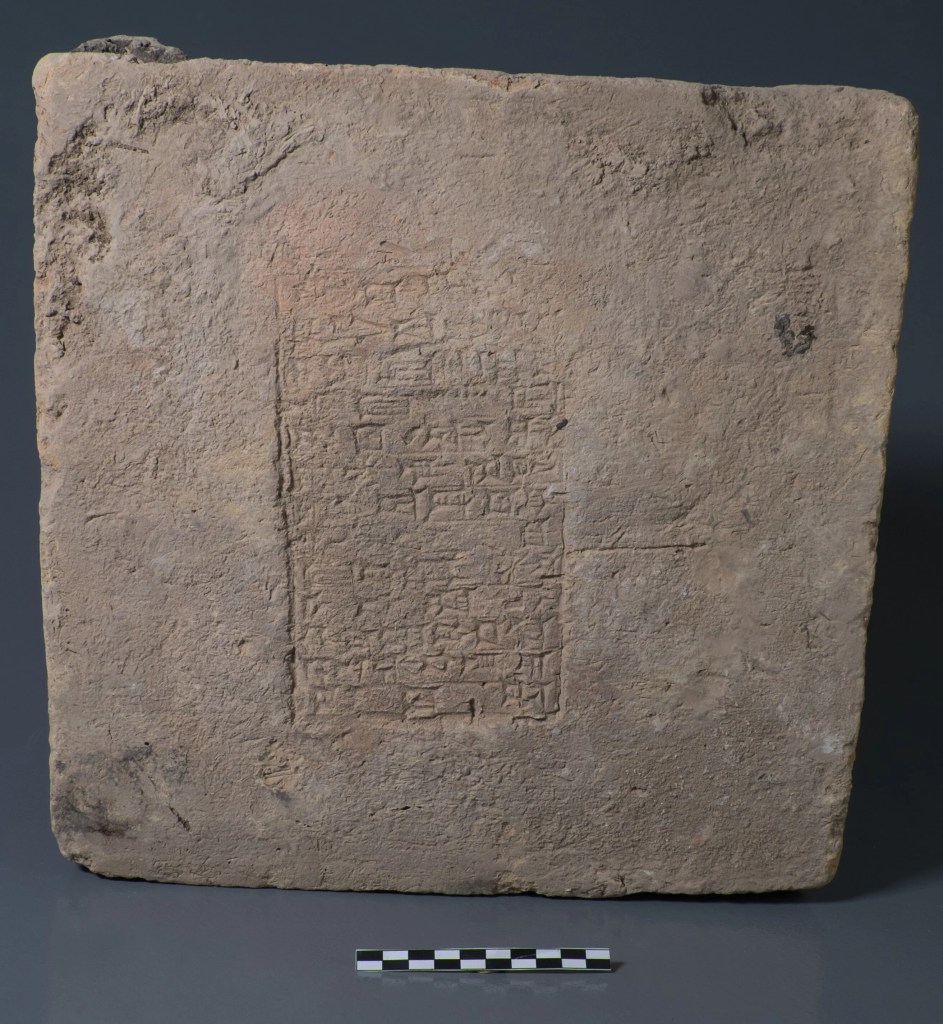
The battery algorithm adapted swiftly. Within days, Daugherty adjusted his code to accommodate the varying thickness and irregular shrinkage of charred papyrus, returning flattened digital views of the hidden text [3]. The model scroll proved that the unwrapping pipeline could extract complex text without damaging irreplaceable artifacts. Just as geophysicists study ancient Mesopotamian bricks recording planetary magnetism, researchers are applying advanced laboratory techniques to retrieve historical records from baked materials [1].
Writing for Live Science, science communicator Kenna Hughes-Castleberry observed that developing segmentation software on sacrificial mock rolls creates a safe testbed. Engineers can refine machine-learning algorithms on known text samples, ensuring high text-detection accuracy before attempting scans on priceless Herculaneum scrolls [1, 2].
What Egyptian Papyri Reveal About Metal Inks
The broader utility of Seiler’s discovery hinges on whether Roman scribes regularly employed metal-enriched inks. Papyrologist Leah Packard-Grams investigated this question through ancient Greek and Egyptian manuscripts housed in the Center for the Tebtunis Papyri at UC Berkeley’s Bancroft Library. Excavated 126 years ago at the ancient settlement of Tebtunis, these papyrus rolls date from between 300 B.C.E. and 300 C.E., including everyday registers from Dionysios, a local schoolteacher who meticulously recorded food expenses for his children along the canal [3].
Using a handheld X-ray fluorescence device, Packard-Grams confirmed that Tebtunis papyri written after the first century C.E. frequently contain measurable quantities of lead or copper. Scribes traditionally manufactured black ink from lampblack soot, water, and gum arabic, but minerals were sometimes added to improve flow or alter pigmentation. The timeline of metal-enriched ink adoption across the Roman Mediterranean world coincides directly with the era when the Herculaneum Library was buried in 79 C.E. [3]
Although scholars have not systematically examined the entire surviving collection for metallic signatures, earlier spectroscopic analyses revealed lead in at least one detached fragment [2, 3]. Packard-Grams notes that mapping lead concentrations could also help researchers distinguish overlapping lines and trace individual scribal hands across surviving Herculaneum scrolls [3].
Vesuvius Challenge and Recovered Philosophies
Efforts to decipher carbonized scrolls accelerated dramatically with the Vesuvius Challenge, launched in 2023 by computer scientist Brent Seales of the University of Kentucky and Silicon Valley investors [3, 4]. Seales had previously pioneered digital unwrapping in 2015 on a synagogue scroll burned in roughly 600 C.E. [3]. Offering over $1.8 million in prizes, the Vesuvius Challenge competition catalyzed rapid machine-learning breakthroughs [4, 5]. In 2023, contestants deciphered the first Greek word, πορφύραc (a Greek term for purple), followed in 2024 by 15 complete columns from an Epicurean treatise discussing sensory perception and pleasure [3, 4].
In June 2026, researchers announced a major triumph in Naples, as reported by National Geographic: the virtual unwrapping of PHerc. 1667, recovering nearly 1.5 meters of continuous Greek script across roughly 20 columns [4, 5]. Earlier physical attempts during the 1960s and 1980s used gelatin and acetic acid, shrinking the manuscript’s diameter from 1.9 inches to under 0.8 inches and destroying over half the roll. Lead papyrologist Federica Nicolardi and scholar Claudio Vergara revealed that the text presents a Stoic philosophical treatise referencing Stoic Aristocreon, the nephew of foundational philosopher Chrysippus [5].
Classicist Thomas Coward of the University of Bristol emphasized that recovering original Stoic treatises provides unfiltered access to Hellenistic philosophy rather than relying on later summaries. Similar breakthroughs on PHerc. 172 unlocked more than 70 columns of Epicurean Philodemus in his treatise On Vices, with confirmed passages from Book 8 of On Gods [4, 5]. Incorporating lead-detection protocols will help prioritize the most legible manuscripts, accelerating the recovery of ancient philosophy from Herculaneum scrolls still sealed in carbon [1, 5].
- ACADEMIC JOURNAL Seiler, D., LaManna, J. M., McOsker, M., Kreimer, D., Daugherty, M. C., & Dopke, J. (2026). A model carbonized papyrus scroll opens a novel path to identifying readable scrolls of the Herculaneum Library. PLOS ONE, 21(9), e0353485. [Article Link]
- ONLINE NEWS Hughes-Castleberry, K. (2026, September 16). New trick could reveal text on 2,000-year-old scrolls charred by eruption of Mount Vesuvius. Live Science. [Article Link]
- ONLINE NEWS Eurasia Review. (2026, September 17). To read 2,000-year-old burned papyrus scrolls, scientists make and burn their own. Eurasia Review. [Article Link]
- ONLINE NEWS Futura Team. (2026, June 26). AI cracks a 2,000-year-old mystery buried by Mount Vesuvius. Futura-Sciences. [Article Link]
- ONLINE NEWS Amiri, A. (2026, June 29). AI has deciphered a 2,000-year-old treatise frozen by Mount Vesuvius, revealing ancient wisdom lost in time. The Daily Galaxy – Great Discoveries Channel. [Article Link]
- ONLINE NEWS Ground News. (2026, September 17). We may soon be able to read long-lost ancient scrolls damaged by the eruption of Mount Vesuvius. Ground News. [Article Link]
APA 7: PerEXP Teamworks. (2026, September 17). Reading Herculaneum scrolls: How lead inks reveal charred text. https://perexpteamworks.com/en/herculaneum-scrolls-lead-ink-scans/


