



For more than a century, naturalists assumed that the black-and-white gentoo penguins swimming through sub-Antarctic waters belonged to a single, widely distributed lineage. That assumption collapsed after researchers completed a comprehensive genomic survey across remote breeding colonies. An international consortium has officially identified a new penguin species on the isolated Kerguelen Islands, proving that traditional morphology concealed deep genetic divergence. The newly described bird, formally named Pygoscelis kerguelensis, establishes that gentoos actually comprise four distinct evolutionary species [1].
What Defines the New Penguin Species?
The newly recognized southeastern gentoo penguin inhabits the remote Kerguelen Islands, known in French as the Desolation Islands, situated nearly 2,000 miles from any permanently inhabited landmass. Because these volcanic outposts remain exceptionally difficult for scientists to reach, the distinct lineage escaped formal recognition for generations. Daly Noll, a graduate student at the University of Chile in Santiago and lead author of the study published in Communications Biology, examined thousands of genetic differences across the birds’ nuclear genomes [1], [4]. The birds inhabit Kerguelen Island. Genomic comparisons revealed sharp divergence from continental neighbors despite superficial physical similarities [1], [4].
To human observers and ocean predators alike, gentoos share a familiar black back and white underside that provides vital camouflage while diving for food in frigid seas. The new penguin species displays subtle differences in vocalizations and average body dimensions, but genetic divergence far outstrips its physical appearance. Biologists classify such organisms as cryptic species, meaning evolutionary lineages that appear almost identical while harboring profound genetic separation. Co-senior author Rauri Bowie, a curator at the UC Berkeley Museum of Vertebrate Zoology, noted the historic debate surrounding these populations. “For over 100 years it’s been controversial as to how many species or how many subspecies there are,” Bowie explained, highlighting how modern integrative genomics finally resolved the taxonomic deadlock [1].
How Genomes Divided Gentoo Penguin Species
Previous ornithologists had proposed as many as six regional subspecies, yet taxonomic disputes persisted without consensus for decades. Genomic tools broke that stalemate. To establish definitive boundaries, Bowie joined senior authors Juliana Vianna of Andrés Bello National University in Santiago and Elie Poulin of the University of Chile, assembling an international team of biologists from Australia, Spain, South Africa, France, the United Kingdom, Argentina, Brazil, and Monaco [1], [4].
Together, the international team analyzed whole-genome sequences from 64 penguins collected across 10 distinct breeding colonies, covering nearly the entire circumpolar range of gentoos for the first time [1], [4]. The genomic analysis focused on thousands of single nucleotide polymorphisms (SNPs), revealing four distinct species rather than minor geographical variants [1], [4].

The southern gentoo, now classified as Pygoscelis ellsworthi, represents the most populous lineage and thrives along coastal Antarctica, the Antarctic Peninsula, and South Georgia Island. North of the Antarctic Polar Front, the eastern lineage, Pygoscelis taeniata, nests on the Crozet Islands, Marion Islands, and Macquarie Islands. The northern gentoo, Pygoscelis papua, remains restricted to South American colonies on the Falkland/Malvinas and Martillo Islands, while Pygoscelis kerguelensis occupies Kerguelen and probably nearby Heard Island. Each group possesses unique genetic adaptations tailored to distinct thermal regimes [1], [4].
Sub-Antarctic Currents and Diet Drove Speciation
Evolutionary reconstructions show that penguins originated roughly 22 million years ago in waters surrounding Australia and New Zealand. Around 12 million years ago, the opening and strengthening of the Antarctic Circumpolar Current created powerful oceanic flow that helped ancestral penguins disperse northward toward sub-Antarctic archipelagos, South America, and Africa. Researchers estimate that the four gentoo lineages diverged much later, between 300,000 and 500,000 years ago. Ten colonies provided 64 genomes. The Antarctic Polar Front acted as a formidable ecological barrier, separating cold Antarctic waters from warmer, saltier northern oceans and preventing genetic exchange between isolated island colonies [1], [4].
Behavioral ecology reinforced this physical isolation because gentoos maintain exceptionally flexible feeding habits. While Emperor and Adélie penguins depend heavily on diminishing krill stocks, gentoos readily consume fish, squid, cuttlefish, and krill, allowing them to forage near their home colonies rather than undertaking long oceanic migrations. Because populations return consistently to the same nesting grounds year after year, local selection pressures intensified over millennia [1].
In a parallel evolutionary pattern, marine snails reveal new insights into evolutionary transitions when environmental shifts restrict dispersal across ocean corridors. For gentoos, behavioral site fidelity and oceanic currents permanently split ancestral populations into discrete evolutionary branches [1], [4].

Will Climate Change Strand Island Populations?
While the southern lineage in Antarctica may expand its breeding range southward as sea ice retreats, sub-Antarctic gentoo penguin species face acute environmental peril. Climate models assessing habitat availability by 2050 suggest that island-dwelling populations could lose suitable climate space across their existing homes. “In Antarctica, of course, other species, not the gentoo, are threatened by climate change,” senior author Juliana Vianna warned. “But the gentoo is of most concern in the sub-Antarctic region.” Because these birds inhabit isolated oceanic islands, they cannot easily migrate across deep oceanic divides when local thermal conditions shift [1].
Island endemics encounter multiple compounding pressures beyond rising ocean temperatures, including commercial fishing competition, accidental net entanglement, predation from introduced rats and dogs, and outbreaks of avian influenza. Just as historical evidence demonstrates how giant mammals declined due to human impact rather than climate fluctuations alone, modern sub-Antarctic birds confront interacting human and ecological stressors. A new penguin species restricted to a single archipelago cannot absorb sudden breeding failures without risking severe population collapse. Vianna stressed that conservation institutions across governing nations must formally recognize all four species to implement tailored legal protections [1].
Parallel Breakthroughs in Tiger Cat Genetics
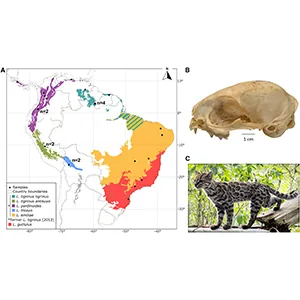
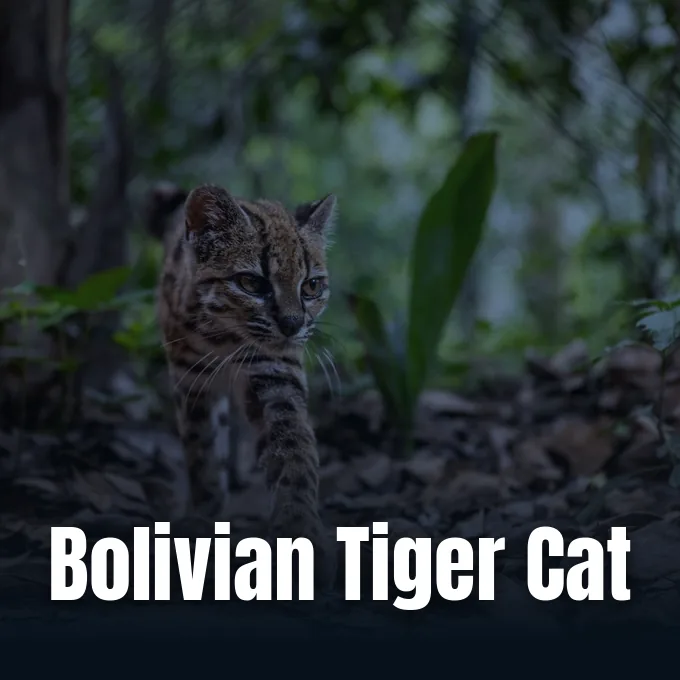
Remarkably, the description of Pygoscelis kerguelensis coincided with another century-first taxonomic breakthrough on the South American mainland [2], [3]. In the cloud forests of Bolivia, an international research team discovered the first new living cat species described in over 100 years: a tiny wildcat named Leopardus tilcayo [2], [3]. Much like gentoos, small spotted tiger cats in the genus Leopardus look deceptively similar, causing biologists to confound separate evolutionary branches for decades [2], [3]. Museum specimens included six Guiana Shield cats. Researchers analyzed whole genomes from 38 cats, confirming five full tiger cat species alongside a new Peruvian subspecies designated Leopardus tigrinus antisuyo [2], [3], [5].
To untangle complex hybridization in the cats’ evolutionary past, lead author Jonas Lescroart of the University of Antwerp partitioned high-quality genomes into 22,873 sections, building independent phylogenies to identify ancient gene flow [2], [5]. The data demonstrated that Leopardus tilcayo diverged from related lineages approximately 1.43 million years ago in the steep Yungas cloud forests [2], [3]. The official reference animal is an adult male collected near Arapata Village in the La Paz region of Bolivia [2].
As detailed in recent coverage of the new cat species in the Bolivia Yungas, the animal was already recognized by Indigenous communities under the traditional name tilcayo [2], [3]. Co-author Paola Nogales-Ascarrunz of Universidad Mayor de San Andrés verified that local knowledge preceded formal scientific naming, bridging ethnobiology with modern genomics [2], [3].
Why Cryptic Species Redefine Global Conservation?
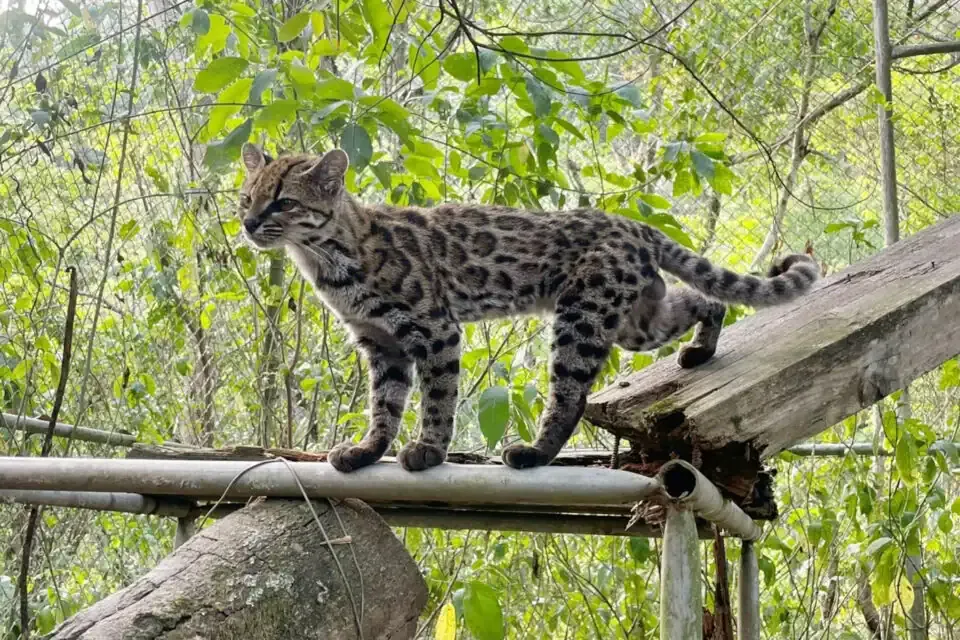
Tigrino was already fully grown. A captive male at Senda Verde Wildlife Sanctuary in the Nor Yungas alerted biologists that adult tilcayos measure barely 42.5 to 50.5 centimeters [2], [3].
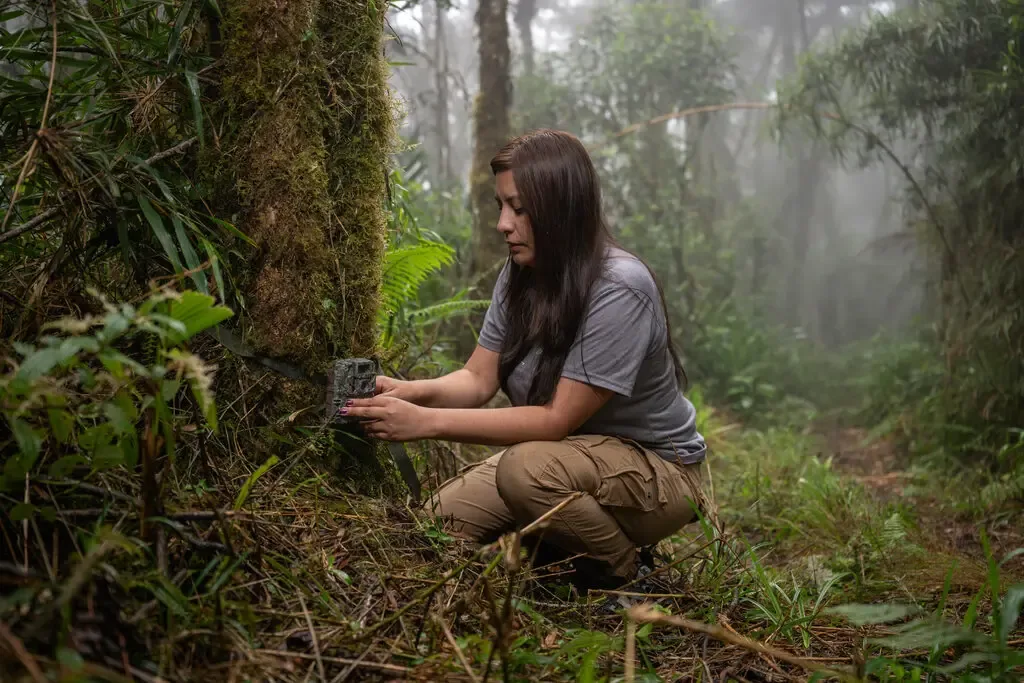
Adult tilcayos reach between 16.7 and 19.9 inches in head-to-body length, with a tail extending 25 to 26.5 centimeters (about 9.8 to 10.4 inches) [2], [3]. Genetic demographic reconstructions indicate an estimated 63 percent decline in effective population size across historical epochs. Furthermore, co-author Tadeu Gomes de Oliveira of Maranhão State University noted that camera traps repeatedly misidentified tilcayos as margays, skewing habitat estimates [2],. “If one supposedly widespread species is actually several more restricted lineages, each may have a much smaller geographic range,” ecologist Samantha Zwicker observed regarding the urgent conservation implications. Tigrino lives at Senda Verde [3].
The discovery of both a new penguin species and a cryptic wildcat demonstrates that modern conservation can no longer rely solely on visible morphology [1], [2]. Implementing whole-genome sequencing reveals vital physiological adaptations, such as enhanced lipid storage in Antarctic gentoos and specialized diving metabolism in eastern populations [1], [4]. With sub-Antarctic islands warming rapidly toward critical 2050 thresholds, recognizing cryptic biodiversity provides the baseline data needed to safeguard fragile island ecosystems before isolated lineages vanish unrecorded [1], [2], [3].
- ONLINE NEWS University of California – Berkeley. (2026, September 21). Scientists discover first new penguin species in more than 100 years. ScienceDaily. [Article Link]
- ONLINE NEWS Gajbhiye, S., & Ralls, E. (2026, September 22). For the first time in 100 years, scientists have identified a new cat species living in a South American forest. Earth.com. [Article Link]
- ONLINE NEWS Puiu, T. (2026, September 21). This Tiny Wildcat Was Mistaken for a House Cat and Turned Out to Be the First New Cat Species in More Than 100 Years. ZME Science. [Article Link]
- ACADEMIC JOURNAL Noll, D., Younger, J., Pertierra, L. R., Greve, M., Pizarro, E. J., León, F., Brandt, D. Y. C., Tyler, J., Clucas, G., Levy, H., Simison, W. B., McInnes, J., Pistorius, P., Le Bohec, C., Bonadonna, F., Trathan, P. N., Barbosa, A., Raya Rey, A., Dantas, G. P. M.,. Vianna, J. A. (2026). Integrative evidence reveals adaptive divergence and speciation in gentoo penguins. Communications Biology, 9(1). [Article Link]
- ACADEMIC JOURNAL Lescroart, J., Bonilla-Sánchez, A., Napolitano, C., Buitrago-Torres, D. L., Ramírez-Chaves, H. E., Pulido-Santacruz, P., Murphy, W. J., Svardal, H., & Eizirik, E. (2023). Extensive Phylogenomic Discordance and the Complex Evolutionary History of the Neotropical Cat Genus Leopardus. Molecular biology and evolution, 40(12). [Article Link]
APA 7: PerEXP Teamworks. (2026, September). How New Penguin Species Emerged Across Remote Ocean Islands.


