



Hajime Isayama’s global anime phenomenon Attack on Titan is returning to movie theaters on October 23, 2026, bringing its foundational compilation film back to the big screen in upgraded cinematic formats. Announced on September 9 during official celebrations for the newly established “Attack on Titan Day,” the theatrical re-release of Attack on Titan Part 1: Crimson Bow and Arrow introduces the franchise to panoramic ScreenX auditoriums while reviving motion-based 4DX and Ultra4DX screenings. Tokyo theaters will host the initial screenings [1].
Attack on Titan Theatrical Screening Details
When Attack on Titan Part 1: Crimson Bow and Arrow first debuted in Japanese cinemas in 2014, the film condensed the introductory thirteen episodes of the television anime into an intense two-hour theatrical package. Wit Studio had launched the broadcast series in 2013 to unprecedented critical acclaim, but the theatrical compilation gave audiences their first opportunity to experience the terrifying breach of Wall Maria within an authentic cinematic environment [1].
Production companies Wit Studio and MAPPA ultimately steered Attack on Titan through four television seasons comprising 94 episodes, concluding humanity’s apocalyptic war in late 2023. Over that decade-long broadcast history, international distributors including Crunchyroll, Hulu, and Adult Swim brought the dark fantasy epic to millions of global viewers, with English dub performances from voice actors Matthew Mercer and Josh Grelle further solidifying its pop-culture presence [1].
The upcoming October 23 theatrical event does not include unreleased story footage or supplemental epilogues detailing the future of the franchise. Instead, the release functions as an engineering upgrade designed to present the existing 2014 film through contemporary high-end cinema technologies. Kodansha and the production committee selected this opening chapter to launch a retrospective program that bridges the anime’s origins with its ultimate climax. Fans who followed Eren Jaeger, Mikasa Ackerman, and Armin Arlert across four television seasons can now re-examine the earliest titan incursions through modernized visual projection and physical motion effects. The presentation maximizes sensory immersion for both veteran enthusiasts and curious newcomers, offering fresh perspective on foundational narrative arcs [1].
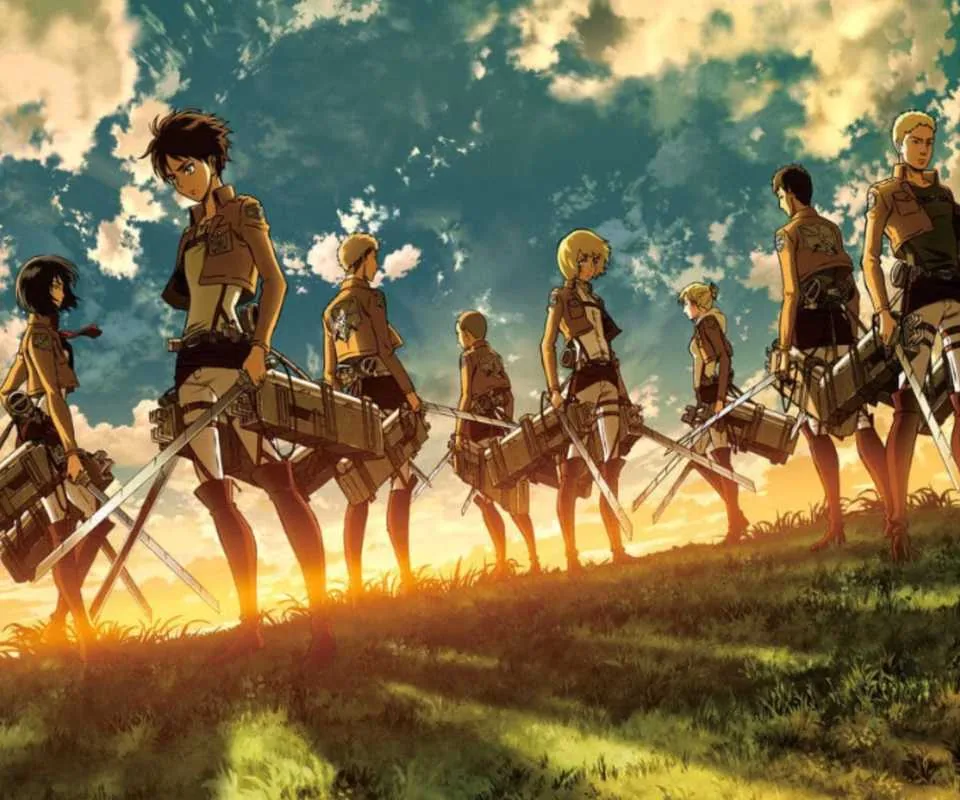
ScreenX Multi-Projection Enhances Survey Corps Action
The October re-release marks the very first time that any Attack on Titan production has received the ScreenX treatment. ScreenX is a specialized multi-projection format that selectively expands action sequences onto the left and right walls of the cinema auditorium, generating an expansive 270-degree viewing angle. By projecting environmental footage beyond the traditional front screen, the format envelopes the audience in the spatial disorientation of high-speed vertical maneuvering equipment [1].
Aerial combat against towering humanoid predators requires acute spatial awareness. When Eren confronts the Colossal Titan atop Wall Rose, the multi-projection screens expand the gargantuan scale of the monster as heat blasts and steam plumes roll across the auditorium walls. Kinetic grappling maneuvers through urban corridors gain substantial depth when soldiers swing past the viewer’s peripheral vision. Ultra4DX auditoriums combine these multi-wall visuals with synchronized motion seats and environmental air blasts, replicating the violent recoil of battlefield engagements [1].
Enhanced cinematic formats can occasionally seem superfluous when paired with standard animated dramas. In contrast, Isayama’s apocalyptic universe thrives on palpable tension, visceral claustrophobia, and the constant threat of imminent destruction. ScreenX expands footage across three walls. The heightened sensory presentation strips away all illusion of security, placing viewers directly into the ranks of the Survey Corps as humanity mounts its desperate defense [1].
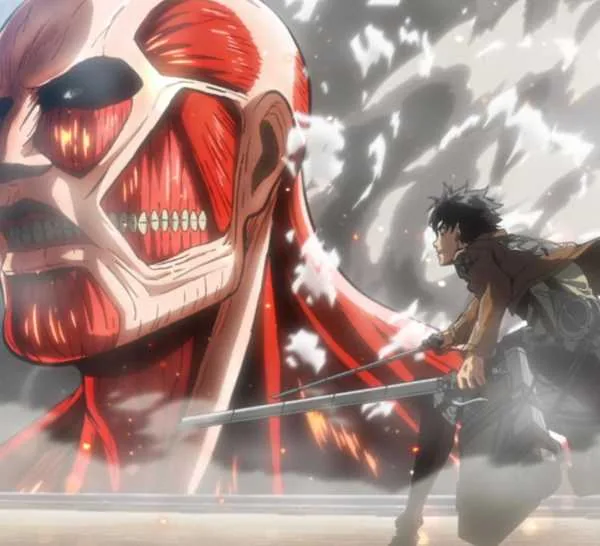


Crimson Bow and Arrow Streamlines Season One
Covering the first thirteen episodes of the anime, Crimson Bow and Arrow condenses the opening story arc into a tightly focused theatrical narrative. The compilation film streamlines exposition to emphasize the devastating breach of the Shiganshina District and the defense of Trost [1].
The first season spans 25 episodes. Part two, titled Wings of Freedom, covers episodes 14 through 25 [1].
For prospective fans who hesitated before tackling a 94-episode epic, the theatrical re-release provides an accessible entry point. The movie format preserves every crucial emotional beat, from Eren’s harrowing childhood loss to his shocking first transformation during the defense of Trost. The timing of this screening proves deliberate. With Attack on Titan: Final Chapter – The Last Attack scheduled to arrive in theaters in 2027 with its own ScreenX presentation, October 2026 offers newcomers the ideal window to experience the franchise’s beginning before witnessing its apocalyptic finale in premium multi-projection formats [1].

Dark Shonen Storytelling Redefined by Isayama
Hajime Isayama began publishing the original manga in 2009, but the 2013 television anime produced by Wit Studio catapulted the series into a Guinness World Record-holding sensation. On global community platforms like MyAnimeList, the initial season maintains a celebrated 8.55 rating supported by hundreds of thousands of registered viewer reviews. The franchise established unprecedented standards for television animation production values, combining Hiroyuki Sawano’s driving orchestral soundtrack with complex hand-drawn kinetic combat sequences [1].
By steering its storyline into darker, increasingly nihilistic themes, Attack on Titan shattered traditional demographic assumptions that historically divided juvenile shonen publications from graphic seinen titles. Its overwhelming international success demonstrated that mainstream manga readers embraced moral ambiguity and lethal consequences for core characters. Weekly Shonen Jump quickly leaned into this darker aesthetic, launching its popular ‘Dark Trio’ of Chainsaw Man, Jujutsu Kaisen, and Hell’s Paradise to explore similar grim territory [1].
Wit Studio soon produced other bleak survival anime cut from identical stylistic cloth, most notably Kabaneri of the Iron Fortress and Seraph of the End. Isayama’s uncompromising commentary on the machinery of war and the systemic vilification of ‘the other’ carries profound resonance in 2026. Wit Studio produced the animation. These challenging thematic foundations ensure that the early Trost and Shiganshina battles maintain their dramatic power over a decade after their initial broadcast [1].

Theatrical Compilation Anime Expands Beyond Japan
While theatrical recap movies have existed since the early decades of the medium, Attack on Titan accelerated the modern trend of transforming television anime arcs into high-profile cinema events. Studios recognize that dedicated fans readily purchase cinema admissions to experience landmark battles on giant screens with uncompressed theatrical audio. Similar theatrical compilation strategies have flourished across popular properties like Gintama, proving that curated recap presentations command dependable box office revenue [1].
Production committees increasingly coordinate theatrical screenings with digital streaming catalogues to keep legacy franchises active between production cycles. Television anime broadcasts and cinematic retrospectives frequently collaborate to rekindle community interest around iconic character journeys, echoing conversations seen in recent Bleach Episode 48 preview coverage of returning franchise veterans. Eren Jaeger is the central protagonist. As comprehensive digital libraries on platforms like Crunchyroll, Hulu, and Adult Swim host all 94 episodes, specialized theatrical events provide an irreplaceable communal viewing atmosphere [1].
Favorable box office returns across Japanese theaters starting October 23 could encourage international licensing partners to bring ScreenX and Ultra4DX screenings to overseas multiplexes. Audiences who discovered the series during its four-season run appreciate experiencing the harrowing defense of Wall Rose with expansive side-wall projection. The Last Attack arrives in 2027. Whether fans attend the theatrical re-release in Tokyo or revisit the anime through domestic streaming, the return of Crimson Bow and Arrow reaffirms why Hajime Isayama’s brutal masterpiece reshaped modern action storytelling [1].
- ONLINE NEWS Kurland, D. (2026, September 26). 12 Years Later, Attack on Titan Is Going Back to Where It All Began. Comic Book Resources. [Article Link]
- ONLINE NEWS Associated Press. (2026, September 25). U2 goes back to school to put on a show where it all began 50 years ago. Japan Today. [Article Link]


