






When Apple unveiled the foldable iPhone Duo during its Surprise and Shine presentation in Cupertino, the announcement immediately sparked debate over whether handheld screens can displace small tablets. Unfolding the dual-screen handset reveals a 7.6-inch inner canvas that sits remarkably close to the 8.3-inch panel on the seventh-generation iPad Mini. While the foldable bridges the gap between pocket handsets and larger tablets, notable differences in processing hardware, multitasking software, and retail pricing set the two devices apart before pre-orders arrive on October 23 [1], [4].
iPhone Duo Challenges the iPad Mini Form Factor
Apple designed the iPhone Duo with two symmetrical halves connecting into a single frame that maintains the exact same aspect ratio across both displays, creating a continuous outer boundary that transitions smoothly between handheld mobile tasks and expanded reading modes. When fully opened, the handset measures as the thinnest phone in company history [4]. That folding architecture eliminates carrying a secondary tablet bag [1].
Display engineering marks another major hardware divide. While the seventh-generation iPad Mini retains an 8.3-inch panel with a standard 60Hz refresh rate, both panels on the iPhone Duo feature ProMotion technology that dynamically reaches 120Hz refresh rates, producing fluid touch interactions and responsive animations throughout daily mobile workflows. The tablet provides more viewing surface for reading documents [1].
Hinge durability remains an open question for prospective buyers. The flexible display bends along a center seam, meaning the long-term behavior of the screen crease will only become evident after months of continuous folding by everyday owners. The iPad Mini uses rigid glass. For shoppers hesitant to commit several thousand dollars to an unfamiliar mechanical hinge, visiting an Apple Store to test the opening resistance firsthand offers valuable guidance before ordering [1].
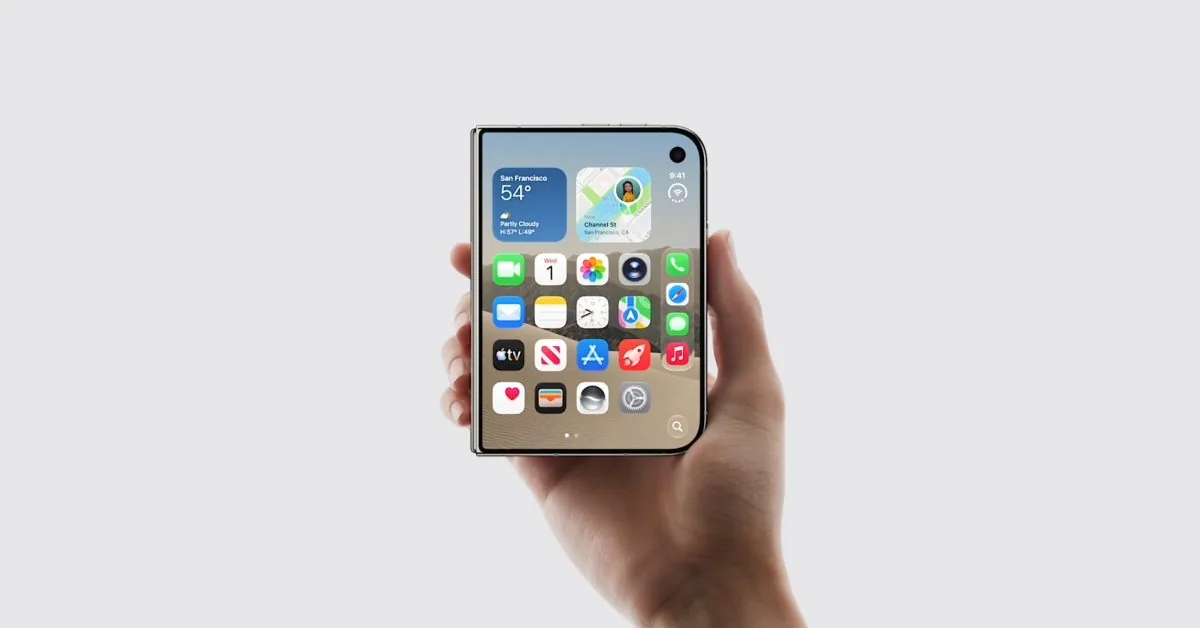
Silicon and Camera Upgrades Favor the Foldable
The iPhone Duo arrives equipped with the high-end A20 Pro processor, paired with a 7-core graphics unit and 12GB of system memory. By comparison, the 2024 iPad Mini relies on an A17 Pro chip housing a 5-core graphics processor alongside 8GB of memory, giving the foldable phone measurable advantages in computational speed, graphical throughput, and memory bandwidth [1].
Apple outfitted the iPhone Duo with a dual-camera module consisting of a 48-megapixel main sensor and a 48-megapixel ultra-wide lens. The iPad Mini houses a single 12-megapixel rear sensor. Because tablet owners already carry pocket phones everywhere, a superior camera on the foldable consolidates daily photography into one device [1].
Evaluating silicon efficiency requires examining how each device sustains intense computational workloads over extended work sessions without aggressive thermal throttling. The A20 Pro chip allows the iPhone Duo to process demanding local machine intelligence tasks and high-frame-rate games without stuttering, backed by a 7-core graphics processor and four additional gigabytes of system memory compared to the tablet. However, a folding chassis distributes heat differently than a rigid aluminum slate, meaning the iPad Mini can dissipate thermal loads from its 5-core graphics configuration evenly across its larger surface area during lengthy gaming, digital illustration, or document review sessions. Shoppers choosing between them must weigh peak processing speeds against the convenience of a larger, cooler tablet frame that runs for hours without draining a primary telephone battery [1].



Multitasking Limits and Apple Pencil Constraints
Although the iPhone Duo features an interface modified to take advantage of its unfolded canvas, it still runs phone software rather than the full iPadOS platform. The software supports two apps side by side in a fixed split view that divides the screen evenly, whereas iPadOS supports flexible window management and multi-app workspaces tailored for productivity tasks [1].
The iPhone Duo will not support the flagship Apple Pencil Pro, restricting compatible stylus input strictly to the USB-C Apple Pencil model. Furthermore, Apple will not activate stylus compatibility at launch, holding back firmware support until an update ships later in 2026. Tablet users who depend on pressure sensitivity, barrel rotation, and magnetic wireless charging will find the iPad Mini far more versatile for creative projects [1].
Operating an iPad Mini provides a dedicated environment for reading digital books and drafting notes without phone notifications disrupting concentration. Running tasks on a separate slate also preserves smartphone battery life during lengthy research sessions. For users wanting an all-in-one pocket computer that unfolds into an expanded view, the Duo offers unrivaled convenience [1].
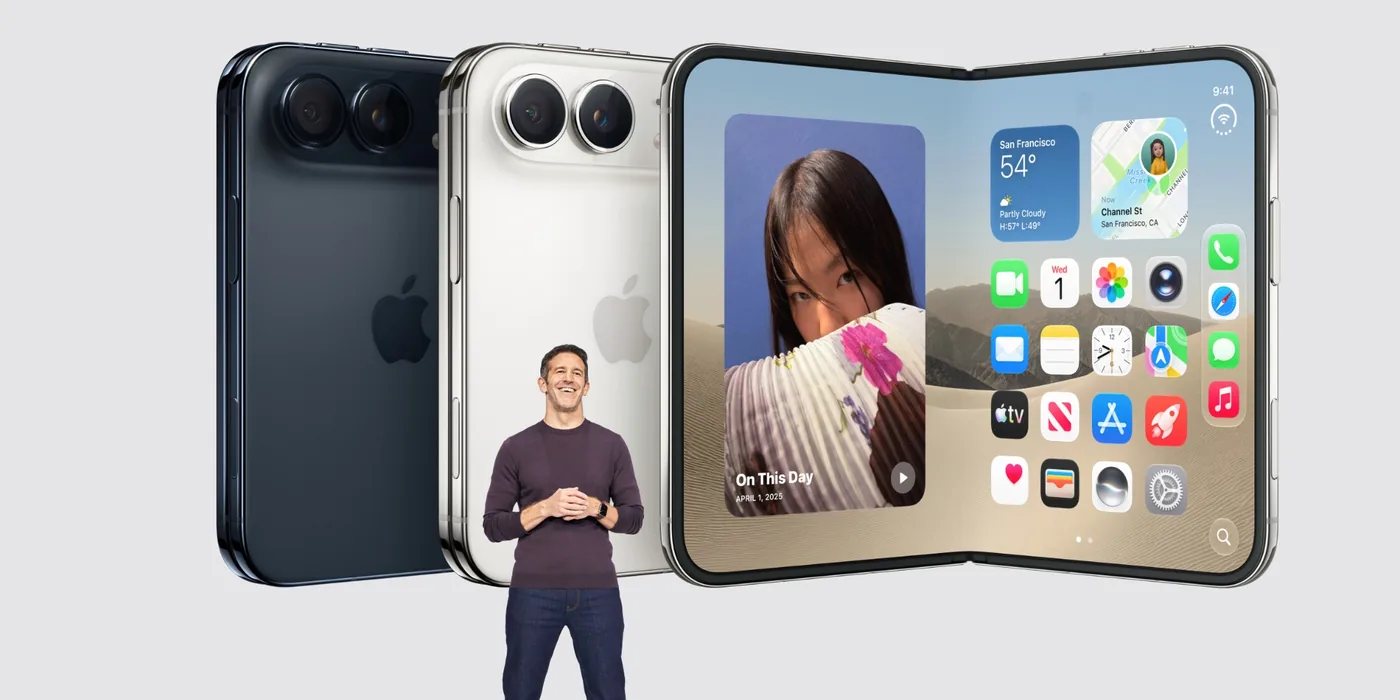
iPhone Duo Pricing Reflects Steep Foldable Costs
The base iPhone Duo costs $1,999 for 256GB of onboard storage, with pricing climbing to $3,200 for the top-tier 2TB configuration [1], [3]. Meanwhile, the iPad Mini begins at $600 for a 128GB model and tops out at $900 for 512GB, with cellular connectivity adding an extra $150 charge. Confirming earlier reporting that the iPhone Duo could start at $2,000, Apple has positioned the foldable device as a high-end luxury product [1].
An individual could buy a brand-new 256GB iPhone 18 Pro for $1,200 alongside a standard $600 iPad Mini, and the combined purchase would still cost less than a single entry-level Duo. That arithmetic forces prospective buyers to decide whether consolidating two gadgets into one folding frame justifies paying a premium over owning both an advanced smartphone and an independent tablet [1].
Under the newly introduced Apple Upgrade initiative, customers can lease the device for $57.99 monthly over 24 months, with full trade-in credits applying if they purchase the phone outright at the end of the term. Trading in an iPhone 17 Pro Max reduces payments to $9.24 per month on a 12-month lease or $21.12 monthly on a 24-month agreement. Those subsidized tiers provide accessible entry without paying $2,000 upfront [3].
Foxconn Assembly Yields Trouble Early iPhone Duo Production
Manufacturing reports published by China’s Jiemian News revealed that initial assembly lines at Foxconn achieved completion rates barely above 60% as of September 17. Foxconn technicians repeatedly adjust equipment, assembly lines, and production tolerances while fabricating the complex dual-screen enclosure at mass scale [2].
Meeting high production standards could take anywhere from six months to a full year for assembly lines to achieve mature yield rates. Suppliers waited to see whether Apple would relax quality requirements to accelerate output, but the company refused to compromise its tolerances. With early inventory expected to be tightly constrained, customers are tracking early setup for iPhone Duo pre-orders opening on October 12 to secure launch shipments [2].
John Ternus is marking one month as Apple CEO and is restructuring the company to accelerate product development and introduce new devices more frequently, according to Bloomberg reporter Mark Gurman. Ternus said that Apple must become “more experimental” to remain competitive in the emerging artificial intelligence landscape. While confidential retail boxes marked “Do Not Open Until October 8” sit in stores awaiting merchandising displays, the iPhone Duo stands as Apple’s boldest attempt to test whether tablet loyalists will finally embrace a folding future [2].
- ONLINE NEWS McClure, D. (2026, October 3). iPhone Duo vs. iPad Mini: Which Apple device is right for you? Engadget. [Article Link]
- ONLINE NEWS MacRumors Staff. (2026, October 3). Top Stories: Apple Smart Home Launch on October 13, iPhone Duo Production Issues, and More. MacRumors. [Article Link]
- ONLINE NEWS Christoffel, R. (2026, October 2). iPhone Duo can be just $9/month with trade-in using Apple Upgrade. 9to5Mac. [Article Link]
- ONLINE NEWS Rossignol, J. (2026, October 2). Apple Store in UK Reopening on iPhone Duo Launch Day. MacRumors. [Article Link]


