




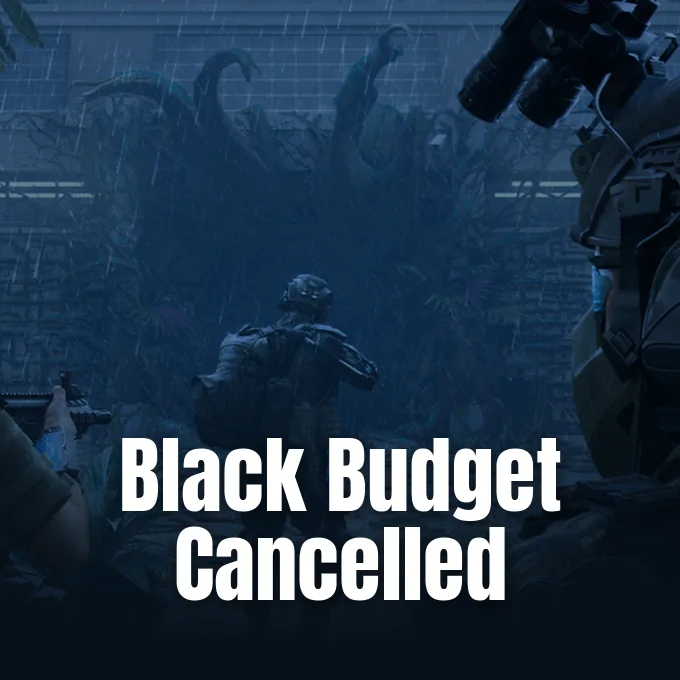
Steam storefront pages displayed active playtest registration links on October 1, 2026, even as Publisher Krafton confirmed that development on PUBG: Black Budget had officially ended [3]. Publisher Krafton announced the sudden project cancellation through an official Development Update posted across the Steam Community hub following an exhaustive internal evaluation [1]. Positioned as an extraction shooter spin-off blending survival mechanics with battle royale firefights, the project concluded testing less than a year after its public reveal [4].
Krafton Halts PUBG: Black Budget on Steam
The cancellation notice arrived through a Steam Community update posted directly by PUBG Studios on October 1, 2026, explaining that evaluating internal milestones forced a difficult corporate decision regarding commercial sustainability across evolving live-service PC markets. “After reviewing the project’s development status and future direction, we concluded that its current direction would not allow us to deliver an experience players could enjoy over the long term,” Publisher Krafton wrote [1]. The production team thanked testers who participated in earlier Closed Alpha sessions, acknowledging that community feedback directly shaped their final strategic assessment [3]. Closed Alpha testing ended in June. Reporter Sherif Saed at Eurogamer documented that the sudden termination followed months of private evaluations regarding core engagement metrics [1].
The playtest link remained on Steam. The digital storefront continued to host an active button allowing users to request access to playtests [3].
PUBG Studios emphasized that internal testing data would inform upcoming titles across the corporate portfolio. In its closing message to alpha participants, the developer committed to applying practical lessons from weapon handling and networking experiments to future software. “PUBG Studios will carry what we learned from development and testing into future projects, continuing to listen to players as we explore new gameplay experiences,” the studio stated. Publisher Krafton previously targeted substantial commercial growth through multiplayer spin-offs, making the sudden cancellation a notable strategic realignment for the broader franchise [1].
Extraction Mechanics and Time Loops on the Island
First revealed in November 2025, PUBG: Black Budget attempted to combine traditional battle royale survival with high-stakes extraction shooter design across volatile multiplayer servers where squads competed for territory. Publisher Krafton positioned the PvEvP (player versus environment versus player) first-person shooter as a central pillar of the franchise’s modern expansion. Matches dropped combatants onto an isolated island trapped in an anomalous time loop, forcing squads to gather valuable resources while hunting rival operators. Strange weather phenomena altered visibility dynamically across mountainous terrain, creating unpredictable environmental hazards during high-tier extraction sequences [1].
Environmental anomalies formed the mechanical core intended to keep repetitive excursions unpredictable. Unstable atmospheric vortexes shifted extraction zones across matches, forcing squads to adapt travel routes under intense pressure. Combatants confronted hostile AI militia and human opponents before securing specialized cargo pods across dangerous drop points [1].

Production roots extended back well before the official November 2025 presentation, as financial documents published by Publisher Krafton in 2023 first referenced an unannounced extraction experience codenamed Black Budget. Publisher Krafton previously targeted 2024. Extensive internal revisions delayed public testing into 2026 as engineering teams rebuilt foundational networking systems. The studio subsequently organized several closed test phases, culminating in its largest Closed Alpha deployment in June across international testing pools [1].


Why Black Budget Joined Cancelled Studio Spin-Offs
Black Budget marks the second high-profile PUBG spin-off cancelled by Publisher Krafton within a single calendar year, following months of private evaluations regarding core engagement metrics. In March, the publisher terminated PUBG: Blindspot after merely two months in early access. The team previously cancelled PUBG: Blindspot. PUBG: Blindspot offered 5v5 top-down tactical combat inspired by Ubisoft’s Rainbow Six Siege, yet rapid player drop-offs following launch prompted executives to shutter matchmaking servers before full commercial release. Reporter Sherif Saed observed that both projects struggled to transition early conceptual enthusiasm into dependable long-term player numbers [1].
Industry pressures have increasingly punished experimental multiplayer projects across modern gaming. Similar abrupt shutdowns mirror cancellations like Armed Fantasia, where publishers abandoned ambitious spin-offs after internal reviews questioned long-term audience retention [1]. Publisher Krafton prioritized retention metrics [2].
Reporting from Reporter Varun Karunakar at GamingBolt highlighted that internal leadership questioned whether the core gameplay loop could sustain an active community against established genre leaders across modern platforms [2]. Closed testing feedback suggested that matches struggled to generate consistent excitement during protracted loot runs. GameSpot noted that Publisher Krafton believed Black Budget simply wasn’t fun enough to keep potential players engaged over multi-year cycles. Publisher evaluations concluded that Black Budget lacked the necessary engagement loop to justify ongoing server maintenance and post-launch seasonal roadmaps [4].

Competitive Pressures in the Extraction Shooter Market
The extraction shooter landscape has transformed into an unforgiving subgenre dominated by entrenched competitive titles with massive player bases. Established franchises maintain dedicated communities, forcing newcomers to deliver flawless network architecture, deep progression loops, and rapid seasonal content cycles from day one if they hope to survive in competitive storefronts against massive player bases. Embark Studios generated significant momentum behind ARC Raiders, attracting consistent player interest ahead of its Frozen Trail update scheduled for release in October. Competing directly against ARC Raiders and its high-profile Frozen Trail content drop represented an intimidating commercial hurdle for Black Budget [2].
Live-service volatility has forced corporate reassessments across international gaming conglomerates. When multi-year development budgets clash with uncertain monetization projections, studio leadership frequently halts production before incurring operational debt. Strategic pivots often follow studio contractions like the recent Heart Machine layoffs, underscoring how volatile player communities dictate corporate roadmaps across experimental genres [2].
Rather than funding an uphill battle in a crowded PvPvE sector, Publisher Krafton appears positioned to redirect development capital toward proven single-player and cooperative properties. Reporter Varun Karunakar at GamingBolt noted that Publisher Krafton successfully navigated controversies surrounding Developer Unknown Worlds and Subnautica 2, establishing that brand as a key intellectual property priority. With Subnautica 2 demonstrating strong commercial resonance, studio executives can consolidate development resources around franchise world-building where market competition remains significantly less saturated than crowded PvPvE spaces. Publisher Krafton aims to expand the Subnautica universe into a durable multi-game property while avoiding high-risk live-service shootouts [2].
Future Spin-Offs and Ded.Net Development
Despite shelving Black Budget, Publisher Krafton has not abandoned experimental expansions for the broader PUBG franchise. During the Gamescom showcase in August, the publisher announced PUBG: Ded.Net as its next major multiplayer initiative, departing dramatically from the gritty military realism that defined original battle royale maps across previous franchise entries. Krafton Madison leads that project. Based in Wisconsin, the Krafton Madison team is constructing a distinctive action framework aimed at diverse multiplayer audiences [1].
Crafted with a vivid 1980s aesthetic, PUBG: Ded.Net integrates roguelite mechanics into squad-based shooting arenas across procedural environments where players progress through escalating encounters featuring retro-futuristic combat gear. Players explore dynamic run modifiers unlike anything previously seen in the PUBG franchise. The title targeted PlayStation 5. The production team is targeting simultaneous releases across PC, PlayStation 5, and Xbox Series X/S hardware [1].
Can PUBG Studios transform experimental spin-offs into durable live-service hits across modern consoles? By terminating Black Budget during closed testing rather than pursuing an expensive early access cycle, Publisher Krafton avoided the protracted commercial struggles that doomed PUBG: Blindspot. As engineering teams transfer closed alpha data to Krafton Madison and other satellite studios, Publisher Krafton aims to protect its flagship brand while hunting for fresh multiplayer hits across competitive global gaming markets [1].
- ONLINE NEWS Saed, S. (2026, October 1). Another PUBG game cancelled – Krafton pulls the plug on time-looping extraction shooter Black Budget following an internal review. Eurogamer. [Article Link]
- ONLINE NEWS Karunakar, V. (2026, October 2). PUBG: Black Budget Cancelled, Krafton Pulls The Plug Over Engagement Concerns. GamingBolt. [Article Link]
- ONLINE NEWS Blues News. (2026, October 1). PUBG: Black Budget fades to black. Blues News. [Article Link]
- ONLINE NEWS GameSpot. (2026). PUBG: Black Budget canceled, joining live-service graveyard. GameSpot. [Article Link]


