





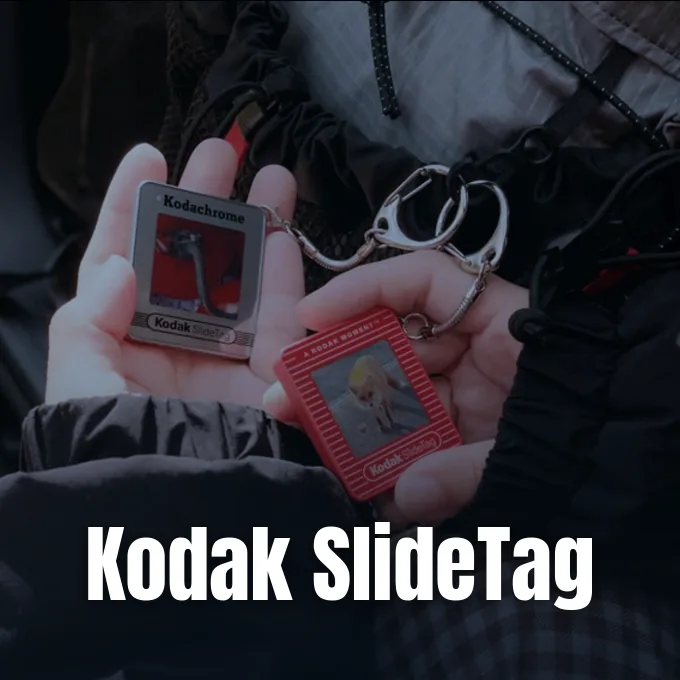
Reto Productions launched the Kodak SlideTag on November 23, 2026. The new pocket tracker pairs personal picture displays with Bluetooth location tools to help users find lost items without carrying separate tags on their key rings. The unit brings a six-color electronic paper screen into an item finder format. Owners can show family portraits or daily reminders right next to their keys. It works with two major location networks from Apple and Google. Both Android and iPhone users gain a simple way to trace lost bags or house keys without buying separate hardware [2].
How the Kodak SlideTag Is Built
The outer casing of the Kodak SlideTag draws its look from the iconic 1935 Kodachrome slide mount used for vintage color film slides [2]. The design reflects retro styling that Reto Productions previously explored with its miniature Charmera keychain camera. Instead of taking photos, this unit displays them on a front panel that clips to luggage or key rings. It weighs 16.6 grams. That makes it heavier than a standard Apple AirTag, but it stays light enough for daily pocket carry. The small plastic shell slips easily into pockets with car fobs and coins so users will hardly notice the extra weight when walking to work [1].
Most commercial Bluetooth trackers look like plain plastic discs. Reto Productions chose a different visual direction with the Kodak SlideTag by turning the locator into a display piece that users can see every day on their key rings [2]. White borders frame the tiny screen. That border mimics vintage Kodachrome cardboard mounts from classic slide projectors to give the accessory an unmistakable film-era look [1].
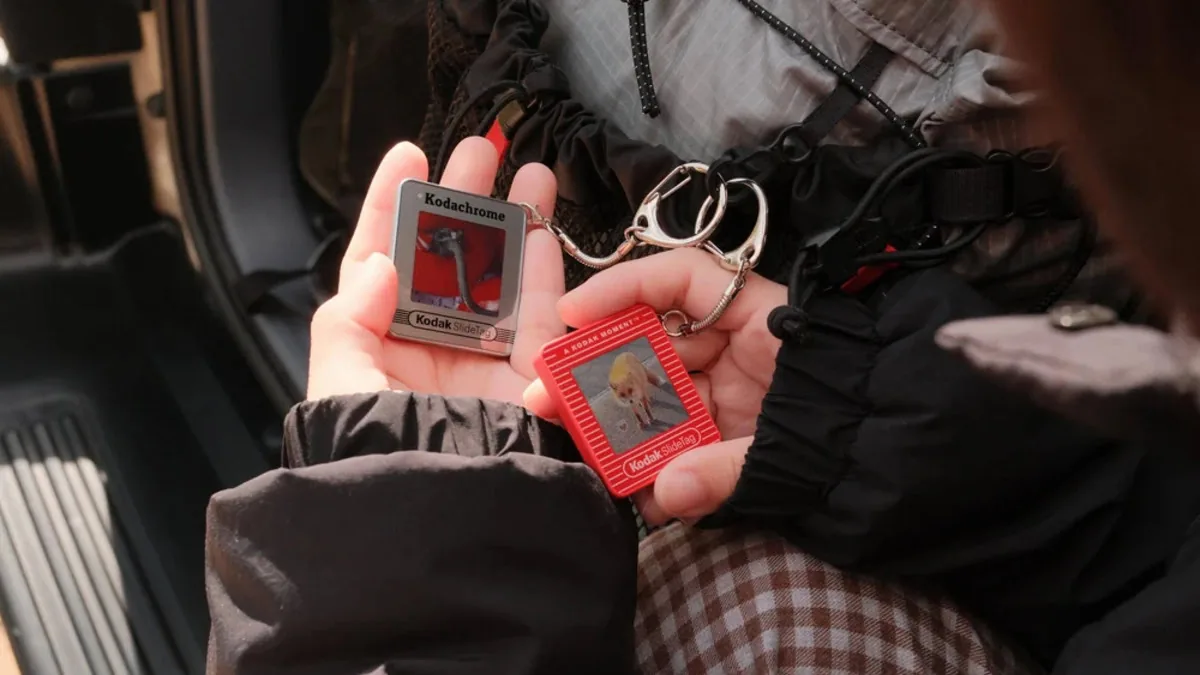
Jackson Chen of Engadget said the device serves as “a lo-fi version of what you could buy” in comparison to standalone photo frames or high-end item finders. The casing stays firm when dangling from car key rings or gym bags. A top loop secures the tag to metal rings without adding bulk. The compact build helps owners organize everyday keys as it displays pictures of pets, friends, or travel spots on the go [1].
Screen Capabilities and App Controls
The screen measures 1.54 inches. The Kodak SlideTag centers around this 1.54-inch E-Ink display, which delivers a resolution of 240 x 240 pixels across six distinct printed colors to keep battery drain minimal [1, 2]. Because electronic ink only draws current when pixels change, an image stays visible even when the unit rests idle on a nightstand [1]. The device stores 12 photos. Android Authority reported that this built-in storage allows users to carry a personal gallery locally on the tag without streaming images from phones during daily errands [2].
Owners manage the screen with the Kodak Memory Link app. Through this mobile application, users can create custom photo galleries and automated slideshows that rotate through stored portraits throughout the day. Other screen modes add practical utility. The app can set the screen to show a daily to-do list, a calendar, an active countdown timer, a personal QR code, or an electronic name badge [1].
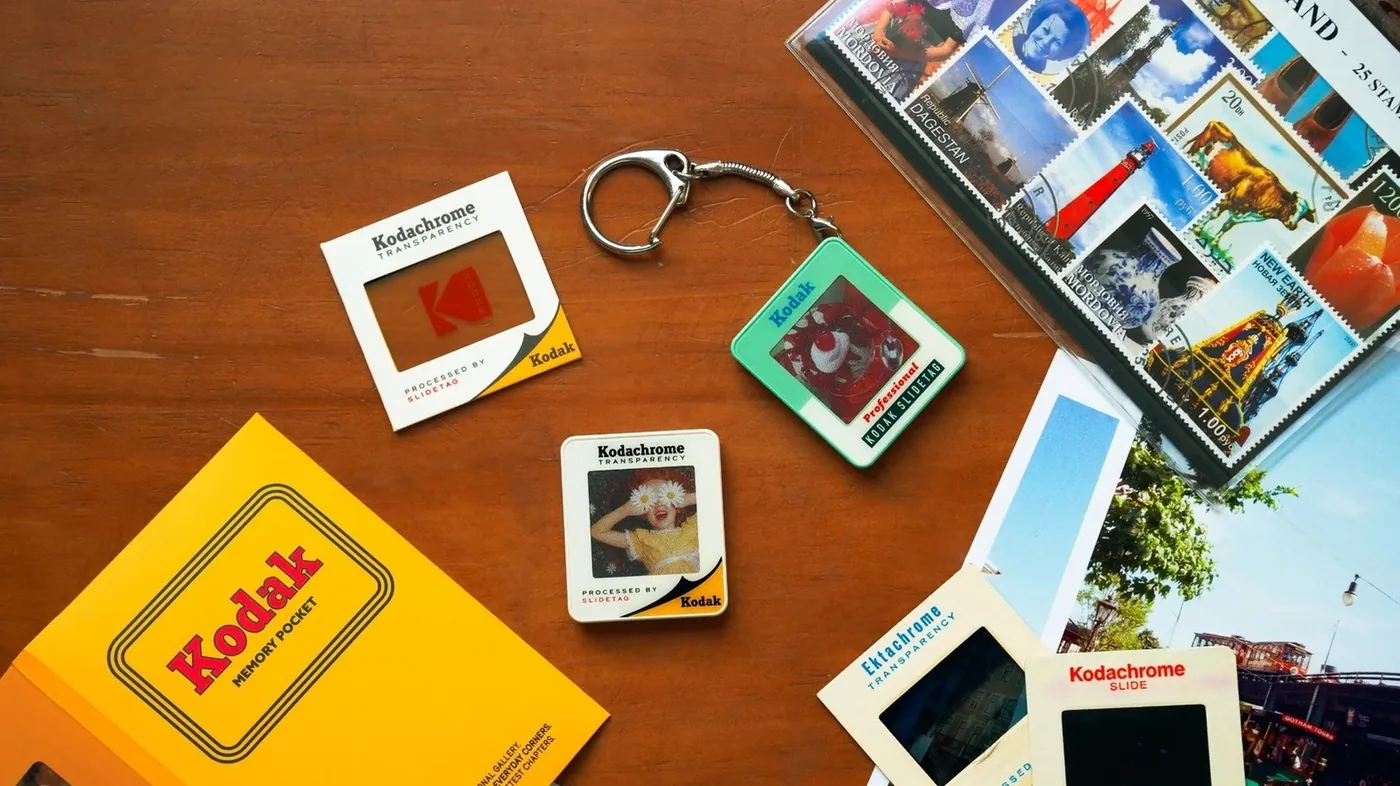
Electronic paper screens do not match the backlight brightness or pixel density of smartphone panels. Chen said the SlideTag works as a charming lo-fi alternative to high-resolution digital frames because it relies on nostalgic color tones. Sunlight does not wash out the paper surface, so pictures remain easy to see outdoors on bright afternoons. The low refresh rate suits static images best, but it keeps power consumption low enough for long weekend trips [1].


Tracking on Apple and Google Networks
Unlike most location trackers on store shelves that lock users into a single operating system, the Kodak SlideTag works across both Apple Find My and Google Find Hub networks [1, 2]. Most competing tags pick a single ecosystem, forcing buyers to choose between an iPhone accessory or an Android tool. Motorola recently prepared its Moto Tag 3 tracker for retailers, but dual-network pairing remains rare among third-party accessories [2].
Apple built its Find My network around a vast crowdsourced grid of connected phones and tablets. In early 2021, Apple estimated that its network included approximately one billion active devices worldwide that detect and relay Bluetooth beacons without revealing personal information or exposing location history to outsiders. When an item with a compatible tag goes missing in a public space, nearby phones pick up the faint radio beacon and securely send location coordinates back to the registered owner’s map. In March 2021, Macworld reported that Apple added support for tracking backpacks and luggage in system updates, introducing safety alerts for unauthorized tags in the user’s vicinity. People who find a lost tag can tap it with any phone equipped with near-field communication to read contact details on a webpage [3].
Apple AirTags use custom U1 or U2 silicon chips to offer Precision Tracking with ultra-wideband radio directions, but the SlideTag relies on standard Bluetooth 5.4 connectivity [1, 3]. It does not offer directional arrow guidance across a living room rug, but it connects reliably over typical short-range distances [1]. Bluetooth tags maintain a detection range of around 30 meters before losing touch with a phone signal. Apple caps each account at 32 tracking tags [3].
Hardware Protection with Replaceable Battery
Key accessories must withstand rain showers, spilled drinks, and dusty pockets during daily travels. The Kodak SlideTag carries an IP54 rating for protection against grit and water sprays. The IP54 build indicates that the outer shell shields inner components from dust ingress and splashing water [1]. In contrast, Apple built the original AirTag with an IP67 seal that can endure complete water submersion up to one meter for 30 minutes in laboratory tests [3]. Users must avoid submerging the SlideTag in water, but its exterior easily handles damp morning commutes and rainstorms without failing. The device balances weather resistance with an open keychain form factor [1].
Powering an electronic ink panel and constant Bluetooth beacons needs careful energy management. Reto Productions gave the SlideTag a replaceable battery so users do not discard the entire gadget once its cell runs dry [1]. Standard Apple AirTags rely on CR2032 coin cells that provide roughly one year of battery life under normal daily use [3].
Because electronic paper only draws current when refreshing pixels, the SlideTag avoids draining extra power as it shows a static picture on its screen. Bluetooth 5.4 keeps wireless check-ins energy efficient while linking with nearby phones [1]. Firmware updates on Apple devices happen automatically in the background when the tracker sits near a paired phone with enough battery charge [3]. Users can check battery levels from mobile settings before leaving on long trips [1].
Buying the Kodak SlideTag in Blind Boxes
Reto Productions launched the Kodak SlideTag at a retail price of $34.99, as reported by Android Authority [2]. Engadget listed it at $35 for individual units. Single blind boxes cost $35. Kodak adopted a blind box sales method for the gadget, packing each unit in sealed cartons with nine possible styles. Buyers receive one of eight standard retro casing designs, or they might uncover a rarer secret edition that appears at a 1 out of 64 chance to surprise dedicated collectors. This collectible packaging mirrors popular toy trends, encouraging photography fans to trade duplicate designs with friends after opening their boxes [1].
For collectors who want every single casing style right away, Kodak sells an entire set of nine blind boxes for $280 on its official website. Customer orders are capped at two individual boxes or one complete set to manage inventory and prevent bulk resellers. The purchase caps help keep the product available for individual fans [1].
At roughly $35, the unit costs more than basic plastic discs but brings screen capabilities that rivals lack. An AirTag 2 discount on Amazon dropped Apple’s tracker to $23 ahead of holidays, but the SlideTag targets shoppers who want a personal photo keepsake on their keys. The added appeal comes from having a mini picture frame dangling right beside car keys. By pairing Kodachrome slide nostalgia with Google and Apple locator networks, Reto Productions turned a routine utility tool into a charming everyday accessory [1].
- ONLINE NEWS Chen, J. (2026, November 23). Kodak’s SlideTag combines a digital photo frame and an AirTag. Engadget. [Article Link]
- ONLINE NEWS Android Authority. (2026). Kodak’s SlideTag is a Find Hub tracker that doubles as a tiny E-Ink photo frame. [Article Link]
- WEBSITE Wikipedia. (2026). AirTag. [Article Link]


