






Hardware manufacturers are preparing to release the first retail systems powered by AMD’s Ryzen AI Max 400 series processors, but early testers discovered that mainline operating systems could not detect the built-in neural accelerator. Upstream tracking from Phoronix reveals that maintainers have finally queued an enablement patch scheduled for the Linux 7.4 kernel cycle [3]. This change introduces official Linux NPU support for the new hardware, allowing upcoming Gorgon Halo platforms to initialize artificial intelligence silicon under standard distribution kernels rather than proprietary vendor stacks [1].
Mainline Linux Kernel NPU Support Appears in Version 7.4
The timing of the upstream patch arrives right as hardware partners prepare initial commercial shipments of AMD’s flagship mobile and desktop platforms. While AMD regularly delivers its vendor-side software stacks ahead of retail hardware launches, mainline kernel integration often lags behind official product announcements by several months across multiple processor generations. In this case, systems based on the Gorgon Halo architecture approached retail distribution while the default kernel lacked native Linux NPU support. Upstream maintainers characterized the initial omission as an oversight rather than an intentional platform delay [1]. The processor hits 5.2GHz boost clocks.
Technical analysis published by Linux.org.hk emphasizes that the newly submitted driver patch is remarkably compact. Rather than introducing a rewritten abstraction layer or redesigning kernel subsystems, the code registers new hardware identifiers and binds the silicon directly into the existing AMD XDNA driver framework. The compact patch structure provides a critical insight into AMD’s silicon design strategy. It demonstrates that the Gorgon Halo accelerator is an architectural descendant of earlier XDNA parts rather than a radical departure requiring bespoke driver architecture or redesigned abstraction layers [1].
Upstream maintainers have queued the enablement work specifically for the upcoming Linux 7.4 kernel cycle. However, tracking analysts note that the target release window could still shift as upstream testing progresses through different release candidates. If the patch misses the primary merge window, stable tree backports may determine when general distributions receive out-of-the-box recognition [1].
Upstream Drivers Bridge AMD Linux NPU Support
The relationship between vendor repositories and upstream Linux has historically followed a staggered timeline across multiple hardware generations. AMD routinely distributes its ROCm compute platform and XDNA userspace utilities independently, allowing internal engineering teams to iterate on cutting-edge software without waiting for mainline kernel release schedules. This separation often forces enterprise operators to maintain customized distribution images. Establishing native Linux NPU support within AMD’s upstream driver tree eliminates the requirement for proprietary out-of-tree kernel patches during initial hardware evaluation [1].
Direct driver integration is particularly significant because enterprise server administrators avoid unverified external code when configuring critical on-premises infrastructure. As Linux.org.hk noted, upstream enablement reads “less like a planned platform introduction and more like an oversight that upstream maintainers are now correcting”. Mainline inclusion ensures that bug fixes and security hardening flow through regular kernel distribution channels rather than isolated vendor repositories [1]. Other Gorgon Halo systems exceed $7,000.
Enterprise system evaluators track three specific milestones across the Linux 7.4 merge cycle. First, engineers must confirm which specific PCI device IDs the submitted patch incorporates. Second, testing teams need to observe whether the code integrates early enough to qualify for backporting into established long-term support kernels. Finally, enterprise administrators must verify that AMD’s official ROCm userspace software toolchain binds cleanly against the mainline driver rather than requiring isolated staging modules [1].

GMKtec Deploys Staggered Pricing for Gorgon Halo Desktops
While kernel maintainers finalize driver patches, hardware manufacturers are launching the first commercial systems built around Gorgon Halo silicon. Chinese hardware vendor GMKtec announced the EVO-X5 Pro mini PC, pricing the early configuration at $6,399. Although that figure represents a substantial investment for a compact desktop, hardware reporter Efosa Udinmwen noted in TechRadar that competing Gorgon Halo platforms frequently exceed $7,000. Pricing starts at $6,399 for the initial 30 units equipped with 192GB of RAM and 2TB of solid-state storage, rising to $6,599 for subsequent early buyers and settling at a regular retail cost of $6,799. A secondary configuration pairing 192GB of memory with 4TB of storage carries a Super Early Bird tag of $6,699, an Early Bird rate of $6,899, and a standard price of $7,099 [2].
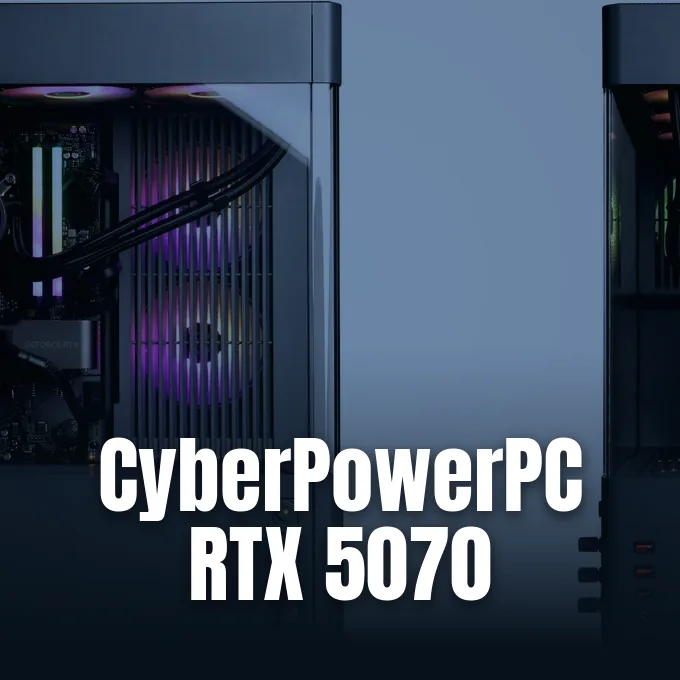
This aggressive price point highlights an expanding divide across modern desktop computing tiers. Consumers prioritizing affordability frequently monitor deals like the CyberPowerPC RTX 5070 gaming desktop discount at Walmart or the broader budget ecosystem supported by the AMD Ryzen AM4 processor expansion. In contrast, GMKtec specifically targets specialized artificial intelligence workloads that demand extreme local throughput [2].

Internal storage expands to 24TB. High-speed physical connectivity incorporates dual 80Gbps USB4 V2 ports and two 10GbE network jacks [2].
Why Upstream Enablement Matters for Enterprise Hardware
The internal architecture of the GMKtec EVO-X5 Pro illustrates why production operating systems require verified hardware drivers. At the heart of the chassis sits AMD’s Ryzen AI Max+ PRO 495 processor, packing 16 Zen 5 CPU cores, 32 threads, and a maximum boost clock of 5.2GHz. Graphics duties are handled by a Radeon 8065S unit featuring 40 compute units built upon RDNA 3.5 architecture. Complementing the graphics and compute blocks is an XDNA 2 neural processing unit rated for 55 TOPS of INT8 performance [2]. Three fans cool the vapor chamber.
Memory throughput serves as the primary gateway for large local models. The EVO-X5 Pro pairs its processor with 192GB unified memory (operating at LPDDR5X-8533 speeds), providing peak memory bandwidth of 273GB/s. Furthermore, the system firmware can dynamically allocate up to 160GB of that shared capacity directly to graphics buffers. GMKtec claims this hardware configuration enables the machine to execute language models spanning up to 320 billion parameters completely offline under suitable software and quantization conditions. The manufacturer originally tuned the system for 300 billion parameters before validation testing expanded that stated capability. Displays support up to 8K resolution [2].
For institutional buyers, these memory specifications are tightly tied to infrastructure security. Enterprise deployments incorporate AMD DASH (an out-of-band management framework), a dedicated dTPM 2.0 security microprocessor, and support for multi-system compute clustering [2]. For enterprise IT departments evaluating on-premises artificial intelligence hardware, upstream Linux NPU support functions as a threshold condition rather than a cosmetic luxury. Running standard distribution kernels avoids the recurring maintenance burden of vendor-patched forks while protecting critical internal data sovereignty [1].
Does Linux Support NPU Acceleration for Production Deployments?
While initial kernel recognition represents a significant development milestone, early hardware adopters must separate baseline hardware detection from fully accelerated execution. Does mainline driver detection automatically translate into seamless software execution for complex enterprise frameworks? Historical experience with earlier AMD XDNA silicon demonstrates that initial upstream merges often arrive with rough edges, including manual firmware loading steps and partial subsystem controls. As analysts at Linux.org.hk warned, “Being able to see the NPU in lspci is not the same as having a production-ready inference stack” [1].
Software compatibility remains equally variable across real-world enterprise deployments. GMKtec explicitly cautions prospective buyers that offline execution speed depends directly upon “the selected model, software, quantization method, workload, and complete system configuration”. The hardware chassis has undergone validation for 24/7 continuous operation, but continuous runtime certification does not guarantee maximum performance across every localized neural network architecture. External graphics support expands total compute when internal components encounter heavy execution bottlenecks [2].
As the Linux 7.4 release cycle progresses, developers will observe how cleanly user-facing frameworks interact with AMD’s upstream driver branch. Organizations in Hong Kong and other technology hubs evaluating private AI infrastructure must verify whether vendor toolchains bind reliably to standard distribution kernels when processing confidential datasets. Until upstream Linux NPU support matures through rigorous community testing, the Gorgon Halo architecture stands as an ambitious computing platform navigating its critical transition toward reliable open-source enablement [1].
- ONLINE NEWS Linux.org.hk. (2026, September 30). AMD’s Gorgon Halo NPU is missing from mainline Linux — and the fix looks deceptively small. Linux.org.hk. [Article Link]
- ONLINE NEWS Udinmwen, E. (2026, September 30). Somehow, this $6,399 mini PC is the bargain pick, but why? TechRadar. [Article Link]
- ONLINE NEWS Phoronix. (2026). Linux 7.4 to support the NPU on AMD Ryzen AI Max 400 series “Gorgon Halo”. Phoronix. [Article Link]


