






Computer systems rely on basic tools to run hardware, map memory, and schedule application threads. The ongoing architectural debate between a microkernel vs monolithic kernel design centers on where an operating system draws the boundary of supervisor privilege. While traditional monolithic kernels like Linux and BSD bundle file systems, device drivers, and network protocol stacks directly into supervisor space to maximize raw throughput, alternative microkernel designs relocate non-essential services into isolated user-space processes so isolated peripheral bugs cannot bring down the entire host [7]. How should an operating system balance hardware safety against raw communication speed? The answer shapes how modern computing platforms build secure, crash-proof foundations.
- Core Principles of Microkernel Architecture
- How Monolithic Kernels Organize Core Services
- Microkernel vs Monolithic Kernel Fault Isolation
- Why IPC Bottlenecks Slowed Early Microkernels
- L4 Performance Innovations by Jochen Liedtke
- The Tanenbaum-Torvalds Debate on Reliability
- Evaluating Microkernel vs Monolithic Kernel Trade-Offs
- Formal Verification and Component Security
Core Principles of Microkernel Architecture
Danish computer pioneer Per Brinch Hansen laid the basis of minimal kernels in 1967 while directing software work at Regnecentralen [7]. His team was installing an RC 4000 prototype computer at the Zakłady Azotowe Puławy fertilizer plant in Poland, where plant operations needed real-time chemical control software. Concerned that custom software lacked generality and would force staff to rewrite the OS for each customer site, Brinch Hansen designed a shared core. In 1969, Regnecentralen completed the RC 4000 Multiprogramming System to show that a lean nucleus could decouple hardware control from user policies. Plant engineers could then build custom software tools upon this shared base without rewriting hardware code.
The nucleus of the RC 4000 provided message-passing communication for up to 23 unprivileged processes, with eight protected concurrently [7]. It handled CPU time slicing and peripheral data transfers without fixing scheduling policies or memory limits. Parent processes acted as operating systems for child tasks. By 1981, computer researchers adopted the word microkernel for this modular design. In 1986, the AmigaOS Exec kernel applied these minimal concepts to home computing, achieving fast message passing without memory protection.
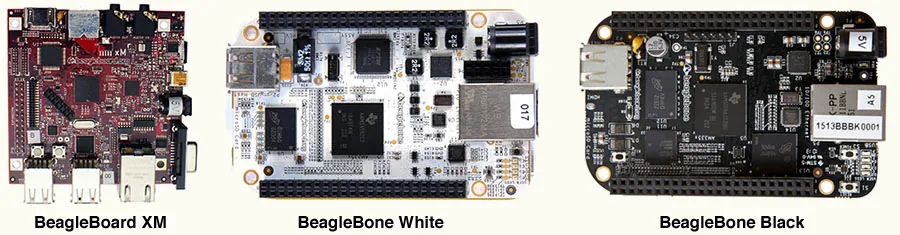
A modern microkernel keeps only low-level address space control, thread handling, and inter-process communication (IPC) in supervisor mode. Device drivers, network protocols, and file systems run as user servers protected by the memory management unit (MMU). While monolithic platforms hold millions of lines of C code in kernel mode, Andrew S. Tanenbaum built the MINIX 3 microkernel using only about 12,000 lines of code [1]. Developers run MINIX 3 on ARM boards like the BeagleBoard XM, BeagleBone White, and the $55 BeagleBone Black with an ARM Cortex A8 chip. Small codebases make inspection simple.
How Monolithic Kernels Organize Core Services
A monolithic kernel executes all fundamental operating system services inside a single privileged address space [7]. Memory management, virtual file systems, network protocol stacks, process schedulers, and peripheral device drivers share identical privilege rings in supervisor mode. When a user program initiates an I/O request, execution enters kernel space through a system call, accessing drivers directly through internal function pointers without context switching. Shared data structures keep overhead low.
During the formative years of Unix development, operating system kernels stayed compact because physical machine memories were limited to 16-bit addressing ranges [7]. When computer hardware shifted to 32-bit architectures, address constraints vanished and software expanded rapidly. The Berkeley Software Distribution (BSD) release of Unix marked a major turning point by integrating full TCP/IP networking, virtual network devices, and complex file systems into supervisor space. Over decades of hardware evolution, popular monolithic kernels like Linux and FreeBSD expanded to accommodate thousands of third-party peripheral drivers, resulting in monolithic codebases spanning tens of millions of lines of source text. Programmers must manage these sprawling drivers with steady care because hardware device drivers account for the vast majority of all reported operating system bugs.
Direct procedure calls inside monolithic kernels yield exceptional throughput because data buffers pass across routines without message marshaling or hardware context switches. File caches, network cards, and user applications interact with minimal latency. But placing every driver inside kernel space creates severe operational stability risks [3]. A single unhandled page fault in a graphic card driver or a corrupted pointer in a storage stack crashes the entire host, forcing a hard system reboot. Nothing survives an unhandled kernel panic.
Microkernel vs Monolithic Kernel Fault Isolation
In a direct microkernel vs monolithic kernel comparison, driver isolation marks the primary dividing line between system resilience and raw execution speed. Monolithic systems place device drivers in privileged memory, even though third-party hardware vendors write most driver code with varying levels of quality control [1]. Because drivers operate with unchecked hardware authority in the same address space as scheduler threads, an ordinary memory leak or array overrun can overwrite page tables and bring down all user workloads. Fault boundaries do not exist in ring zero.
Microkernel operating systems eliminate this shared vulnerability by moving device drivers, protocol stacks, and file systems into distinct user-space server processes. In MINIX 3, the virtual file system, process manager, and memory manager execute as separate tasks guarded by the processor’s hardware memory management unit (MMU) [1]. While maintaining software compatibility with NetBSD userland utilities, MINIX 3 isolates peripheral drivers behind explicit inter-process communication protocols. If an audio card driver crashes or suffers a buffer overflow exploit, it can emit distorted noise, but it cannot alter kernel structures or compromise neighboring user applications. The hardware MMU keeps flawed code trapped within its assigned address space.
Hardware isolation also enables automated recovery through self-healing software structures. MINIX 3 features a dedicated user-mode component named the reincarnation server to supervise system health [1]. When an active driver crashes or hangs unexpectedly, the reincarnation server detects the termination, frees abandoned resources, and spawns a fresh copy transparently so user applications pause briefly rather than failing. The operating system repairs itself without human help.
Why IPC Bottlenecks Slowed Early Microkernels
First-generation microkernels were slow because inter-process communication added heavy latency to routine input and output tasks. In a microkernel vs monolithic kernel setup, completing a simple disk read forces the operating system to cross user and kernel protection boundaries repeatedly [7]. The CPU must marshal message arguments, switch address contexts, and copy payload buffers between independent servers, consuming processor cycles that monolithic systems save through direct memory calls. Context switches carried a heavy toll.
The Mach microkernel, developed at Carnegie Mellon University by Richard Rashid in the mid-1980s, exemplified these first-generation performance struggles. Mach relied on asynchronous message passing, which forced the supervisor to allocate in-kernel message queues and copy payload data twice: once from the sending process into the kernel, and again from the kernel to the receiving process. Frequent translation lookaside buffer (TLB) flushes during context switches evicted cache lines, slowing down routine file system operations. In an influential comparative study, researchers Chen and Bershad measured memory cycles per instruction (MCPI) comparing monolithic Ultrix against Mach running a 4.3BSD Unix server [7]. Their benchmark data revealed that Mach’s penalty came not from IPC execution alone, but from capacity cache misses caused by Mach’s large memory working set.
These cache bottlenecks caused many Mach research efforts to wind down by 2000 [7]. Apple adapted the design in 2001 by introducing macOS on a hybrid kernel named XNU, which merged an OSF MK 7.3 Mach core with BSD Unix subsystems inside supervisor space, a design also powering iOS, tvOS, and watchOS. Microsoft adopted a comparable hybrid model for Windows NT and Windows 11. By retaining device drivers in kernel mode, commercial systems chose monolithic execution speed over isolation.


L4 Performance Innovations by Jochen Liedtke
German computer scientist Jochen Liedtke rejected the common assumption that microkernels were inherently sluggish [8]. He argued that Mach’s disappointing throughput stemmed from flawed implementation choices rather than conceptual limits. In 1988, Liedtke built the L3 microkernel to prove that lean message passing could achieve fast, reliable operation. German technical inspection organization Technischer Überwachungsverein deployed L3 for years to protect industrial equipment.
In 1993, Liedtke introduced the original L4 microkernel, hand-coded in Intel i386 assembly language to extract the maximum possible execution speed from CPU registers [8]. L4 delivered synchronous inter-process communication that was 20 times faster than Mach, stunning the operating systems research world and winning the 2015 ACM SIGOPS Hall of Fame Award. Liedtke replaced asynchronous buffering with synchronous rendezvous calls that passed message payloads directly inside processor registers without memory copying. Furthermore, he invented direct process switching, allowing a sending thread to yield the CPU directly to the receiving thread without invoking scheduler queue overhead. Another optimization called lazy scheduling left blocked threads in ready queues until the scheduler ran, avoiding queue traversal during message exchanges. These innovations eliminated Mach’s cache bottlenecks.
Liedtke formulated an influential minimality rule: the kernel keeps a mechanism only when moving that feature into user space would stop the system from providing core functionality [8]. Under this guideline, L4 handled only memory address spaces, thread scheduling, and IPC. Later research teams proved that high performance did not depend on assembly code. In 1998, the Operating Systems Group TUD:OS at TU Dresden developed L4/Fiasco in C++, while Liedtke’s team at Karlsruhe Institute of Technology created L4Ka::Hazelnut in 1999 for ARM and IA-32 processors. Research continued at IBM Thomas J. Watson Research Center on the Sawmill OS.
The Tanenbaum-Torvalds Debate on Reliability
The structural debate gained public attention when Andrew S. Tanenbaum and Linus Torvalds argued operating system design on Usenet [3]. Tanenbaum, author of Operating Systems: Design and Implementation with Albert S. Woodhull, argued that microkernel vs monolithic kernel design would decide the future of computing. Torvalds defended his monolithic Linux kernel, arguing that monolithic operating systems were simpler to code, easier to coordinate, and delivered better execution speed on personal computers. When author Ken Brown later accused Torvalds of copying MINIX code, Tanenbaum strongly refuted the charge to protect Torvalds’s good name [1].
The dispute flared up again in May 2006 when Tanenbaum, his doctoral student Jorrit Herder, and Herbert Bos published Can We Make Operating Systems Reliable and Secure? in IEEE Computer [3]. The authors argued that for most users, operating system reliability and security mattered far more than raw benchmark numbers. Torvalds responded that microkernels depend on difficult distributed algorithms and that shared kernel data structures remain easier to manage. Tanenbaum answered that distributed algorithms struggle because networked computers lack shared clocks and lose packets over links. In contrast, microkernel servers running on a single PC share hardware timers and never drop local IPC messages, avoiding network complexity. Tanenbaum had already built distributed systems named Amoeba and Globe, giving him direct practical experience with both paradigms.
Tanenbaum supported software pioneer Dave Parnas’s principle of information hiding, arguing that modules should hide private structures behind clean interfaces enforced by the memory management unit [3]. To show practical reliability, Tanenbaum’s team at Vrije Universiteit developed MINIX 3 as a functional, multiserver POSIX system. Compiling the complete MINIX 3 system in 125 compilations takes only five to ten seconds while offering compatibility with NetBSD binary packages and over 400 userland programs.
Evaluating Microkernel vs Monolithic Kernel Trade-Offs
Evaluating microkernel vs monolithic kernel trade-offs reveals that production operating systems select designs based on practical engineering demands rather than theoretical dogma. Monolithic architectures dominate consumer personal computers, cloud hypervisors, and supercomputing clusters because direct pointer calls deliver maximum I/O performance for compute-intensive workloads. But where unexpected crashes threaten human life or critical infrastructure, microkernels provide proven safety guarantees [3]. General-purpose workstations prioritize raw I/O throughput, whereas aerospace flight controllers require guaranteed fault isolation.
Industrial deployments prove that microkernels thrive in mission-critical embedded computing environments. The QNX microkernel powers carrier-grade Internet routers manufactured by Cisco Systems, where uninterrupted routing uptime and high-speed packet forwarding remain essential [3]. In the aerospace and defense sectors, Green Hills Software’s Integrity microkernel and SYSGO’s PikeOS control flight management systems and avionics computers that must pass mandatory safety certifications like DO-178B. OKL4 from Open Kernel Labs has shipped on billions of cellular baseband chips worldwide, securing radio communication channels away from mobile application processors. Symbian used a hybrid microkernel in early smartphones to guard telephony stacks from application crashes. When system failure carries dangerous physical or economic costs, engineers consistently pick microkernels.
Recent open-source projects continue to advance microkernel technology across modern hardware. Redox OS 0.9.0 provides a Unix-like operating system written in Rust, running all drivers in user space with POSIX compatibility via uutils and desktop rendering through COSMIC [2]. A minimal Redox installation image requires less than 50 MB of storage and runs in under 512 MB of RAM. In high-performance distributed research, StarfishOS by F. Wu, J. Yan, M. Dong, and W. Cai uses a state-partitioned microkernel on Compute Express Link (CXL) shared memory to build Single System Image (SSI) clusters [4].
Formal Verification and Component Security
Because a microkernel keeps its privileged codebase very small, it provides a practical base for complete machine-checked formal verification. Monolithic kernels containing millions of lines of C code cannot be mathematically verified using existing proof systems [5]. In contrast, a microkernel vs monolithic kernel comparison reveals that minimal kernels can be mathematically proven to enforce access control rules, eliminate buffer overflows, and prevent unauthorized data leaks. Clean isolation boundaries turn kernel correctness into mathematical certainty.
The seL4 microkernel, developed by researchers G. Klein, G. Heiser, and colleagues at NICTA and the University of New South Wales (UNSW), achieved the first full machine-checked formal verification of an operating system kernel [5]. As documented in ACM Transactions on Computer Systems, the team proved that seL4’s executable C code matched its abstract specification. The proofs verified access control enforcement, proved information-flow noninterference, and gave worst-case execution time bounds for the compiled binary. Defense organizations and autonomous vehicle makers deploy seL4 because its proofs guarantee that software isolation boundaries cannot be broken by memory safety bugs.
Computer scientist Jonathan S. Shapiro applied capability-based security to operating system design by creating the Extremely Reliable Operating System (EROS) in 1991 at the University of Pennsylvania, building on concepts from KeyKOS, GNOSIS from Tymshare, and the Plessey System 250 [9]. In EROS, components run as isolated event loops communicating through capability-protected IPC, and neither EROS nor KeyKOS was ever penetrated by an attacker. Microkernel designs also support research facilities; in Physics of Particles and Nuclei Letters, A. Kozlovsky and colleagues at JINR described using a microkernel structure for Maestro slow control software synchronizing the Booster injector and Nuclotron-collider beam transport channel [6]. The design lowered maintenance barriers for students from Dubna State University while maintaining quality attributes identified by Neal Ford.
- WEBSITE Tanenbaum, A. S. (2004). MINIX 3 Documentation. MINIX 3 Wiki. [Article Link]
- WEBSITE Redox OS Developers. (2026). Redox OS: A Unix-Like Microkernel Operating System Written in Rust. [Article Link]
- WEBSITE Tanenbaum, A. S. (2006). Tanenbaum-Torvalds Debate Part II. Department of Computer Science, Vrije Universiteit. [Article Link]
- CONFERENCE PAPER Wu, F., Yan, J., Dong, M., Cai, W., Xu, J., Xin, T., & Chen, H. (2026). StarfishOS: Revisiting Single System Image on CXL with State-Partitioned Microkernel. Proceedings of the ACM SIGOPS 32nd Symposium on Operating Systems Principles, 247-268. [Article Link]
- ACADEMIC JOURNAL Klein, G., Andronick, J., Elphinstone, K. J., Murray, T., Sewell, T. A. L., Kolanski, R., & Heiser, G. (2014). Comprehensive formal verification of an OS microkernel. ACM Transactions on Computer Systems, 32(1), 1-70. [Article Link]
- ACADEMIC JOURNAL Kozlovsky, A., Bukharin, A., Ivliev, D., Melnikova, O., Noskov, A., Smirnova, Y., Shirikov, I., & Zhabin, I. (2026). Benefits of a Microkernel Architecture for Slow Control Systems Software in Research Activities: Case Studies from LHEP, JINR. Physics of Particles and Nuclei Letters, 23(5), 686-689. [Article Link]
- WEBSITE Wikipedia contributors. (2026). Microkernel. Wikipedia, The Free Encyclopedia. [Article Link]
- WEBSITE Wikipedia contributors. (2026). L4 microkernel family. Wikipedia, The Free Encyclopedia. [Article Link]
- WEBSITE Wikipedia contributors. (2026). EROS (microkernel). Wikipedia, The Free Encyclopedia. [Article Link]
Cover image: Faisal Akeel / Wikimedia Commons, CC BY-SA 3.0


