




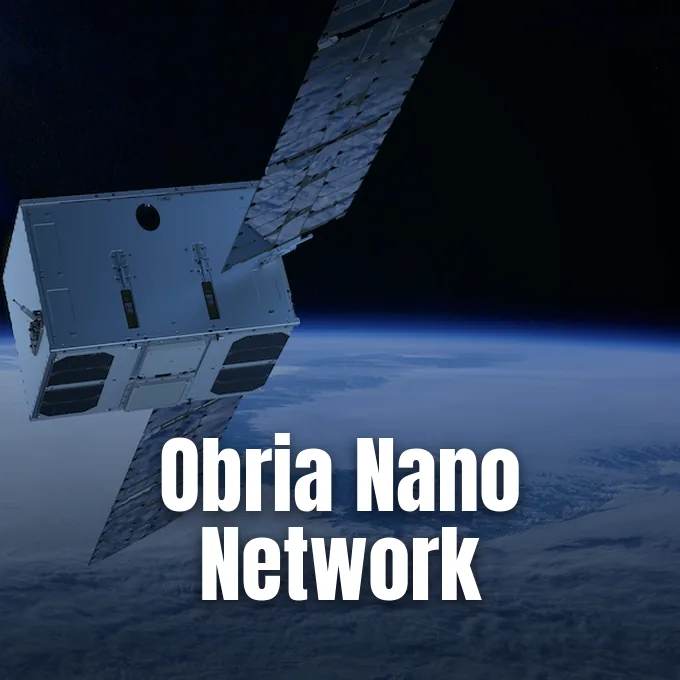
Ukrainian defense startup Himera and Danish satellite builder GomSpace have begun orbital testing with the Obria Nano communications satellite following its launch earlier this month. The test spacecraft serves as the first flight unit for a planned Ukrainian satellite network designed to provide secure battlefield links and reduce reliance on private foreign suppliers [1].
Orbital Deployment on Transporter-18
The test craft reached low Earth orbit on October 1, 2026, traveling aboard the SpaceX Transporter-18 rideshare mission from an American launch site to test radio relay systems for Ukraine. Ground controllers established two-way telemetry soon after the upper stage separated, and diagnostic checks confirmed that the bus systems and solar panels responded to commands throughout its first four weeks in space [1].
Sandra Erwin reported in SpaceNews that neither Himera nor GomSpace shared the craft’s weight, radio frequencies, data bandwidth, or budget during the briefing. The test gathers flight data for a future Ukrainian network [2]. In-orbit trials help Danish and Ukrainian technicians fix bus flaws before factory lines start. Himera was founded in 2022.
Misha Rudominski, co-founder and chief executive of Himera in Kyiv, described the flight as an important step toward long-term national space capabilities rather than a simple demonstration launch. “For us, this project is about more than launching a satellite. It is an opportunity to lay the foundation for an independent communications network for Ukraine,” Rudominski said. Himera plans to use data from this craft to build a resilient satellite network that serves Ukrainian defense forces stationed in contested border regions, maintaining reliable command links during ground combat. Ukrainian engineers at the ground control center track every pass to ensure the experimental payload meets all mission criteria [4].

Technical Goals for Obria Nano
The main goal of Obria Nano is testing space links that can survive wartime radio jamming. Frontline soldiers in Ukraine gain an alternative radio route when Himera places secure tactical payloads into low Earth orbit to bypass Russian jamming systems [5]. Russian electronic warfare units often jam ground towers near the front.
Long-term plans for the Obria network call for small satellites that provide dependable radio coverage across Ukraine while working with European space systems. Rudominski said that early orbital tests must prove that low-cost nanosatellites can deliver steady data links to small hand-held terminals carried by Ukrainian soldiers. “We are starting by testing technologies in orbit, while our long-term goal is to develop capabilities that will strengthen the country’s strategic security and reduce dependence on external communications providers,” Rudominski said. Sovereign communications protect Ukrainian command lines during prolonged combat [1].
Mission control will stay inside Ukraine under the project agreement. Jesper Stahl Hein representing GomSpace and Misha Rudominski of Himera agreed that a Ukrainian operator will run daily satellite tasks. Local crews fly the craft from Ukrainian ground stations, so commanders can set transmission priorities without requesting clearance from foreign private vendors during emergencies [3].
Vulnerabilities of Commercial Satellite Dependence
Ukraine has relied on private satellite networks since Russian armed forces launched their full-scale invasion in 2022, creating acute vulnerabilities whenever private service terms shift without notice. SpaceX deployed thousands of Starlink terminals that quickly became the primary communications link for artillery units, medical evacuation teams, and drone operators in towns where Russian shelling destroyed cellular networks. Ukrainian forces relied on these fast satellite dishes to share real-time reconnaissance video feeds and coordinate frontline defense operations across shattered regions. Artillery crews, reconnaissance squads, and forward command posts relied on terminals to maintain encrypted digital connectivity during mobile maneuvers [1].
Oleksii Tucha reported in Defender Media that bandwidth limits in mid-October 2026 disrupted Ukrainian reconnaissance flights, reinforcing the urgent case for Obria Nano. The connectivity drop made it harder for air defense crews to intercept Russian attack drones. News reports analyzed Starlink connectivity restrictions across Ukrainian operational zones as military leaders searched for stable orbital alternatives.

Disputes over the mid-October service limits sparked public friction between SpaceX chief executive Elon Musk and United States defense officials regarding who authorized the caps, but Ukrainian officials announced on October 24 that throughput for both Starlink and Starshield had recovered to standard rates in all combat sectors. Ukrainian armed forces still need dependable satellite links while coordinating deep reconnaissance flights and Ukrainian drone strikes targeting infrastructure far behind Russian frontline fortifications [1].


What Does GomSpace Provide?
Founded in 2007, GomSpace manufactures nanosatellites and small space subsystems for institutional and commercial clients in more than 60 countries worldwide, maintaining engineering headquarters in Aalborg, Denmark, through its wholly owned subsidiary GomSpace A/S. The parent enterprise is GomSpace Group AB. The company trades publicly on the Nasdaq First North in Stockholm under the ticker GOMX, with FNCA Sweden AB acting as its certified adviser [2].
GomSpace operates additional technical centers in Luxembourg, France, and the United States to deliver integrated satellite systems for academic research groups, businesses, and foreign government defense ministries. By supplying flight-proven satellite buses, power boards, and software-defined radio units, GomSpace allowed Ukrainian engineers to bypass years of basic structural work and focus on orbital radio experiments [2].

“We are excited to work with HIMERA and accelerate this important initiative. Our shared ambition is to strengthen Ukraine’s independent communications capabilities and support the country’s long-term security and economic development,” GomSpace chief executive Carsten Drachmann said. Militarnyi reported that GomSpace nanosatellite architectures provide a reliable starting point for broader constellation testing [3].
European Cooperation and Domestic Manufacturing
The Obria Nano partnership is one of two European-backed space projects aimed at giving Ukraine greater control over its orbital communications setup. Five days before the GomSpace news, Ukraine’s Defense Ministry signed a letter of intent with Finnish satellite maker ICEYE and telecommunications company Nokia. That separate plan explores building an independent broadband satellite network under Ukrainian government control. Ukrainian defense forces already use ICEYE radar satellites to track Russian troop movements in near real time through day and night [1].
Neither European satellite project is designed to replace the Starlink network, whose massive orbital constellation of thousands of spacecraft delivers high data volume to users around the globe. Instead, smaller national satellite constellations provide protected channels for priority military units, functioning as a sovereign safeguard that supplements private communications during war [1].

A major long-term goal for the Obria project is moving satellite and ground terminal manufacturing to Ukrainian facilities. Ukrainian company Stetman previously signed an agreement with GomSpace to set up a joint venture that will make satellites locally, though the current stage of that project remains unannounced. Domestic assembly will build Ukrainian aerospace expertise and expand factory lines, allowing rapid design adjustments based on direct combat feedback from frontline troops [6].
Constellation Plans for Obria Nano
Test results from Obria Nano will guide the design of Ukraine’s future satellite network. LB.ua reported that Ukrainian engineers are tracking link performance, power levels, and payload reliability during regular ground station passes. These practical flight tests provide developers with the real data needed to build an effective national communications setup [7].
Anna Yudina at Himera in Kyiv confirmed ongoing tactical hardware development. Ukrainian defense forces facing Russian electronic jamming currently use Himera radio equipment in frontline combat where enemy warfare units attempt to jam radio traffic every day, and linking those field radios to low Earth orbit satellites allows signals to reach troops over hills, forests, and damaged towns where line-of-sight transmission cannot travel [2]. Field trials in eastern Ukraine proved that frequency-hopping algorithms maintain voice and data links under active Russian jamming barrages, while compact portable terminals will soon connect field units with orbiting spacecraft to give commanders uninterrupted tactical situational awareness during fast-moving defensive maneuvers.
A complete satellite constellation needs steady funding, international cooperation, and multiple rocket launches. SpaceX launched Transporter-18 on October 1. Operating a test craft in orbit marks practical progress for Ukrainian technical independence, as combat-tested tactical software joined with Danish nanosatellite engineering gives Ukraine a firmer base for security in space [1].
- ONLINE NEWS Erwin, S. (2026, October 27). Ukrainian startup, GomSpace test satellite for future communications network. SpaceNews. [Article Link]
- PRESS RELEASE GomSpace. (2026, October 27). Ukraine’s sovereign satellite now operating in orbit. GomSpace. [Article Link]
- ONLINE NEWS Militarnyi. (2026, October 27). Ukrainian OBRIA NANO communications satellite now operating in orbit. Militarnyi. [Article Link]
- ONLINE NEWS Ukrinform. (2026, October 27). First satellite of Ukraine’s OBRIA communications network becomes operational in orbit. Ukrinform. [Article Link]
- ONLINE NEWS UA.NEWS. (2026, October 27). Ukraine’s Himera and Denmark’s GomSpace have launched a test communications. UA.NEWS. [Article Link]
- ONLINE NEWS Tucha, O. (2026, October 27). A test satellite for the future Ukrainian communications network has appeared in orbit. Defender Media. [Article Link]
- ONLINE NEWS LB.ua. (2026, October 27). Ukraines sovereign satellite launched into orbit. LB.ua. [Article Link]
APA 7: PerEXP Teamworks. (2026, October 28). Himera and GomSpace Begin Orbit Tests for Obria Nano. PerEXP Teamworks. https://perexpteamworks.com/en/obria-nano-test-satellite-orbit/


