





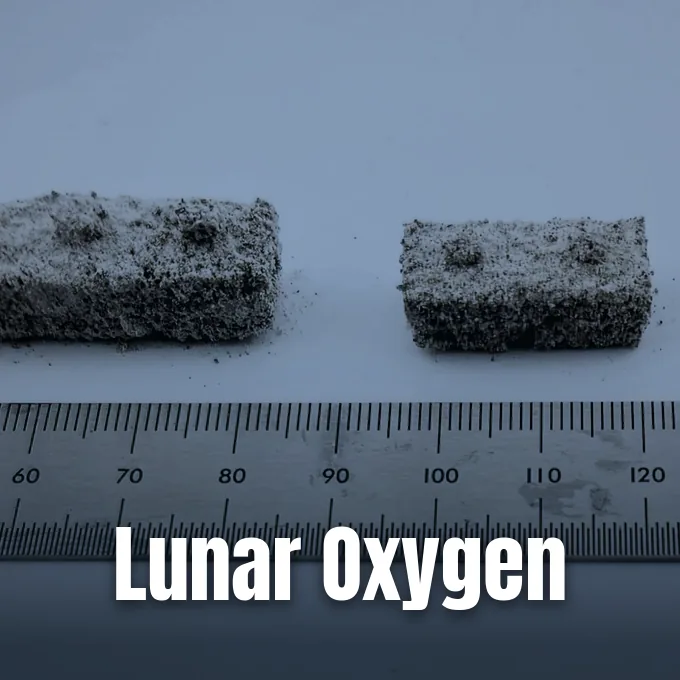
Permanent human outposts on the Moon depend on obtaining industrial supplies directly from local lunar ground rather than hauling every kilogram of consumables across deep space from terrestrial launch pads on Earth [2]. Lunar soil holds abundant oxygen locked tightly within dense crystalline silicate minerals. Recent laboratory investigations show that adapting semiconductor plasma processing offers an efficient chemical pathway to release bound oxygen from mineral grains at much lower temperatures than conventional high-temperature smelting methods [1]. This method for lunar oxygen extraction could supply breathable air for crews and oxidizer for spacecraft launching from the surface [2].
The Chemistry of Regolith Simulants
Unlike terrestrial soil shaped by organic matter, lunar regolith consists of sharp impact fragments. NASA researchers rarely test original samples returned by Apollo missions because pristine lunar material remains scarce in university laboratories [4]. To evaluate extraction chemistry, experimental teams rely on standardized materials like lunar mare simulant, known as LMS, to replicate the dark basaltic plains explored during earlier surface expeditions on the Moon [1].
Surface reservoirs could face rapid depletion under intensive use, showing why projected water limits on the moon make local gas recovery essential for sustaining long-term crews at polar encampments. Oxygen makes up a large share of lunar soil by weight inside minerals like anorthosite [2]. Breaking these mineral bonds with traditional thermal reduction needs heating powder above 1,000 degrees Celsius, consuming massive electrical power that early lunar habitats can’t spare easily [5].
Basaltic plains examined during Apollo flights contain high concentrations of iron, titanium, and silicon oxides. Extracting useful volatiles requires separating these elements without bulk melting [1]. Lower reaction temperatures protect processing hardware from thermal fatigue while reducing the shielding mass required on cargo landers [5].

Lunar Oxygen Extraction Using Semiconductor Plasma
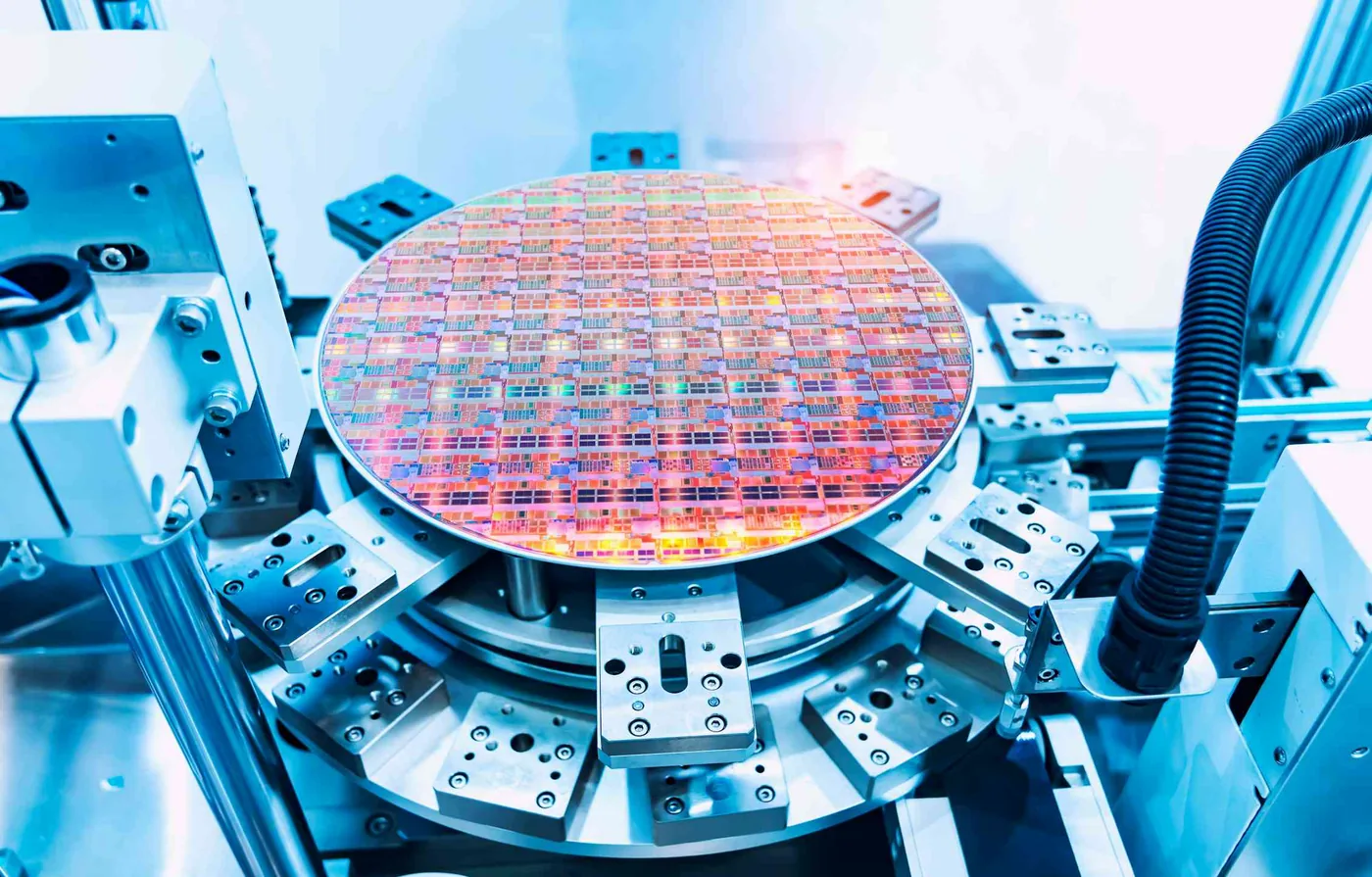
Computer chip manufacturing and space exploration seem like distant fields, yet modern fabrication plants have spent decades perfecting dry chemical etching on silicon dioxide for microprocessors used across the computing industry [2]. Chip foundries use plasma to break chemical bonds cleanly on microchip wafers without needing wet chemical baths [5]. Aneeta Jaggernauth, Aidan Cowley, and Rajani K. Vijayaraghavan tested whether these proven wafer etching techniques could react with oxygen-bearing minerals in lunar regolith simulant during laboratory trials [1].
Their study, published in Scientific Reports, shows how semiconductor etching methods translate to planetary resource processing [1]. Because plasma etching runs as a dry process, it completely eliminates the logistical burden of transporting heavy liquid chemicals across deep space from Earth. Researchers bypass years of trial and error while refining lunar oxygen extraction because the underlying semiconductor chemistry has been proven for decades [5].
Standard smelting methods demand molten salt reactors and corrosive liquid agents that present severe containment hazards inside sealed habitats. Plasma chambers isolate reactions within low-pressure vessels [2]. This controlled gas flow simplifies downstream filtration and protects life support plumbing from abrasive lunar dust particles that would otherwise cause valve failures [5].
Fluorine Gas Reactions on Anorthosite
To examine how plasma affects lunar dust, the research group exposed lunar mare simulant to plasmas generated with two fluorinated gases used in microelectronics: sulfur hexafluoride (SF6) and octafluorocyclobutane (C4F8). Aneeta Jaggernauth and her research colleagues tracked the chemical reactions using X-ray photoelectron spectroscopy, X-ray diffraction, and X-ray energy dispersive spectroscopy imaging across multiple sample runs at the laboratory. The tests revealed that SF6 plasma reacted almost exclusively with the anorthosite mineral grains inside the simulant mixture, leaving other compounds relatively untouched [1].
A thin fluoride layer formed across grain surfaces, altering crystal lattices and causing strain-broadening in X-ray diffraction peaks associated with anorthosite during spectroscopic measurements. The reaction with SF6 caused a noticeable loss of signals from the silicon and oxygen channels during spectroscopic imaging, confirming that energetic fluorine atoms displaced oxygen from mineral bonds across the sample. By contrast, the C4F8 plasma produced no equivalent signal loss or diffraction line broadening, reacting across multiple minerals without isolating anorthosite grains during processing [1].
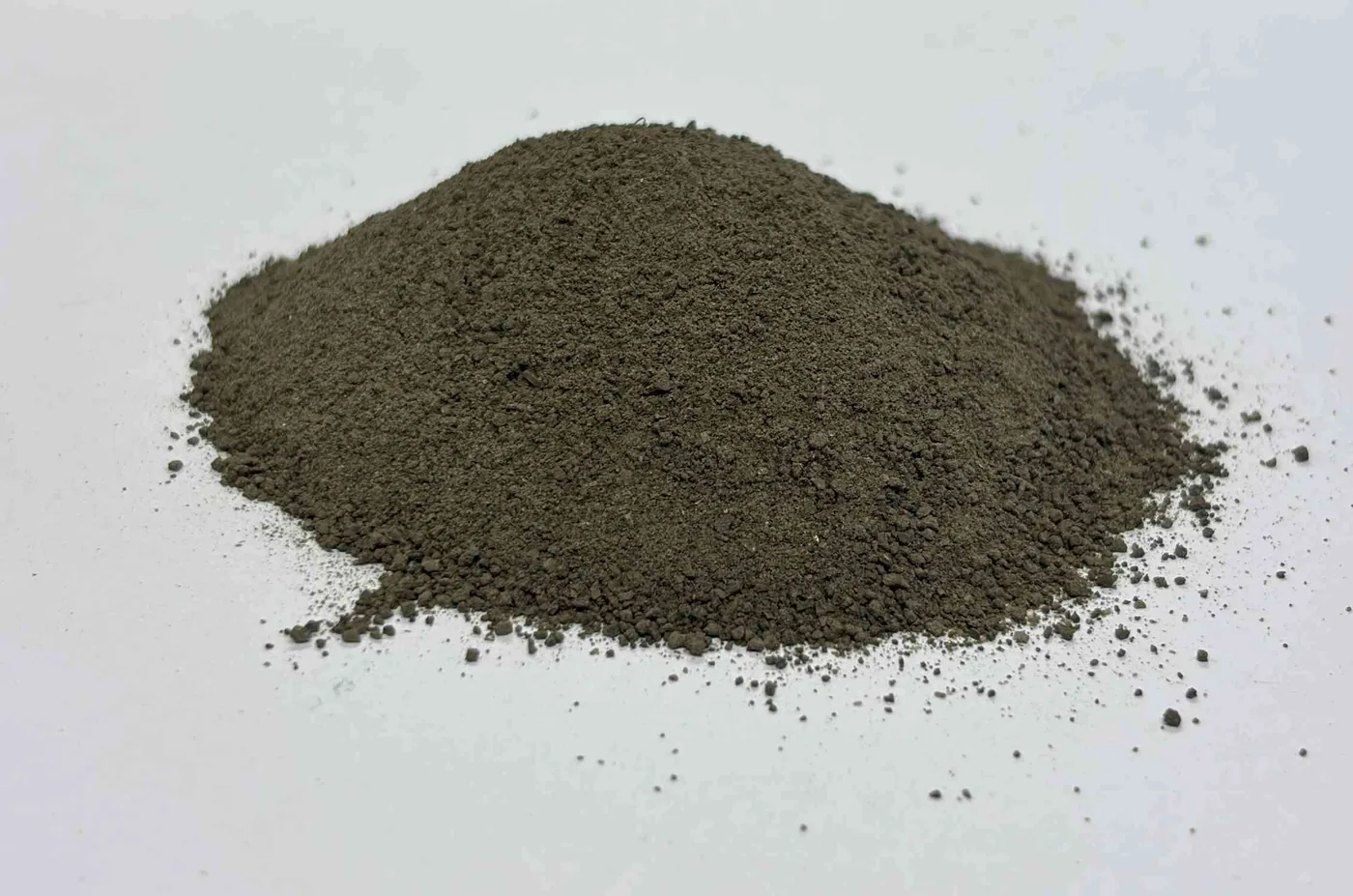
Co-authors S. Kelly, B. K. Tanner, and R. O’Connor confirmed that both plasma formulations released measurable quantities of oxygen along with carbon monoxide and carbon dioxide. These gas releases closely match silicon dioxide semiconductor etching [1]. Identifying how different minerals respond to plasma allows engineers to select landing sites with rich anorthosite deposits on the Moon [2].

3D Printing Regolith Without Chemical Binders
While extracting breathable gas solves life support needs, permanent lunar bases also require physical protective shelters to shield crews from cosmic radiation, solar storms, and micrometeoroids. Freight costs for concrete or metal panels exceed thousands of dollars per kilogram, forcing NASA mission architects to construct outposts out of local lunar regolith. At the University of Arkansas, first author Cole McCallum and senior author Wan Shou developed an additive manufacturing approach that turns simulated lunar soil into interlocking bricks without adding chemical binders [4].
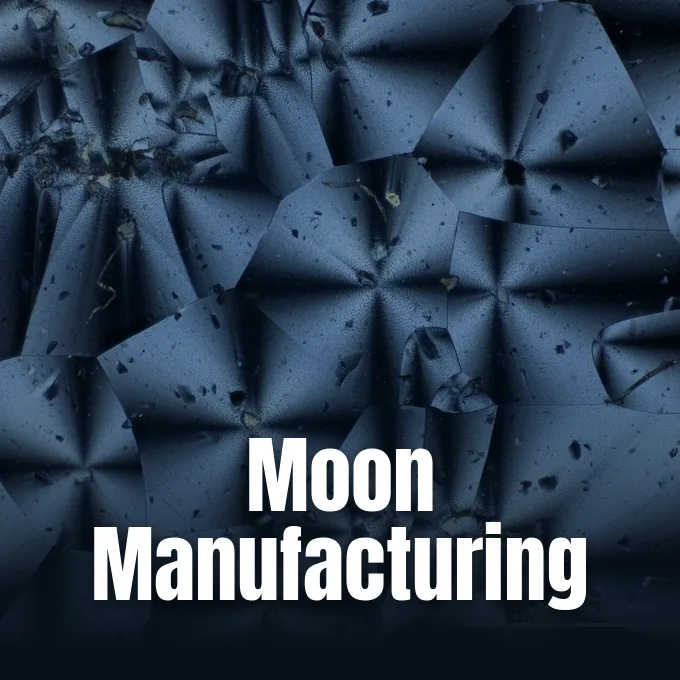
Structural analyses of moon manufacturing material show that building durable habitats requires balancing mechanical integrity with available raw resources on the surface. Published in npj Advanced Manufacturing, the Arkansas study relied on laser powder bed fusion with low-power light [3]. The team spread thin layers of Lunar Highlands Regolith Simulant LHS-1 across a build plate, heating particles until they fused together through sintering. “There’s nothing else it’s binding to. The regolith powder is binding to itself,” McCallum said [4].
University of Arkansas researchers Youwen Liang, Nahid Tushar, Ben Xu, Bo Zhao, and Hao Zeng assisted McCallum and Shou in refining laser parameters for three-dimensional printing [3]. The powder bonded without imported adhesives or chemical binders. Eliminating polymer resins removes hundreds of metric tons of cargo from resupply flights launched from Earth toward the Moon [4].
Structural Testing of Interlocking Blocks
The Arkansas engineering team fabricated small blocks measuring a few centimeters across, shaping them into interlocking cross and H-shaped designs resembling toy building blocks [4]. These geometric joints allow individual pieces to lock together firmly without requiring mortar, screws, or glue. Wan Shou and Cole McCallum evaluated the compressive strength of each block [3]. Because the mineral powder fuses without liquid polymers, the sintered regolith contains microscopic pores that result in lower mechanical strength than conventional composite construction materials [4].
“These structures we’re making can be self-supported,” McCallum said. “But I would be hesitant to say our process could be used for something that’s supporting other loads at this moment yet”. Wan Shou explained that researchers must still determine how powder bed fusion behaves under the Moon’s low-gravity environment and in the vacuum of space. McCallum, who grew up in Little Rock and earned degrees in physics and mechanical engineering, became one of 30 Lafayette Fellows chosen from 3,400 applicants before beginning aerospace studies at ISAE-SUPAERO in Toulouse, France [4].

Interlocking blocks allow astronauts to assemble reconfigurable structures that can expand as surface infrastructure grows at lunar outposts [3]. Crews can replace damaged bricks individually over time. Sintered regolith also provides natural thermal shielding against severe freezing conditions during the two-week lunar night on the Moon [4].
Scaling Lunar Oxygen Extraction for Surface Habitats
Heavy surface mobility platforms will support processing equipment across the Moon, connecting with planned moon base rovers designed to expand crew operational range during NASA Artemis missions. Both plasma extraction and binder-free sintering show that raw regolith can provide essential life support gases and durable building elements to sustain permanent scientific expeditions across the hostile lunar surface. Aidan Cowley and Rajani K. Vijayaraghavan explained that plasma extraction yields must increase significantly before the process can meet the daily breathing and propellant demands of human surface crews [2].
Beyond oxygen, lunar regolith contains valuable metals including silicon, aluminum, and iron that plasma treatments could liberate for solar cell manufacturing on the Moon [5]. Combining chemical extraction with on-site additive manufacturing creates an integrated production cycle where astronauts process local dust into breathable air, propellant, and protective habitats. As laboratory teams refine reactor designs and laser sintering, lunar oxygen extraction remains a foundational technology for establishing permanent human settlements beyond Earth [2].
Autonomous resource harvesters bridge the logistical divide between brief exploratory sorties and the establishment of permanent outposts supporting ongoing scientific inquiry on the Moon. Living off local planetary resources makes long-term space exploration viable [5].
- ACADEMIC JOURNAL Jaggernauth, A., Kelly, S., Tanner, B. K., O’Connor, R., Cowley, A., & K. Vijayaraghavan, R. (2026). Impact of oxygen extraction from lunar regolith simulant using fluorinated plasma processes. Scientific Reports, 16(1). [Article Link]
- ONLINE NEWS Vijayaraghavan, R. K., & Cowley, A. (2026). A new way to extract oxygen from lunar soil could support bases on the moon. Phys.org. [Article Link]
- ACADEMIC JOURNAL McCallum, C., Liang, Y., Tushar, N., Xu, B., Zhao, B., Zeng, H., & Shou, W. (2026). Additive manufacturing of lunar regolith for reconfigurable building blocks toward lunar habitation. npj Advanced Manufacturing. [Article Link]
- ONLINE NEWS ScienceDaily. (2026). Scientists turn Moon dust into LEGO-like bricks for future lunar bases. [Article Link]
- ONLINE NEWS Cowley, A., & Vijayaraghavan, R. K. (2026). A new way to extract oxygen from lunar soil could support bases on the Moon. The Conversation. [Article Link]
APA 7: PerEXP Teamworks. (2026, November 21). Lunar Oxygen Extraction from Regolith Supports Future Moon Bases. PerEXP Teamworks. https://perexpteamworks.com/en/lunar-oxygen-extraction-moon-bases/


