






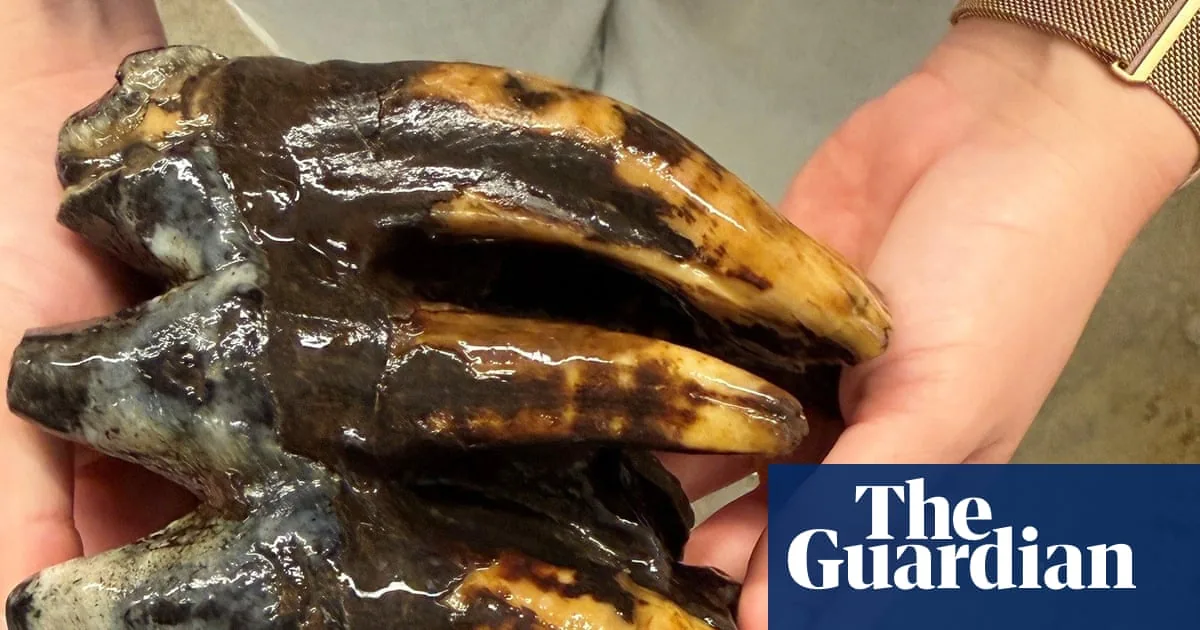
A mastodon tooth that initially looked like a peculiar rock has become a new specimen for Stanford University. Geomorphologist Brigid Lynch found the fossil while working at a preserve in California’s San Mateo County. The discovery was announced by the Midpeninsula Regional Open Space District (Midpen) and reported by The Guardian. Paleontologists identified an adult Pacific mastodon molar. Researchers now plan to date the mastodon tooth fossil, giving its remarkable preservation a firmer place in the region’s Ice Age history. [1]
Mastodon Tooth Found During Fieldwork
Brigid Lynch was working at a San Mateo County preserve when an unusual object caught her attention. She initially took it for a rock. Paleontologists confirmed it was a tooth from an adult Pacific mastodon, an extinct relative of living elephants, as Midpen described in a Wednesday release. Uwa Ede-Osifo reported the announcement for The Guardian on September 12. Lynch made the initial find. The paleontologists supplied the identification. [1]
Lynch studies landforms as a geomorphologist; the tooth brought her fieldwork into contact with paleontology (the study of ancient life through fossils). What made this particular find worth investigating further? Paleontologist Wayne Thompson emphasized its completeness, describing it as the most complete mastodon molar from the area and the most spectacular example he had personally seen. His assessment concerns this specimen’s preservation. That creek context also separates the find from ancient marine life. Unlike marine specimens such as a chunky belemnite fossil and a Jurassic survivor, which record ocean organisms from hundreds of millions of years ago, Lynch’s discovery preserves a terrestrial Ice Age mammal. The Guardian does not report a claim that it is the largest or oldest mastodon tooth ever found. [1]
What Kind of Tooth Is It?
A mastodon tooth comes from an extinct mammal related to modern elephants. In this case, the San Mateo specimen is specifically a molar from an adult Pacific mastodon. Molars are chewing teeth. The Guardian describes the animal as a herbivore (a plant-eating mammal), placing the tooth within ancient feeding anatomy. Its identity also separates the discovery from shark fossils like megalodon teeth that frequently surface in related online searches. The reported find belongs squarely to a mastodon. [1]
The Guardian provides no dimensions for Lynch’s find. Its report gives no detailed account of the tooth’s chewing surface or cusps. Readers cannot independently evaluate the identification criteria from the published text. Thompson calls its condition “immaculate.” Size remains unreported. A description of preservation does not establish a measurement, and his comparison with other local molars concerns completeness. Readers wondering how big this mastodon tooth is must wait for specimen-specific dimensions. Borrowing measurements from other finds would be misleading. [1]
How Old Is the Fossil?
The Guardian describes the fossil as 10,000 years old. At the same time, it reports that Stanford researchers will use carbon dating to determine its age. The 10,000-year figure is a reported age estimate. No laboratory result accompanies it. Stanford University’s school of sustainability will carry out the work, based on Midpen’s announcement. The news report supplies neither a completed measurement nor an uncertainty range. An estimated Ice Age origin provides context, but the upcoming laboratory test will date the specimen itself. [1]
Stanford has the donated tooth. The report gives no timetable for the dating results. [1]
Researchers need to keep two timescales separate when discussing this discovery: the age of the individual tooth and the much longer history of mastodons in North America. The Guardian places that broader history about 2.5 million years into the past. That figure does not date Lynch’s specimen. Nor does the animal’s eventual extinction establish when this particular adult lived, even though both dates help explain why a mastodon fossil attracts attention in California today. Stanford’s planned analysis addresses the specimen itself. The newspaper does not name a sampling procedure or describe any results from preliminary testing. [1]

Where Did Pacific Mastodons Live?
Pacific mastodons inhabited parts of western North America, according to The Guardian. California was part of that range. The newspaper also names Oregon, the northern Rocky Mountain region and parts of Mexico, placing Lynch’s San Mateo County discovery within a much wider account of the animal’s distribution. The tooth adds a specimen from a named locality to the story of these animals. The report does not describe a newly established range. Nor does it suggest scientists thought mastodons were absent from California. [1]
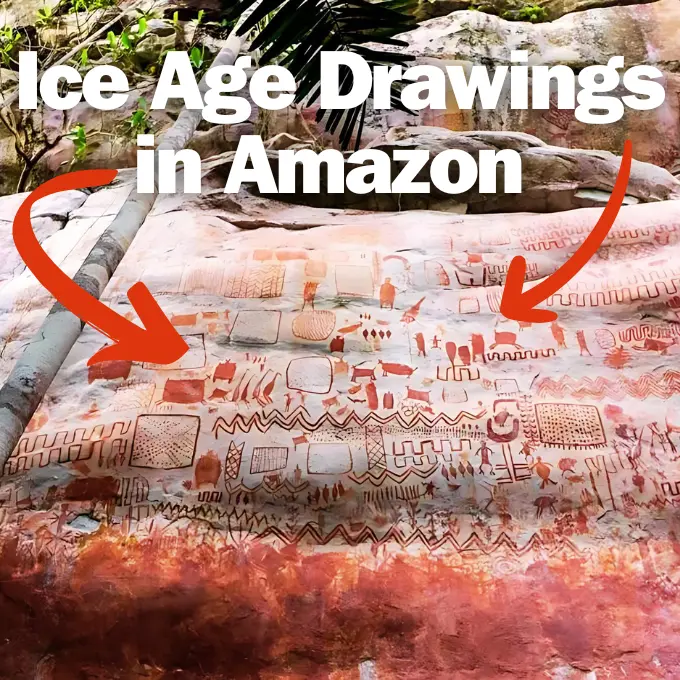
The Guardian links mastodon extinction more than 10,000 years ago to climate-driven habitat changes and human overhunting. That is the newspaper’s broader account of their disappearance. The new tooth does not establish an extinction cause: the report presents no analysis connecting this individual animal’s death to either pressure. Traces of early human presence across the Americas are also explored in coverage of Ice Age drawings in the Amazon rainforest. Those archaeological findings remain a separate subject, offering no direct evidence about the demise of the San Mateo mastodon. [1]
How Does This Find Compare?
Mastodon remains have surfaced in other ordinary settings. The Guardian recounts a 2024 discovery in which a New York State resident found a mastodon jaw beneath a lawn. It also mentions a woman who found an ancient tooth protruding from beach sand near California’s central coast a year prior to that. The newspaper describes that earlier tooth as a foot long. That measurement belongs to the beach discovery, not Lynch’s specimen. The finds involve different places, years and objects. The article gives no basis for treating them as a single deposit or assigning them the same age. [1] Their connection is the animal whose remains people encountered.
Thompson’s response singles out the San Mateo molar’s preservation rather than a sale price. How much is a mastodon tooth worth? The Guardian gives no appraisal, auction result or monetary valuation for this specimen. It reports a scientific donation to Stanford University. Its value lies entirely in research rather than commerce. Studying surviving skeletal elements of extinct animals helps reconstruct past ecosystems, but published reports provide no price guide for fossil collectors. [1]
What Will Stanford Study Next?
Christine Garcia curates Stanford’s geoscience specimen collection. In her remarks to The Guardian, Garcia emphasized that fossil evidence offers researchers an irreplaceable window into prehistoric biodiversity and ecological history. She linked the study of ancient organisms with ongoing efforts to protect modern ecosystems. Her point addresses the overarching rationale for paleontological research rather than an immediate ecological reconstruction based on a single tooth. Stanford’s first planned laboratory investigation is carbon dating. That analytical result is still pending. [1]
Coverage of the California discovery also appeared in The New York Times and Discover, though only brief summaries were available [2, 3]. In wider paleontology, ancient tooth and bone preservation connects diverse evolutionary investigations. A recent study examined skeletal remains of a freshwater jalodontid chondrichthyan from the Upper Triassic Arden Sandstone Formation of Warwickshire, UK [4]. Another recent ecological investigation explored high cryptic diversity of invertebrates in varying nearshore habitats of the Beaufort Sea. Because both studies are bioRxiv preprints, they have not yet undergone peer review and should be evaluated with caution [4, 5].
Stanford researchers can now investigate the donated mastodon tooth, but the published account leaves several specimen-level questions open. It gives no laboratory age, physical dimensions or detailed account of how paleontologists identified the molar. The next substantive update will be the radiocarbon dating result and its reported measurement uncertainty, which will help researchers place Lynch’s find into the regional chronology of Pacific mastodons in California. [1]
- ONLINE NEWS Ede-Osifo, U. (2026, September 12). Fossilized 10,000-year-old mastodon tooth found by California scientist. The Guardian. [Article Link]
- ONLINE NEWS A mastodon tooth is discovered in a California creek. (n.d.). The New York Times. [Article Link]
- ONLINE NEWS 10,000-year-old fossilized mastodon tooth found in California creek is in immaculate condition. (n.d.). Discover. [Article Link]
- PREPRINT Skeletal remains of a freshwater jalodontid chondrichthyan from the Upper Triassic Arden Sandstone Formation of Warwickshire, UK. (2026). bioRxiv. [Article Link]
- PREPRINT High cryptic diversity of invertebrates in varying nearshore habitats of the Beaufort Sea. (2026). bioRxiv. [Article Link]
APA 7: An ancient mastodon tooth awaits its age test at Stanford. (2026, September 12). https://perexpteamworks.com/en/mastodon-tooth-california-stanford-dating/


