




Expedition 75 astronauts completed an intensive operational cycle aboard the International Space Station (a permanently crewed microgravity orbital outpost) highlighted by autonomous maintenance and manufacturing trials. How can future exploration crews maintain vital hardware across multi-year voyages without relying on emergency resupply freighters? Validating dependable microgravity soldering techniques establishes a direct foundation for long-duration orbital independence. Flight Engineer Anil Menon and Station Commander Jessica Meir advanced several critical science investigations while preparing the orbital outpost for incoming logistics [1, 2].
- Lead-Free Microgravity Soldering in Harmony Module
- Spacesuit Maintenance and Canadarm2 Operations in Quest
- Simulating Lunar Descent Trajectories From the Cupola
- Evaluating Astronaut Cardiovascular and Physical Conditioning Devices
- Virtual Reality Robotics and TORU Docking Preparations
- Progress 96 Rendezvous and Orbital Cargo Transfers
Lead-Free Microgravity Soldering in Harmony Module
Flight Engineer Anil Menon conducted the final operational run of the MIYOKA investigation inside the Harmony Module to evaluate in-space electronics repair. Spacecraft systems experience extreme vibrational loads, severe thermal cycles, and pervasive cosmic radiation exposure that inevitably degrade delicate circuit traces over multi-year journeys. Precision was paramount. Testing autonomous repair capabilities in orbit proves that future crews can service degraded flight electronics without awaiting replacement components from ground depots [1, 2].
Flight Engineer Anil Menon utilized specialized tools to apply a lead-free soldering alloy directly onto experimental circuit boards in microgravity. Liquid solder behaves unpredictably in weightlessness because surface tension dominates fluid dynamics in the absence of gravity-driven buoyant convection. Every soldered joint counts. Once the circuit board cooled, engineers secured the hardware for return to Earth, where metallurgists will compare its crystalline microstructure directly against identical ground-soldered baseline samples. Demonstrating reliable microgravity soldering allows exploration missions traveling toward the Moon and Mars to manufacture and repair mission-critical electronics independently while reducing costly reliance on space cargo missions supporting station research [1, 2].
Flight Engineer Anil Menon sealed the finished circuit board inside protective transit stowage before completing post-operation electrical diagnostic sweeps across the Harmony Module. Flight Engineer Jack Hathaway stowed the cooled-down soldering iron, completed circuit board, and experiment tools into storage containers before cleaning Harmony’s maintenance work area. Official NASA mission logs recorded that Flight Engineer Anil Menon and Flight Engineer Jack Hathway completed the maintenance sweep [1].

Spacesuit Maintenance and Canadarm2 Operations in Quest
Flight Engineer Jack Hathaway transitioned to the Quest Airlock with Station Commander Jessica Meir to service spacesuit cooling assemblies following an intensive sequence of four spacewalks completed across a monthlong period. Extravehicular mobility units depend on recirculating water loops to dissipate astronaut metabolic heat during grueling orbital excursions. Hathaway and Meir meticulously scrubbed heat exchangers and flushed water conduits to ensure full readiness for future excursions [2].
During a Wednesday briefing, Station Commander Jessica Meir described operating outside station structures while anchored to the Canadarm2 robotic arm on Sept. 1. “I felt like I was just there levitating above the Earth. I think that was the biggest eureka moment for me,” Meir stated when explaining the psychological impact of working in open space. Operational duties resumed rapidly as Flight Engineer Jack Hathaway joined European Space Agency Flight Engineer Sophie Adenot in the cupola to configure cleaning equipment and inspect the seven viewing windows overlooking Earth [1, 2].
Deep cleaning operations in the cupola required specialized wiping materials and delicate mechanical pressure to prevent surface scratches across the multi-pane glass. Flight Engineer Anil Menon and Flight Engineer Jack Hathaway wiped the optical surfaces thoroughly before applying protective sealant tape across gaps between individual panes to prevent floating particulate accumulation. Maintaining scratch-free optical ports remains crucial for photographic Earth observations and manual spacecraft rendezvous monitoring [1].
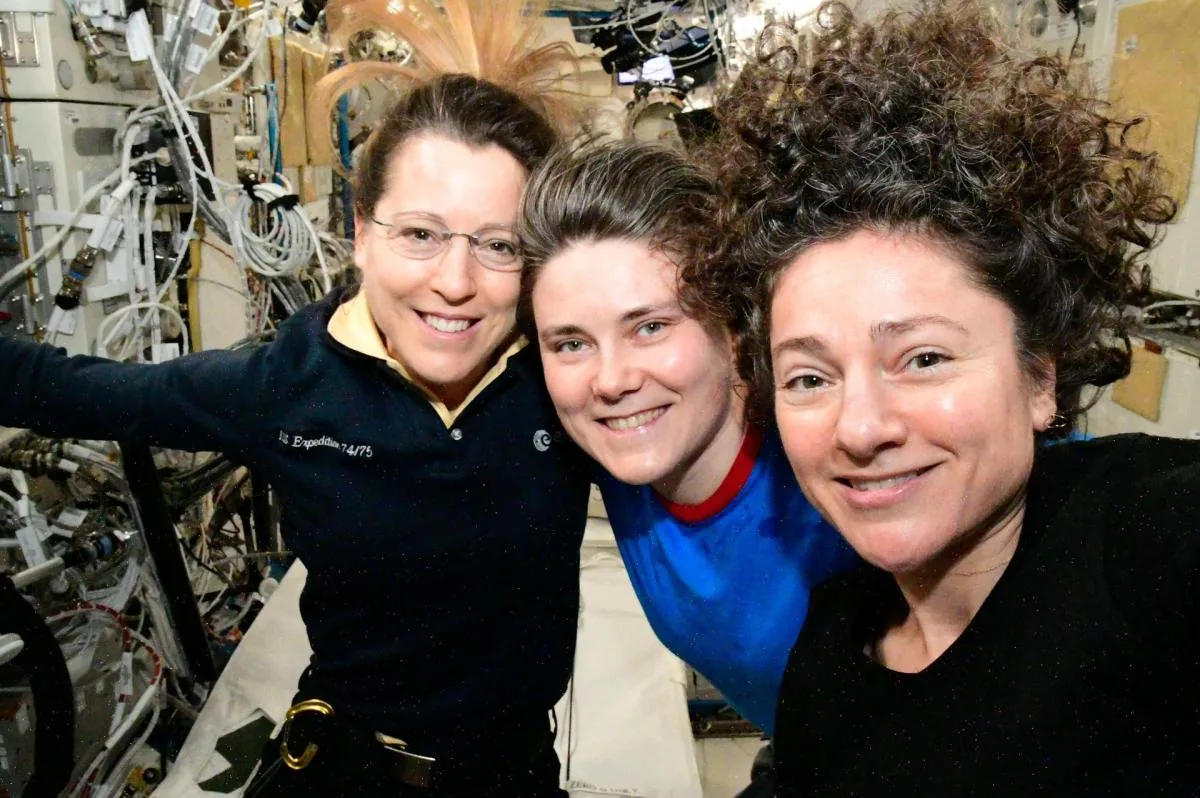
Simulating Lunar Descent Trajectories From the Cupola
Station Commander Jessica Meir initiated a demanding operational shift inside the cupola by conducting high-fidelity Lunar Simulations. Working with precision hand controllers, a laptop computer interface, and synthesized audio signals, Meir practiced controlling a simulated spacecraft along a complex lunar descent trajectory. The Manual Piloting study (an investigation evaluating human cognitive control during planetary arrivals) helps researchers evaluate how microgravity exposure alters motor control and spatial orientation during high-consequence flight phases. Operating in weightlessness for months disrupts inner ear vestibular cues, creating significant sensory discordance when pilots must transition to landing maneuvers. Understanding these neurological shifts allows mission planners to design intuitive flight control algorithms and responsive autopilot overrides that assist pilots during emergency touchdown profiles on planetary surfaces [1].
Could prolonged weightlessness alter the neural pathways responsible for manual trajectory corrections during lunar touchdown? Investigators examine whether vestibular disorientation degrades manual steering accuracy during planetary descent maneuvers. Meir adjusted velocity and attitude angles repeatedly against simulated gravitational descents to measure pilot reaction latencies. Meir tested manual overrides. Station Commander Jessica Meir later partnered with Flight Engineer Anil Menon to perform rigorous ultrasonic inspections of structural bulkheads inside the Zarya Module, ensuring hull integrity across the aging station segment [1].
Evaluating Astronaut Cardiovascular and Physical Conditioning Devices
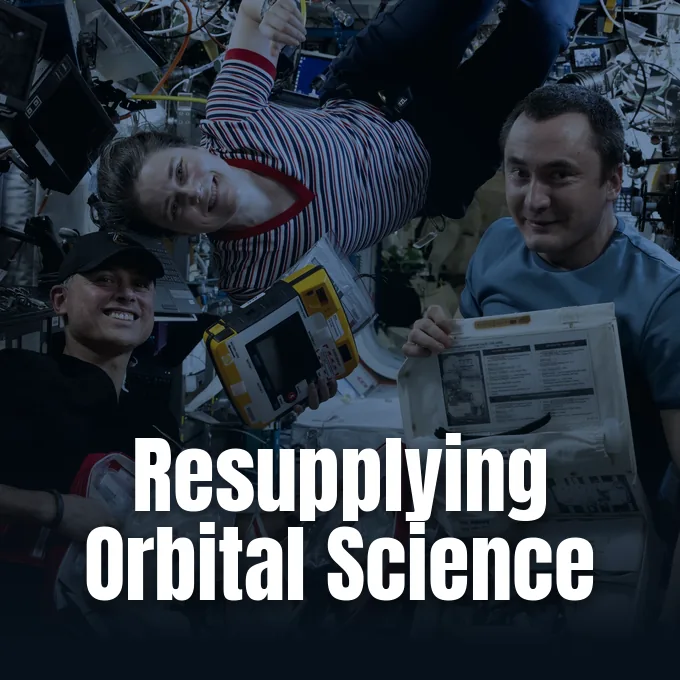
Flight Engineer Sophie Adenot of the European Space Agency started her duty cycle exercising on the newly installed European Enhanced Exploration Exercise Device (E4D). Advanced resistive exercise hardware counteracts bone mineral density degradation and muscle atrophy during long-duration orbital missions. The E4D system utilized internal controller software to record mechanical workload metrics, enabling biomedical researchers to benchmark human performance against pre-flight cardiovascular baselines [1].
Flight Engineer Sophie Adenot subsequently downloaded continuous physiological metrics gathered by her specialized smart watch onto a portable computer tablet. Adenot then conducted an orbital medical conference with ground physicians to assess data from the RelaxPro investigation. RelaxPro evaluates non-pharmacological interventions, including guided auditory relaxation narratives and standardized sleep assessment questionnaires, to mitigate psychological stress and improve sleep architecture for astronauts living in isolated environments [1, 2].

Physical conditioning concluded inside the Tranquility Module as Flight Engineer Sophie Adenot executed resistance training routines monitored in real time by ground exercise physiologists. Meanwhile, Flight Engineer Pyotr Dubrov and Flight Engineer Anna Kikina conducted targeted circulatory assessments by attaching pressure cuffs across their arms, wrists, and fingers. Microgravity alters vascular resistance, prompting researchers to track microcirculatory blood flow dynamics in relation to astronaut exercise and physiological sampling [1, 2].
Virtual Reality Robotics and TORU Docking Preparations
Flight Engineer Pyotr Dubrov and Flight Engineer Anna Kikina transitioned to the Zvezda Module to test the backup tele-operated rendezvous unit (TORU). Testing the TORU system (a manual backup piloting suite) guarantees that orbital crew members can assume manual control of approaching spacecraft if primary automated navigation sensors fail. Cosmonauts practiced manual docking control using control sticks and video monitors connected directly to the station’s radio telemetry channels [2].
Flight Engineer Pyotr Dubrov and Flight Engineer Anna Kikina also conducted robotic training sessions for the Teledroid investigation. The cosmonaut pair donned immersive virtual reality headsets and paired them with body-worn kinetic controllers to simulate telemanipulating external anthropomorphic robotics across the station’s exterior. These simulations demonstrate how orbiting crews could direct robotic manipulators across complex exterior maintenance tasks without requiring hazardous extravehicular spacewalks [2].
Flight Engineer Andrey Fedyaev worked throughout the Roscosmos segment inspecting vital electronic infrastructure and performing scheduled housekeeping routines. Fedyaev dismantled, inspected, and sanitized ventilation systems, internal power supply units, and laptop computers inside both the Zvezda Module and the Nauka Module. Maintenance protocols also required Fedyaev to balance internal fluid reserves by transferring potable water supplies between storage tanks in the Zvezda Module [1, 2].
Progress 96 Rendezvous and Orbital Cargo Transfers
Uncrewed orbital freighters sustain ongoing research and life support operations aboard the International Space Station. Roscosmos launched the Progress 96 cargo spacecraft from Kazakhstan on Wednesday to deliver critical resupply logistics to the orbiting outpost. Loaded with 2.8 tons of food, propellants, pressurized gases, and experimental hardware, the automated freighter executed orbital phasing burns to align its trajectory with the space station [1, 2].
Automated docking to the Poisk Module is scheduled for Saturday at 9:46 a.m. EDT as Flight Engineer Pyotr Dubrov and Flight Engineer Anna Kikina monitor the spacecraft’s approach. Mission controllers coordinated with crew members reviewing NASA SpaceX Crew-12 return preparations to ensure proper schedule deconfliction during high-activity docking windows. Dubrov verified the alignment. Official live coverage for the automated docking sequence begins at 9 a.m. EDT on NASA+ and partner broadcast networks [1].
Following docking contact, Flight Engineer Pyotr Dubrov and Flight Engineer Anna Kikina will conduct extensive leak and pressure verification checks across the docking vestibule lasting approximately two hours. Once atmospheric equalization confirms seal integrity, the cosmonauts will open the Poisk Module hatch to commence unloading nearly three tons of vital supplies. Related orbital instrumentation preprints on arXiv, which have not yet been peer-reviewed, analyze similar calibration protocols for space hardware. Station Cargo Mission Preps Expedition operations combined supply deliveries with lead-free microgravity soldering trials and lunar piloting practice to ensure that Expedition 75 remains fully prepared for extended exploration missions [1, 2, 3].
- PRESS RELEASE Garcia, M. A. (2026, September 18). Week ends with soldering, lunar simulations, and cargo mission preps. NASA. [Article Link]
- ONLINE NEWS Cosmic Chronicles. (2026, September 17). Crew works soldering, cardiac research, virtual reality and prepares for cargo mission. Cosmic Chronicles. [Article Link]
- PREPRINT The SPHEREx Instrument: Calibration, testing and performance measurements of the NIR spectroscopic surveyor from the laboratory to in-orbit commissioning. (2026). arXiv [Preprint – not yet peer-reviewed]. [Article Link]
APA 7: TWs Editor. (2026, September 18). How Expedition 75 tests microgravity soldering in orbit. PerEXP Teamworks. https://perexpteamworks.com/en/microgravity-soldering-iss-expedition-75/


