



The NASA moon orbiter mission continues to monitor our celestial neighbor for catastrophic collisions that alter its scarred terrain. How often do incoming cosmic rocks strike the barren lunar crust with explosive force? While small debris bombards the airless surface daily, researchers reporting in Science Advances revealed on September 16, 2026, that an unexpected impact carved out a massive 728-foot crater [1, 3].
Routine Data Check Reveals Rare Impact
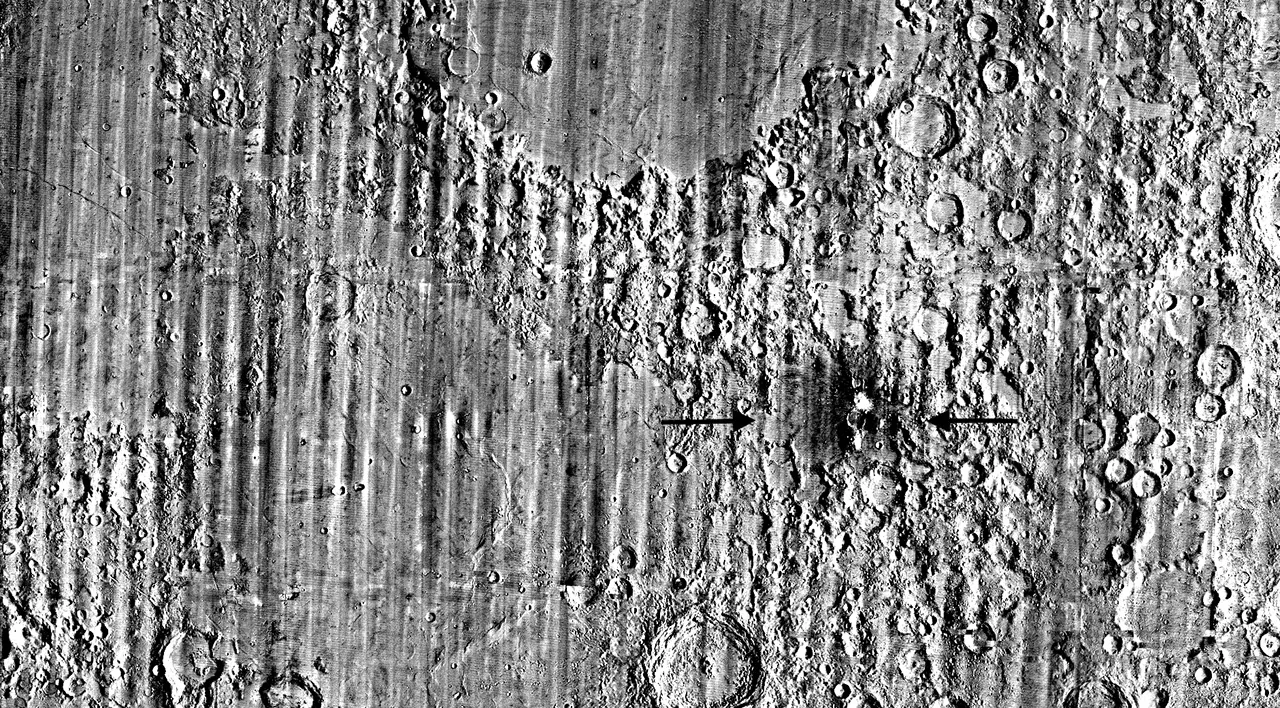
Scientists process immense volumes of photographic data during ongoing orbital surveys. Robert Wagner, an image-processing specialist from Intuitive Machines (a space exploration company collaborating with NASA), was conducting a routine data-quality check when an unusual planetary feature appeared on his computer monitor. Wagner scanned a giant Moon map and noticed an anomalously large bright spot encircled by a dark halo, suggesting that fresh subsurface materials had recently been violently disturbed [1, 3]. Wagner immediately halted scheduled data processing to examine the unexplained lunar marking [3].
Verifying novel impact features requires meticulous comparison between older baseline maps and newly acquired high-resolution imagery. Working with detailed records from the Lunar Reconnaissance Orbiter Camera (an advanced dual-camera system designated as LROC), Robert Wagner compared before-and-after observations of the eastern lunar limb to determine when the collision transpired. The chronological image sequence confirmed that a comet or asteroid roughly the size of a three- to six-story building collided with the lunar crust between April 11 and May 22, 2024. The resulting collision gouged a prominent bowl measuring 728 feet across and 141 feet deep into the ancient surface [1, 3]. At this scale, the crater spans the length of two football fields and could easily swallow three vertically stacked yellow school buses [3]. Deep impacts matter.
Officially named McGetchin after pioneering lunar scientist Tom McGetchin, the structure represents the largest newly formed impact crater discovered anywhere in the solar system [1, 3].
How NASA Moon Orbiter Mission Scanned Topography
Orbiting observation platforms provide unbroken surveillance across treacherous celestial environments. The NASA moon orbiter mission, conducted by the Lunar Reconnaissance Orbiter (LRO), has circled the Moon for more than 17 years to systematically measure surface properties. Equipped with seven specialized scientific instruments, the robotic explorer continuously charts lunar topography, mineral composition, surface temperature variations, and harsh cosmic radiation fields [1, 3]. Orbital maps revealed the scar.
Long-term automated monitoring enables planetary specialists to detect subtle morphology shifts that ground telescopes fail to discern. Throughout the spacecraft’s operational lifetime, mission teams have cataloged at least 1,000 new impact craters while flagging more than 100,000 discrete surface modifications generated by direct impacts or secondary debris showers [1, 3]. In parallel operational efforts, engineers also demonstrated precision lunar tracking by using LRO laser instruments to detect surface landers resting quietly on the regolith. These complementary techniques underscore how versatile orbital hardware captures dynamic lunar processes [3].
Without a dense atmosphere to decelerate or vaporize incoming bolides, space debris strikes the lunar exterior unimpeded. The smallest impact pits that researchers can resolve in LROC images span roughly 30 feet in width (the length of a three-story building laid horizontally on its side), typically produced by cosmic rocks measuring 43 inches across. Collisions at that modest scale occur frequently, generating approximately 140 fresh craters across the Moon each year [1, 3]. Microscopic projectiles strike daily.
Massive Excavation Forming McGetchin Crater
Planetary scientists estimate that an impact of this extraordinary magnitude happens on the Moon roughly once in a century or even longer [1, 3]. Lead author M. S. Robinson and coauthors reported in Science Advances that McGetchin crater exhibits a 222-m diameter along its rim crest, demonstrating profound kinetic excavation upon collision [1]. Why did this specific space collision produce such an unusually prominent structural footprint? High speeds drive excavation.
A cosmic projectile plunging toward the surface carries massive kinetic energy that detonates instantly upon contact with solid bedrock. The impact shock waves excavated deep crustal layers and violently ejected fragmented rocky material outward across the eastern lunar limb. Orbital cameras recorded widespread rays of bright, highly reflective material radiating outwards, forming a stark contrast against the weathered surrounding background. Ground-based telescopes cannot trace such detailed physical changes because most fresh lunar impacts produce microscopic indentations that remain undetectable in ordinary orbital surveys [1, 3]. Fresh craters form.
Investigating the physical dimensions of McGetchin crater provides empirical verification for theoretical crater-scaling models. Planetary researchers Robert Wagner, A. K. Boyd, P. Mahanti, and M. R. Manheim utilized stereographic camera elevations to confirm that the crater depression plunges 141 feet below the pre-existing surface plane [1, 3]. Numerical simulations calibrated against older lunar basins gain critical validation when fresh, pristine impact structures can be measured immediately following excavation. Fresh topography reveals unaltered structural geometry [1].


Thermal Anomaly in Distal Lunar Regolith
Orbital cameras alone cannot reveal the entire physical extent of lunar collision events. Following the optical confirmation of McGetchin crater, scientists operating LRO’s thermal radiometer instrument, Diviner, carried out specialized follow-up observations of the target site. Their thermal scans uncovered an extensive 4-mile-wide region encircling the crater that registers approximately 16 degrees Fahrenheit cooler during the lunar night than the surrounding terrain [2, 3]. Surface dust fluffs up.
Thermal measurements document how celestial collisions alter surface geology at remarkable distances. In a companion study published in Science Advances, researchers T. M. Powell, B. T. Greenhagen, and D. A. Paige explained that this pronounced cooling occurs because seismic shock waves and ballistic ejecta fluff up the surrounding regolith. Distal regolith modification reduces soil density and drastically lowers the material’s thermal inertia, preventing surface rocks from retaining solar heat during frigid lunar nights. The immense scale of this cold spot proved striking because it confirmed that asteroid strikes modify planetary surfaces far beyond the physical crater rim [2, 3].
Understanding distal soil disturbance assists geophysicists in interpreting thermal patterns across older lunar regions. Coauthors T. Horvath, J. Williams, E. Jhoti, E. J. Speyerer, and C. M. Elder determined that fine regolith (the fragmented layer of loose rocky powder resting above bedrock) behaves dynamically during energetic impacts. Data gathered by the NASA moon orbiter mission demonstrate that energetic blasts disturb porous regolith across hundreds of square kilometers [2, 3]. Cold regolith lingers.
Comparing Impact Rates Across Lunar History
Quantifying contemporary crater formation rates provides an essential reference point for planetary chronology. While modern instruments observe ongoing strikes, earlier chronological studies of the Moon’s age relied heavily on counting accumulated impact craters across ancient highlands to date planetary crusts. Without accurate contemporary impact rates, geologists struggle to distinguish whether dense cratering patterns reflect intense ancient bombardments or steady accumulation across billions of years [1]. Impacts reshape lunar soil.
Crater preservation styles differ sharply across celestial bodies depending on active atmospheric and tectonic conditions. On neighbouring planets, volcanic resurfacing observed across Mars repeatedly erases older impact structures beneath extensive lava flows and windblown dust sheets [1, 2]. On the airless Moon, however, pristine excavation scars like McGetchin crater persist virtually unchanged for millions of years, degrading only through the relentless grinding of micrometeorite bombardment [1, 3]. Because the lunar surface lacks active liquid weathering or plate tectonic recycling, each newly cataloged crater preserves an indelible kinetic record.
Statistical crater distributions documented by LRO offer unprecedented baseline data for solar system dynamics. Long-duration tracking confirms that small bolides producing 30-foot craters strike frequently, whereas massive impacts spanning hundreds of feet remain exceptionally rare occurrences occurring on centennial intervals [1, 3]. Science writer Lonnie Shekhtman highlighted that cataloging these rare strikes enables astronomers to refine planetary protection models for both Earth and the Moon. Sustained orbital surveillance clarifies how hazardous objects navigate near-Earth space [3].
Preparing Exploration Rovers for Altered Terrain
Future lunar exploration architectures depend heavily on precise knowledge of physical ground conditions. How do fresh impact scars reshape future exploration routes across the lunar surface? As NASA advances plans for sustained human presence and expanded commercial activity on the Moon, understanding loose surface regolith becomes essential for mission safety [3]. Physical changes in soil density could directly affect how robotic rover wheels and landing gear interact with loosened regolith.
Encountering unexpectedly uncompacted terrain poses serious mechanical risks for autonomous lunar surface vehicles. Planetary scientists warn that a rover driving into a distal impact zone could experience reduced wheel traction or unexpected sinkage in fluffed-up soil. The four-mile thermal halo surrounding McGetchin crater illustrates that physical ground softening extends substantially beyond the visible rim [2, 3]. Robotic navigators must map surface thermal signatures to identify uncompacted zones before attempting traverse routes across unfamiliar terrain [2].
Continuous surveillance conducted by the NASA moon orbiter mission underscores the dynamic, evolving nature of what was long considered a dormant celestial body. Discoveries like McGetchin crater reveal that kinetic impacts continuously reshape the lunar landscape, overturning surface dust, redistributing heat, and creating fresh geological formations. By combining multi-spectral photography from LROC with nighttime thermal mapping from the Diviner radiometer, international researchers possess powerful observational tools to monitor ongoing surface alterations [1, 2, 3]. Planetary scientists will continue evaluating orbital telemetry to track how newly formed craters alter the physical environment across our nearest celestial neighbor [1, 3].
- ACADEMIC JOURNAL Robinson, M. S., Boyd, A. K., Mahanti, P., Manheim, M. R., Speyerer, E. J., Stopar, J. D., & Wagner, R. V. (2026). A new 222-m diameter lunar crater. Science Advances, 12(38). [Article Link]
- ACADEMIC JOURNAL Powell, T. M., Greenhagen, B. T., Horvath, T., Williams, J., Jhoti, E., Speyerer, E. J., Elder, C. M., & Paige, D. A. (2026). New lunar crater reveals extensive distal regolith modification. Science Advances, 12(38). [Article Link]
- ONLINE NEWS Shekhtman, L. (2026, September 16). NASA’s Moon Orbiter Spots New, ‘Once-in-Century’ Moon Crater. NASA Science. [Article Link]
APA 7: TWs Editor. (2026, September 17). How NASA Moon Orbiter Mission Found a Rare Lunar Crater. PerEXP Teamworks. https://perexpteamworks.com/en/nasa-moon-orbiter-mission-crater/


1 comment