




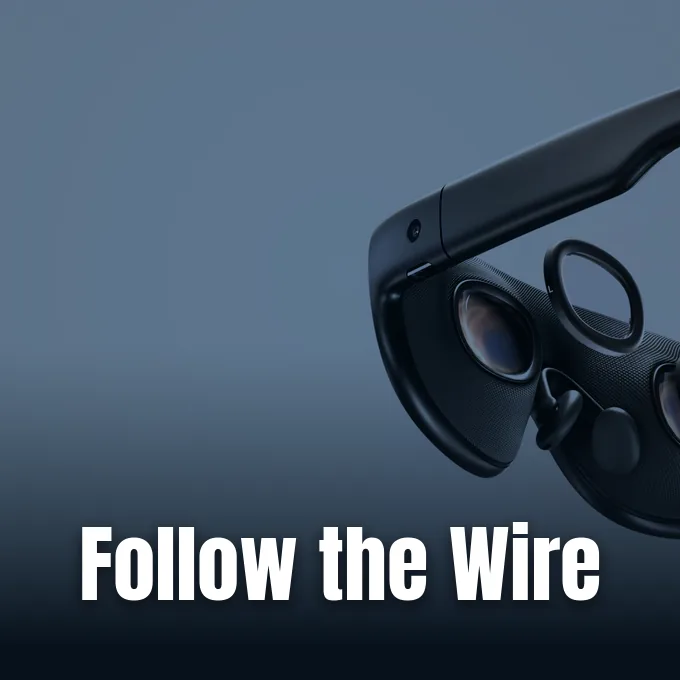
A cable trails from the earpiece of a slim Meta headset, its lenses tucked into a frame closer to glasses than a Quest. UploadVR published the images and says it found them in a HorizonOS firmware package, according to The Verge’s September 11 report. The apparent device is Project Phoenix. Meta has not confirmed that identification in the available reporting, but the pictures offer a possible first look at a smaller design before Meta Connect. [1]
Meta Headset Images Escape Through Firmware
UploadVR names the hiding place precisely. The images were “found in the HorizonOS Prescription Lens firmware package,” the outlet says, as quoted by The Verge’s Stevie Bonifield. Firmware is software associated with hardware; here, a software package appears to have exposed a physical design before a product presentation. The discovery comes from UploadVR, with Bonifield relaying its account. Neither the package’s name nor the appearance of the images establishes that Meta has settled on this as the version it will sell. [1]
Meta’s event is approaching. Bonifield places the discovery ahead of Meta Connect, which the report says starts on September 23. The timing brings a possible new design into view before that event, although the article does not establish that Meta plans to show Phoenix there. A file appearing before a presentation and a product appearing onstage are separate developments. For now, the detail available to examine is the frame itself.
Software can expose traces of products before their makers formally introduce them, a theme also covered in PerEXP Teamworks’ report on Steam achievement lists leaking for unreleased games. In the Phoenix report, UploadVR points to images rather than an achievement list. The supplied coverage does not establish whether those images represent Meta’s final hardware.
Android Authority also carried a Project Phoenix leak headline. Only its headline and RSS summary were available for review; neither provides independent verification of the hardware described here. [2]
A Frame Between Quest and Glasses
The lenses sit inside a slim, glasses-style frame, according to The Verge’s description, giving the apparent Meta headset a different outline from the company’s larger devices. Bonifield compares its position to the space between Meta’s Ray-Ban AI smart glasses and the Quest 3, a full VR (virtual reality) headset. Phoenix appears smaller than Meta’s other headsets, but the report supplies no dimensions or weight. A slimmer outline alone cannot establish how heavy the device feels when someone wears it.
Xreal and Viture enter the comparison here. The Verge describes their mixed reality glasses as bulkier than Ray-Ban AI glasses, yet smaller than a full headset, and suggests Meta could be pursuing similar competition with Phoenix. The comparison concerns the kind of device the pictures resemble. It does not establish equal display quality, the same software, or interchangeable uses across those products. Neither company’s presence in the report supplies missing specifications for Meta.
The front view emphasizes the lenses. The rear view introduces the wire, and with it a question about what hardware might sit beyond the frame.
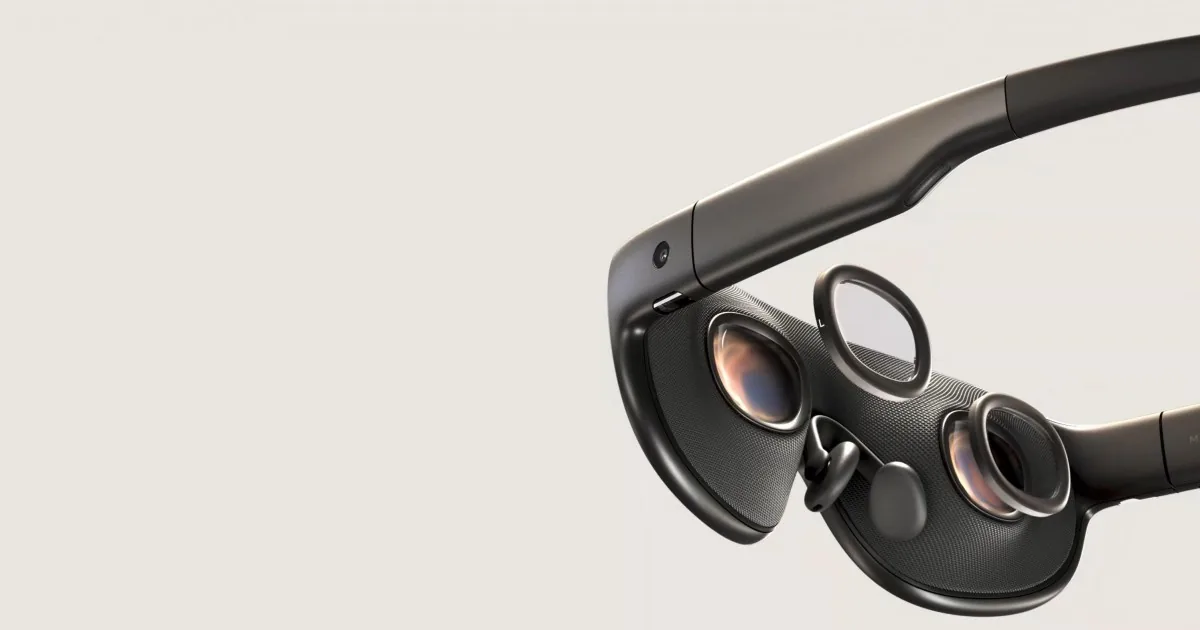


A Cable Leaves the Earpiece
The rear view supplies another clue. Bonifield describes a wire extending from one earpiece and suggests it could connect to a battery or a compute puck (an external processing unit). The wire’s purpose is unconfirmed. Neither possibility establishes what Meta has actually put at the other end, and the supplied report gives no connector specification or accompanying component that would settle the question. A cable is visible in the reported image; its destination remains an interpretation. [1]
A battery and a processing unit would answer different questions about the apparent Meta headset. One possibility concerns power; the other concerns where the device handles computing work. Bonifield leaves both possibilities open, so the image cannot support a definite claim that Phoenix requires a particular external accessory. The report also gives no battery-life estimate. Without those details, describing Phoenix as a complete standalone device would go beyond what the leak shows.
Google provides a relevant comparison. Bonifield reports that Google’s Project Aura XR (extended reality) glasses have an external compute puck wired to their frames, an arrangement that places a named counterpart beside Phoenix’s unexplained cable. However, the account describes Google’s connection directly and treats the destination of Meta’s wire as a possibility. Project Aura does not settle the Phoenix question. Meta would still need to identify the connected component before the cable could support a definite claim about external processing.
Possible Cameras Face Two Directions
The earpieces appear to contain outward- and downward-facing cameras, Bonifield writes. Their orientation adds a second hardware detail to the cable emerging from the frame, but The Verge does not identify a function for each apparent camera or describe a working demonstration that would show what they capture. Camera specifications are absent, too. The report cannot establish a particular tracking system or control method from those visible features alone. Phoenix’s arms may hold important parts of the device, yet the available images leave the relationship between those parts and the lenses at the front unexplained. Meta’s own account of the hardware would be needed to connect those observations to specific capabilities. [1]
Meta’s apparent design leaves the arms of the frame carrying several of the most interesting details: the possible cameras and the point where the wire exits. The lenses define the front view; those earpieces raise questions about how the device might operate. The supplied coverage includes no hands-on account to connect the two. It offers a look at hardware imagery, with the experience of actually wearing Phoenix still outside the evidence.
Connect Approaches, Launch Remains Unconfirmed
Bonifield reports that Project Phoenix has been in development for some time and is not expected to launch until next year, meaning 2027 in the context of the September 2026 article. That is a reported expectation. The supplied material contains no official Meta release date, price, or availability announcement, and the approaching Connect event does not turn the expectation into a confirmed schedule. The distinction matters for anyone following the new Meta headset as a potential purchase. [1]
Meta still has the cable to explain. A product presentation could identify what connects to it, clarify whether the earpiece features are cameras and show how the frame works in practice. Until Meta supplies those details, the next questions concern the hardware outside the pictures: what powers Phoenix, where it handles processing, and whether a finished device will retain the shape UploadVR’s reported discovery has brought into view.
- ONLINE NEWS Bonifield, S. (2026, September 11). Meta may have leaked the first look at its slim ‘Project Phoenix’ headset. The Verge. [Article Link]
- ONLINE NEWS Meta’s Project Phoenix just leaked, and it looks nothing like a Quest. (n.d.). Android Authority. [Article Link]


1 comment