



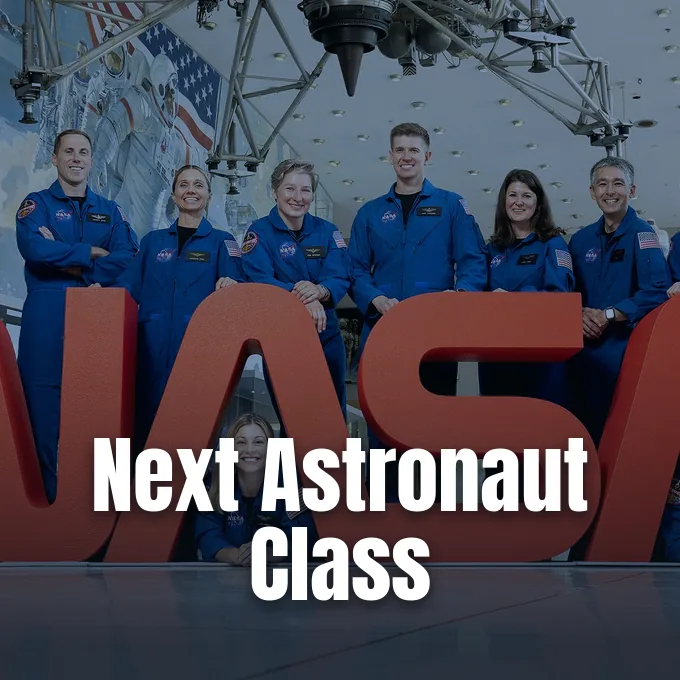
NASA has opened candidate recruitment to expand its astronaut corps as human exploration shifts toward long missions on the lunar surface and early preparations for Mars [1]. The agency began accepting NASA astronaut applications on Saturday, giving hopeful applicants until December 3, 2026, to submit their materials. With only 32 active astronauts currently on the flight roster, federal officials are looking for new personnel to build lunar infrastructure, conduct scientific fieldwork, and test spacecraft systems [1, 3]. Selected candidates will spend several years preparing for flights that push beyond low Earth orbit during a decade defined by the expanding Artemis campaign [1].
Eligibility Criteria for Applicants
Candidates must be American citizens who hold a graduate degree in science, technology, engineering, or mathematics from an accredited college or university. NASA accepts master’s degrees in engineering, biological science, physical science, or computer science. Reviewing NASA astronaut applications requires evaluating academic backgrounds alongside professional technical experience. Applicants can also qualify by completing two years of doctoral study in an eligible STEM subject or mathematics. Medical professionals meet the standard if they hold an MD, DO, Physician Assistant credential, Doctor of Nursing Practice, or Family Nurse Practitioner degree. Graduates of a recognized Test Pilot School qualify if they also hold a STEM bachelor’s degree [1].
Beyond graduate degrees, applicants need three years of related professional experience earned after completing their academic program. Pilots flying high-performance jet aircraft must document 750 hours as pilot in command. Fixed-wing aviators require 1,500 total flight hours with 750 hours in command, while rotary-wing pilots need 1,000 total flight hours including 300 hours in command. Physicians may count clinical residency completed by July 2027 toward this requirement, and every candidate must pass NASA’s long-duration flight physical [1].

Selection Timeline for Astronaut Candidates
NASA announced the recruitment window on Saturday during an air show at Kennedy Space Center in Cape Canaveral, Florida [3, 6]. Interested citizens have until 11:59 p.m. EST on Thursday, December 3, 2026, to submit their application packages. The arrival of thousands of NASA astronaut applications will trigger a thorough vetting process spanning the next twelve months. Final candidate selections are scheduled for late 2027 before training begins in early 2028 [1, 3]. This incoming group will serve as NASA’s 25th astronaut class [3].
Competition for each seat is high because thousands of specialists answer every national recruitment notice. The agency last opened applications in 2024, receiving more than 8,000 submissions before choosing 10 astronaut candidates on September 22, 2025 [1, 2]. That class lifted total selections to 370 individuals since the original Mercury Seven reported in 1959 [1, 4]. Scott Tingle, chief astronaut and chair of the selection board in Houston, spoke about the deeper meaning of joining the corps. “For those who apply, becoming a NASA astronaut is more than a career opportunity,” Tingle said. “It is a chance to join a legacy of explorers who have pushed the boundaries of discovery and play a role in the missions that will shape humanity’s future in space. The next generation of astronaut candidates could help write history while inspiring future scientists, engineers, and explorers” [1].
Training Curriculum at Johnson Space Center
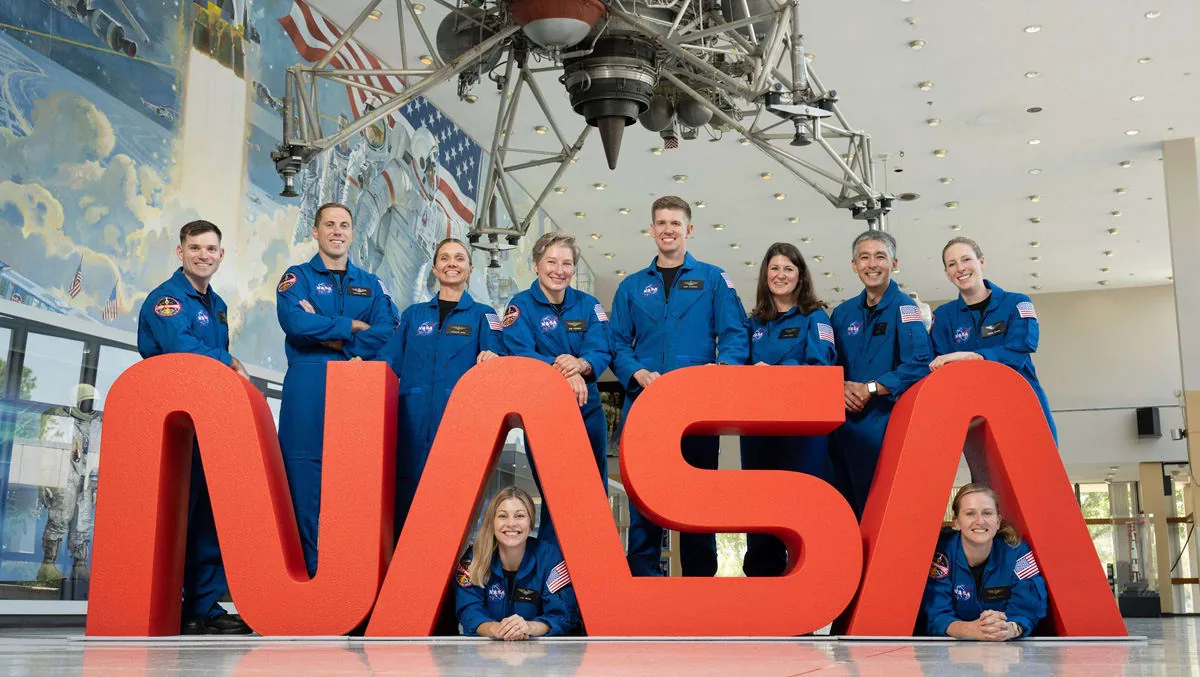
Once candidates arrive at Johnson Space Center in Houston, they begin a two-year basic training syllabus to build expeditionary competence [2]. Classroom lessons cover orbital mechanics, spacecraft avionics, space medicine, physiology, and foreign languages [4]. In addition, trainees log regular flight hours in supersonic T-38 jet aircraft to develop rapid cockpit decision-making and crew coordination. Vanessa Wyche, director of Johnson Space Center, said: “Today, our mission propels us even further as we prepare for our next giant leap with NASA’s newest astronaut candidate class” [2].
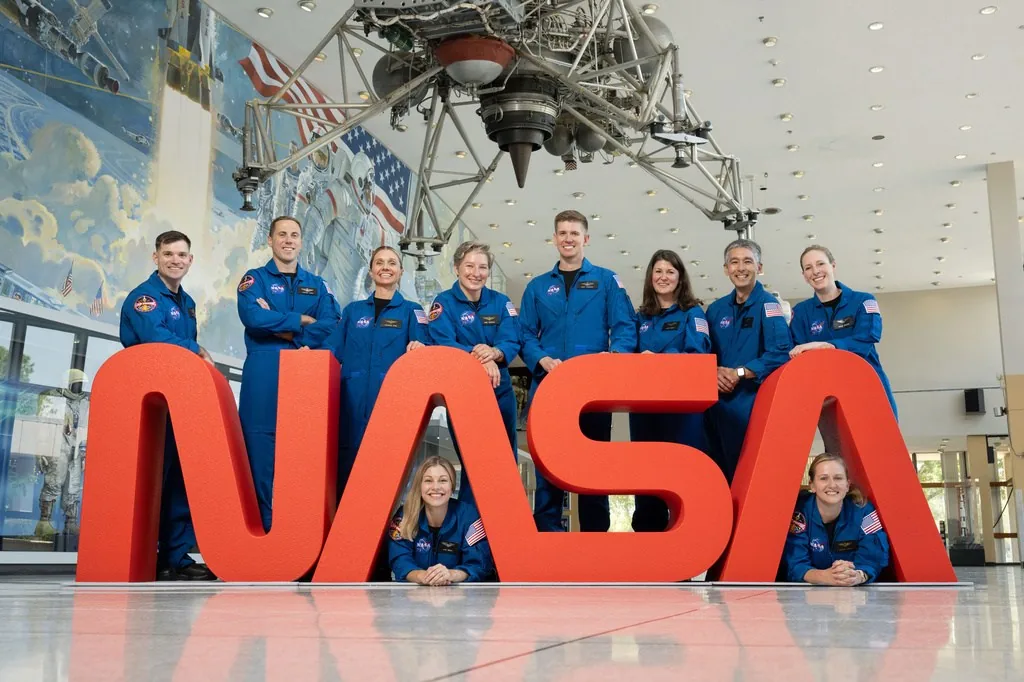
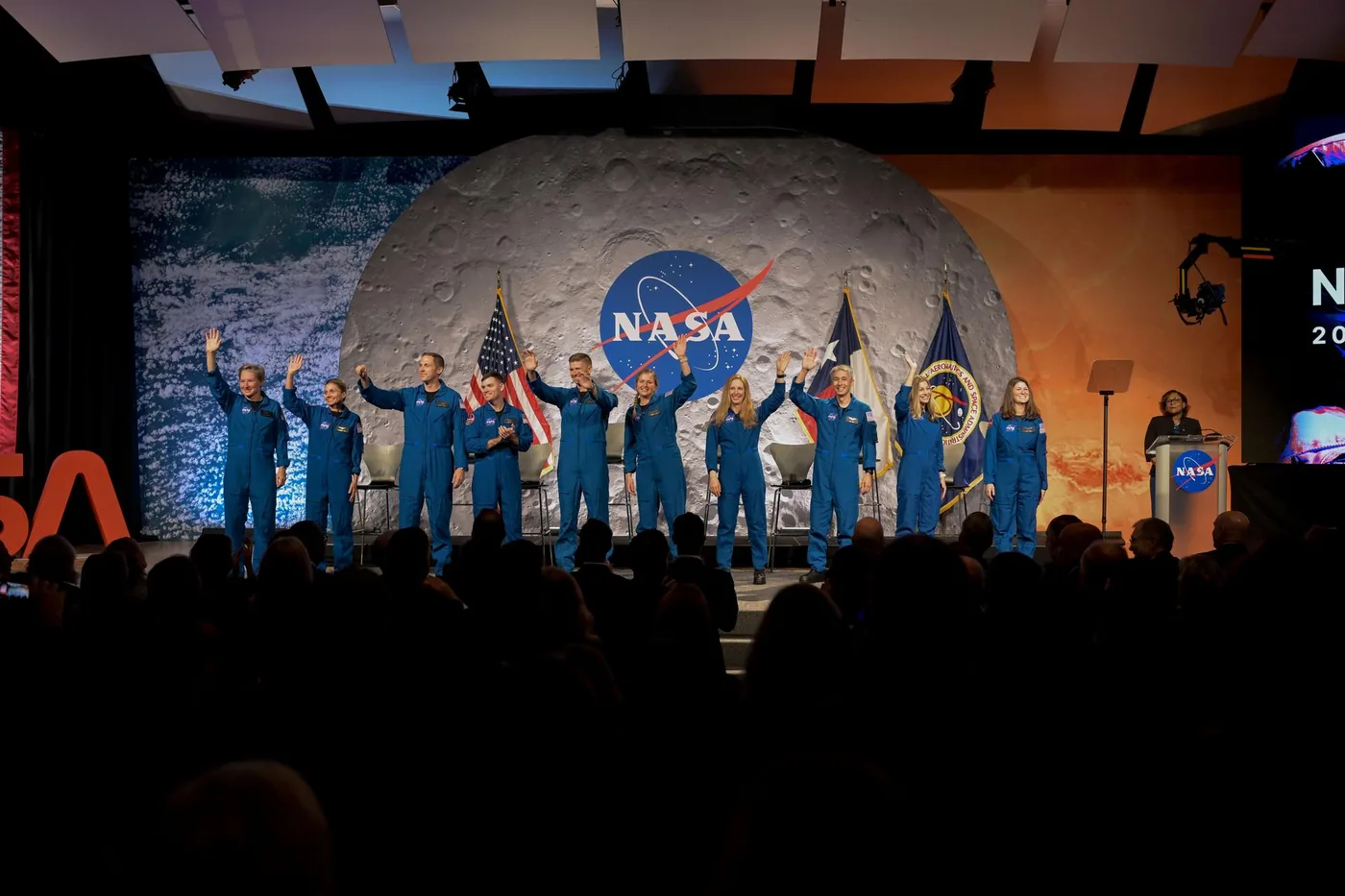
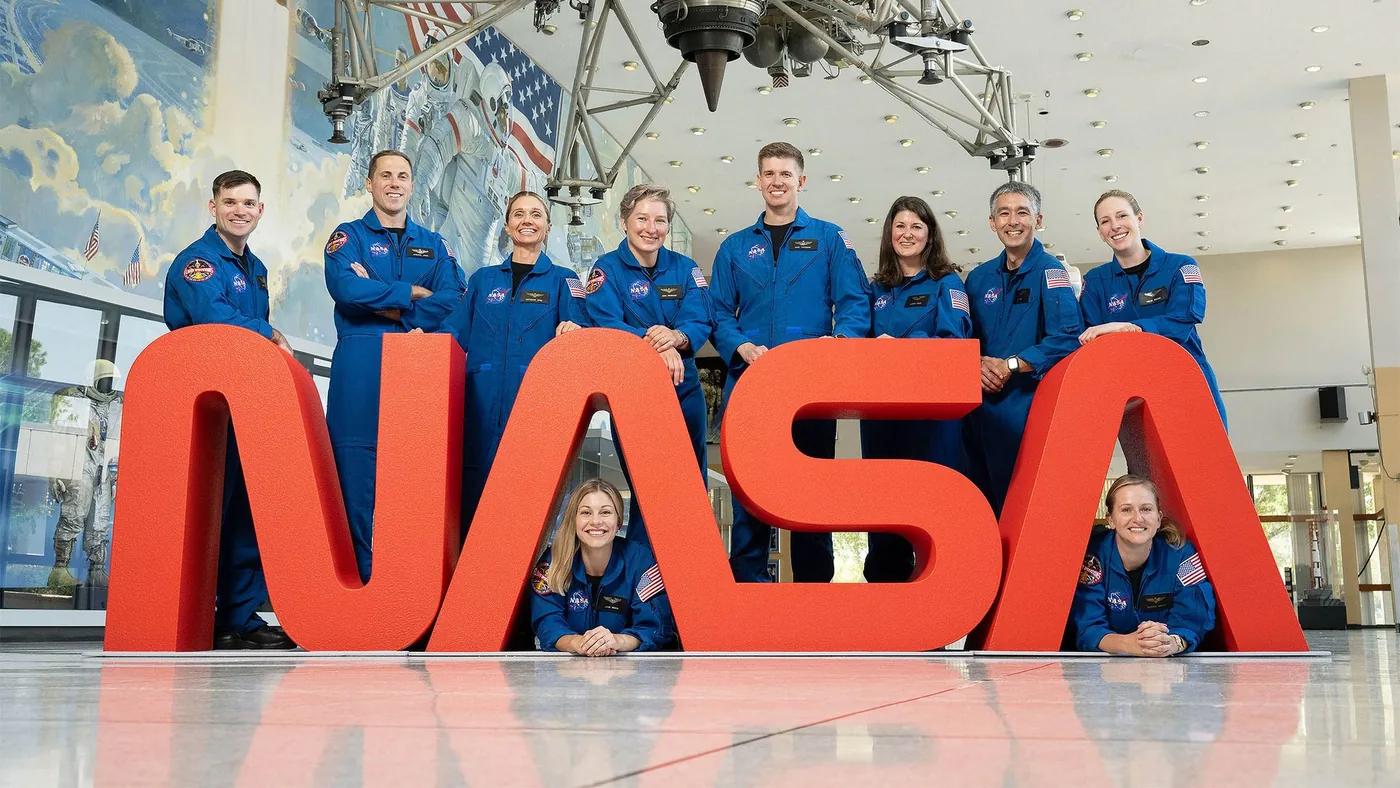
The selection board intentionally balances operational piloting experience with specialized technical backgrounds to construct capable exploration teams. Sean Duffy, acting NASA administrator during the 2025 ceremony, called the new group “the next generation of American explorers” who unite science and operations [2, 4]. That 2025 cohort featured U.S. Army Chief Warrant Officer 3 Ben Bailey, who logged more than 2,000 flight hours across rotary and fixed-wing aircraft, and U.S. Air Force Major Adam Fuhrmann, an aerospace engineer with dual master’s degrees. Aviators such as U.S. Navy Lieutenant Commander Erin Overcash and former naval test pilot Rebecca Lawler joined commercial engineers like Yuri Kubo, who worked on launch avionics at SpaceX. Scientific expertise includes chemical engineer Katherine Spies, biomedical specialist Anna Menon, undersea medicine expert Dr. Imelda Muller, and planetary geologist Dr. Lauren Edgar [4].
Spacewalk Preparation in Neutral Buoyancy
Candidate preparation relies heavily on underwater simulation to replicate the weightless working environment of extravehicular activity (EVA). Trainees submerge into a massive pool at the Neutral Buoyancy Laboratory in Houston wearing pressurized spacesuits carefully weighted so that divers neither float nor sink while working alongside full-scale mockups of orbiting laboratory modules and lunar surface equipment. Every bolt turn, tether latch, and handrail grip demands deliberate physical precision. Repeated practice in the tank helps complex orbital repair drills and lunar traverses become routine before crews ever step outside a pressurized airlock [2].
Operating in low Earth orbit—the orbital band within roughly 1,200 miles above Earth—imposes serious physical stress on bones, muscle mass, and the human cardiovascular network. A 2023 medical study evaluating long space missions found that even 600 minutes of weekly aerobic and resistance conditioning could not fully halt physiological decline across several organ systems during half-year deployments. Trainers respond with intense physical schedules. Beyond gym conditioning, candidates travel to desert field sites and study rock collections in gloveboxes so they can read geological formations, catalog layers, and operate sampling instruments while wearing clumsy pressurized gloves. Those surface skills will determine which rocks astronauts bring back from shadowed craters at the lunar south pole [2].
Flight Roles Across Orbital Stations
With only 32 active astronauts currently serving in the corps, NASA faces a serious personnel shortfall as lunar missions expand [1, 3]. Artemis III commander Randy Bresnik pointed out this operational reality to The Associated Press on Saturday. “We have far more work than we have astronauts,” Bresnik said. He urged qualified individuals to apply before the December deadline, noting that crews will soon live and work on the lunar surface. “By then we’re going to have people on the moon—so don’t delay,” Bresnik said [3, 6].
The new cohort will help manage the orbital shift as the International Space Station prepares for retirement around 2030, handing over research duties in low Earth orbit to privately operated commercial platforms [2]. Station duties demand great patience. Frank Rubio, who set the U.S. spaceflight endurance record of 371 consecutive days in orbit, said to the AP that spaceflight makes up only a tiny slice of total agency service. “It’s important for them to realize most of that work is not going to the moon, right?” Rubio said. “That will be about 1% of your experience. What you’re doing is contributing to the mission of going to the moon” [3]. Trainees will spend most of their early years working with flight teams at Johnson Space Center, where mission directors coordinate orbital timelines and the NASA Artemis crew gathers in Houston to review flight procedures.
How NASA Astronaut Applications Support Artemis Goals
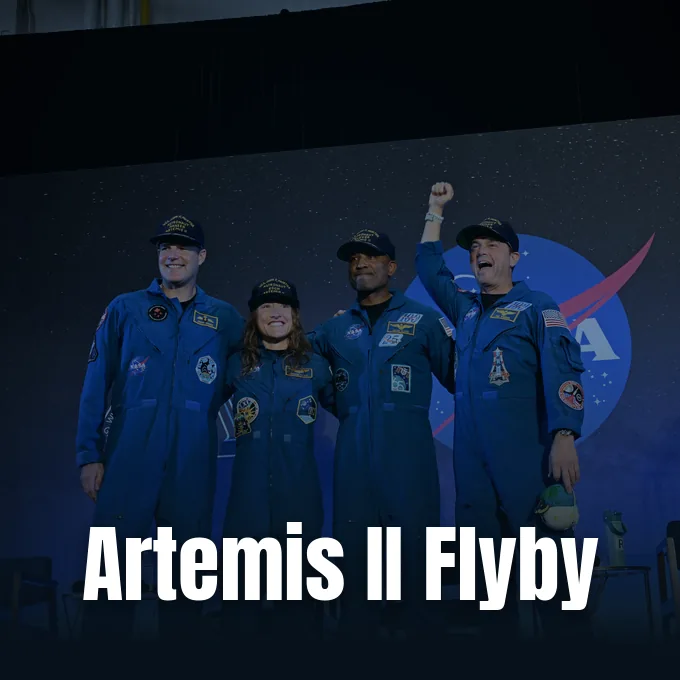
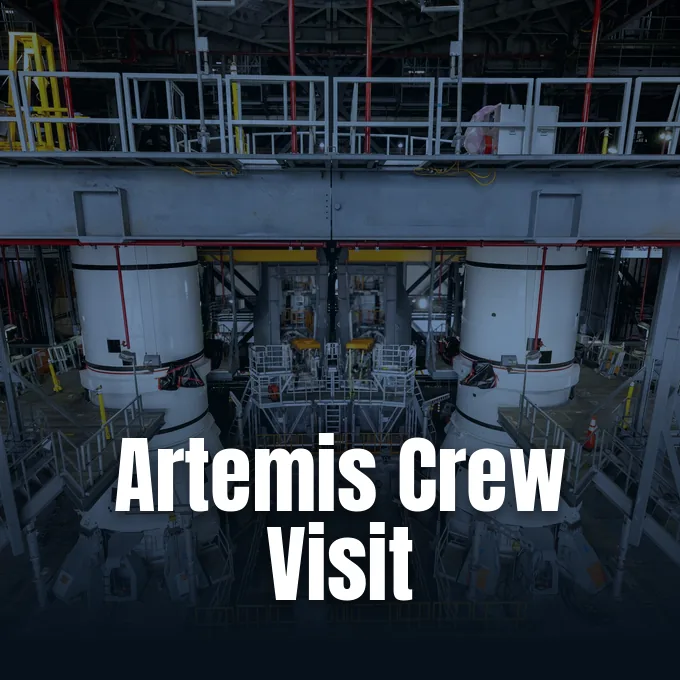
The agency needs a steady influx of NASA astronaut applications to support flight schedules extending toward Mars [1]. The mission sequence started in April when the four-person Artemis II crew carried out a lunar flyaround, proving that crew capsule systems can sustain human life on deep-space trajectories. Flight teams coordinate vehicle inspections before flight integration, including sessions where the Artemis 3 mission crew toured Kennedy booster stacking inside the Vehicle Assembly Building. Next summer, commander Randy Bresnik and three crewmates will launch into Earth orbit to practice docking maneuvers with lunar landers developed by Elon Musk’s SpaceX and Jeff Bezos’ Blue Origin. That flight serves as a rehearsal for Artemis IV, which aims to deliver a two-person landing party to the moon’s southern polar region [3].
Building a permanent Moon Base requires launching rovers, habitation shelters, robots, and power grids before crews can remain on the surface for extended rotations [3]. NASA Administrator Jared Isaacman framed the broader scope of the mission when announcing the recruitment campaign. “The people we select could walk on the Moon, live and work at the Moon Base, and help pioneer the systems and operations that will ultimately carry crews to Mars,” Isaacman said. Those deep space journeys will demand sound judgment, practical skill, and mutual trust among crew members. NASA Deputy Administrator Matt Anderson echoed that sentiment in urging Americans with technical backgrounds to apply. “The window is open. The mission is waiting. And the only thing missing from the greatest adventure humanity has ever embarked upon is you,” Anderson said [1].
- PRESS RELEASE Taveau, J. (2026, November 7). NASA Seeks Next Generation of Explorers to Join Astronaut Corps. NASA. [Article Link]
- ONLINE NEWS Villellas, A., & Ralls, E. (2025, November 13). NASA Selects Ten New Astronauts From the Best and Brightest of 8,000 Candidates. Earth.com. [Article Link]
- ONLINE NEWS Dunn, M. (2026, November 7). NASA Is Looking for New Astronauts to Help Grow Its Artemis Program. ABC News. [Article Link]
- ONLINE NEWS Kuper, S. (2025, September 23). NASA Unveils Latest Class of Astronaut Candidates. Space Connect. [Article Link]
- ONLINE NEWS Mirage News. (2026, November 7). NASA Seeks New Generation of Astronauts. Mirage News. [Article Link]
- ONLINE NEWS Dunn, M. (2026, November 7). Want to Fly to the Moon? NASA Is Looking for New Astronauts to Help Grow Its Artemis Program. FOX 56 News. [Article Link]
APA 7: PerEXP Teamworks. (2026, November 8). NASA Opens Astronaut Applications for Artemis Lunar Missions. PerEXP Teamworks. https://perexpteamworks.com/en/nasa-astronaut-applications-artemis-missions/


