





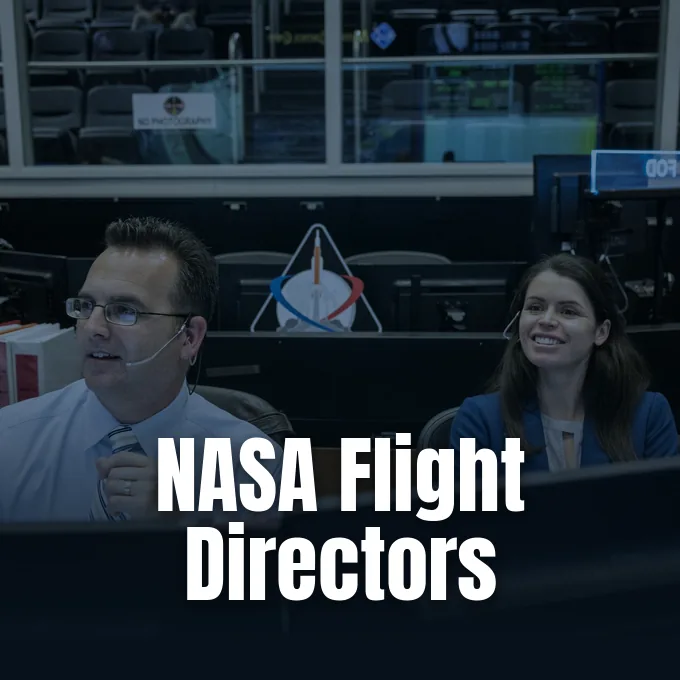
Human spaceflight command requires real-time precision during high-risk orbital operations. The agency opened applications on Oct. 2, 2026, seeking candidates for the next class of NASA flight director personnel stationed at Johnson Space Center in Houston, Texas [1]. Selected leaders will oversee crewed expeditions to the International Space Station, navigate lunar landing profiles under the Artemis campaign, and prepare operational architectures for future voyages to Mars [2]. The competitive recruitment window remains active for ten days through Monday, Oct. 12, 2026 [1].
- What Does a NASA Flight Director Do?
- Mission Command Across Station Expeditions and Artemis Voyages
- What Are the Professional Qualifications for Flight Directors?
- Operational Authority Across GS-14 and GS-15 Grade Levels
- How Rigorous Is NASA Flight Director Training?
- USAJOBS Deadlines for Flight Director Applications
What Does a NASA Flight Director Do?
A NASA flight director holds ultimate operational authority for crew safety and vehicle survival during real-time human space missions [1].
Every operational shift places the designated director in executive command of an integrated flight control team comprised of specialized engineering controllers, flight surgeons, Capcom communicators, and international partner liaisons. While orbital systems communicate with ground stations across tracking networks, the flight director evaluates anomalous telemetry, resolves unexpected hardware degradation, and executes mission rules designed to protect multi-billion-dollar spacecraft assets [6]. In pre-flight phases, directors collaborate with engineering and safety boards to verify that procedural flight plans match verified vehicle capabilities before any rocket clears the launch pad [1]. Chief Flight Director Emily Nelson emphasized that accomplishing upcoming exploration milestones demands expert integrators who unite multidisciplinary specialists into a single unified operational cadence [4]. Directors synthesize complex telemetry into real-time operational decisions [1].
Operational leadership in mission control extends beyond automated system management. Flight directors chair the Flight Techniques Panel and Joint Operations Panel to establish enforceable mission rules across flight profiles. They represent Flight Operations during high-level agency Flight Readiness Reviews [6]. Nelson highlighted this evolving balance: “Accomplishing these ambitious goals requires flight directors who are expert integrators, bringing together a broad range of teams and disciplines into a clear, unified mission effort. This integral role exemplifies the best of innovation and teamwork.” [1]
Mission Command Across Station Expeditions and Artemis Voyages
Flight directors at Johnson Space Center divide their tactical assignments among continuous low Earth orbit expeditions and deep space exploration programs. The International Space Station maintains twenty-four-hour orbital shifts requiring constant coordination with commercial cargo carriers and overseas space agencies [5]. When anomalous vehicle performance emerged during commercial partner flights, mission managers adapted operational timelines just as commercial crew flight operations shift to uncrewed testing protocols to safeguard human occupants [1]. Houston maintains round-the-clock console coverage.
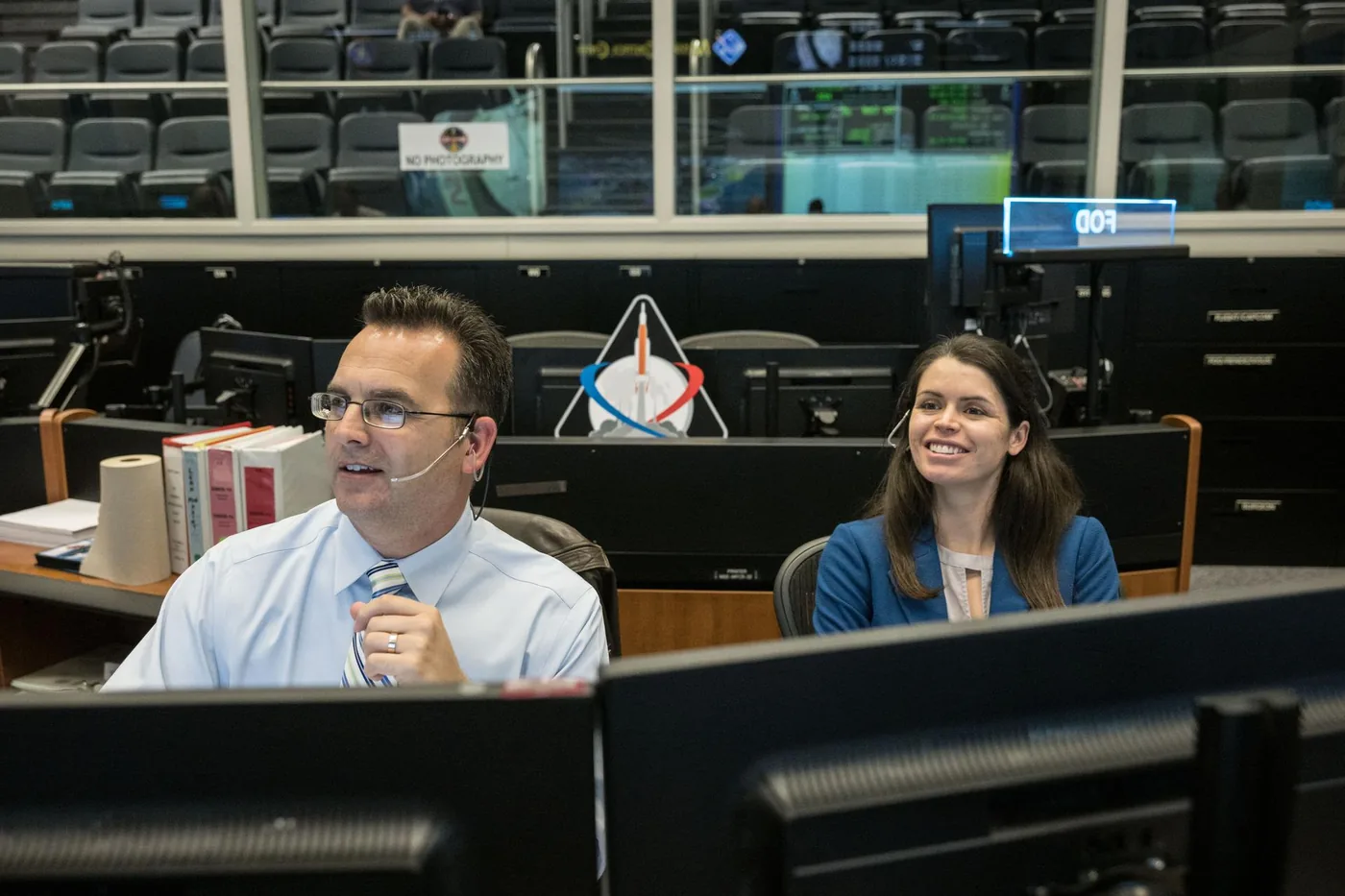
Lunar exploration introduces communication latencies and extreme orbital mechanics absent in standard low Earth orbit routines. White Flight Control Room teams at Johnson Space Center monitored the Artemis II flight control room during orbital operations on April 10, 2026, managing spacecraft trajectory through splashdown and recovery under the direction of NASA photographer Robert Markowitz’s archival documentation [3]. Artemis missions demand real-time decisions where immediate abort options back to Earth are constrained by celestial physics [4]. Flight controllers coordinate trajectory adjustments with Orion spacecraft propulsion systems [3].
Exploration horizons extend toward Mars Base architectures and interplanetary transit vehicles. As commercial launch manifests expand under expanded commercial crew orbital flight rotation missions to maintain space station staffing, future flight directors will simultaneously oversee lunar surface activities from Texas consoles. Nelson underscored that operational teams are entering a pivotal phase supporting active orbital science while deploying lunar surface foundations [1]. Houston leads these multi-vehicle operations.
What Are the Professional Qualifications for Flight Directors?
Candidates applying for the flight director vacancy must hold United States citizenship and an accredited bachelor’s degree in engineering, physical science, computer science, biological science, or mathematics [1]. Formal education establishes baseline competency for analyzing complex spacecraft propulsion, avionics, and thermal dynamics under tight operational constraints. Applicants possessing engineering degrees must graduate from programs holding accreditation from ABET (Accreditation Board for Engineering and Technology) [6].
Academic coursework requirements remain rigorous for scientific disciplines outside standard mechanical engineering curricula. Computer science applicants must document at least 30 semester hours or 45 quarter hours in mathematics, statistics, and computer science, with differential and integral calculus constituting at least half of those mathematical course credits [6]. The vacancy announcement explicitly demands substantial, progressively responsible professional experience that demonstrates time-critical decision-making under high-stress conditions [2]. Candidates from diverse aerospace domains qualify if they have led critical technical responses, integrated multi-system spacecraft hardware, or managed operations where decisions carried direct consequences for human safety or multi-billion-dollar space assets [6]. Candidates must hold American citizenship [1].
Prior experience working on console as a certified flight controller is common among past appointees but remains entirely optional for new applicants [2]. NASA created direct-hire pathways to attract technical leaders from external commercial aerospace enterprises, military aviation wings, and academic research institutes. Qualified specialists who developed foundational skills through technical development pathways in federal aerospace operations can leverage equivalent professional accomplishments to meet GS-14 or GS-15 qualification standards [6]. Relevant leadership credentials matter far more than past badge location [2].


Operational Authority Across GS-14 and GS-15 Grade Levels
Civil service appointments for flight directors fall under the Aerospace Technology (AST) specialty framework at the GS-14 and GS-15 federal pay tiers. An applicant qualifying at the GS-14 level must demonstrate at least one full year of specialized experience equivalent to GS-13 duties, including real-time technical operations, ground network integration, and risk management across spacecraft systems. At this grade level, flight directors exercise increasing autonomy while managing procedural execution and anomaly resolution [6].
Senior appointments at the GS-15 grade require one year of specialized leadership experience equivalent to the GS-14 tier. Leaders at this level drive cross-discipline integration, coordinate flight rules with the Astronaut Office, and interface directly with international space agencies and commercial crew contractors. Selectees must undergo rigorous pre-employment security vetting, complete drug screening, and pass a comprehensive Flight Controller physical examination to certify endurance for prolonged shift work. Shift work includes nights, weekends, and holidays [6].
Administrative guidelines impose clear statutory conditions on all incoming flight operations personnel. Under Title 5 of the Code of Federal Regulations, Part 11, new hires must complete a one-year probationary period during which their sustained operational performance and fitness are certified in writing. Per Executive Order 14343, flight director positions are designated non-bargaining unit roles excluded from collective bargaining units. Federal employees who received Voluntary Separation Incentive Payments within the preceding five years must also repay those disbursements before establishing official appointment dates [6].
How Rigorous Is NASA Flight Director Training?
Initial certification as a NASA flight director takes up to sixteen months of intensive coursework, multi-vehicle simulation training, and direct operational mentoring inside the Flight Director Office [2]. Trainees immerse themselves in detailed spacecraft systems architecture covering propulsion, environmental control, electrical power distribution, and automated guidance algorithms [1]. Dedicated senior flight directors mentor each candidate through real-time console rotations to instill instinctive operational discipline. Initial certification requires sixteen months [2].
Simulations test candidate composure under compounding hardware failures where every second shapes mission outcomes. Integrated training regimens place trainees inside mission control consoles while simulation supervisors inject cascaded telemetry dropouts, thruster leaks, and cabin depressurization alarms. Candidates also participate in spacewalk preparation inside the Neutral Buoyancy Laboratory, examining extravehicular crew choreography beneath forty feet of water in Houston [2]. Through repetitive trial scenarios, future directors master time-critical decision frameworks, balancing conservative risk avoidance against urgent mission survival mandates [1]. Continuous career learning ensures directors adapt operational rules as novel exploration hardware transitions from factory floor assembly to active orbital staging [2].

Beyond technical mastery, trainees develop communication protocols that unite disparate engineering teams under crisis conditions. In mission control, conciseness prevents channel saturation across complex voice loops connecting flight controllers with orbiting astronauts [2]. Operational leadership balances technical scrutiny with rapid consensus building, ensuring decisions remain sound when incomplete telemetry confronts the console. Nelson described this core operational requirement: “We are working in an exciting, pivotal time as we continue supporting operations to the International Space Station while building the next phase of human spaceflight with Artemis and Moon Base missions, preparing to go farther than ever before.” [1]
USAJOBS Deadlines for Flight Director Applications
The application portal for the newest flight director cohort opened on Friday, Oct. 2, 2026, on the federal USAJOBS platform [1]. Qualified United States citizens must submit their complete application package through vacancy announcement 886788000 before the portal closes on Monday, Oct. 12, 2026. Ten days define the open application window [2]. Applicants must provide narrative resume documentation demonstrating how past technical leadership directly satisfies AST specialized experience criteria [6].
Recruitment across civil service channels utilizes the Office of Personnel Management’s Direct Hire Authority to expedite hiring for critical technical roles. Direct Hire Authority governs this recruitment [6]. NASA headquarters contact Rachel Kraft and Spanish-language media liaison María José Viñas in Washington oversee international outreach, while Anna Schneider and Mary Pfister manage Johnson Space Center inquiries at phone extension 281-483-5111 [1]. Robert Pearlman reported for collectSPACE in Houston that space analysts follow class selections closely as mission command models adapt during commercial spaceflight growth [7].
NASA plans to complete applicant evaluations and announce formal class selections before the end of 2026. Selections are scheduled before January [1]. Selected candidates will immediately relocate to Houston to begin their sixteen-month operational training syllabus inside the Flight Director Office [2]. Prospective leaders seeking to direct the next era of lunar and deep space operations must finalize their civil service credentials and submit certified transcripts before the Oct. 12 deadline expires [1].
- PRESS RELEASE Low, L. E. (2026, October 2). NASA Opens Applications for Next Class of Flight Directors. NASA. [Article Link]
- WEBSITE Daugbjerg, J. (2026, September 23). Apply to be a Flight Director FAQ. NASA. [Article Link]
- ONLINE NEWS Worldnewsdotcom. (2026, October 2). NASA Opens Applications for Next Class of Flight Directors (Johnson Space Center). World News. [Article Link]
- PRESS RELEASE Mirage News. (2026, October 2). NASA Opens Applications for Next Flight Director Class. Mirage News. [Article Link]
- ONLINE NEWS Mirage News. (2026, October 2). NASA Opens Applications for New Flight Directors. Mirage News. [Article Link]
- WEBSITE USAJOBS. (2026, October 2). Flight Director, AST, Mission Operations Integration (Direct Hire). United States Office of Personnel Management. [Article Link]
- WEBSITE Pearlman, R. (2026, October 2). NASA recruits new flight directors (2026). collectSPACE. [Article Link]
APA 7: PerEXP Teamworks. (2026, October 3). NASA Flight Director Selection Opens for Deep Space Missions. PerEXP Teamworks. https://perexpteamworks.com/en/nasa-flight-director-applications/


