





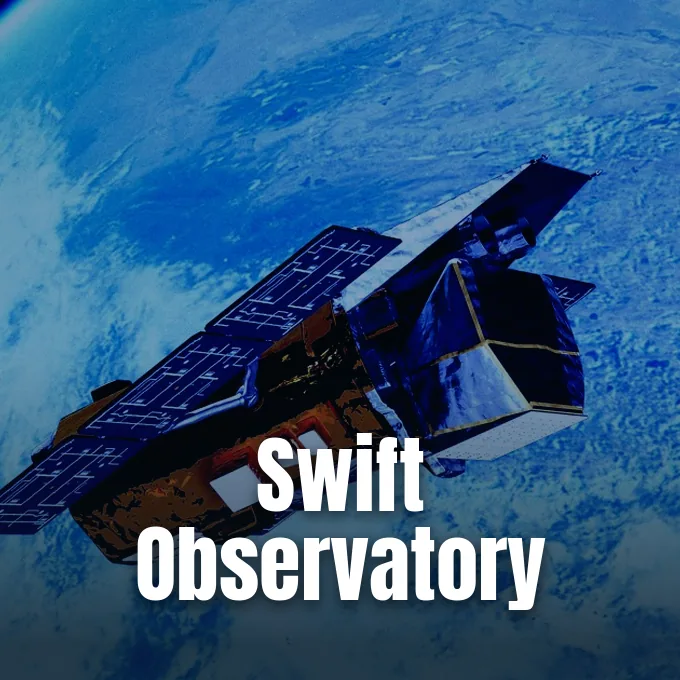
NASA said its Neil Gehrels Swift Observatory is falling back to Earth after a failed rescue mission by a commercial partner. The craft spent nearly 22 years studying cosmic blasts. Rising air drag pulled the probe below 171 miles (275 kilometers) in late October. Scientists expect most parts to burn up during the upcoming Swift observatory reentry, but several dense pieces may survive [2].
Tracking the Swift Observatory Reentry Path
Data from the U.S. Space Force indicates that the probe will plunge into the air between Tuesday and Wednesday, according to astrophysicist Jonathan McDowell of Durham University. Swift launched in November 2004 for what NASA planned as a two-year mission. It operated for more than two decades instead, but solar storms expanded the upper air and hastened the craft’s fall. In mid-October, the craft reached an altitude where onboard systems could no longer counter the drag. That left flight teams with no way to keep it in orbit [1].
The probe sank faster after engineers attempted an eleventh-hour return to science goals, an effort covered when the Swift telescope resumed science operations in low orbit. NASA reported in an October 23 update that the craft was sinking quickly under intense air drag [1]. Controllers could not alter the path of the Swift observatory reentry once the craft dropped below 171 miles, because it lacked thrusters to steer toward a safe ocean corridor. Ground trackers cannot name the exact crash site until hours before the fall. Swift circles Earth in an orbit inclined roughly 20 to 21 degrees relative to the equator, so any surviving pieces will hit inside that tropical sea band [2].
Why the Katalyst Rescue Mission Failed
NASA hoped to avoid an unguided reentry by hiring private industry to lift the probe. In September 2025, the space agency picked Katalyst Space Technologies, a startup from Flagstaff, Arizona, to build a dedicated rescue craft for the LINK mission, aiming to dock with Swift and nudge the telescope into a higher and more stable orbit [1]. The rescue craft launched in July [2].
The rescue craft ran into attitude control trouble months into its flight and began tumbling out of control. Katalyst could not recover its spin or rendezvous with the telescope. Because no second craft was ready, Swift was left to sink on its own. While the failure doomed the telescope, the project yielded data on autonomous rendezvous, as detailed in analysis of how the Swift boost mission delivers space servicing lessons. Ground controllers watched as the orbit decayed below recovery points [1].

Surviving Hardware and Ground Debris Risks
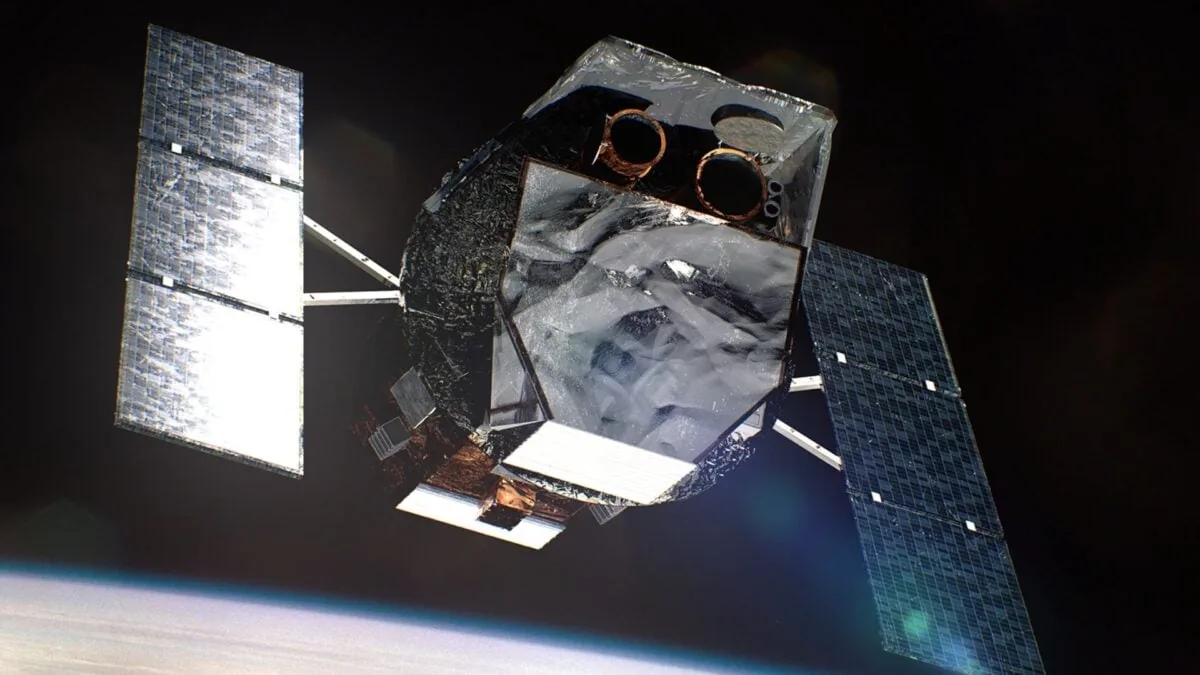
Swift weighs about 1,500 kilograms, or roughly a ton and a half. Jonathan McDowell told Gizmodo that craft of that size often see about 10% of their mass survive air entry, meaning at least 100 kilograms (220 pounds) of metal could reach the surface. “It wouldn’t be surprising if at least 100 kilograms [220 pounds] or so survive reentry,” McDowell said. Dense mirror assemblies and heavy brackets endure heat better than thin metal shells [2].
Dean Sladen, quality manager at aerospace parts supplier Accu Components, told Space.com that certain parts are tough. Sladen said the telescope’s six heavy reaction wheels, which are spinning metal flywheels used to point the instrument, along with optical mirrors and lenses, have the best chance of surviving the fall. Most of the craft will burn into gas high above Earth. Darren McKnight, senior technical fellow at LeoLabs, told Space.com that while the missed boost was unfortunate, the telescope poses little risk. McKnight said the craft is unlikely to harm people because its path stays within 21 degrees of the equator, a zone that is mostly open sea [1].
Calculations show that the odds of any person being struck by falling debris are about one in 10,000. Yet McDowell said roughly 10,000 unguided reentries have occurred since the space age began with Sputnik. The orbit crosses mostly open sea, but also passes above land in Australia, India, Southeast Asia, Africa, and Central and South America. “Should you be worried that you are going to get hit by space junk? No,” McDowell said. He added that world leaders still face a clear policy test to end unguided falls [2].

How the Swift Observatory Reentry Affects Research
The Neil Gehrels Swift Observatory leaves behind a deep record across two decades in space. NASA built the craft to spot gamma-ray bursts, the strongest blasts in the cosmos. Over its career, Swift spotted more than 2,000 gamma-ray bursts and logged 1,400 supernovae [2].
Those scans fueled roughly 7,000 papers. The work reshaped how astronomers understand stellar collapses, gamma-ray bursts, and the birth of black holes in distant galaxies. Swift outlived its planned two-year lifespan by two decades. “We’re all going to pour one out for Swift,” McDowell said of its final plunge [2]. Its archived data will aid research for years.
The Swift observatory reentry closes an era of high-energy sky surveys that began when the craft launched in 2004. Astronomers must now rely on other space tools and ground arrays to catch quick gamma flashes. Swift helped astronomers track afterglows by sending coordinates to observatories around the globe within minutes of a blast, giving ground teams time to view the fading light [2].

Upper Air Impact of Falling Space Junk
Tracking unguided descents remains difficult once a craft breaks up in high air. In a 2026 study published in Science, Fernando and Charalambous showed that seismic sensor grids can track falling space debris in real time. Using a minimum-gradient fit seismic inversion method, they found the speed, altitude, descent angle, and fragmentation pattern of falling metal. They tested this method on seismic data from the 2024 reentry of China’s Shenzhou-15 craft, showing that debris hit far south of paths predicted by standard orbital tools [3].
Beyond ground hazards, experts worry about what happens to metals vaporized in the upper air. McDowell said researchers still do not fully grasp how tons of vaporized aluminum and exotic alloys affect air chemistry. As reentries multiply each year, vaporized scrap could harm the ozone layer and alter global climate patterns in ways that scientists are only beginning to study [2].
Swift is one of many defunct objects falling out of crowded orbits this decade. Low Earth orbit holds thousands of dead satellites, errant stages of Chinese rockets, and long-lost Soviet satellites. As air drag pulls these hulls down, reentries will become regular events rather than rare occurrences. While Swift will end its trip over ocean waters without hitting land, its unguided return shows why satellite makers must build reliable disposal gear into future space flights [1].
- ONLINE NEWS Tangermann, V. (2026, November 2). A derelict NASA space telescope is falling back to Earth and experts have no idea where it’ll crash. Futurism. [Article Link]
- ONLINE NEWS Lapointe, E. (2026, November 2). Where pieces of NASA’s Swift observatory may crash this week. Gizmodo. [Article Link]
- ACADEMIC JOURNAL Fernando, B., & Charalambous, C. (2026). Reentry and disintegration dynamics of space debris tracked using seismic data. Science, 391(6783), 412-416. [Article Link]


