





Near field communication is a short-range wireless standard that lets two phones or cards exchange data over distances under four centimeters. The protocol relies on high-frequency magnetic induction at 13.56 megahertz to link devices without manual pairing menus, building on early radio-frequency identification research led by inventor Charles Walton [9]. Early tracking tags offered one-way beams, but this two-way standard lets microchips alternate between sending and reading data, allowing portable gear to complete payments and read tags [4]. Standardized by international working groups, engineers tuned the radio link to enable close-range data exchange between mobile hardware without draining battery reserves [11]. The architecture allows mobile handsets to interact with passive cards, smart posters, and contactless payment readers across local municipal networks [6, 9]. Physical proximity confirms user intent during every touch transaction [12].
- Physics of Magnetic Induction
- Three Distinct Operational Modes
- Origins in Early RFID Patents
- Field Trials in European Cities
- How Near Field Communication Secures Transactions
- Near Field Communication in Mobile Systems
- Wireless Power for Small Hardware
- Comparing Near Field Communication With Other Protocols
Physics of Magnetic Induction
NFC hardware links two loop antennas into an air-core transformer [9]. When electric current flows through the primary coil inside an initiator, it creates a magnetic field that induces voltage across the secondary coil in the target device through Faraday’s law of induction. This voltage powers unpowered tags [10].
The base carrier frequency is fixed at 13.56 megahertz in the global industrial, scientific, and medical radio band [9]. At 13.56 megahertz, the radio wavelength spans 22.1 meters, which is vastly larger than the centimeter gap between handsets. Maxwell equations dictate that the boundary between localized near fields and radiating far fields occurs at the wavelength divided by two pi, creating a crossover radius at 3.52 meters. Within this 3.52-meter radius, magnetic energy stays close to the antenna coil rather than radiating into open space [10].
This field causes energy to drop swiftly with distance. Far-field radio signals fade at an inverse-square rate of twenty decibels per decade, but near-field induction decays at an inverse-sixth-power rate of sixty decibels per decade [10]. Dan Nosowitz noted that magnetic signals drop off within four inches [4].
Three Distinct Operational Modes
International specifications define three operational setups: reader/writer, peer-to-peer, and card emulation [9]. In reader/writer mode, an active phone reads data from unpowered tags placed on posters, store goods, or key fobs [4]. The phone powers the passive tag, which answers at speeds between 106 and 424 kilobits per second across five official tag classes defined by the NFC Forum [9]. Debbie Arnold of the NFC Forum explained that unpowered tags are inexpensive to embed in everyday goods, allowing phones to retrieve web addresses and product details [4].
In peer-to-peer mode, two battery-powered devices exchange data directly. The NFC Forum ratified this mode in January 2009 to let mobile devices swap contacts and links. Because data speeds under ISO/IEC 18000-3 top out at 848 kilobits per second, phones use peer handshakes to launch Wi-Fi or Bluetooth connections [4, 9].
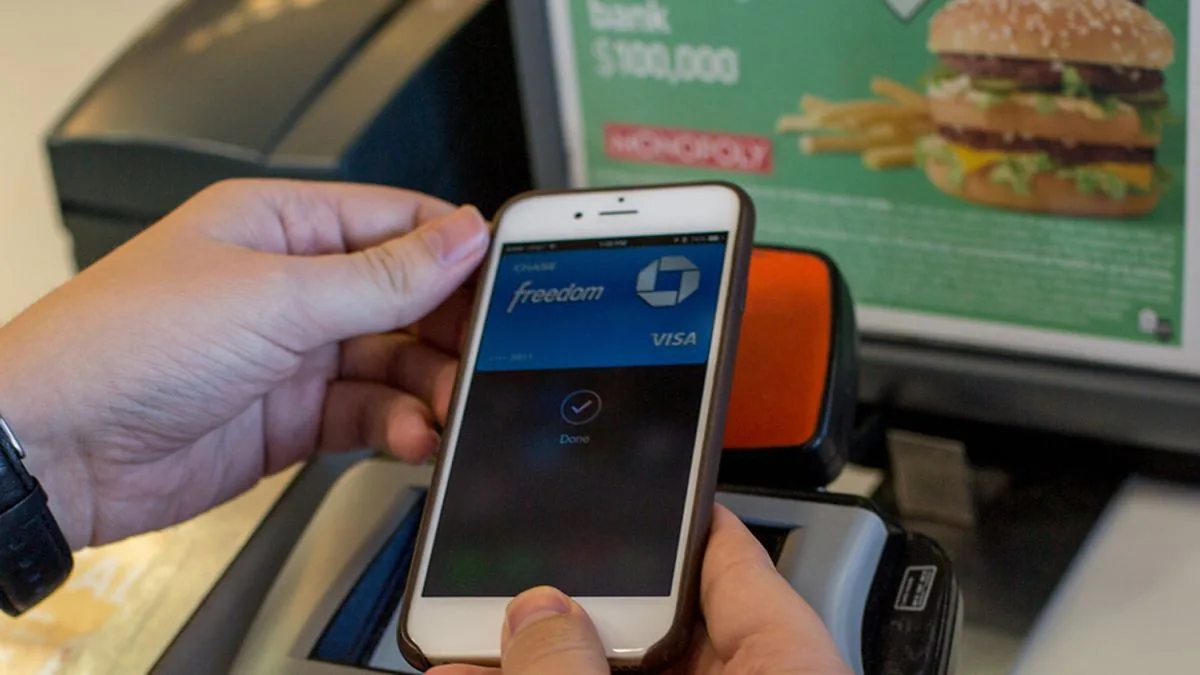
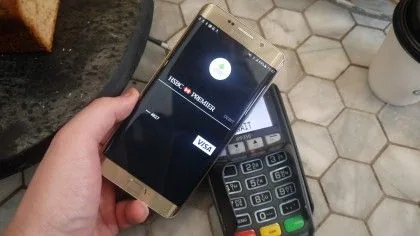
Card emulation mode lets a mobile phone function as an unpowered contactless smart card compliant with international ISO/IEC 14443 and Sony FeliCa standards, allowing handsets to deliver transit tokens or stored bank cards. The exchange completes even when the phone battery is drained [4, 9]. Cameron Faulkner reported that these emulated cards replace traditional credit cards at coffee shops and supermarkets [1].
Origins in Early RFID Patents
The technology grew out of radio-frequency identification work conducted in the late twentieth century. The United States Patent and Trademark Office granted the first patent mentioning RFID to inventor Charles Walton on May 17, 1983. In 1997, Marc Borrett and Andrew White at Innovision Research and Technology patented an inductive link for Hasbro Star Wars toy figures [9].
On March 25, 2002, Dutch maker Philips and Japanese giant Sony agreed to build an open standard for short-range wireless links. Engineers Franz Amtmann from Austria and Philippe Maugars from France drafted six foundational patents at Philips Semiconductors, winning the European Inventor Award in 2015. ISO approved the baseline protocol as ISO/IEC 18092 on December 8, 2003, and ECMA adopted ECMA-340 to define transfer rates between 106 and 424 kilobits per second. These standards harmonized unpowered tag protocols across consumer electronics, establishing common communication formats for future mobile handsets and contactless reader hardware [6, 9].
In 2004, Nokia, Philips, and Sony founded the NFC Forum to test device compliance and set data standards, joined by MasterCard, Visa, Motorola, and NEC [6, 9]. Nokia released a snap-on shell for the Nokia 5140 in 2004 and shipped a model for the Nokia 3220 in 2005. Nokia then launched the Nokia 6131 phone for British trials in 2007 [9].
Field Trials in European Cities
European transport agencies and telecom operators launched early trials between 2005 and 2007 to test user adoption [7, 9]. In May 2005, the German city of Hanau ran bus payment tests using Nokia phones and Philips chips [6, 9]. In October 2005, France Télécom and Orange began a six-month test in Caen with 200 residents carrying Samsung phones, letting users pay at Galeries Lafayette with Laser Cofinoga cards and open Vinci parking gates [6, 7].
The Caen test let residents tap Clear Channel bus shelters to hear spoken schedules or tap cinema posters for video trailers [6, 7]. Patrice Gibon at Philips Semiconductors said the pilot was a world first [6]. User satisfaction in Caen reached 87 and 94 percent [7].
French carriers and banks formed the P€GASUS initiative in November 2006 under the TES competitiveness cluster, testing Payez mobile in Caen and Strasbourg with 1,000 customers and 200 merchants across six major banking groups including BNP Paribas, Crédit Agricole, and Société Générale. Veolia Transport tested 27 bus riders in Nice, RATP and SNCF tested 43 rail passengers in Ile-de-France, and Keolis tested 50 riders in Rennes [7]. On May 21, 2010, Nice launched Cityzi with Orange, Bouygues Telecom, SFR, and NRJ Mobile, distributing Samsung Player One phones with Pass Citizi and equipping 400 to 500 merchants with contactless point-of-sale terminals [8, 9]. Coralie Cathelinais reported that municipal leaders planned to expand the network to between 2,000 and 3,000 merchant terminals by year end [8].


How Near Field Communication Secures Transactions
The short reach of inductive fields forms a natural defense against snooping [9, 10]. Because magnetic power falls off by sixty decibels per decade, an attacker needs listening hardware within less than two meters to intercept raw signals [10]. Users must place devices within four centimeters of a reader to exchange data [9].
To protect banking numbers, mobile devices store card records inside a tamper-resistant chip called a secure element, which early phones embedded on motherboards or inside SIM cards from carriers like Orange and SFR [7, 9]. When a point-of-sale reader requests payment, the secure element signs the transaction cryptographically without sharing the account number with the operating system [9]. In Nice, purchases under twenty euros finished with a tap, but larger payments asked for a PIN [8]. Dan Hughes developed lightweight software stacks to run peer payments on these constrained chips [9].
Architecture shifted when Host Card Emulation allowed operating systems to emulate smart cards in the cloud, leading financial network Dinube to launch native mobile contactless payments in October 2014 without external phone cases or sticker add-ons. Platforms soon paired cloud emulation with biometric sensors, advancing methods for securing mobile interactions against unauthorized capture. Apple launched Apple Pay on iPhone 6 in October 2014. Softcard ran across major American cellular carriers until Google bought the assets in March 2015, followed by the rollout of Android Pay in September [9].
Near Field Communication in Mobile Systems
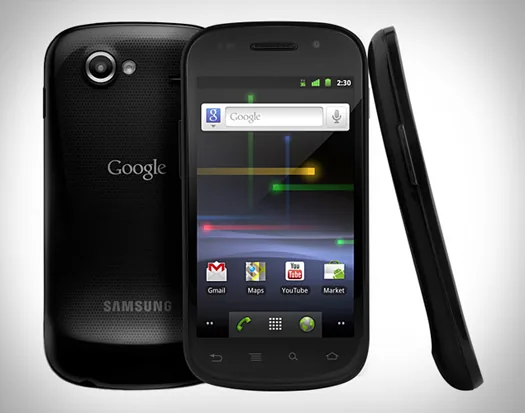
Smartphones became the main consumer home for near field communication in late 2010 when mobile platforms added native software support. Google added induction code to Android 2.3 Gingerbread and launched it on the Samsung Nexus S, and Google CEO Eric Schmidt highlighted mobile tags at Mobile World Congress [4, 9]. Jerry Hildenbrand reported on Android Central that early apps were scarce outside tests like Google Hotpot in Portland [2]. Nokia added support to Symbian Anna on the Nokia C7 in 2011, and China Unicom deployed transit payments in Beijing subways in December 2010. Handset manufacturers soon realized that integrating inductive coils into phone chassis unlocked convenient touch routines for millions of mobile subscribers [4, 9].
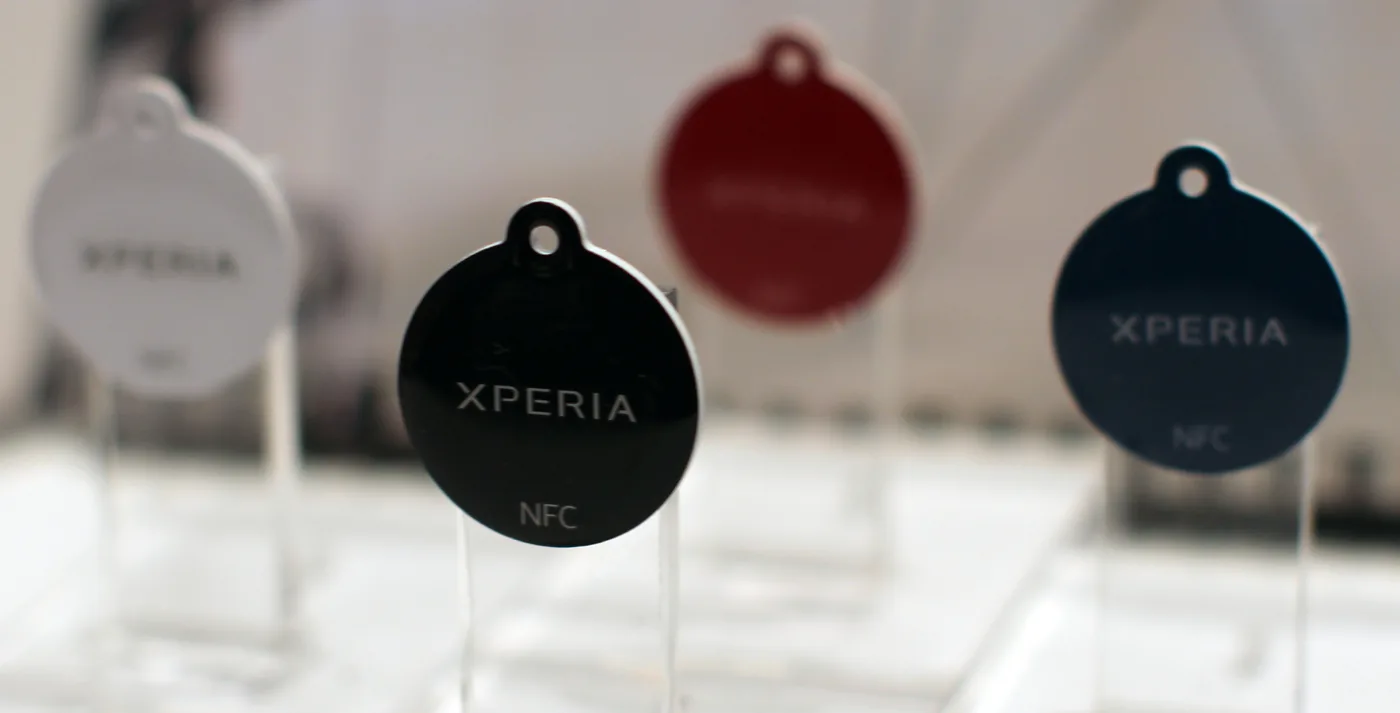
In 2011, Google introduced Android Beam in Android 4.0 Ice Cream Sandwich to share photos, map directions, and contacts by touching phones together [1]. Christopher MacManus reported that Sony launched SmartTags in 2012, selling sets of four tokens in red, white, blue, or black for about $30 with the Sony Xperia P [3, 9]. Touching a nightstand tag muted ringers and set alarms [3].
Low power draw gives inductive chips a sharp advantage over other phone radios. A mobile chip draws about fifteen milliamperes during active transmission, using far less power than Wi-Fi or Bluetooth. Passive tags draw zero battery power, running entirely on the radio field sent by the phone. Dan Nosowitz noted that transfer speeds of 0.424 megabits per second cannot stream video, but they work reliably to pair accessories and tap routers [4].
Wireless Power for Small Hardware
Recent specifications from the NFC Forum expand the technology from data transfer to wireless charging. The group introduced the NFC Wireless Charging standard, sending up to one watt of power over gaps of two centimeters [5, 9]. In 2026, the International Electrotechnical Commission adopted the rule as IEC 63652:2026. This rule removes charging ports from tiny gear [5].
The Wireless Power Consortium Qi platform delivers up to fifteen watts for phones, but its coils take up considerable room inside hardware cases [5, 9]. In contrast, near field communication wireless charging uses tiny antennas measuring three by three millimeters to power compact hardware [9]. The NFC Forum Reference Wireless Charging Listener 7 spec defines antennas measuring nine by four millimeters. These miniature antennas fit into earbuds, smart glasses, fitness rings, and medical sensors where space is scarce. Compact gadgets recharge while resting on compatible phones, providing cable-free convenience for battery-powered accessories without requiring bulky charging cradles [5].
Accessory makers have built these charging rules into active gear. The Universal Stylus Initiative adopted the specification in Version 2.0 of its active stylus standard, allowing digital pens to draw up to one watt from tablets. The NFC Forum runs certification under Test Release 13.1 and Certification Release 15 to ensure gear from different makers works reliably together [5, 9]. The European Commission published a 2024 study recognizing the standard as a key framework for small electronics [5].
Comparing Near Field Communication With Other Protocols
Understanding near field communication means looking at how it compares to RFID, Bluetooth, and Ultra-Wideband [4, 9]. RFID links like EZ-Pass or FasTrak beam $4.25 highway tolls over long distances, but work as one-way roads. Bluetooth provides higher bandwidth for music and video, but requires pairing codes and drains standby battery power [1, 4]. Ultra-Wideband measures spatial positions across rooms, but needs complex radio antennas [9]. Touch induction provides instant validation for transit turnstiles and cash registers [4].
In tactical setups, engineers use near-field magnetic induction to create secure audio bubbles, as manufacturer FreeLinc built induction accessories that wrap a tight wireless field around headsets and two-way radios. Because this bubble has a radius of about 1.5 meters, outside radios cannot listen in or disrupt speech. At DEF CON 27, organizers gave attendees magnetic induction badges that let badges talk securely to each other [10].
Scientists continue to find new roles for passive tags and induction coils in medicine and urban tourism [13, 14]. Engineers designed medical sensors that stream patient health readings, and developed stretchable adhesive coils that stick to human skin to transmit biometric signals to smartphones [13, 15]. In tourism, Roland Egger studied how municipal tags deliver audio guides at historic sites, expanding ideas tested in Caen and Nice [14]. By pairing unpowered tags with touch verification, near field communication links everyday objects to digital networks. Low tag costs ensure widespread use across municipal services, healthcare facilities, and retail environments [4, 12].
- ONLINE NEWS Faulkner, C. (2017). What is NFC? Everything you need to know. [Article Link]
- ONLINE NEWS Hildenbrand, J. (2010). Gingerbread feature: Near Field Communication. [Article Link]
- ONLINE NEWS MacManus, C. (2012). Sony’s SmartTags could change phone habits. [Article Link]
- ONLINE NEWS Nosowitz, D. (2011). Everything You Need to Know About Near Field Communication. [Article Link]
- WEBSITE NFC Forum. (2023). Wireless Charging with NFC. [Article Link]
- ONLINE NEWS Deleurence, G. (2005). Caen, la ville où l’on paye et s’informe en sortant son portable. [Article Link]
- ONLINE NEWS Derriano, L. (2007). La révolution mobile sans contact arrive en 2008. [Article Link]
- ONLINE NEWS Cathelinais, C. (2010). Nice, première ville à passer au paiement sans contact. [Article Link]
- WEBSITE Wikipedia. (2026). Near-field communication. [Article Link]
- WEBSITE Wikipedia. (2026). Near-field magnetic induction communication. [Article Link]
- ACADEMIC JOURNAL Want, R. (2011). Near field communication. IEEE Pervasive Computing, 10(3), 4-7. [Article Link]
- ACADEMIC JOURNAL Coşkun, V., Özdenizci, B., & Ok, K. (2015). The Survey on Near Field Communication. Sensors, 15(6), 13348-13405. [Article Link]
- ACADEMIC JOURNAL Cao, Z., Chen, P., Ma, Z., Li, S., Gao, X., Wu, R., Pan, L., & Shi, Y. (2019). Near-Field Communication Sensors. Sensors, 19(18), 3947. [Article Link]
- ACADEMIC JOURNAL Egger, R. (2013). The impact of near field communication on tourism. Journal of Hospitality and Tourism Technology, 4(2), 119-133. [Article Link]
- ACADEMIC JOURNAL Kim, J., Banks, A. R., Cheng, H., Xie, Z., Xu, S. H., Jang, K., Lee, J., Liu, Z., Gutruf, P., Huang, X. L., Wei, P., Liu, F., Li, K., Dalal, M., Ghaffari, R., Feng, X., Huang, Y. Y., Gupta, S., Paik, U., & Rogers, J. A. (2014). Epidermal Electronics with Advanced Capabilities in Near-Field Communication. Small, 11(8), 906-912. [Article Link]
- ACADEMIC JOURNAL Curran, K., Millar, A. H., & Garvey, C. M. (2012). Near Field Communication. International Journal of Electrical and Computer Engineering (IJECE), 2(3). [Article Link]


