



NFC technology allows two electronic devices to exchange data over a distance of four centimeters or less without requiring manual pairing steps or network passwords. Operating at an unlicensed radio frequency of 13.56 MHz, the system relies on inductive coupling between paired loop antennas to generate a localized magnetic field that carries information safely across tiny air gaps [3]. While conventional Wi-Fi routers and Bluetooth adapters broadcast electromagnetic radiation outward into surrounding space, this short-range hardware forms an air-core transformer that confines its alternating magnetic field to the immediate perimeter of both interacting units [2]. Smartphones, point-of-sale payment terminals, transit turnstiles, and unpowered paper stickers depend on this rapid exchange to complete transactions in less than a second [1].
Principles of Inductive Coupling
Loop antennas placed inside transmitting and receiving units form the basic layer of short-range magnetic communication between electronic devices. When an alternating current flows through the primary antenna coil, it creates an oscillating magnetic field that induces electrical voltage across a secondary coil through mutual inductance without any metal pins touching [2]. Because the distance between units stays tiny compared to the 22.1-meter wavelength of a 13.56 MHz carrier wave, the interaction stays confined within what physicists term the near field. Engineers treat this two-coil arrangement as an air-core transformer that transfers small amounts of power and binary data across narrow air gaps. Both coils couple tightly when brought within contact range, keeping interference with surrounding wireless equipment low [3].
Electromagnetic fields behave differently depending on the distance from the emitter coil. In standard radio setups, antennas radiate far-field waves that travel outward into free space, where signal power rolls off at an inverse square rate of one over distance squared. Localized magnetic induction drops at an inverse sixth power rate, attenuating by 60 decibels for every tenfold increase in distance so that receivers outside the immediate contact area detect zero usable signal. This steep drop shields surrounding equipment [2].
The mathematical boundary separating the near field from the far field is called the crossover point. At 13.56 MHz, this boundary occurs at roughly 3.52 meters from the emitter coil according to Maxwell’s electromagnetic equations. Beyond 3.52 meters, escaping magnetic energy attenuates into standard radiative propagation at levels 10,000 to 1,000,000 times weaker than conventional broadcast radio transmissions. Company FreeLinc used this steep roll-off to create a 1.5-meter secure magnetic bubble around two-way radios, and DEF CON 27 organizers adopted identical physical boundaries for conference badges [2].

Three Modes in NFC Technology
NFC technology operates through three distinct communication modes. In passive mode, an active initiator produces a high-frequency alternating magnetic field, while an unpowered target draws operating current directly from the field to return stored data [3]. Popular Science writer Dan Nosowitz explained that while early systems like EZ-Pass and FasTrak used one-way RFID, near-field links allow genuine two-way conversations between hardware [4].
When two battery-powered devices meet, they switch into peer-to-peer exchange mode to share digital files directly. Both devices generate their own radio fields in turn, sending data packets back and forth without either unit needing to energize the other [3]. Google introduced this peer-to-peer functionality through Android Beam in Android Ice Cream Sandwich (version 4.0) in 2011, letting smartphone owners tap phones together to share photos, web links, and contact cards. The handshake needs no pairing PIN [5]. Unlike Bluetooth links that need manual configuration, peer connections establish a data link the moment two phones touch, letting handsets swap directions without needing cellular towers or Wi-Fi routers [3].
Card emulation serves as the third operating mode, letting a smartphone or watch behave like a contactless payment card when presented to a retail reader. Cameron Faulkner reported for TechRadar that NFC chips also power Nintendo Amiibo figurines, allowing physical game figures to sync with consoles via card emulation protocols [5]. Data rates span 106 to 424 kbit/s under ISO/IEC 18000-3 rules [3]. Dan Nosowitz said that 0.424 Mbps cannot stream video, but it moves payment records swiftly [4]. Microsoft Wallet, Apple Pay, Google Wallet, and Samsung Pay rely on this architecture [5].
How Signals Travel Between Coils
Load modulation transfers data without radiating radio waves into space. An active reader emits a continuous 13.56 MHz sine wave to generate an alternating magnetic field, while an unpowered target switches an inner resistor to modulate the coil load and reflect binary data back [3]. The primary coil decodes these subtle voltage swings into digital bits. Because the circuit needs very little power, a mobile handset draws approximately 15 mA during a data transfer session, keeping device batteries from draining during repeated daily taps at transit gates [4].
Sony, Philips, and Nokia founded the NFC Forum in 2004. They were soon joined by MasterCard, Microsoft, Motorola, NEC, and Texas Instruments to establish ISO/IEC 18092 and ISO/IEC 21481 alongside ECMA-340, ECMA-352, and ETSI TS 102 190 rules, guaranteeing international hardware interoperability across emerging consumer electronics [7]. These universal guidelines ensured that legacy contactless cards built on older ISO/IEC 14443 or Sony FeliCa standards interact with modern phones without protocol clashes [3]. NFC Forum representative Debbie Arnold said that low-power tag reading provides simple everyday connections [4].
In NFC technology, short operating distances create a hardware security boundary that software tools cannot copy. Data transfers stop whenever the space between antenna coils exceeds four centimeters, preventing observers from reading packets from across a room [3]. Researchers Nagashree, Rao, and Aswini showed that close range creates a natural defense against eavesdropping, because an intruder needs to position an antenna within inches of the legitimate reader. Physical distance remains the first line of defense [14].
Early Field Trials in France
Guillaume Deleurence reported for 01net that France Télécom, Samsung, and Philips Semiconducteurs launched a six-month trial of NFC technology in Caen in October 2005. Two hundred residents carried Samsung phones equipped with Philips NFC chips. Users tapped their phones to pay at Galeries Lafayette and Monoprix through Cofinoga, and opened parking barriers at Vinci garages [7]. The municipal pilot demonstrated contactless shopping in everyday retail stores.
Residents passed their phones across street tags bearing the Fly Tag mark to fetch bus arrival times at shelters, watch movie previews outside cinemas, and hear audio tours near historic monuments. Patrice Gibon, who headed NFC development at Philips Semiconducteurs, said that earlier trials in Hanau, Germany, with Nokia and in the Netherlands had examined transit payments alone, while Caen combined retail payments with real-time public information gathering on mobile handsets [7]. Feedback surveys showed user satisfaction rates between 87 and 94 percent across test services [8].
Basse-Normandie created the Secure Electronic Transactions cluster (TES) to expand contactless pilots across France. In November 2006, operators Bouygues Telecom, NRJ Mobile, Orange, and SFR joined six commercial banks, including BNP Paribas and Crédit Agricole, to build the P€GASUS initiative. P€GASUS introduced the Payez mobile trial to 1,000 testers and 200 shopkeepers across Caen and Strasbourg. France Télécom tested transit payments with Veolia Transport in Nice on Canca buses, with RATP and SNCF in Ile-de-France for the M’Ticket, and with Keolis in Rennes under the direction of Luc Derriano and Mung Ki Woo in Bordeaux [8].

Mobile Wallets and Security Standards
Contactless services transitioned into full municipal adoption when Nice launched its Cityzi network on May 21, 2010. Coralie Cathelinais reported in 01net that Orange, Bouygues Telecom, SFR, and NRJ Mobile marketed Cityzi handsets like the Samsung Player One with Smart or Origami plans. More than 400 local merchants installed contactless terminals, climbing past 850 outlets within weeks as banking partners BNP Paribas, Banque Populaire, Caisse d’Epargne, La Poste, and Société Générale issued compatible cards. Transit gates equipped 800 bus stops. Cultural plaques in Vieux-Nice and the MAMAC museum let visitors download Flashcode multimedia guides directly onto their mobile screens [9].
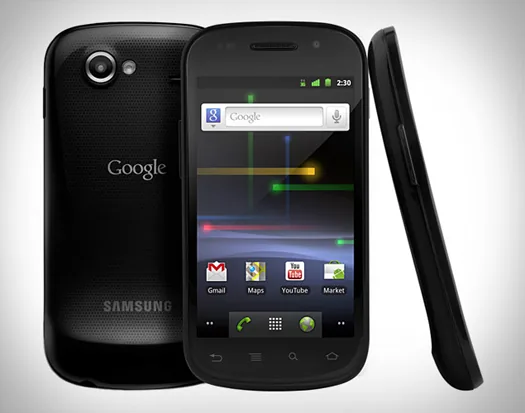
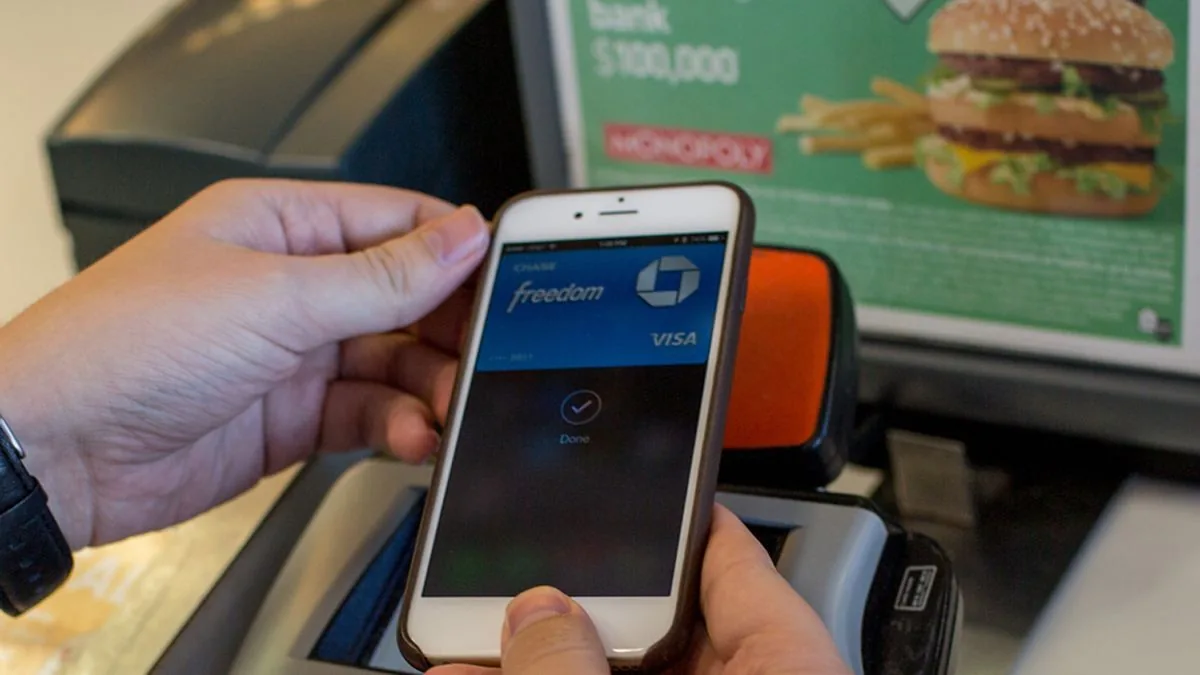
Google teamed with Samsung to launch the Nexus S on Android 2.3 Gingerbread in late 2010, testing merchant payments with Portland shops in its Hotpot pilot, as Jerry Hildenbrand reported for Android Central [6]. Eric Schmidt presented mobile transactions at Mobile World Congress, while US retail chains including McDonald’s, Wawa, Five Guys, and Shake Shack prepared compatible point-of-sale hardware [4]. Apple added NFC to the iPhone 6 in October 2014 for Apple Pay, and Google launched Android Pay in September 2015. Adoption spread across smartphones quickly [3].
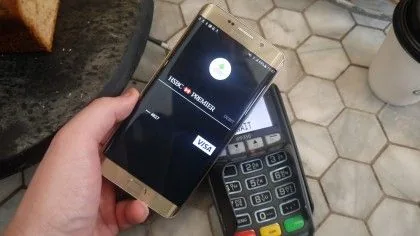
Early mobile wallets relied on tamper-proof secure elements soldered to motherboards or embedded inside SIM cards to hold cryptographic keys. In October 2014, Dinube launched native mobile payments using host card emulation, which lets apps manage credentials safely in cloud servers without dedicated chips [3]. Academic researchers Coşkun, Özdenizci, and Ok observed that payment networks protect card information by generating single-use dynamic cryptograms and tokens. A captured cryptogram cannot execute another purchase [13]. Swatch and Visa partnered with China UnionPay and Bank of Communications to deploy the Swatch Bellamy watch in Switzerland, Brazil, and Asia [3].
Wireless Charging Through NFC Technology
Beyond exchanging data packets, NFC technology can transfer electrical power through the exact same antenna loop. The NFC Forum created the WLC 2.0 wireless charging standard (WLC) to deliver up to one watt of power over distances of up to two centimeters. Hardware designers use this feature to eliminate bulky charging ports and remove secondary inductive coils from ultra-compact gadgets. Smartwatches, digital styluses, and wireless earbuds can now draw power straight from the back of a smartphone when their batteries run low. A user listening to wireless headphones can place them against their phone casing to top up the battery without carrying a second charging cradle or plugging in a wall cord [10].
Small antenna size gives near-field charging a strong edge over larger inductive systems. The Wireless Power Consortium built the Qi platform to send up to 15 watts over four centimeters, but Qi coils are too big for slender accessories [10]. NFC charging antennas can measure as little as 3 by 3 millimeters, fitting neatly into smart rings, skin patches, and stylus pens [3]. Joint efforts also harmonized appliance rules. The NFC Forum collaborated with the Wireless Power Consortium on the Ki Cordless Kitchen specification to coordinate standards [10].
Accessory makers have adopted near-field charging across several product categories. The Universal Stylus Initiative standardized on NFC wireless charging so digital pens recharge straight from tablet screens without needing batteries or cords. Manufacturers test products through the NFC Forum Test Release 13.1 (TR13.1) program to ensure interoperability across brands. In 2024, the European Commission reviewed wireless charging markets and recognized the NFC Forum as an essential body shaping charging standards for portable consumer goods [10].
Tag Architecture for NFC Technology
Passive tags are the simplest components built for NFC technology. A standard tag includes a small silicon chip attached to an antenna loop, sealed inside paper stickers or key fobs [3]. Because the circuit gathers power from the reader’s magnetic field, tags need no batteries and stay functional for decades on store shelves [4]. Charles Walton secured the earliest RFID patent in May 1983, laying technical foundations for proximity tagging. The NFC Forum classified these devices into five official tag types, defining distinctive memory capacities, data transmission rates, and write capabilities for commercial applications [3].
Innovision Research and Technology founders Andrew White and Marc Borrett patented proximity tokens in 1997 for Hasbro Star Wars figures, allowing toys to communicate with nearby electronic bases. Sony created Smart Tags in 2012 to let phone owners trigger custom settings, such as activating silent mode when placing an Xperia phone on a nightstand. In that same year, British restaurant group EAT. and telecom carrier Everything Everywhere placed smart posters across the United Kingdom, letting customers tap posters with phones to view lunch menus. Philips Semiconductors inventors Franz Amtmann and Philippe Maugars received the European Inventor Award in 2015 for fundamental NFC patents. Adoption spread to retail menus [3].

Transit networks rely on proximity tags to move riders through gates. French transit agencies, including RATP, SNCF, Keolis, and Veolia Transport, formed the Ulysse working group to put transit passes onto phones under ISO 14443 standards [8]. Nokia shipped the NFC shell add-on for the Nokia 5140 and Nokia 3220, followed by the Nokia 6131 and the Nokia C7 running Symbian Anna. China Unicom and Yucheng Transportation Card rolled out transit payments on Chongqing buses in January 2009 and Beijing subways in December 2010 [3].
Flexible Sensors for Skin Monitoring
Recent materials research has transformed passive tags into battery-free diagnostic sensors for healthcare and commerce. In a survey in the journal Sensors, Cao and co-authors explained that connecting sensing materials to near-field chips creates unpowered testing tools capable of wireless signal transfer [12]. The sensor harvests energy from a nearby phone, takes an instant reading, and transmits results back through load modulation. Dan Hughes developed early lightweight NFC stacks before standard host card emulation arrived on Android KitKat [3]. Inspectors check food freshness and medical samples without batteries [12].
Biomedical engineers have created stretchable epidermal electronics that adhere to human skin like temporary adhesive patches. In a study published in the journal Small, Rogers and co-authors demonstrated flexible conductive coils and thinned chips mounted onto low-modulus elastomeric adhesives to allow seamless contact with skin under extreme deformation during daily activities. The patch needs no wires. Medical staff can read vital health metrics simply by placing an ordinary smartphone against the patient’s skin to power the circuit and collect physiological measurements. These soft devices prove that NFC technology supports personal healthcare monitoring in non-clinical settings without restricting physical movement [11].
Writing in IEEE Pervasive Computing, Want said that near field communication provides the physical connection linking everyday objects to the Internet of Things. By turning unpowered objects into responsive digital nodes, the standard joins digital networks with physical environments. Simple tap interactions now handle everything from retail checkout lines to medical monitoring, proving that short-range magnetic coupling remains one of computing’s most practical wireless tools [1].
- ACADEMIC JOURNAL Want, R. (2011). Near field communication. IEEE Pervasive Computing, 10(3), 4-7. [Article Link]
- WEBSITE Wikipedia. Near-field magnetic induction communication. Wikipedia. [Article Link]
- WEBSITE Wikipedia. Near-field communication. Wikipedia. [Article Link]
- ONLINE NEWS Nosowitz, D. (2011, March 1). Everything you need to know about near field communication. Popular Science. [Article Link]
- ONLINE NEWS Faulkner, C. (2017, May 9). What is NFC? Everything you need to know. TechRadar. [Article Link]
- ONLINE NEWS Hildenbrand, J. (2010, December 21). Gingerbread feature: Near Field Communication. Android Central. [Article Link]
- ONLINE NEWS Deleurence, G., & La rédaction. (2005, October 20). Caen, la ville où l’on paye et s’informe en sortant son portable. 01net. [Article Link]
- ONLINE NEWS Banque des Territoires. (2007, December 21). Télécoms – La révolution mobile sans contact arrive en 2008. Banque des Territoires. [Article Link]
- ONLINE NEWS Cathelinais, C., & La rédaction. (2010, May 21). Nice, première ville à passer au paiement sans contact. 01net. [Article Link]
- WEBSITE NFC Forum. (2023, June 30). Wireless charging with NFC. NFC Forum. [Article Link]
- ACADEMIC JOURNAL Kim, J., Banks, A. R., Cheng, H., Xie, Z., Xu, S. H., Jang, K., Lee, J., Liu, Z., Gutruf, P., Huang, X. L., Wei, P., Liu, F., Li, K., Dalal, M., Ghaffari, R., Feng, X., Huang, Y. Y., Gupta, S., Paik, U., & Rogers, J. A. (2014). Epidermal Electronics with Advanced Capabilities in Near-Field Communication. Small, 11(8), 906-912. [Article Link]
- ACADEMIC JOURNAL Cao, Z., Chen, P., Ma, Z., Li, S., Gao, X., Wu, R., Pan, L., & Shi, Y. (2019). Near-Field Communication Sensors. Sensors, 19(18), 3947. [Article Link]
- ACADEMIC JOURNAL Coşkun, V., Özdenizci, B., & Ok, K. (2015). The Survey on Near Field Communication. Sensors, 15(6), 13348-13405. [Article Link]
- ACADEMIC JOURNAL Nagashree, R. N., Rao, V., & Aswini, N. (2014). Near Field Communication. International Journal of Wireless and Microwave Technologies, 4(2), 20-30. [Article Link]


