



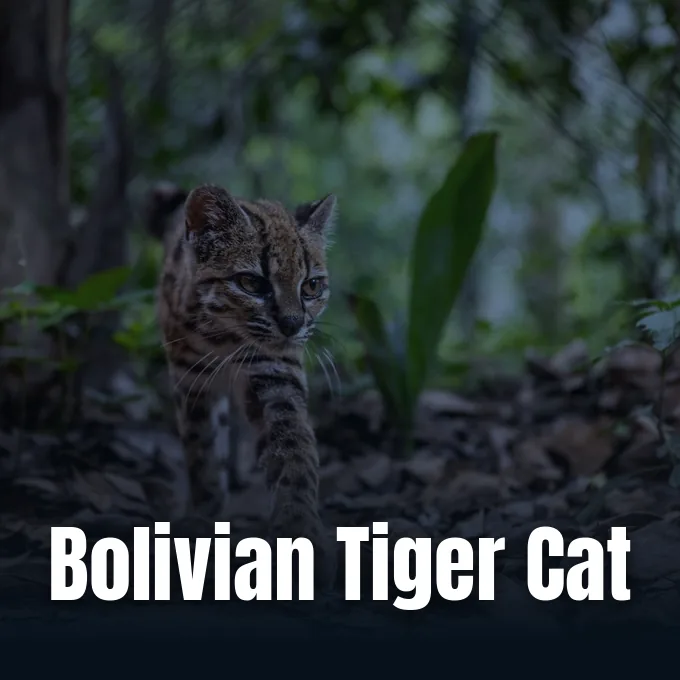
Can an elusive feline roam mountain peaks for generations without formal recognition by modern biology? Deep within the cloud-covered Bolivian Yungas, evolutionary biologists have confirmed a **new cat species** named Leopardus tilcayo, known colloquially among rural communities as the Tilcayo. The formal taxonomic description marks the first identification of a living wildcat in South America since the Uruguayan pampas cat was described in 1923. Comprehensive genomic sequencing published in the journal Current Biology confirms that this diminutive predator diverged from related lineages roughly 1.4 million years ago [1].
- Discovery of a Hidden Cloud Forest Predator
- How Genomic Tools Identified a New Cat Species
- Taxonomic Sorting Across the South American Feline Tree
- The Captive Ambassador Named Tigrino at Senda Verde
- Evolutionary Divergence in the Cloud Forests of Bolivia
- Urgent Conservation Challenges Facing Fragile Yungas Habitats
Discovery of a Hidden Cloud Forest Predator
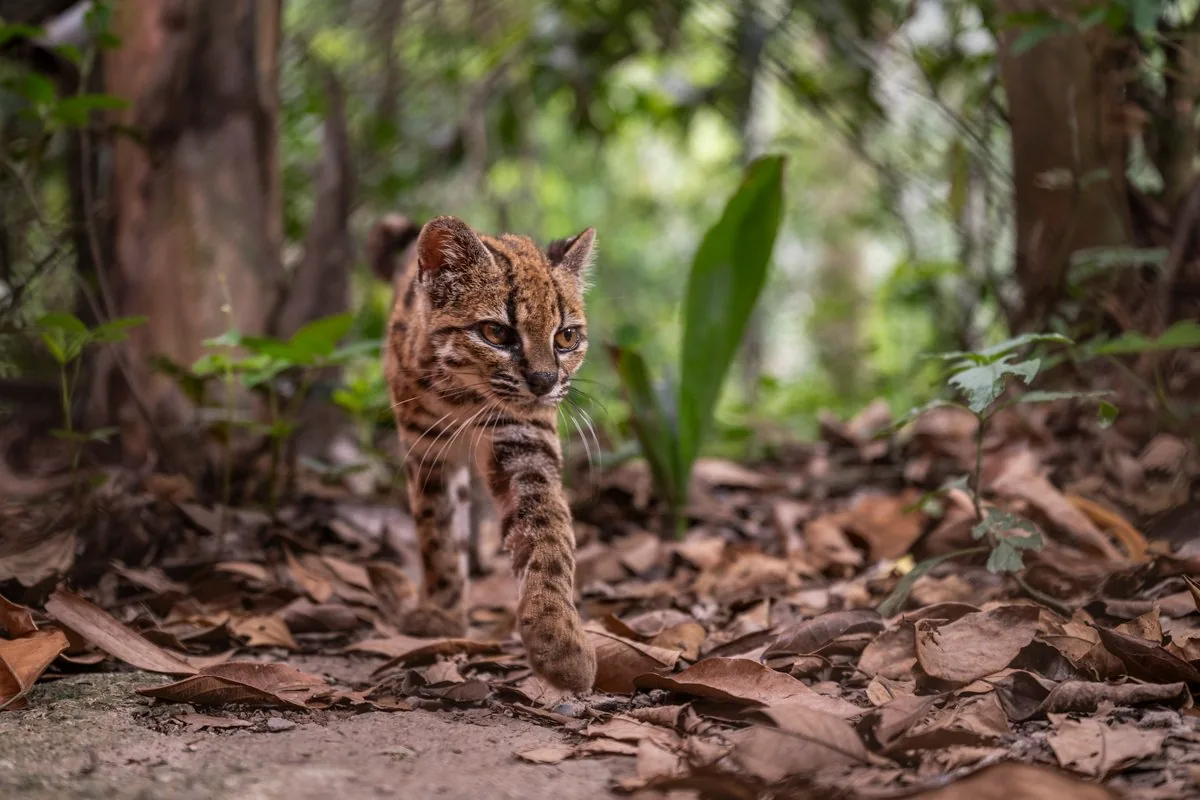
Bolivia’s Yungas forest presents one of the most rugged montane environments on Earth, characterized by steep slopes wrapped in perpetual cloud cover, dense foliage, and persistent humidity. Within this mist-shrouded canopy, local residents have long recognized a small, spotted wildcat known in native communities as the tilcayo, an animal now scientifically recognized as a distinct new cat species. Adult cats measure between 42 and 50 centimeters in head and body length, weighing between 1.4 and 2 kilograms, with a tail adding another 25 centimeters [4]. Their fur displays a light brown background patterned with irregular rosettes (rose-like clusters of dark spots typical of spotted wild cats) across the body, providing camouflage against the mossy tree bark [2].
Tigrino weighs barely three pounds. His diminutive frame makes this secretive carnivore substantially smaller than an ordinary domestic cat [2].
Field researchers still know remarkably little about the creature’s daily biology and hunting patterns within the Yungas canopy. Scat samples recovered during surveys contained tiny fragments of rodent bone, confirming that the feline hunts small forest rodents beneath the undergrowth, while camera-trap evidence indicates that the species remains predominantly active during nocturnal hours. Understanding how these small carnivores regulate prey populations provides essential perspective on the broader trophic behavior of local predators in fragile montane ecosystems where specialized hunters keep rodent numbers in check. Because continuous cloud cover and sheer cliffs limit visibility, biological teams rely heavily on automated camera stations to monitor these secretive hunting pathways through remote forest valleys [2]. Future ecological expeditions aim to clarify whether their diet also includes birds or lizards dwelling in the subcanopy.
How Genomic Tools Identified a New Cat Species
Visual identification remains extremely difficult. Evolutionary biologists classify tiger cats as cryptic species (organisms that share nearly identical physical morphology despite possessing deep, independent evolutionary histories). Study co-lead author Jonas Lescroart from the University of Antwerp in Belgium emphasized that separating these animals by visual markings alone proves virtually impossible. Paola Nogales-Ascarrunz, a National Geographic explorer and co-lead author, initiated laboratory tests after observing that the captive Bolivian cat possessed coat patterns diverging from standard Brazilian descriptions [2].
To resolve the mystery, an international consortium led by senior author Eduardo Eizirik at the Pontifical Catholic University of Rio Grande do Sul in Porto Alegre, Brazil, sequenced the complete genomes of 38 felines [4]. The investigation examined 26 tiger cats representing the genus Leopardus, as well as eight historical museum specimens preserved in regional scientific archives [1]. Jonas Lescroart told Gizmodo that this multi-institutional effort constitutes the most comprehensive genomic examination of the lineage ever conducted [3].
Laboratory teams analyzed genetic material taken from skin, fur, muscle tissue, bones, and teeth collected from specimens across Costa Rica, Colombia, Peru, Bolivia, Brazil, Suriname, Guyana, and Venezuela [5]. Geneticist Leslie Lyons from the University of California, Davis, noted that because these nocturnal animals are so difficult to observe in wild settings, modern genomic data frequently require revisions to early taxonomic classifications [4]. Genomic comparisons swiftly confirmed that the Bolivian samples represented an unrecognized branch, establishing the animal as a distinct new cat species within South America’s feline radiation [1].
Taxonomic Sorting Across the South American Feline Tree
Taxonomic debates persisted for decades. The tiger cat was first described scientifically in 1775 based on individuals recorded in French Guiana [5]. Throughout the 18th and 19th centuries, European collectors traversed the continent and assigned numerous conflicting species names to regional varieties. During the 20th century, baffled taxonomists collapsed all of these varied populations into a single catch-all species designated as Leopardus tigrinus, known as the northern tiger cat or oncilla [4].
Taxonomist Fabio Oliveira do Nascimento at the Museum of Zoology at the University of São Paulo explained that the tiger cat tree was historically contentious and poorly understood [5]. **Modern molecular techniques** overturned that consolidated view over the past decade through detailed genomic inspections. Researchers officially validated the southern tiger cat (Leopardus guttulus) in 2013, recognized Leopardus emiliae in 2017, and differentiated the clouded tiger cat (Leopardus pardinoides) in 2024 [4]. Fabio Oliveira do Nascimento noted that clarifying these genomic distinctions provides long-awaited resolution to historical classification debates [5].
The new study published in volume 36 of Current Biology confirms that tiger cats encompass **five distinct species** rather than a single widespread animal. Beyond affirming the four previously proposed lineages, researchers formally established Leopardus tilcayo as an independent fifth species [1]. Furthermore, investigators recognized a novel subspecies native to the Peruvian Yungas on the western side of the Andes, designating it Leopardus tigrinus antisuyo in honor of the historic Antisuyu region of the Inca empire [2].


The Captive Ambassador Named Tigrino at Senda Verde
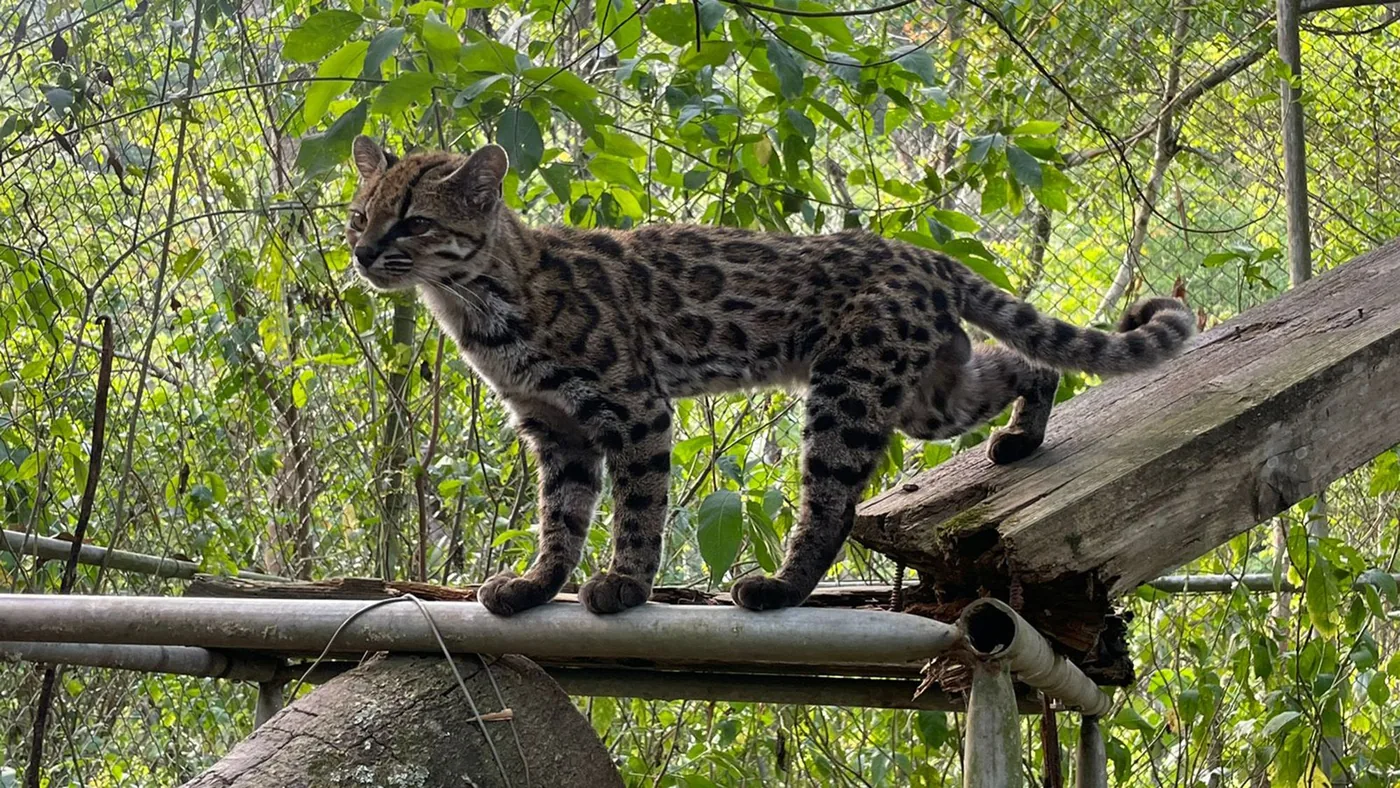
Remarkably, the discovery of this new cat species originated through an unexpected encounter in wildlife rehabilitation. Paola Nogales-Ascarrunz told NBC News that a local resident brought an unusual wildcat into the Senda Verde Wildlife Sanctuary, a Bolivian refuge caring for victims of illegal wildlife trafficking [3]. The male cat, affectionately named Tigrino, arrived at the refuge approximately 10 years ago after being housed by a local family [2].
Tigrino serves as the species’ type specimen (a physical individual that acts as the permanent reference standard for a scientific name) [5]. While caring for the animal, Nogales-Ascarrunz realized that his bodily proportions and coat markings failed to match standard descriptions derived from Brazilian specimens. This made us wonder: what tiger cat do we actually have in Bolivia? The observation prompted researchers to collect genetic samples and initiate comprehensive comparative sequencing [2].
The team’s anatomical descriptions of Leopardus tilcayo currently rely on only two live individuals: Tigrino in captivity and a single wild individual photographed in the forest [5]. Co-lead author Jonas Lescroart admitted that discovering a totally distinct animal came as a genuine shock to the entire research consortium. **No previous naturalist** had ever proposed that the Bolivian population constituted an isolated subspecies, let alone an independent biological species [2].
Evolutionary Divergence in the Cloud Forests of Bolivia
Genomic dating demonstrates that this new cat species diverged from the lineage containing L. tigrinus and L. pardinoides approximately 1.4 million years ago [4]. In feline evolutionary biology, a temporal separation exceeding one million years typically corresponds to a full species-level divide. Jonas Lescroart explained that greater differences in genomic sequence directly reflect longer periods during which populations lived in complete physical isolation [2]. Researchers examined dental features as well as historical museum specimens (the study of DNA preserved in historic museum collections) to confirm that morphological variations align with genetic divergences [1].
Geographic isolation drove the split. The dramatic topography of the South American Andes creates formidable natural barriers, including high mountain crests, steep valleys, and rushing rivers that segregate wildlife populations. Leslie Lyons highlighted that such geographic fragmentation regularly generates hidden biodiversity across South America, where related species evolve independently on opposite mountain slopes [4].
These rugged mountain barriers explain why Leopardus tilcayo thrives on the eastern Andean slopes of Bolivia, while Leopardus tigrinus antisuyo occupies the Peruvian Yungas on the western side. Similar topographic isolation often conceals secretive animals until modern survey equipment penetrates remote habitats, echoing accounts of an elusive mammal rediscovered after decades of scientific absence. In dense tropical forests, **unseen evolutionary lineages** persist quietly in the company of known fauna such as the margay, kodkod, and Geoffroy’s cat [4].
Urgent Conservation Challenges Facing Fragile Yungas Habitats
Conservation status assessments must now change drastically. The International Union for Conservation of Nature currently classifies tiger cats under two categories labeled as vulnerable, assuming broader geographic distributions and larger collective numbers [2]. Dividing tiger cats into five distinct species fragments those estimates. Jonas Lescroart warned that species previously masked under the general northern tiger cat umbrella will likely require reclassification as **endangered wildlife** once assessed as independent biological units [5].
The Yungas ecosystem itself faces severe environmental destruction that threatens this newly recognized carnivore. Nogales-Ascarrunz emphasized that forest loss accelerates due to expanding agricultural borders, illegal mining operations, and human-caused fires that burn through fragile mountain slopes [2]. In addition, free-ranging domestic dogs introduce lethal infectious pathogens into wild cat populations, compounding the toll of poaching and wildlife trafficking across the region [5]. These pressures compound rapidly.
Urgent conservation priorities now include restoring fire-damaged forest patches, protecting remaining native canopies, and establishing connected migration corridors between surviving populations. Senior author Eduardo Eizirik pointed out that discovering a new cat species among high-profile carnivores delivers a **profound warning for global biodiversity**. Countless undiscovered species inhabit threatened ecosystems worldwide, facing extinction before science ever discovers and describes them [2].
- ACADEMIC JOURNAL Lescroart, J., Nogales-Ascarrunz, P., Cassatt-Johnstone, M., Bonilla-Sánchez, A., Sartor, C. C., Angulo, F., Ramirez, J. L., de Oliveira, L. R., de Oliveira, T. G., Shapiro, B., Aliaga-Rossel, E., Svardal, H., & Eizirik, E. (2026). Phylogenomics and museomics reveal five distinct species of tiger cats in South America. Current Biology, 36. [Article Link]
- ONLINE NEWS Guardian staff reporter. (2026, September 17). New cat species identified in Bolivia for first time in more than a century. The Guardian. [Article Link]
- ONLINE NEWS Randolph, M. (2026, September 17). See the first new species of cat discovered in more than a century—it’s adorable. Scientific American. [Article Link]
- ONLINE NEWS Simms, C. (2026, September 17). Beautiful new cat species is first to be named in a century. New Scientist. [Article Link]
- ONLINE NEWS Ferrari, O. (2026, September 17). Scientists name a new cat species for the first time in over a century. Live Science. [Article Link]
APA 7: PerEXP Teamworks. (2026, September 18). Bolivia Yungas Forest Harbors New Cat Species After a Century. PerEXP Teamworks. https://perexpteamworks.com/en/new-cat-species-bolivia-yungas/


