





Nvidia raised concerns with state leaders in Taiwan after prosecutors indicted an Nvidia Taiwan manager accused of helping smuggle artificial intelligence chips to China. Representatives for the chipmaker said they disputed the criminal charges brought against Chang and argued he should not face a probe, but local aides answered that they hold no role in judicial decisions [2].
The Keelung Smuggling Indictment
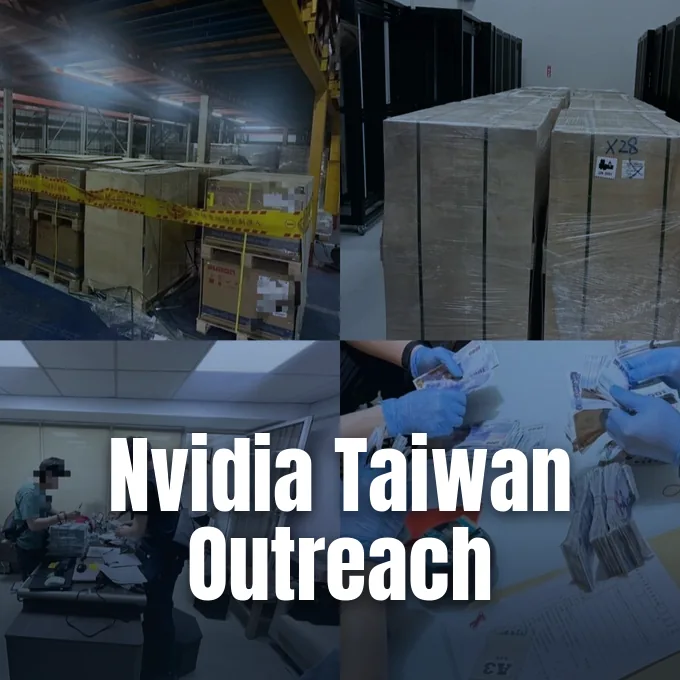
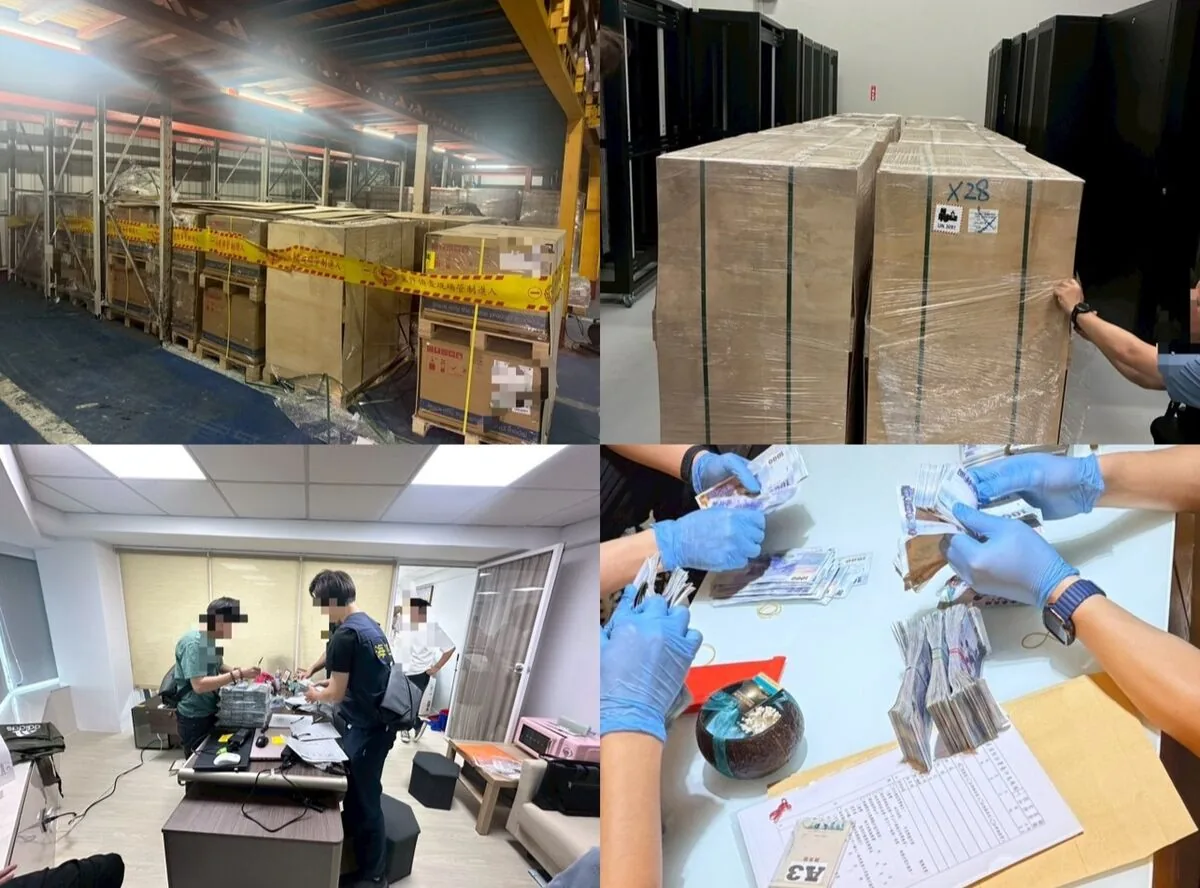
Prosecutors in Keelung detained the manager, surnamed Chang, in July and issued an indictment against him in August on charges of forgery and breach of trust. Authorities identified him as the core figure inside a network that sent 74 servers packed with Nvidia chips to buyers in China. The charges followed an inquiry into how high-end processors bypassed trade limits. Chang faces up to five years in prison [2].
Investigators seized another 56 servers before they could leave the island, while Keelung prosecutors alleged that Chang helped secure Nvidia approval to sell a batch of 130 servers to a buyer that lacked data center space to house the machines. Court records show he concealed that the underlying money came from a Chinese firm. Keelung prosecutors stated that Chang hid the true source of the funds to push the deal through company reviews [2].
Reporters Mackenzie Hawkins at Bloomberg and Ana Maria Constantin at The Next Web documented how the Keelung case unfolded after local agents intercepted the shipment. The Keelung District Prosecutors Office stated that its inquiry uncovered multiple shell intermediaries created to disguise the end users in China. Journalists could not reach Chang to obtain his comment on the charges [2].
Appeals to Taiwan Officials Over the Nvidia Taiwan Manager
Company delegates went to see state leaders in Taipei to raise objections over the criminal case brought against Chang. They told ministers that Nvidia disputed the indictment and argued that the court shouldn’t keep the employee under active inquiry. Ministers in Taipei told the company that elected leaders have no say over independent judges or local courts. Officials in Taipei pushed back [2].
Chen Po-wen, a spokesman for the Keelung prosecutors office, told Bloomberg that law enforcement authorities were completely unaware of any company meetings with political figures, leaving it unclear which request for information Nvidia meant when defending its private discussions in Taipei. Nvidia stated that it had engaged with authorities to deliver requested facts and look after its employee, but investigators in Keelung said they hadn’t asked the chipmaker for diplomatic input. While tech firms often talk with trade groups, approaching state ministers to complain about an ongoing case against an Nvidia Taiwan manager created friction across legal circles in Taiwan. The court moved forward anyway [2].
The response from leaders in Taipei showed that local courts follow written statutes rather than cabinet requests. Chang remains in detention in Keelung while judges review the sales papers. Chen Po-wen confirmed that prosecutors will present their findings before Keelung judges when formal hearings begin [2].
Company Investigation and the TSMC Request
Nvidia told reporters that it conducted its own review into the server sales as soon as questions arose about diverted hardware. “We investigated this matter thoroughly, as is our standard practice, and found no indication that our employee knew of the alleged diversion effort by employees at other companies,” the company said. Representatives maintained that Chang acted in good faith during the approval process without knowing where the hardware would go [2].
Seeking advice on how to navigate the fallout in Taiwan, Nvidia also turned to Taiwan Semiconductor Manufacturing Co. (TSMC), its main chipmaker. Nvidia asked TSMC leaders for counsel on handling the public storm, but the foundry giant declined to get involved in the dispute. As Cheng Ting-Fang reported for Nikkei Asia from Tokyo, TSMC has focused on its own supply plans, setting up a $500 million fund to back chip startups and upstream suppliers. TSMC spokespeople maintained that the foundry focuses on contract chip manufacturing rather than political disputes involving client personnel [1].
Nvidia insisted that its outreach was normal practice. Company leaders said they stepped in to provide facts sought by public bodies while supporting a worker who faced criminal charges, but the refusal from TSMC showed that industry partners chose to keep their distance from the Keelung case [2].
Government Relations and the Nvidia Taiwan Manager Role
Part of the trouble came from a management gap in Taipei, where Nvidia operates without a government relations director. The company only recently advertised the post to hire a lead advocate, leaving local managers without seasoned policy help when agents arrested the Nvidia Taiwan manager in Keelung. The recent job posting shows that Nvidia hopes to build closer ties with Taiwanese regulators as export scrutiny grows. Nvidia had to rely on staff in California [2].
The direct approach in Taiwan echoes lobbying steps that Nvidia previously took in the United States. In Washington, Nvidia’s general counsel called an official at the Department of Commerce to discuss an inquiry into Singapore-based Megaspeed International, an investigation that federal regulators later chose to pause. Megaspeed has denied all wrongdoing, even as American agents asked whether its founder, Chinese businesswoman Alice Huang, gathered secrets for Beijing [2].
The Megaspeed scrutiny gained momentum after US officials investigated an Nvidia spy plot involving figures close to Jensen Huang. The co-founder stepped down as chief executive after admitting to an affair with Alice Huang, though the two share no family relation. Associated Press reported that Megaspeed said Alice Huang left the firm in August 2025 and holds no current post, adding that the cloud vendor runs a lawful trade while checking its own records [1].
Wider Scrutiny Over Diverted AI Hardware
Political pressure has intensified in Washington as Scott Bessent questions Nvidia over diverted AI processors shipped to Asia. Tony Czuczka reported for Bloomberg that Bessent urged Nvidia to pick an outside chief and demanded clear answers within 10 days on whether the vendor pushed questionable sales to China to lift revenue. Bessent said that tech vendors must follow export laws or face strict oversight from federal regulators. Bessent wants a clean break from past practices [1].
The debate over export rules has also divided leaders in Washington. Commerce Secretary Howard Lutnick prepared to join President Donald Trump on Air Force One for talks in China following policy clashes with Bessent over chip bans. Reports in The New York Times showed Lutnick had pressed to narrow trade rules that affected server hubs in Malaysia tied to his former firm Cantor Fitzgerald, whose facilities may serve Chinese tech giant Tencent [1].
At the same time, the United States and Pax Silica allies including Japan, the United Kingdom, and India agreed to draft a shared list of AI technologies to shield before Donald Trump meets Xi Jinping at the Asia-Pacific Economic Cooperation forum in Shenzhen. An inquiry by The Wall Street Journal revealed how large server farms in Southeast Asia used gaps in trade sanctions to give Chinese firms access to Nvidia computing power [1]. While allies of Jensen Huang discussed his possible return, the Keelung prosecution shows that governments in Asia and the West intend to enforce chip limits by targeting supply networks on the ground [2].
- ONLINE NEWS Hawkins, M. (2026, November 15). Sources: Nvidia appealed to Taiwanese officials after its manager was charged over chip smuggling, and sought advice from TSMC, which declined to get involved. Techmeme. [Article Link]
- ONLINE NEWS Constantin, A. M. (2026, November 15). Nvidia pressed Taiwan over indicted manager. The Next Web. [Article Link]


