




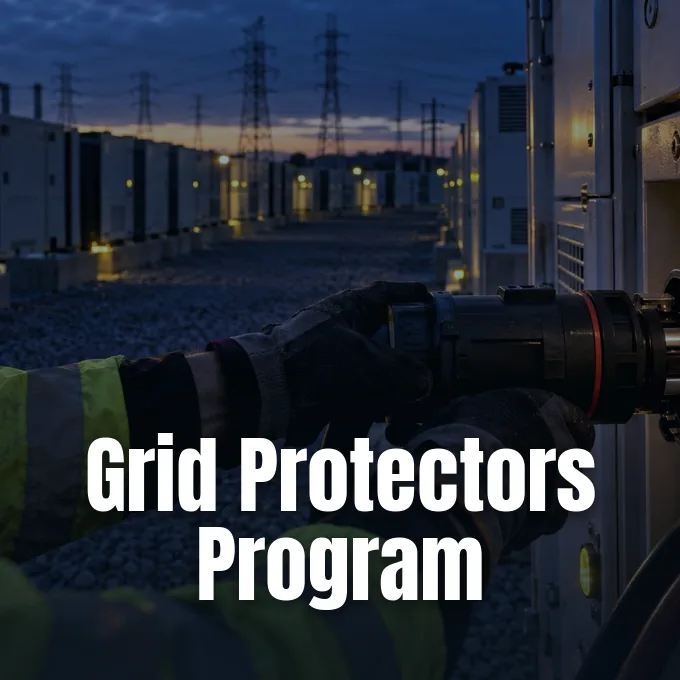
OpenAI launched the Grid Protectors Program on November 2, 2026, setting up a national plan to lower power use at future data center hubs whenever local grids face peak strain. The effort pairs the software maker with power providers, state regulators, and public leaders to agree on terms where big server sites trim their energy intake instead of pulling full wattage non-stop. When summer heat waves drive home air conditioners or winter freezes spike heating needs, enrolled sites will dial back energy draw so local families keep their lights on. Georgia serves as the first test location for the plan [1].
How the Grid Protectors Program Works
Power grids face rising strain as big AI clusters spread across the country. Forecast data published by Subvolts indicates that United States data center capacity will top 100 gigawatts by 2030. Can aging power lines handle this rapid load growth without brownouts? Power providers worry that giant server sites will crowd out nearby homes during heat waves [2].
The initiative relies on demand response deals that set how much power a campus can shed, how fast staff can cut that load, and how long the reduction runs. When winter freezes or summer heat waves push power lines to their limits, grid operators can tell the data center to curtail its energy intake on short notice. That quick load cut frees up power for nearby neighborhoods without forcing utilities to fire up dirty peaker plants that sit idle most of the year. OpenAI said it wants power firms to use campus energy trims as a dependable backup when hometowns face winter freezes or peak summer heat [2]. Power cuts happen quickly. That rapid shift shields local towns.
Power firms also gain early planning clarity through these multi-year deals. Instead of absorbing unannounced power spikes from new server projects, energy suppliers work with software builders years before construction begins. Seroki reported in Lesiba that the Grid Protectors Program gives OpenAI a way to handle energy limits cooperatively rather than fighting local utility commissions [5].
The Georgia Power Pilot
OpenAI chose Georgia for its first real-world trial under the plan. The software group is building a massive compute campus in Effingham County under the project title Project Camellia. The development serves as the test ground where engineers will verify whether huge server racks can drop power draw without breaking ongoing AI workloads, proving that heavy computing hubs can work with electric firms rather than overwhelming local public energy lines. Local grid supervisors in Georgia will monitor the facility to see how fast systems respond during seasonal shortages. The deal stays legally binding through every phase [1].
Georgia Power disclosed key details about the Effingham County site on July 22, 2026, stating that the project will need about 3,200 megawatts of power. To deliver that large volume without breaking local lines, OpenAI signed a 25-year contract that lets Georgia Power trim energy sent to the campus during peak demand periods. Writer Theo Nash noted in Unite.AI that contracted power will arrive in phases between 2028 and 2032 as grid gear expands. Georgia Power called the pact “among the largest single-facility demand-response commitments in the country”, adding that trimming campus load during pinches lets the utility build fewer costly power plants to meet coming growth [1]. Project Camellia anchors that schedule.
The contract allows Georgia Power to curtail up to 1,000 megawatts of energy during peak strain. That volume of load shedding matches the home power use of 700,000 families, topping the combined residential energy needs of Washington and Boston put together. As daily.dev reported, cutting that large load preserves power for home air conditioners during severe heat waves [3].



Batteries and On-Site Storage
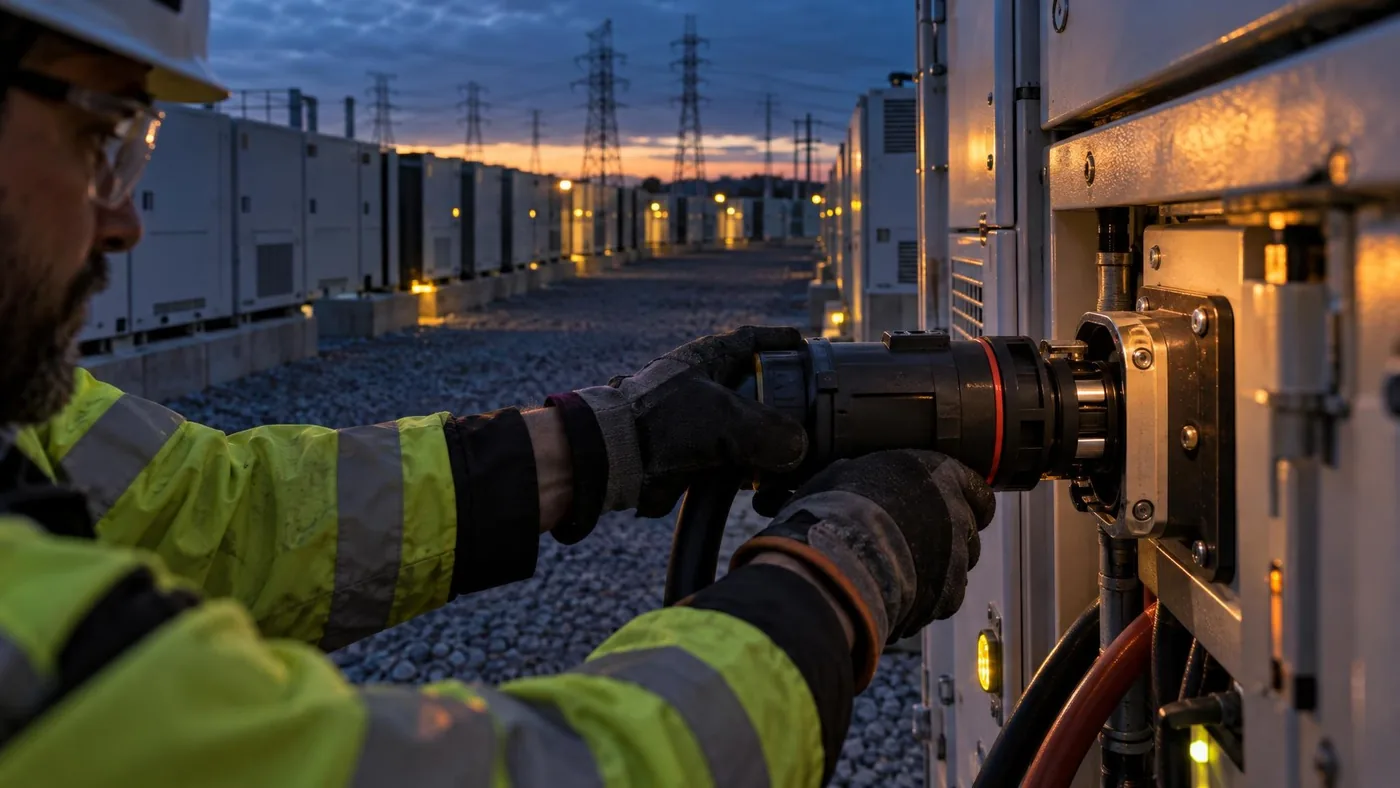
Engineers cannot simply flip a wall switch to cut electricity to thousands of processors. Sharp drops in current can damage computer chips or erase complex training runs that have run for months. To protect hardware, OpenAI will install on-site battery storage systems paired with automated software controls. Battery banks buffer power drops within milliseconds [1].
OpenAI also plans to work with grid operators to feed power back into public lines using on-site generation or stationary battery packs. Similar concepts have been explored in research on flexible data centers, where compute operators adjust power draw according to local solar and wind output. Operators charge batteries during mild sunny hours and discharge energy during evening peaks, helping balance frequency swings across public lines. These automated controls turn large server campuses into shock absorbers for regional energy grids [1]. Backup battery units store excess solar energy.
OpenAI said that campus flexibility “cannot replace investment in new energy supply and transmission”. Demand response acts as a balancing tool rather than a way to avoid building clean power plants. Server sites still need steady energy contracts to support basic daily operations over future decades [1].
Customer Utility Bills
A primary worry for families in host communities is whether AI campuses will cause residential electricity bills to spike. Power providers spend millions of dollars building new high-voltage lines, heavy poles, and substations, and utilities often pass those capital costs directly to local households. For the Effingham County project, OpenAI agreed to pay the full infrastructure costs and electric-service expenses required to connect and run the site. That financial pledge prevents construction bills from rolling onto residential Georgia Power customers. OpenAI pays for the grid equipment it needs [1].
Fixed power equipment carries regular maintenance costs regardless of how much energy moves across wires on any single afternoon. Substations, transformers, and distribution poles must be inspected and kept in working order all year long. Because large computing campuses buy electricity steadily around the clock, they help spread those fixed network costs over a much larger volume of overall energy sales. In addition, dialing down campus power intake during extreme weather limits the costly grid additions that utilities would otherwise build solely to survive brief summer spikes [1]. Long-term deals protect everyday ratepayers. If a project stalls, local families stay protected.
State regulators approved the contract after evaluating household rate impacts. Georgia Power announced on August 26, 2026, that the plan passed the Georgia Public Service Commission. The utility projects $950 million in annual customer savings starting in 2029 from large-load deals including Project Camellia. That portfolio yields at least $15 monthly in savings for a typical Georgia household (using 1,000 kilowatt-hours per month) [1].
Grid Protectors Program Expansion
Georgia represents only the opening phase of a wider national rollout. OpenAI intends to extend the Grid Protectors Program to future compute sites across the country. Because regional grids vary by available fuel types, weather patterns, and local laws, each agreement will adapt to local utility conditions. Local grid stability guides each agreement [1].
Industry analysts at VFF explained that proactive utility partnerships give technology companies a predictable route to secure power during energy shortages. Without structured coordination on electricity demand, artificial intelligence developers risk public backlash and regulatory roadblocks over surging utility rates. Electric companies also gain valuable advance visibility into massive computing loads, helping grid engineers plan and construct necessary substation upgrades years before server racks go live. Direct cooperation with local utilities helps tech firms avoid political friction while securing steady power access [4].
The Effingham County site is under development as the program’s first testing ground. OpenAI stated that it will announce further utility partnerships as terms are finalized in other states. If Project Camellia proves that flexible computing can protect community power supplies, demand response could become the standard blueprint for artificial intelligence infrastructure [1].
- ONLINE NEWS Nash, T. (2026, November 2). OpenAI launches Grid Protectors Program for compute campuses. Unite.AI. [Article Link]
- ONLINE NEWS Subvolts. (2026, November 2). OpenAI launches Grid Protectors Program for reliable electricity. Subvolts. [Article Link]
- WEBSITE daily.dev. (2026, November 2). Introducing the Grid Protectors Program. daily.dev. [Article Link]
- ONLINE NEWS VFF – The signal in the noise. (2026, November 2). OpenAI launches Grid Protectors Program with utilities. VFF. [Article Link]
- WEBSITE Seroki. (2026, November 2). Introducing the Grid Protectors Program. Lesiba. [Article Link]
- ONLINE NEWS Techmeme. (2026, November 2). OpenAI launches the Grid Protectors Program. Techmeme. [Article Link]


