




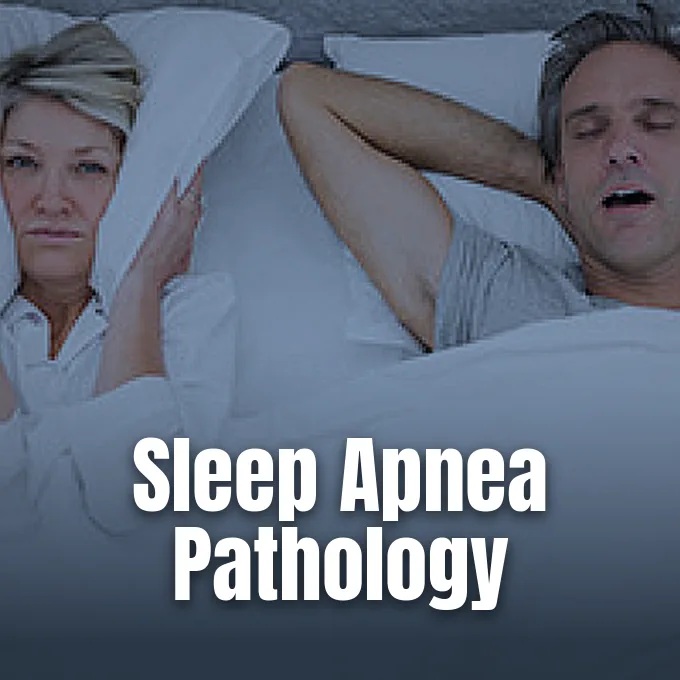
Understanding what is sleep apnea begins with a clear clinical definition: it is a chronic sleep-related breathing disorder where airflow repeatedly drops or halts during sleep, cutting off oxygen and causing repeated awakenings at night. These nighttime pauses happen either when relaxed throat tissues block the upper airway or when the brain temporarily fails to send breathing signals to chest muscles. While many people link the condition to loud snoring, recurring choking spells deprive bodily tissues of deep rest and raise long-term cardiovascular risks [1, 14].
- What Is Sleep Apnea?
- Distinguishing Obstructive from Central Events
- Common Nighttime Warning Signs
- Physical Mechanisms Behind Airway Collapse
- Cardiovascular Consequences of Sleep Apnea
- How Obstructive Sleep Apnea Affects Cognition
- Clinical Diagnosis and Polysomnography
- Therapeutic Devices and Medical Interventions
What Is Sleep Apnea?
At its core, the condition involves a recurring pause in normal breathing that disrupts deep sleep and strains bodily systems. Clinical diagnostic standards identify two main airway events during sleep: an apnea, defined as a full or near-full cessation of airflow lasting ten seconds or longer, and a hypopnea, which involves a partial drop in airflow paired with oxygen loss or brain arousal. When these events recur dozens of times each hour, blood oxygen levels fall, prompting the autonomic nervous system to trigger brief micro-arousals so muscle tone in the throat can return [14].
Epidemiological data indicate that obstructive sleep apnea affects between 936 million and 1 billion people globally between the ages of 30 and 69, yet most patients remain undiagnosed [10, 14]. Because these pauses happen while a person sleeps, adults rarely recall waking up or gasping for air during the night. Often, a bed partner or family member is the first to notice heavy snoring broken by quiet spells that end in sudden choking snorts [7, 15].
Ordinary snoring comes from harmless vibration of throat tissues when air passages narrow slightly during sleep [7]. True apnea involves real airway suffocation where airflow stops until rising carbon dioxide levels awaken the sleeper, shattering deep rest and leaving patients chronically tired [1, 14].
Distinguishing Obstructive from Central Events
Obstructive events make up the vast majority of clinical cases and stem from mechanical closure in the throat. During an obstructive episode, the tongue, soft palate, and lateral throat walls collapse into the airway passage while the diaphragm and chest muscles keep working hard to pull air into the lungs [14, 15]. The American Academy of Sleep Medicine identifies four main drivers of obstructive events: a narrow throat, poor dilator muscle reflex during sleep, an oversensitive breathing control loop, and a low arousal threshold that causes early waking [14].
Central events occur through an entirely different pathway that involves no tissue blockage in the throat. In central cases, the brainstem respiratory center within the pre-Bötzinger complex fails to send neural signals, leaving the chest and diaphragm still for 10 to 30 seconds. Primary central sleep apnea is uncommon, comprising only 3.8% of central diagnoses, with most cases linked to heart failure, stroke, or Cheyne-Stokes breathing cycles [14, 16].
Some patients display mixed events, starting with a central pause before respiratory muscles resume an obstructed effort against closed throat tissue. Positive airway pressure can at times induce emergent central pauses as carbon dioxide levels shift under mechanical airflow. Sleep specialists treat these conditions as an overlapping spectrum of sleep-disordered breathing [14].
Common Nighttime Warning Signs
The most common night symptom of airway obstruction is loud snoring broken by silent pauses and subsequent gasping or choking sounds [7, 15]. As throat muscles relax, breathing pauses for ten to thirty seconds until a brief arousal reopens the passage with a loud snort [7]. Frequent nighttime urination, known as nocturia, serves as another key warning sign because altered chest pressures stimulate atrial natriuretic peptide release, prompting the kidneys to produce excess urine during sleep. Night sweats, dry mouth at waking, and restless limb tossing also accompany these broken sleep cycles [2, 15].
Because repeated awakenings disrupt deep sleep, patients suffer from daytime drowsiness and heavy cognitive fatigue [7, 13]. Reviewers at MedlinePlus and Dr. Allen J. Blaivas of Rutgers New Jersey Medical School note that affected adults struggle to focus at work, suffer morning headaches from carbon dioxide buildup, and can fall asleep while reading or driving [7, 14]. Chronic sleep loss also harms mood, fostering irritability and higher rates of depression [7, 13].

In older adults, the disorder often goes undetected because loud snoring is less common, especially among seniors who live alone. Dr. Ronald Petersen, an Alzheimer’s expert at the Mayo Clinic in Rochester, Minnesota, evaluated a female patient in her 60s whose waning focus mimicked early dementia. “Her attention was waning,” Dr. Petersen recalled. “She couldn’t follow a television program or stay focused during a conversation.” An overnight sleep test at the Mayo Clinic revealed obstructive breathing pauses, and continuous positive airway pressure restored her cognitive test scores within a year [11].
Physical Mechanisms Behind Airway Collapse
The human upper airway is a soft, flexible tube without bone or cartilage support along the pharynx. During waking hours, dilator muscles such as the genioglossus maintain tone to keep the passage open against the suction created when the lungs pull in air [14, 15]. When a person falls asleep, muscle tone drops, allowing the soft palate, uvula, and tongue base to slide backward toward the rear throat wall [15].
Excess body weight is the single biggest anatomical risk factor for airway closure. At Harvard Medical School in Boston, Dr. Atul Malhotra notes that roughly two-thirds of adults with obstructive airway pauses carry excess weight, as fat pads in the neck and tongue narrow the breathing passage [3]. A large collar size of 17 inches (43 cm) or more in men and 16 inches (41 cm) or more in women marks high airway vulnerability [7]. Yet 20% to 25% of patients are not overweight, developing airway collapse from an inherited small lower jaw, an enlarged soft palate, or large tonsils and adenoids [3, 15].
Sedatives and alcohol taken before bed weaken throat muscle tone while dulling the brain’s natural waking reflex [7, 16]. Endocrine conditions also narrow the throat: hypothyroidism lowers muscle tone and causes fluid retention, while acromegaly causes soft tissue growth that crowds the breathing passage [3].
Cardiovascular Consequences of Sleep Apnea
Each breathing pause sets off acute stress in the circulatory system through sudden oxygen drops, carbon dioxide spikes, and surges in sympathetic nerve activity [13, 14]. When the airway closes, strong breathing efforts against the obstruction create steep negative chest pressures that strain heart chambers and reduce cardiac blood supply. In a clinical trial published in Hypertension, Dr. R. P. Pedrosa and colleagues found obstructive breathing pauses in 64.0% of patients with resistant hypertension [13, 14].
Writing in the Journal of Thoracic Disease, Dr. Robert C. Stansbury and Dr. Patrick J. Strollo explain that chronic nighttime oxygen drops cause vascular inflammation, blood vessel stiffening, and tissue damage. Over time, these vascular insults raise the incidence of heart failure, atrial fibrillation, and ischemic stroke [13, 14]. Non-obese patients with breathing pauses face about 2.7 times higher risk of early arterial hardening than obese peers without the condition, showing that vascular harm stems directly from hypoxic stress [15]. An epidemiological review by K. A. Franklin and E. Lindberg noted that patients younger than 70 years face an increased risk of early death if their apnea remains untreated [14].
Metabolic harm further ties airway pauses to vascular illness. Intermittent nighttime hypoxia impairs insulin signaling and disrupts blood sugar control, accelerating the onset of type 2 diabetes [13, 14]. Combined with abdominal fat, high blood pressure, and blood lipid imbalances, airway obstruction sits at the center of metabolic syndrome [13].
How Obstructive Sleep Apnea Affects Cognition
Beyond heart strain, nighttime breathing pauses damage brain networks and impair memory storage. In Current Sleep Medicine Reports, Dr. Magalie Carey and Dr. Ina Djonlagic explain that consolidating declarative and motor memories requires unbroken sleep microarchitecture. When repeated arousals break slow-wave sleep and rapid eye movement stages, memory processing in the hippocampus and cerebral cortex is stunted, keeping the brain from storing new tasks and facts [4].
Molecular brain imaging links airway pauses to biomarkers of Alzheimer’s disease. At the Turner Institute for Brain and Mental Health at Monash University in Melbourne, Australia, Dr. Melinda Jackson and Marina Cavuoto led a PET scan study in 34 adults with untreated airway blockages. The Monash team discovered higher beta-amyloid buildup in patients with severe pauses, correlating with reduced time spent in deep stage N3 sleep. “The significance of finding the association between increased brain amyloid in patients with OSA will allow for further research to explore in more detail the implications of treating OSA for reducing dementia risk,” Dr. Jackson said [9].
Postmortem studies provide further proof of neural damage. Working with the Landspitali Biobank in Reykjavik, Iceland, Professor Stephen Robinson of RMIT University and Austin Health’s Institute for Breathing and Sleep examined brain tissue from 34 deceased donors with clinically verified airway obstruction. Robinson found Alzheimer’s-like amyloid plaques and neurofibrillary tangles in the hippocampus and brainstem. “Our study is the first to find Alzheimer’s-like amyloid plaques in the brains of people with clinically-verified obstructive sleep apnea,” Robinson said [10]. In San Diego, California, Dr. Sonia Ancoli-Israel of UC San Diego showed that CPAP therapy slowed cognitive decline in older adults [11].
Clinical Diagnosis and Polysomnography
Confirming a diagnosis needs objective sleep testing rather than symptom recall alone. Full overnight polysomnography in a sleep laboratory remains the clinical standard, using electroencephalography (EEG) to track brain waves, electrocardiography (ECG) for heart rhythms, and chest belts to gauge breathing effort. For uncomplicated adult cases, home sleep apnea testing offers a simpler path, tracking airflow, breathing effort, and blood oxygen levels in the patient’s own bed [7, 14].
Doctors score disease severity using the Apnea-Hypopnea Index (AHI), which counts the average number of pauses and shallow breathing events per hour of sleep. Under American Academy of Sleep Medicine guidelines, an apnea requires an airflow drop of at least 90% lasting ten seconds or longer, while a hypopnea entails an airflow drop of 30% or more coupled with oxygen loss or an arousal. An index from 5 to 14 marks mild illness, 15 to 29 reflects moderate disease, and 30 or higher indicates severe illness [14].

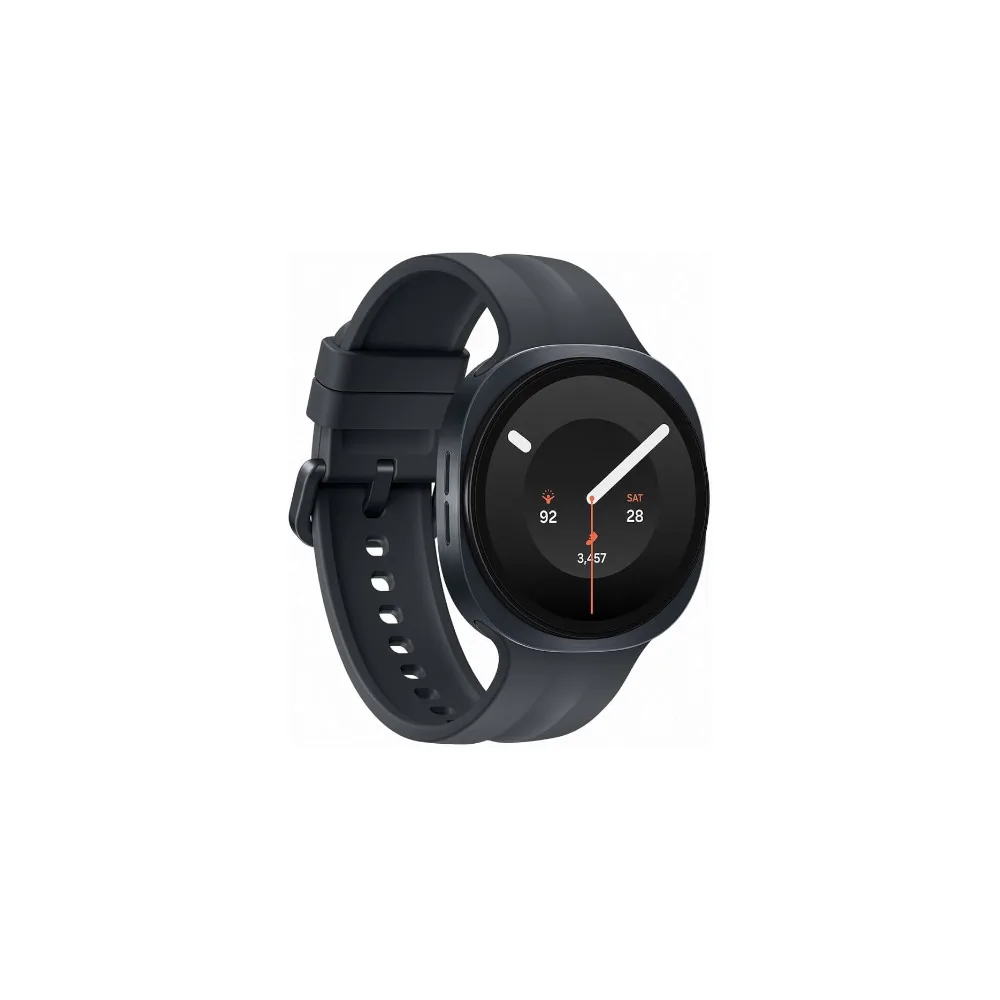
New digital tools are aiding sleep diagnostics. At the CITIC research center of Universidade da Coruña, researchers Alejandro Mayorga-Redondo, Diego Alvarez-Estevez, and Eduardo Mosqueira-Rey, working with CESGA in Galicia, Spain, built a quantum neural network that detects breathing events from polysomnography records using far fewer parameters than classical models [12]. In Seoul, South Korea, Samsung won clearance from the U.S. FDA and South Korea’s Ministry of Food and Drug Safety to deploy sleep apnea detection on the Galaxy Watch 9, Galaxy Watch Ultra 2, and Galaxy Ring, assessing oxygen drops across two sleep sessions [8].
Therapeutic Devices and Medical Interventions
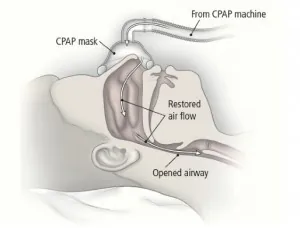
Continuous positive airway pressure (CPAP) is the primary non-invasive therapy for moderate to severe breathing blockages [2, 5]. By blowing a gentle stream of pressurized room air through a mask, the machine acts as an air splint to keep throat passages from closing during sleep [2, 7]. For adults who find high exhale pressure hard to tolerate, bilevel positive airway pressure (BPAP) devices offer separate pressures for breathing in and out, while auto-adjusting positive airway pressure (APAP) tunes pressure levels as sleep stages shift [2].
Patients who cannot tolerate a mask can try oral devices or surgical care. Mandibular advancement mouthpieces, made by dental specialists, fit over the teeth to hold the lower jaw forward, keeping the tongue from sliding back into the airway [2, 5]. When physical tissue blocks airflow, surgical options include removing enlarged tonsils, advancing the jaw, or implanting a hypoglossal nerve stimulation device in the chest to stimulate tongue nerves during inhalation [2, 7].
Drug treatment gained formal backing in December 2024 when the U.S. Food and Drug Administration approved tirzepatide, sold as Zepbound by Eli Lilly and Co. in Indianapolis, for moderate to severe obstructive sleep apnea in adults with obesity [6, 7]. In two 52-week clinical trials involving 469 adult patients without type 2 diabetes, once-weekly tirzepatide shots produced significant drops in the Apnea-Hypopnea Index alongside marked weight loss. “Today’s approval marks the first drug treatment option for certain patients with obstructive sleep apnea,” said Dr. Sally Seymour of the FDA Center for Drug Evaluation and Research [6]. Stephanie Watson, former executive editor at Harvard Women’s Health Watch and writer for Harvard Health Publishing, notes that pairing PAP therapy with weight loss and side sleeping offers the best path to long-term health [5].
- WEBSITE National Heart, Lung, and Blood Institute. (2025). What Is Sleep Apnea? National Institutes of Health. [Article Link]
- WEBSITE National Heart, Lung, and Blood Institute. (2025). Sleep Apnea Treatment. National Institutes of Health. [Article Link]
- WEBSITE Harvard Medical School. (2021). Sleep and Health Education Program: Risk Factors for Obstructive Sleep Apnea. [Article Link]
- ACADEMIC JOURNAL Carey, M., & Djonlagic, I. (2025). The Impact of Obstructive Sleep Apnea on Memory Consolidation: A Review. Current Sleep Medicine Reports, 11(1). [Article Link]
- WEBSITE Watson, S. (2013). Weight loss, breathing devices still best for treating obstructive sleep apnea. Harvard Health Publishing. [Article Link]
- PRESS RELEASE U.S. Food and Drug Administration. (2024). FDA Approves First Medication for Obstructive Sleep Apnea. [Article Link]
- WEBSITE MedlinePlus. (2025). Obstructive Sleep Apnea – Adults. National Library of Medicine. [Article Link]
- ONLINE NEWS Siddiqui, A. (2026). Samsung’s upgraded sleep apnea detection is rolling out to Galaxy Watch and Galaxy Ring. Android Authority. [Article Link]
- ONLINE NEWS ScienceDaily. (2020). Link between sleep apnea and increased risk of dementia. Monash University. [Article Link]
- ONLINE NEWS ScienceDaily. (2020). Identical signs of brain damage in sleep apnea and Alzheimer’s. RMIT University. [Article Link]
- ONLINE NEWS Span, P. (2010). When Sleep Apnea Masquerades as Dementia. The New York Times. [Article Link]
- ONLINE NEWS Quantum Zeitgeist. (2026). Quantum Neural Networks Detect Sleep Apnea With Fewer Parameters Than Classical Systems. [Article Link]
- ACADEMIC JOURNAL Stansbury, R. C., & Strollo, P. J. (2015). Clinical manifestations of sleep apnea. Journal of Thoracic Disease, 7(9), E298-E310. [Article Link]
- WEBSITE Wikipedia contributors. (2026). Sleep apnea. Wikipedia, The Free Encyclopedia. [Article Link]
- WEBSITE Wikipedia contributors. (2026). Obstructive sleep apnea. Wikipedia, The Free Encyclopedia. [Article Link]
- WEBSITE Wikipedia contributors. (2026). Central sleep apnea. Wikipedia, The Free Encyclopedia. [Article Link]


