





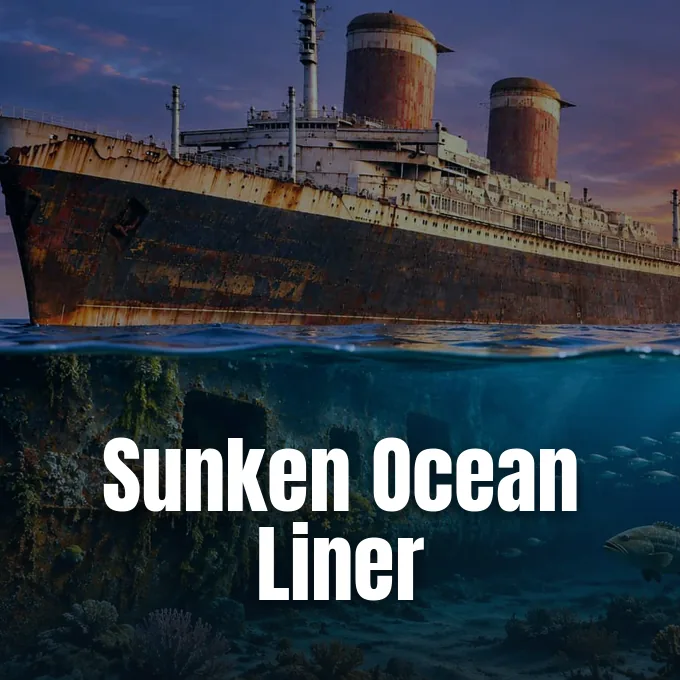
Florida officials and marine engineers scuttled the SS United States off the Florida coast on November 11, sending the 302-meter ocean liner to the seafloor to create the world’s largest artificial reef. The $13.5 million reefing project gives a second life to the former transatlantic record holder, resting roughly 22 nautical miles southwest of Destin in the Gulf of Mexico [3, 4]. How will marine life turn hundreds of feet of steel into a living ecosystem? Over the next decade, natural currents and settling organisms will coat the bare hull, turning the retired flagship into a major marine habitat and scientific observation site [2].
The Gulf Seabed Site
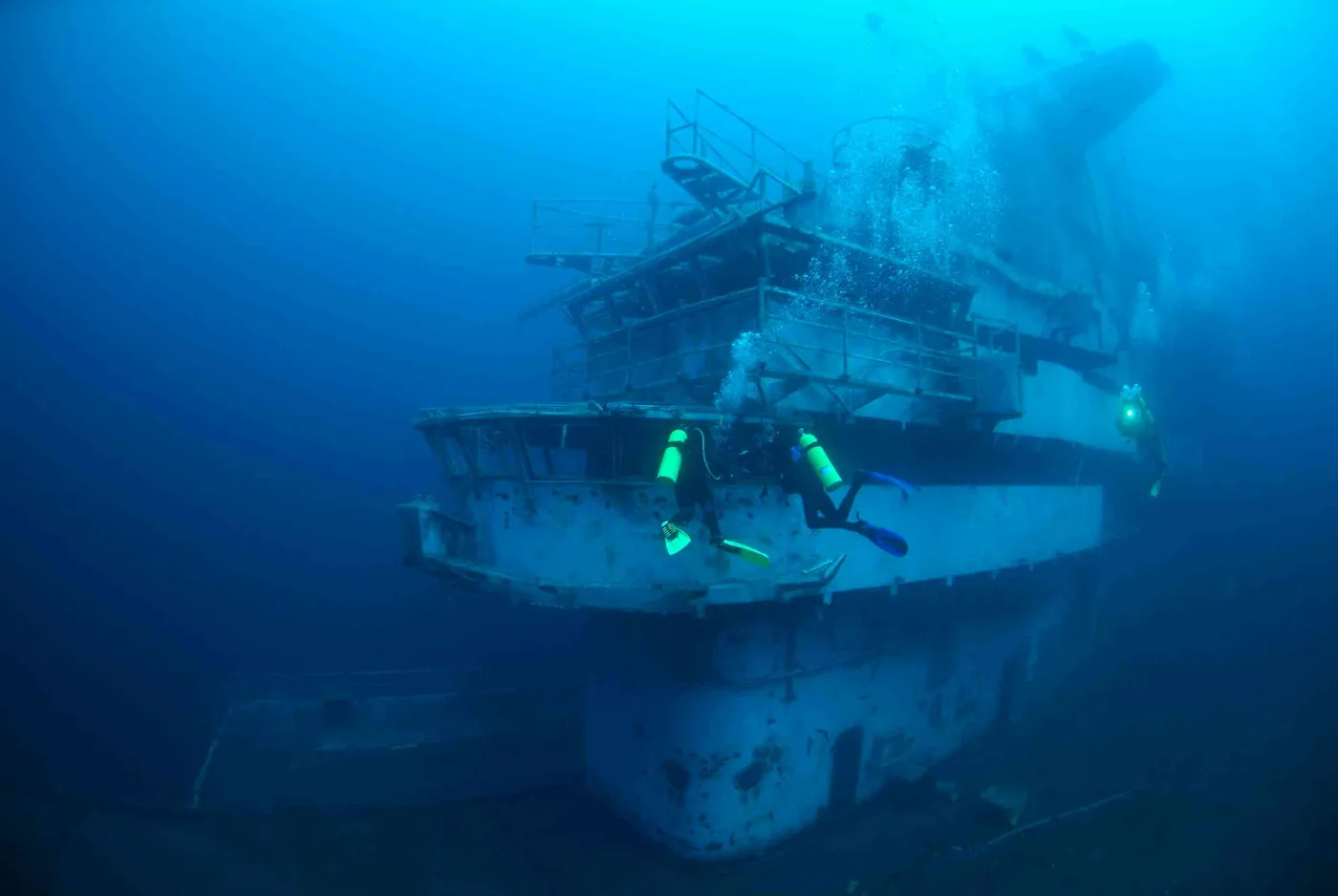
The scuttling operation took more than seven hours on Wednesday, November 11, as Gulf water slowly filled lower compartments before the massive hull tilted to one side and slipped beneath the waves, sending the 990-foot ocean liner to its final resting place on the seafloor [3]. Associated Press reporters John Hanna and Stephen Smith reported from Destin, Fla., that state and county officials directed the scuttling roughly 25 miles southwest of Destin, between Panama City and Pensacola [4]. The ship settled on the sandy seafloor in 55 meters of water. Its upper deck structures rise to within roughly 17 to 18 meters of the surface, leaving the superstructure accessible to recreational scuba divers [2, 3].
Marine engineers used controlled flooding rather than demolition charges to sink the ocean liner, opening valves to pump seawater directly into 128 tanks that once held heavy fuel and lubricants. Flooding those empty storage spaces helped the giant vessel settle evenly on the seafloor without breaking apart during descent. The scuttling process took longer than planners expected, but the steady inflow of water lowered the ship safely onto the sandy bottom [3].
Okaloosa County leaders purchased the ocean liner in 2024 for $1 million to save its historic steel frame from scrap dealers. Local authorities funded the broader $13.5 million scuttling program to establish an offshore diving attraction and support regional fisheries off Destin, Fla. [3, 4]. The hull rests intact on sand [3].
SS United States Speed Records
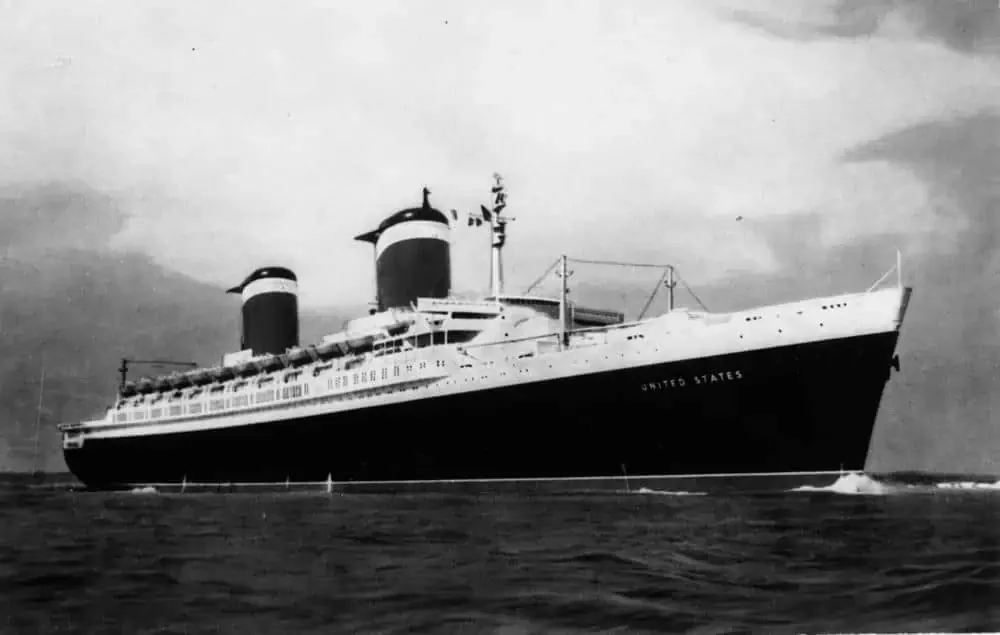
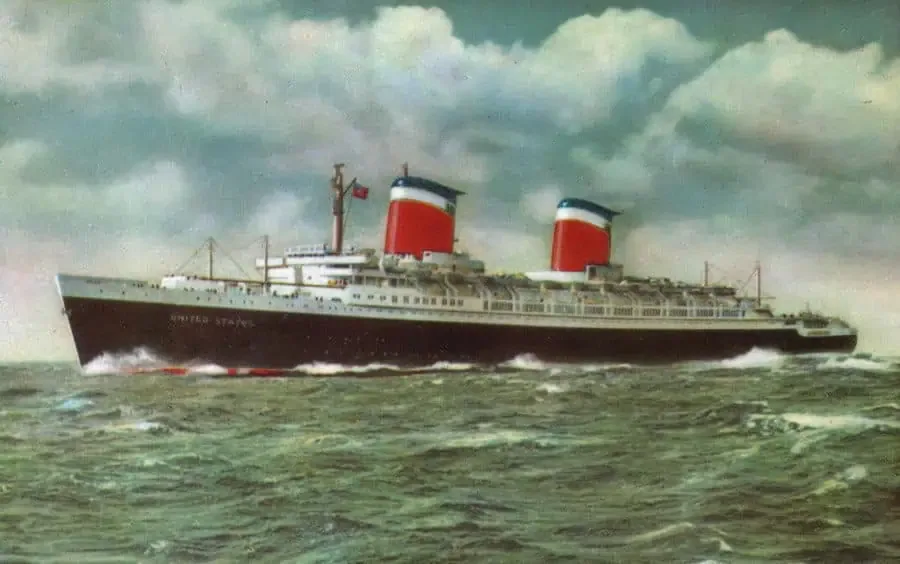
Naval architect William Francis Gibbs designed the SS United States in the early 1950s as both a luxury passenger liner and a convertible military transport. Built with dual-use military specifications, it could carry up to 14,000 troops during wartime emergencies. The vessel measured 990 feet (302 meters) from bow to stern, exceeding the Titanic by 108 feet (33 meters). During July 1952, the liner completed its inaugural Atlantic transit in three days, 10 hours, and 40 minutes, traveling at an average pace of 35.59 knots (41 mph), capturing the coveted Blue Riband from Britain’s Queen Mary and setting an eastbound passenger liner record that remains unbeaten [2, 3].
High-profile travelers boarded the ocean liner during its passenger heyday, including Grace Kelly, Elizabeth Taylor, four American presidents, and a young Bill Clinton. Guests experienced elegant staterooms and world-class hospitality on their crossings. Susan Gibbs, the designer’s granddaughter, told the Associated Press that the ship represents American ingenuity and endurance. “She really embodies and expresses this country’s best,” Gibbs said. “She represents pride and resilience and strength and beauty.” [3]
Commercial jet aircraft made transatlantic flights faster and cheaper during the 1960s, drawing travelers away from maritime crossings [2, 3]. The liner retired in 1969 after completing more than 800 voyages across the Atlantic [3]. Associated Press photographer Matt Rourke documented the vessel as tugs towed it down the Delaware River between Pennsylvania and New Jersey on Feb 19, 2025, moving it away from its Philadelphia pier [4].
Mobile Shipyard Preparation
Contractors moved the hull to Mobile, Alabama. Workers spent months in Alabama stripping out hazardous materials that could harm marine organisms or pollute surrounding waters, including residual fuel oils, asbestos insulation, electrical wiring, and hundreds of brass portholes [2, 3]. Crews also removed hundreds of glass portholes from the hull [3]. Marine ecologist Nicholas Ray said removing environmental hazards is essential before scuttling, ensuring the metal surfaces can safely host marine wildlife [2].
Metal workers cut large openings through the decks and hull plates to let seawater circulate freely after sinking. These access cuts allow trapped air to escape while the ship floods, preventing structural buckling and stabilizing the ship on its way down [2, 3]. The openings also offer safe passages for divers, letting sunlight penetrate into upper compartments. To prevent diver accidents, workers sealed off deep silt-filled bilges and blind corridors where underwater silt-outs could cause disorientation [2].
Crews removed the two giant funnels and radar mast before towing the ship into open water, saving these recognizable elements for display in a planned shore-based museum. The onshore exhibit will preserve maritime artifacts for land-based visitors [3].


Early Marine Colonization
Marine life colonizes the hull in stages. Microscopic bacteria and single-celled algae arrive within hours of immersion, anchoring onto cleaned steel plates to build a thin biological layer known as biofilm. This initial microbial coating plays a foundational ecological role by releasing chemical cues into Gulf currents, signaling drifting invertebrate larvae that the steel offers a stable surface for permanent attachment. Those chemical triggers prompt free-floating organisms to anchor onto the bare hull [2].
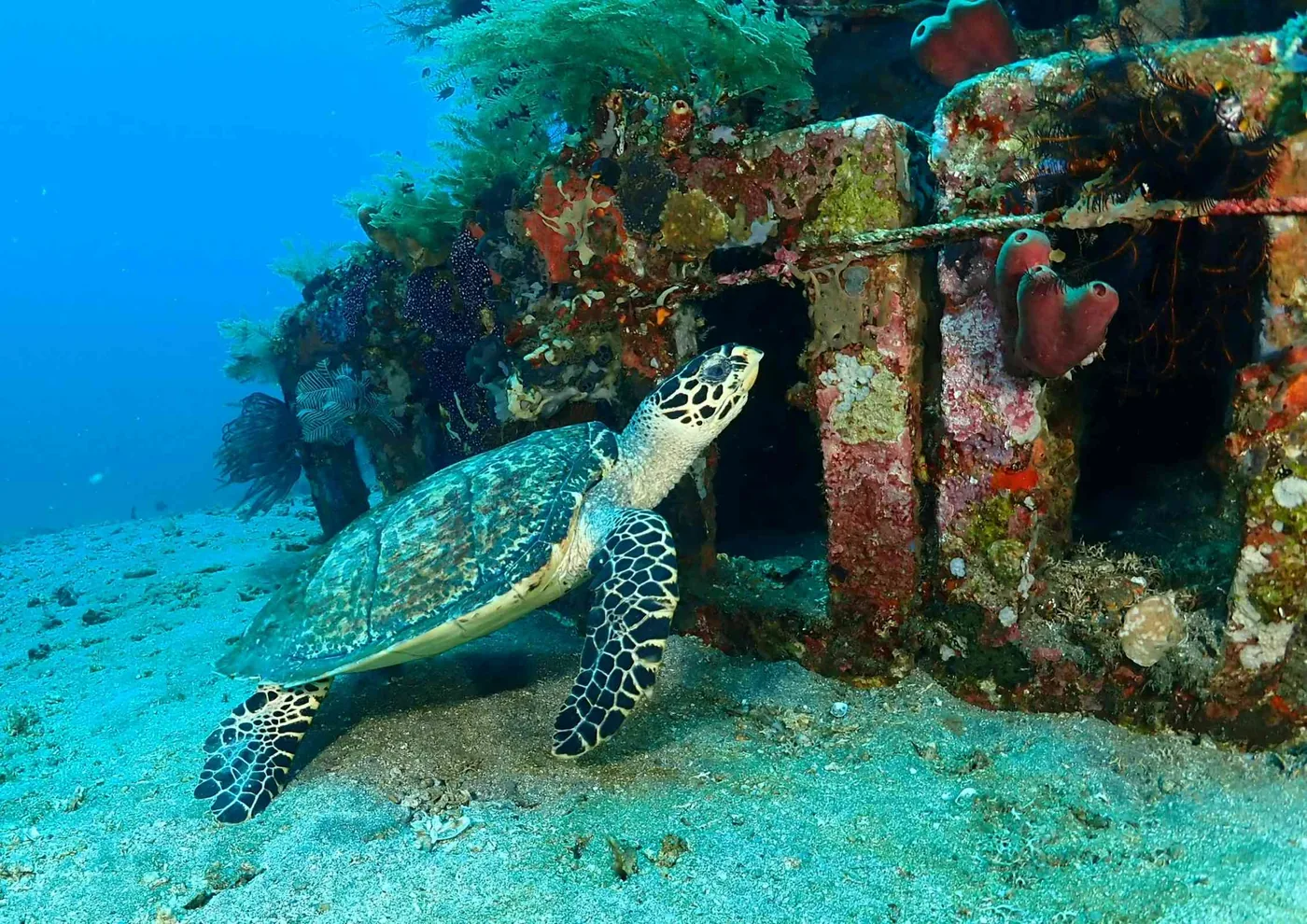
Small barnacles and green algae spread across the submerged hull within three months of immersion, drawing mobile invertebrates such as sea urchins and porcelain crabs that graze along the expanding biological film. Filter-feeding oysters and mussels anchor onto vertical bulkheads. These steep positions expose settling shellfish to prevailing water currents that supply suspended organic nutrients and microscopic plankton, transforming bare steel plates into a dense invertebrate crust that shields the metal beneath [2].
Natural ocean currents carry an abundant supply of larvae and spores across the Gulf of Mexico. Ray said that scientists do not need to seed artificial reefs with laboratory-grown larvae. Adding organisms by hand risks introducing foreign pathogens or non-native species into the open marine environment [2].
How Wildlife Colonizes the SS United States
Hard corals require years to mature fully. Slow-growing stony corals and encrusting sponges secure their first permanent footholds on the outer superstructure within 12 months, gradually building thick calcium carbonate formations that spread across the steel over the next five to ten years. Ray said that within a decade, visiting scuba divers will encounter a mature, self-sustaining biological reef that happens to rest upon an ocean liner, rather than a decaying vessel with scattered marine growth [2].
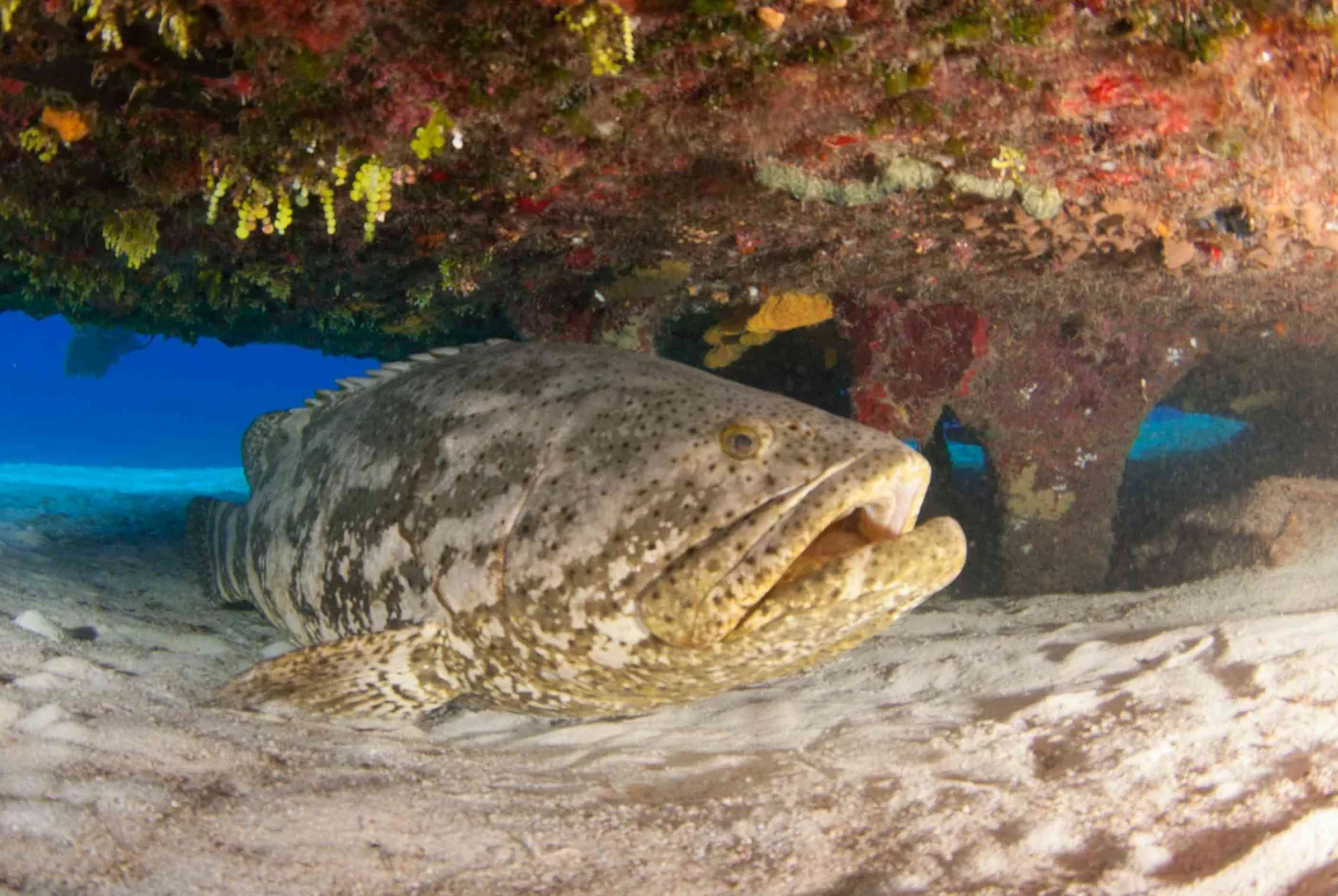
Expanding corals attract diverse fish species. Snappers and groupers settle inside long passenger corridors to escape heavy currents, while open decks attract larger hunters including barracuda, king mackerel, and sharks [2]. Pelagic game fish, including tuna, marlin, and swordfish, patrol the surrounding blue water [4].
At 302 meters, the sunken liner surpasses the nearby 275-meter aircraft carrier USS Oriskany, scuttled off Pensacola in 2006, to become the world’s largest artificial reef [2, 3]. A common misconception suggests that artificial reefs only draw fish away from surrounding waters without adding new biomass. However, large structures provide new physical shelter and food, increasing total biological productivity [2].
Woods Hole Oceanographic Monitoring
Researchers from the Woods Hole Oceanographic Institution launched a multi-year ecological investigation of the sunken liner. The study begins with field surveys during the first month on the seafloor. “This is one of the first times researchers will be able to watch an ecosystem form from scratch,” marine biologist Kirstin Meyer-Kaiser said [3].
Field scientists will collect regular water samples from 132 locations around the ship’s hull to observe chemical and biological changes over time. As seawater corrodes the ship’s massive steel plates, the submerged hull slowly releases trace metals, including iron, manganese, and nickel, into nearby water currents. Meyer-Kaiser and her research team will evaluate how these dissolving metals influence surrounding microbial communities and shape long-term marine life succession. Tracking water chemistry together with biological surveys will provide a detailed baseline for how industrial metal structures interact with open ocean environments over multi-year timeframes [3].
Ecologists Layman and Allgeier (2020) demonstrated in the Journal of Applied Ecology that artificial reefs stimulate local food webs by reaching key nutrient thresholds, showing that physical structures boost primary and secondary biomass production rather than merely attracting existing fish from surrounding waters [1]. A 2020 review examining 39 separate reef evaluations verified that man-made structures frequently support fish assemblages matching those of natural hard-bottom habitats, provided project engineers select appropriate seabed sites and construction materials. Long-term monitoring of the sunken vessel will provide valuable data on how artificial structures enhance coastal ecosystems [1, 3].
- ACADEMIC JOURNAL Layman, C. A., & Allgeier, J. E. (2020). An ecosystem ecology perspective on artificial reef production. Journal of Applied Ecology, 57(11), 2139-2148. [Article Link]
- ONLINE NEWS Ray, N. (2026). The SS United States has been deliberately sunk – this is how marine life will colonise the world’s largest artificial reef. The Conversation. [Article Link]
- ONLINE NEWS Puiu, T. (2026). She Was Once the World’s Fastest Ocean Liner. It’s Now Been Deliberately Sunk to Create the World’s Largest Artificial Reef. ZME Science. [Article Link]
- ONLINE NEWS Hanna, J., & Smith, S. (2026). This ocean liner was the world’s fastest. It’s being sunk to make the largest artificial reef. Associated Press. [Article Link]
APA 7: PerEXP Teamworks. (2026, November 13). SS United States Sinks to Form World’s Largest Artificial Reef. PerEXP Teamworks. https://perexpteamworks.com/en/ss-united-states-artificial-reef/


