





Eighty years after aeronautical engineers first arrived in the California High Desert, NASA Armstrong aircraft continue to redefine atmospheric exploration through rigorous experimental flight testing and aerospace engineering. Five engineers founded the desert outpost in 1946. From breaking the sound barrier to evaluating quiet supersonic prototypes, the Armstrong Flight Research Center transforms civilian and military aviation by proving aerodynamic concepts in actual flight conditions across Southern California skies. Today, the specialized desert facility operates as the agency’s primary proving ground for lunar landing support equipment, critical Earth science observations, and advanced digital flight control architectures [1].
How Did Supersonic Flight Begin at Muroc?
Supersonic flight began at Muroc Army Airfield when five engineers from the National Advisory Committee for Aeronautics (NACA) arrived in the California High Desert on Sept. 30, 1946. Five engineers launched the remote desert outpost. Operating under austere desert conditions, the small technical team assembled specialized telemetry stations across the dry lakebed to monitor aircraft behavior during extreme aerodynamic stress. Their initial technical objective was achieving supersonic flight for the first time, establishing a dedicated operating environment where experimental rocket aircraft could be rigorously evaluated far from populated urban centers [1].
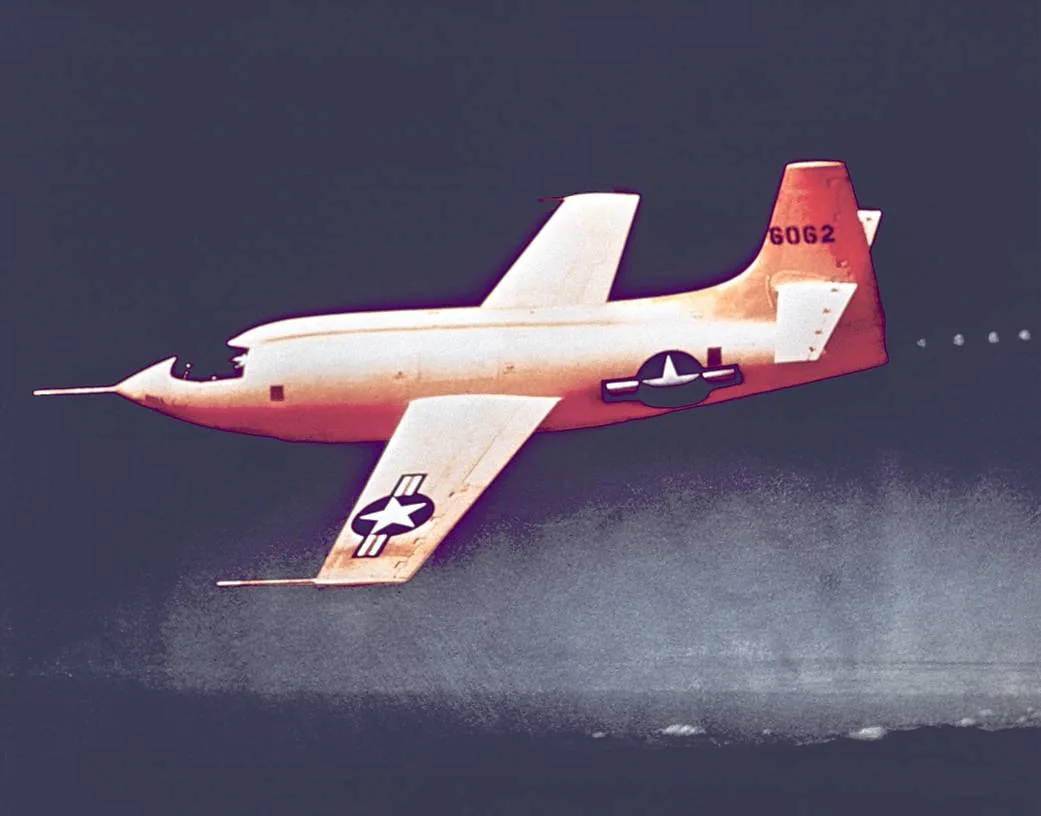
In less than two years, NACA pilots flew the X-1 aircraft faster than the speed of sound, securing an enduring milestone in aviation history [1].
That early NACA desert outpost evolved over 80 years of flight research into NASA’s Armstrong Flight Research Center in Edwards, California. Edwards hosts unique flight operations. Over eight decades, NASA Armstrong aircraft supported milestone missions ranging from early rocket investigations to space shuttle landings and high-altitude SR-71 reconnaissance flights. Flight crews and technicians at the Armstrong Flight Research Center utilized this expansive dry lakebed to conduct high-speed aerodynamic research that shaped the evolution of modern science, atmospheric aeronautics, and human space exploration [1].
NASA Armstrong Aircraft Test Quiet Supersonic Flight
The centerpiece of modern aeronautics research at Edwards is the X-59 supersonic X-plane. The X-59 flies without booms. Technicians at the Armstrong Flight Research Center conduct extensive structural vibration tests, acoustic measurements, and engine runs to verify aircraft readiness before initiating flight test maneuvers over designated desert test ranges. Engineers built this experimental aircraft to demonstrate that overland supersonic speeds do not require disruptive sonic booms over populated ground communities [1].
Undergoing rigorous ground testing and a series of flight evaluations directly at the Armstrong Flight Research Center, the X-59 prepares to demonstrate quiet supersonic flight over communities across U.S. communities. Acoustic sensors measure ground noise. Flying in the very same Southern California skies where the sound barrier fell eight decades earlier, test pilots will evaluate how acoustic shockwaves dissipate along the aircraft’s elongated nose and specialized aerodynamic contours. These upcoming community demonstration flights will collect direct acoustic recordings with public reaction survey data, providing international regulators with the objective technical evidence required to replace existing speed bans and permit faster overland civil passenger routes [1].
Rigorous technical reviews precede each flight. Mission controllers monitor real-time telemetry from control rooms at Edwards, tracking flight parameters and environmental factors throughout every test run. Before each mission, NASA Armstrong aircraft engineering teams inspect structural assemblies and digital flight systems to ensure operational safety during high-stress supersonic maneuvers over California High Desert corridors [1].
How NASA Armstrong Aircraft Support Artemis Missions
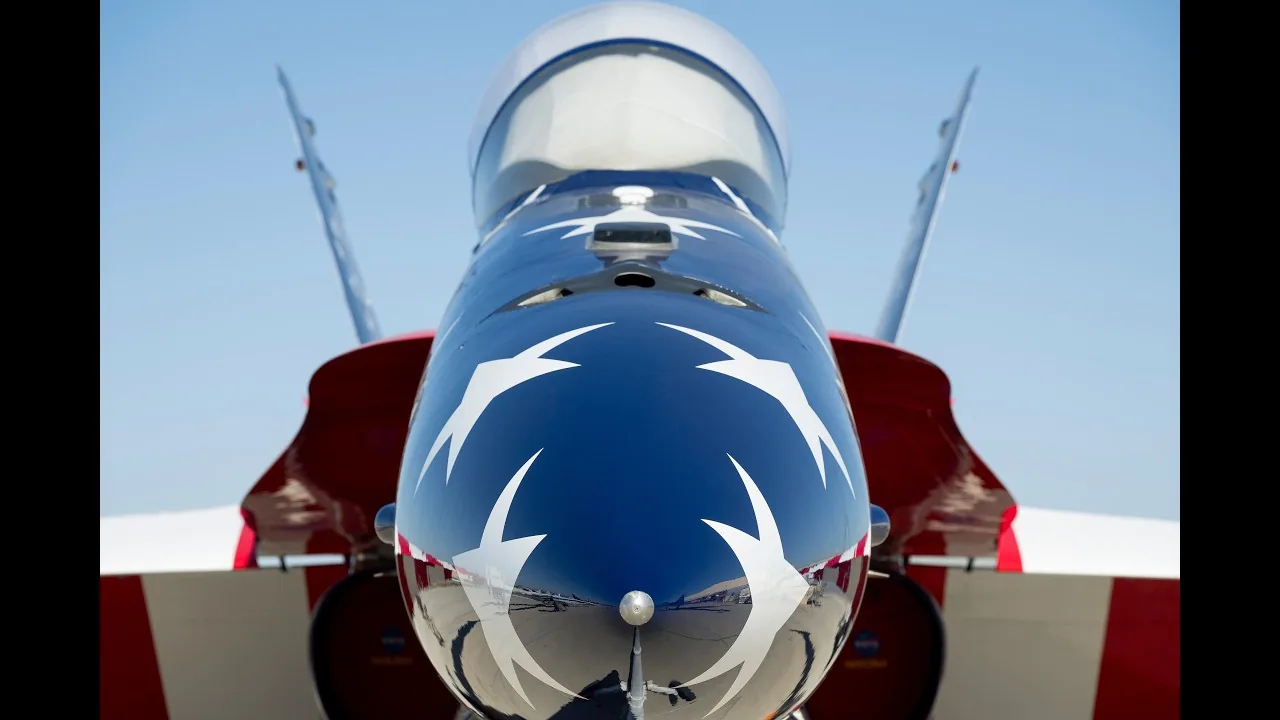
To support NASA’s Artemis lunar missions and humanity’s sustainable return to the Moon, Armstrong Flight Research Center teams deploy research aircraft to validate human spaceflight equipment under real operational environments. A modified 737 tests pressurized spacesuits. Engineers rely on the transport aircraft to evaluate spacesuit mobility, life-support connections, and emergency egress protocols in controlled flight profiles. These practical airborne evaluations verify that next-generation lunar exploration suits withstand rigorous physical movements before astronauts ever encounter lunar surface conditions [1].
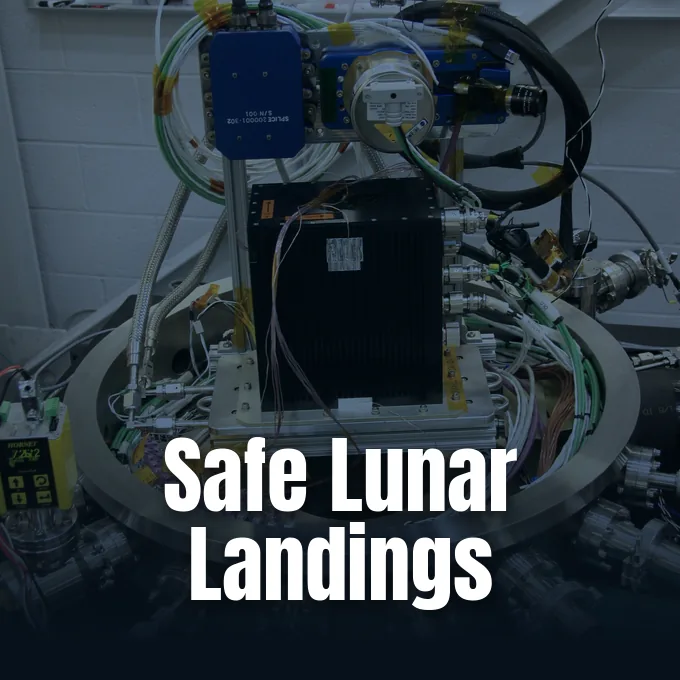
Armstrong also flies a Gulfstream G-III aircraft to collect vital thermal data on the Artemis II heat shield during descent trajectories. Sensors record atmospheric entry heating. Trained flight crews track the spacecraft during high-speed atmospheric descent, capturing high-resolution infrared imagery to evaluate thermal protection performance under severe friction heating. This optical and infrared tracking complements advancements in safe lunar landing technologies that protect returning spacecraft architectures [1].
In parallel launch testing, an F/A-18 aircraft served as a high-performance flying testbed to validate the automated autopilot software governing the Space Launch System (SLS) rocket. Test pilots guided the aircraft through complex flight routines. By stressing guidance software against sudden atmospheric turbulence, Armstrong Flight Research Center pilots confirmed the rocket’s flight computers respond correctly during critical launch phases. This experimental rigor mirrors the flight testing seen in Ingenuity Mars helicopter exploration, where exhaustive simulation preceded operational interplanetary flight [1].

Why Is Neil Armstrong Famous at the Center?
Neil Armstrong is famous at Edwards California because he served as an intrepid research test pilot at the Flight Research Center prior to leading historic missions to the Moon [1].
During his formative test pilot years in the high desert, Neil Armstrong piloted rocket planes and developed specialized piloting techniques that proved essential for lunar exploration. NASA renamed the facility in his honor. That sustained culture of excellence led NASA Administrator Jared Isaacman to recently designate Armstrong as the agency’s Center of Excellence for Flight Test and Aircraft Operations. This official federal recognition highlights Armstrong’s unmatched operational rigor in executing unique atmospheric flight missions that only NASA can fly. Ground crews and test squadrons maintain this legacy by executing challenging flight programs with peerless precision and meticulous safety oversight across every mission [1].
The Center of Excellence designation establishes Edwards as the benchmark for experimental aeronautics. Flight operations demand extraordinary discipline. Interdisciplinary teams of engineers, pilots, and technicians collaborate daily to integrate novel flight avionics and validate mission capabilities before deployment. From high-altitude data flights to unpowered glide landings, the center’s staff upholds technical benchmarks established across 80 years of active desert aviation [1].
Armstrong Research Aircraft Track Changing Earth Systems
Beyond experimental supersonic prototypes and lunar mission support, Armstrong research aircraft at the Armstrong Flight Research Center collect vital scientific observations that track Earth’s shifting climate dynamics. Specialized aircraft deploy worldwide. Flying high-altitude scientific platforms like the ER-2, an airborne research laboratory, NASA researchers gather atmospheric measurements in the upper stratosphere. The aircraft carries advanced remote sensors to sample aerosol concentrations and assess atmospheric chemistry high above ordinary commercial traffic lanes [1].
The center also deploys the C-20A together with modified Gulfstream G-III, Gulfstream G-IV, and Gulfstream G-V aircraft to observe active wildfires. Gulfstream research aircraft map planetary environmental shifts. These specialized science flights capture real-time burn severity metrics, helping natural resource managers coordinate containment strategies during major fire incidents. Airborne sensor suites scan wildfire perimeters to measure thermal output, tracking active smoke columns to support emergency responders [1].
Equipped with specialized radar and optical spectrometers, these airborne science missions monitor polar glacier melt, industrial pollution sources, and surface mineral composition across remote ecosystems. Radar instruments trace subtle terrain deformations. While sub-orbital airborne platforms calibrate remote sensing suites, astronomical instrumentation projects also advance through ground-based optical relay prototypes. In a recent preprint that has not yet been peer-reviewed, researchers documented the design and prototyping of novel robotic optical-relay positioners developed for the MOSAIC instrument at the ELT [2].
How Digital Fly-by-Wire Redefined Aviation Standards
Armstrong fundamentally transformed modern aviation by proving digital fly-by-wire technology in actual flight. Computers replaced mechanical control linkages. Pilots tested initial digital control hardware under demanding flight conditions, confirming that flight computers reliably managed aerodynamic surfaces without pilot-induced oscillations. By replacing mechanical cables with digital computers, Flight Test engineers proved electronic flight controls make commercial and military aircraft vastly safer, more maneuverable, and remarkably fuel-efficient [1].
Today, virtually all modern commercial airliners and high-performance military fighters rely on fly-by-wire flight control principles refined at Edwards. The desert base hosted space shuttle operations. Armstrong served as the primary recovery site for orbital shuttle landings, beginning with the pioneering Space Shuttle Enterprise approach and landing tests that verified unpowered glide dynamics. Flight test engineers meticulously analyzed telemetry streams to correlate atmospheric drag predictions with real-world touchdown deceleration speeds across the expansive desert dry lakebed. These critical approach landings proved that reusable winged orbiters could return safely from space and land smoothly on desert runways, solidifying Armstrong’s indispensable role in supporting human spaceflight programs across multiple generations of space exploration [1].
As aviation moves toward greater autonomy and efficiency, Armstrong works with industry, academia, and government agencies to pioneer cleaner, safer flight. Technical teams maintain advanced ground simulators. Ongoing flight research programs focus on autonomous flight software, electrified aircraft propulsion systems, and resilient flight controls for future fleets. As noted by Teresa Whiting and Dede Dinius in official communications from the Armstrong Flight Research Center, engineers, pilots, and mission support teams continue to push the boundaries of flight innovation [1].
- PRESS RELEASE Whiting, T. (2026, September 28). NASA Armstrong Celebrates 80 Years of Flight Innovation. NASA. [Article Link]
- PREPRINT MOSAIC at ELT: Design and First Prototyping of Novel Robotic Optical-Relay Positioners. (2026). arXiv. [Article Link]
APA 7: PerEXP Teamworks. (2026, September 28). How NASA Armstrong Aircraft Shape 80 Years of Flight. PerEXP Teamworks.


