




What happens to a swallowed sensor when its battery runs out? For most devices the answer is that the battery, and whatever it is made of, has to leave the body somehow. Engineers led by Giovanni Traverso at the Massachusetts Institute of Technology have built edible batteries that power a device for days and then dissolve into nutrients the body already uses. Ordinary button cells are the opposite: their lithium chemistry can burn tissue badly if a cell is swallowed or its seal fails. By contrast, the newly designed energy cell incorporates non-toxic metals, a biodegradable ionic liquid electrolyte, and a fibrous cellulose membrane inspired by edible confectionery wrappers [2]. Publishing their findings in Nature Chemical Engineering on September 21, 2026, the cross-disciplinary team confirmed that ingestible prototypes reliably powered wireless esophageal telemetry and gastric neurostimulation inside live swine for up to three days [1].
The Anatomy of Edible Batteries
Size is the first problem. An ingestible device has to fit in a capsule, and the battery competes for space with the sensor, the radio and any drug reservoir. Reza Ghodssi, a professor of electrical and computer engineering at the University of Maryland who was not involved in the research, emphasized that batteries occupy most of the internal space inside swallowable medical hardware [1]. To overcome these spatial and biological constraints, Traverso and his colleagues abandoned hazardous lithium-ion and alkaline architectures in favor of mineral micronutrients naturally absorbed by the human body [2].
The design relies on a multi-layer sandwich architecture constructed around an anode (the battery’s negative terminal) formed from a biocompatible magnesium alloy. Across from this negative terminal, the cathode (positive terminal) combines molybdenum trioxide with activated carbon. Both magnesium and molybdenum are micronutrients the body needs in small amounts, and together they produce enough voltage to run electronics. Between these opposite terminals, the researchers introduced a biodegradable ionic liquid electrolyte to shuttle electrical charge, replacing the poorly performing buffered saline solutions common in previous biocompatible prototypes [2].
Rather than using rigid synthetic binders, the assembly integrates porous cellulose nanofibrils into a paper-like sheet that holds the active electrodes firmly in place. “We were partly inspired by candies that have an edible rice-paper wrapper,” Traverso told Nature; like those wrappers, the cellulose coating dissolves over time [2]. The packaging had to hold the other parts of the battery together without dragging down its electrical performance [2].
How Wax Coatings Resist Stomach Acid
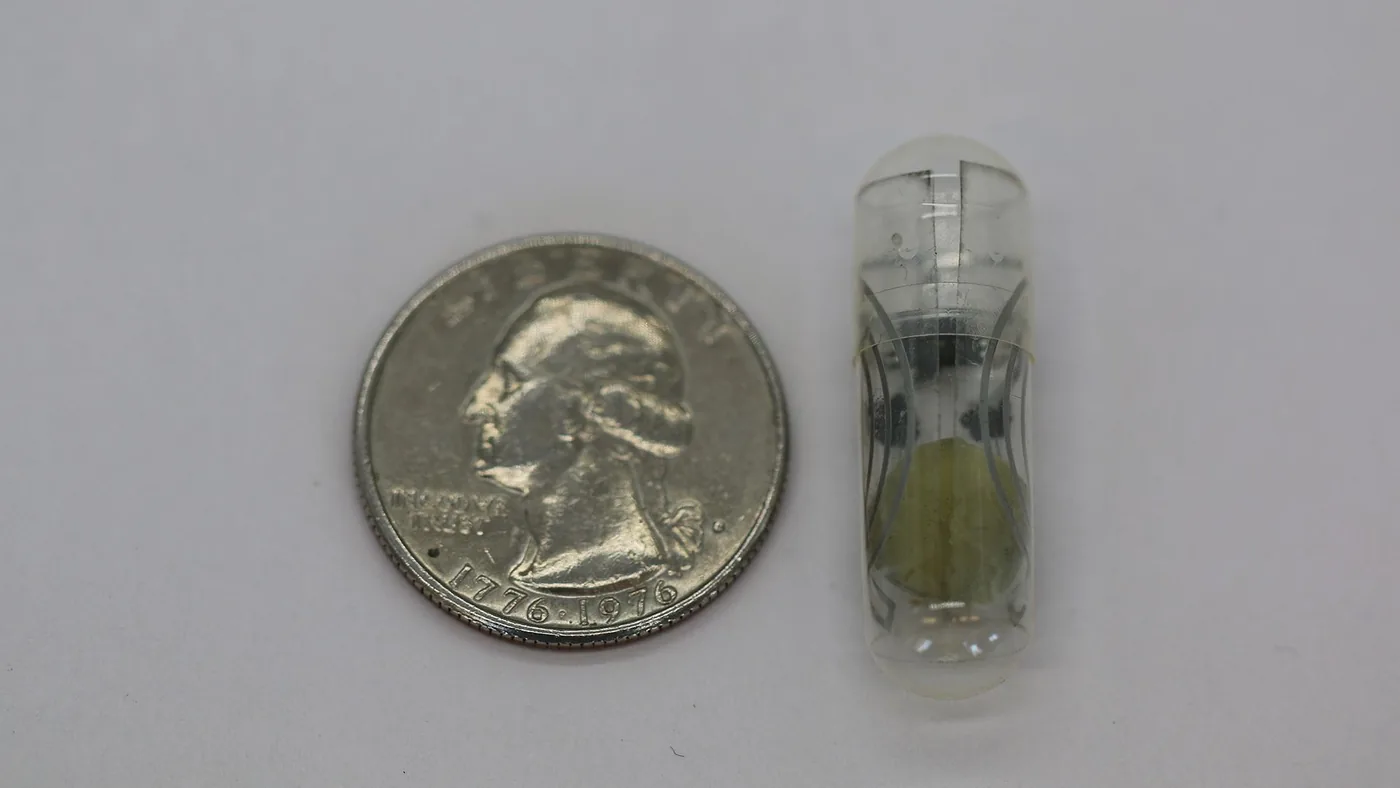
Stomach acid is the next obstacle, because unprotected paper and reactive metals would not last long in it. The researchers solved this by dipping the assembled paper cell into purified beeswax to establish a resilient, hydrophobic barrier against stomach acid [1]. The wax slows the acid down rather than stopping it for good, which is the point [2].
For specialized applications requiring prolonged gastrointestinal monitoring, the engineers deposited a supplementary layer of candelilla wax (derived from the desert shrub Euphorbia antisyphilitica). In Traverso’s framing, the coating is not just packaging: it sets how long edible batteries keep working inside the body. By calibrating coating thickness and wax composition, engineers can program whether a power cell functions for a few hours or survives for several days [1].
In simulated gastric fluid, the sealed cells began coming apart within two weeks and dissolved completely after several months [2]. That is slower than a trip through the gut, which is why the long-term goal is a device that can safely dissolve if it ever gets stuck, instead of a metal-cased cell that has to be retrieved.
Voltage Metrics and Laboratory Energy Benchmarks
The research team manufactured two distinct physical form factors to accommodate diverse biomedical payloads. The smaller prototype was engineered specifically to fit inside a standard pharmaceutical gelatin capsule for smooth oral ingestion. In benchtop characterization tests, this compact cell generated approximately 1.77 volts and delivered an energy capacity of 2 milliampere-hours per square centimeter. That is enough for low-power radio chips and sensors [1].
To support demanding therapeutic mechanisms that consume higher instantaneous power, the investigators fabricated an enlarged battery variant. This larger unit delivered an initial output of 1.84 volts and achieved a maximum capacity of 3.5 milliampere-hours. Inside pigs, the larger cell exhibited a gradual voltage decline from approximately 1.8 volts to 1.6 volts after one day of continuous operation, eventually stabilizing around 1.45 volts by the third day. Similarly, the smaller capsule cell dropped from 1.7 volts to 1.35 volts across the identical 72-hour testing window [1].
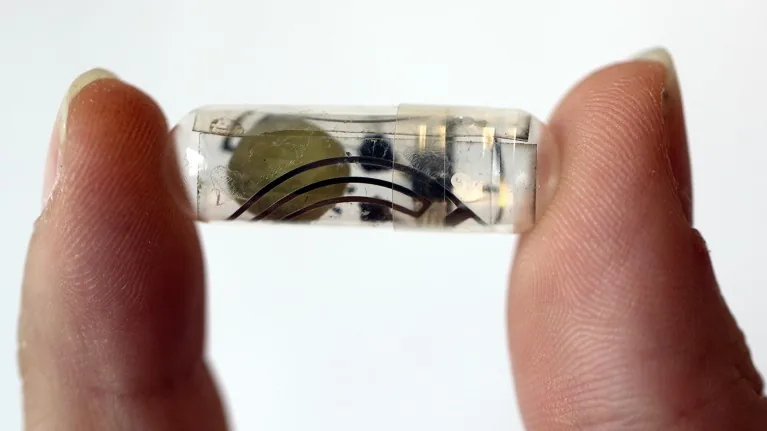
Capacity is still the weak spot. “They need to have an order of magnitude higher capacity for this technology to be even more promising,” Ghodssi said [1].

Tracking Medication Intake With Esophageal Sensors
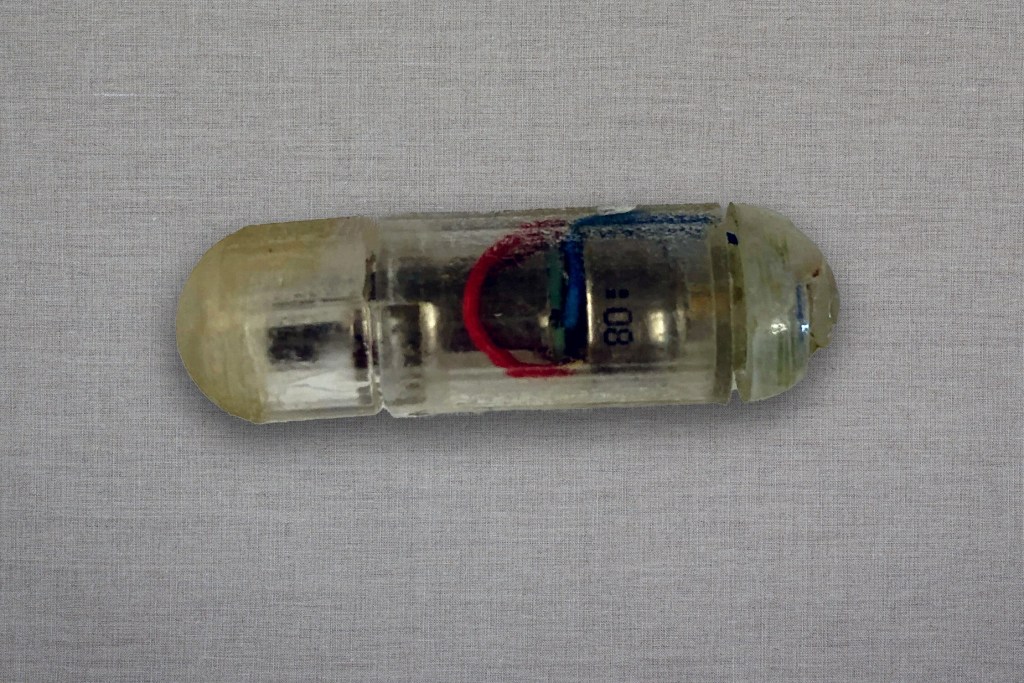
For the animal tests, the researchers packaged the miniature 1.77-volt paper cells into 3D-printed capsules and administered them orally to pigs using an endoscope (a long, flexible tube inserted through the mouth). The small power unit energized an experimental radio-frequency identification (RFID) sensor lodged temporarily within the esophagus. This wireless tag established stable communication with an external receiver positioned up to 5 feet (1.5 meters) away from the animal [1].
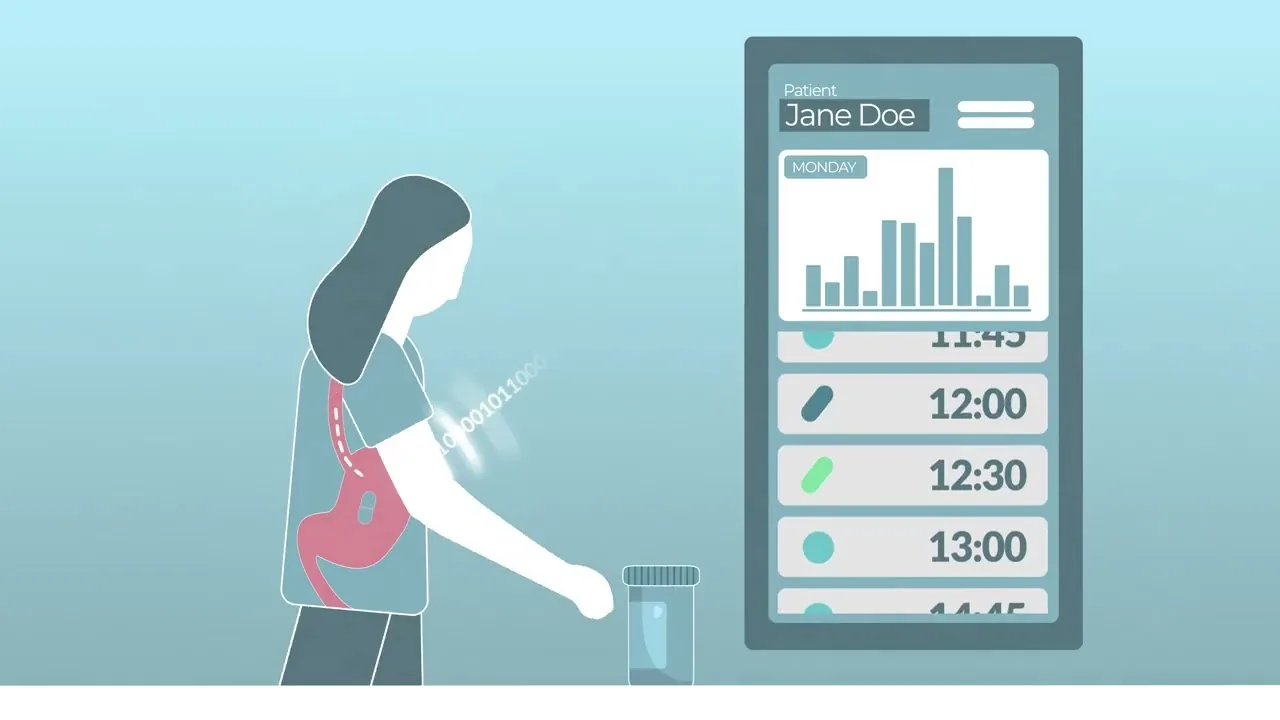
The esophageal RFID tag detected precisely when experimental animals swallowed prescribed oral medication, broadcasting an immediate verification signal to the external receiver [1]. That is a practical target: patients who skip doses are a long-standing problem in treating chronic conditions, and a pill that confirms it was swallowed would give doctors hard data instead of guesswork. While passive diagnostic systems such as tissue-integrated glucose nanosensors monitor subtle chemical fluctuations, active wireless transmitters require self-contained power to broadcast alerts over practical clinical distances.

The tag kept transmitting through the animal’s body, and the edible batteries held enough voltage to keep it running for the whole observation period [1].
Stimulating Gut Hormones via Swallowable Capsules
The second test went further than tracking. Traverso, who is also a gastroenterologist, says ‘electroceutical’ devices are being explored as a way to regulate the connection between the gut and the brain, and could be less invasive than bariatric surgery or implanted stimulators [2]. Electrical stimulation of gastric tissue has previously shown clinical utility for individuals suffering from gastroparesis, a debilitating disorder that delays normal stomach emptying [1]. Delivering electrical stimuli via temporary swallowable capsules could expand these therapeutic benefits to wider patient populations [2].
To test this active modality, the team equipped their larger 1.84-volt battery inside a specialized gastric capsule delivered endoscopically into the stomach of pigs. Once deployed, the device delivered controlled electrical pulses directly to mucosal tissue. Blood assays performed after stimulation revealed a marked surge in circulating concentrations of ghrelin (a hormone that stimulates appetite) [1]. Earlier non-chemical alternatives, such as vibrating capsules engineered to manage appetite, explored mechanical stimulation of stomach receptors, but electrical stimulation allows direct neurochemical modulation [2].
Raising an appetite hormone is not a treatment in itself, and nobody is claiming it is. What the result shows is that a device powered by a battery you can digest can change hormone levels in a living animal, which is the first step toward the kind of temporary, swallowable stimulator Traverso describes [2].
Remaining Manufacturing Hurdles and Clinical Timelines
Despite these encouraging demonstrations, translating laboratory prototypes into standardized medical treatments requires solving significant material hurdles. During animal trials, while the paper battery, waxes, and ionic electrolyte safely dissolved, the accompanying silicon circuit board used in the stomach-stimulation experiment did not degrade. Instead, the swine passed the rigid circuit board naturally through defecation. John Rogers, a materials scientist at Northwestern University who was not involved in the study, said the next step is making every component bioresorbable, so that nothing is left behind if a device gets stuck [1].
That circuit board is a reminder of how far the field still has to go. The battery is edible; the rest of the electronics mostly is not yet, and a truly transient device needs both [1].
Next, the team plans longer tests under conditions that more closely mimic the human gastrointestinal tract. Traverso said that his group is working toward an initial clinical trial of the swallowable RFID compliance system in human subjects within approximately two years [1]. If that goes well, edible batteries could power pills that report when they were taken, monitors that watch a patient after surgery, and diagnostic capsules that do not need to be found and removed afterward [2].
- ONLINE NEWS Ishtiaq, I. (2026, September 21). Scientists made a paper battery you can swallow to power internal medical devices. Live Science. [Article Link]
- ACADEMIC JOURNAL Bourzac, K. (2026, September 21). Edible batteries power medical devices in the body. Nature. [Article Link]
APA 7: PerEXP Teamworks. (2026, September 22). MIT Engineers Power Medical Devices Using Edible Batteries. https://perexpteamworks.com/en/edible-batteries-power-medical-devices/


