





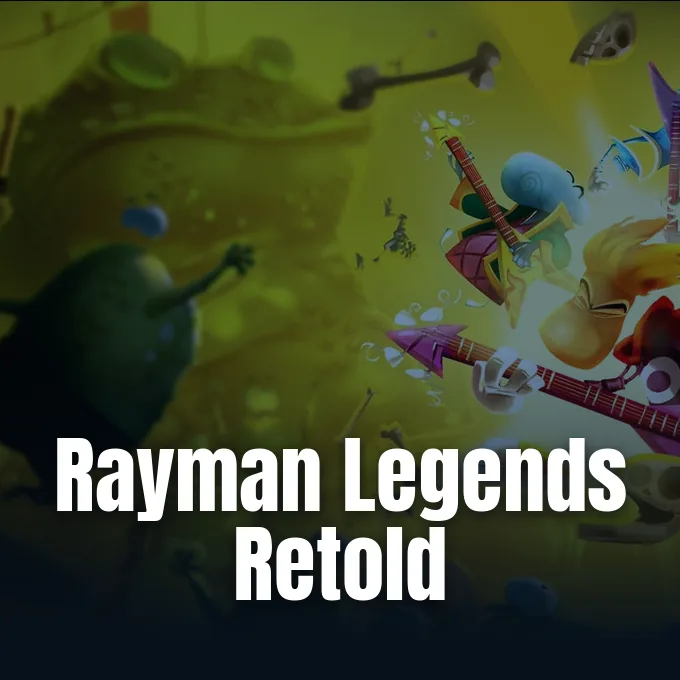
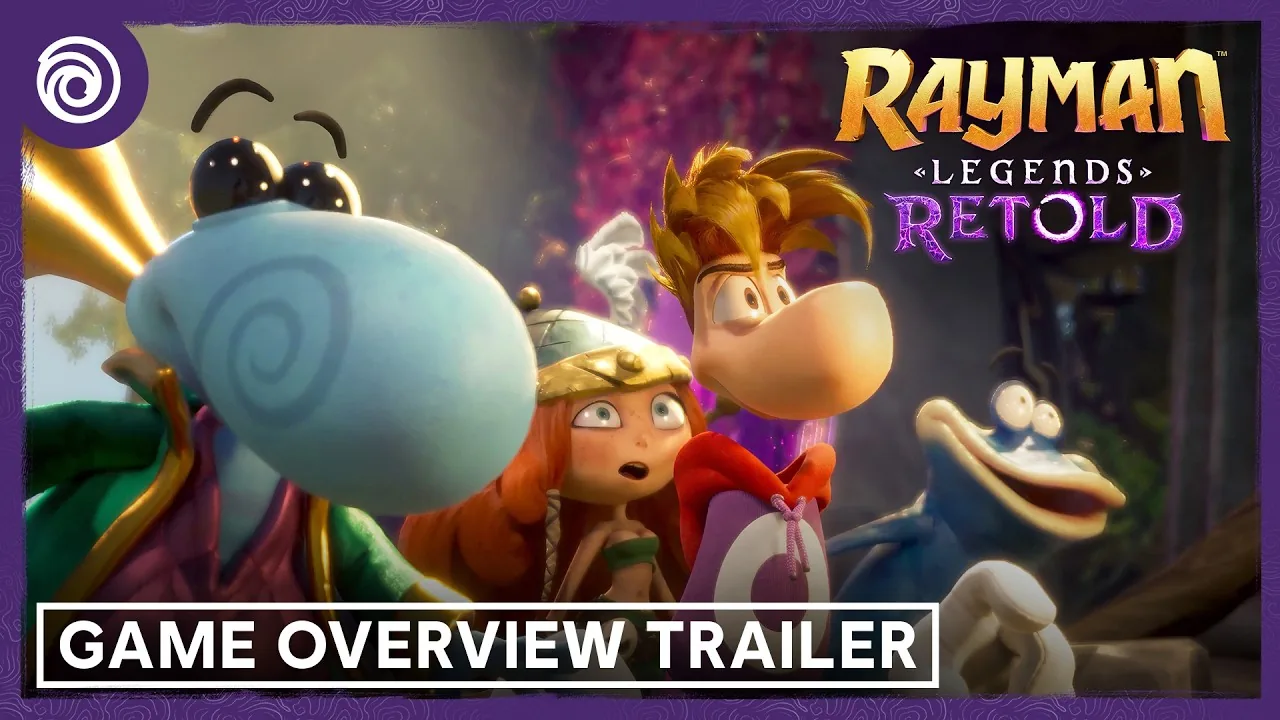
Ubisoft has unveiled an expanded overview of Rayman Legends Retold, confirming that the upcoming remaster doubles its rhythmic stage selection to a dozen music-driven levels before launching on December 3, 2026 [2]. Developed jointly by Ubisoft Montpellier and Ubisoft Milan, the project upgrades the celebrated 2013 platformer into a modernized 2.5D presentation while retaining its foundational engine physics [3]. Players guide Rayman, Globox, Barbara the Barbarian, and Grand Minimus through corrupted zones within the Glade of Dreams [4]. Rather than altering core mechanics, the development teams focused on enhancing audio synchronization and cooperative accessibility [1].
Rayman Legends Retold Expands Musical Rhythm Stages
The original 2013 release earned widespread acclaim for its rhythm-based gauntlets, where character movements synchronized directly with frantic covers of Black Betty, Eye of the Tiger, and Woo-Hoo. In Retold, that concept expands into a full twelve-stage tracklist that pairs the six returning classic sequences with brand-new licensed compositions. Two fresh stages have been showcased during hands-on demonstrations: a high-speed dash inspired by the Macarena and another driven by MC Hammer’s U Can’t Touch This. During the Macarena stage, a luchador boss set to appear in a later underworld level performs the dance routine across a wrestling kitchen background [1].
Creating rhythm stages requires exact precision between visual choreography and acoustic timing. Marco Renso, animation and realisation director at Ubisoft Milan, described the production cycle as conducting an orchestra where every asset and beat must unite into a cohesive pacing experience. Every beat dictates level design. Loïc Gounon, brand producer at Ubisoft Montpellier, explained that curating the expanded tracklist represented the most challenging phase of development because the team wanted songs with broad, transgenerational appeal. Gounon noted that the goal was enabling parents and children to share musical nostalgia together across generations [1].
How do developers keep rhythm platforming accessible without eliminating its traditional challenge? Gounon stressed that Rayman maintains an inherent die-and-retry philosophy without drifting into unforgiving territory. ‘Rayman is not Hollow Knight,’ Gounon stated, emphasizing that the game aims to satisfy veteran platforming enthusiasts who relish demanding trial runs while ensuring younger newcomers can still reach the closing credits [1].
Modern Engine Tech Powers Rayman Legends Remake
Preserving responsive controls was critical when shifting the art direction from hand-drawn 2D illustrations to enhanced 2.5D geometry. To maintain the tactile precision of the 2013 original, the developers adopted an internal architecture that Gounon compared to a nested Russian doll. UbiArt Framework still controls collisions. The proprietary physics engine runs underneath an exterior modern graphics engine responsible for real-time lighting, shaders, and high-fidelity rendering [1].
This dual-engine arrangement guarantees that jump arcs, momentum conservation, and hitbox tolerances match player memories from previous console iterations, avoiding the handling discrepancies that often plague classic platforming revivals. Over the past decade, Rayman Legends appeared across nine distinct gaming systems, including original releases on PlayStation 3, Xbox 360, PC, Wii U, and PlayStation Vita, followed by ports to PlayStation 4, Xbox One, Nintendo Switch, and Stadia. By encapsulating the legacy code, the team ensured that jumping off bouncy mushrooms or wall-sliding down narrow chasms retains the exact timing established thirteen years ago, preventing mechanical friction for returning speedrunners and casual players alike [1].
The transition to 2.5D also unlocks novel cinematic staging opportunities that were impossible in flat environments. Renso highlighted how extended zip lines integrated into musical stages allow the camera to pivot dynamically toward background action. These brief pauses offer players a visual rest stop to watch animated vignettes, such as the dancing luchador, before returning directly to rigorous button inputs. Depth variations let characters scale smoothly against layered backdrops while traversing intricate multi-tiered environments [1].

Cooperative Modes and New Realm Challenges
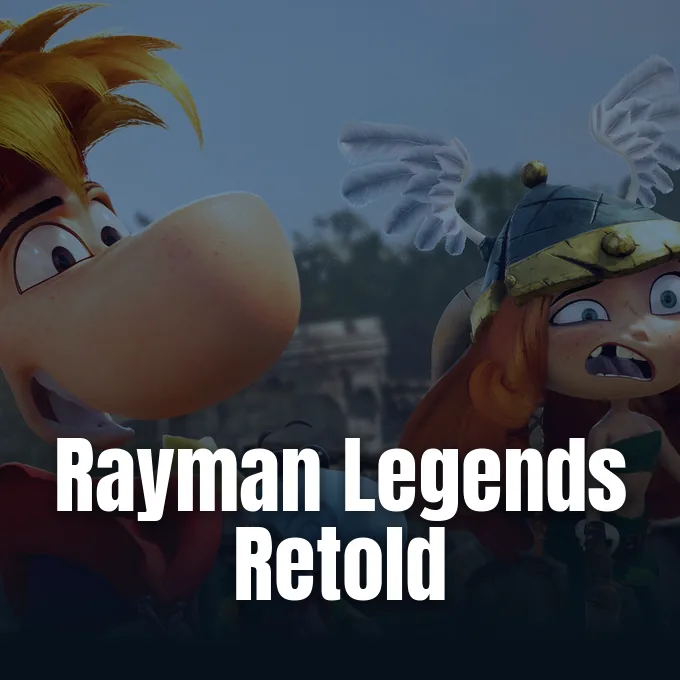
Beyond rhythm performance, cooperative play remains a central pillar of the remastered experience. Four participants can join simultaneously via local couch co-op, choosing between Rayman, Globox, Barbara the Barbarian, and Grand Minimus across the entire storyline. Kung Foot supports four competitors. The fan-favorite soccer minigame returns with refined control responsiveness, selectable power-ups, and customizable match rules designed for friendly living room rivalries [2].
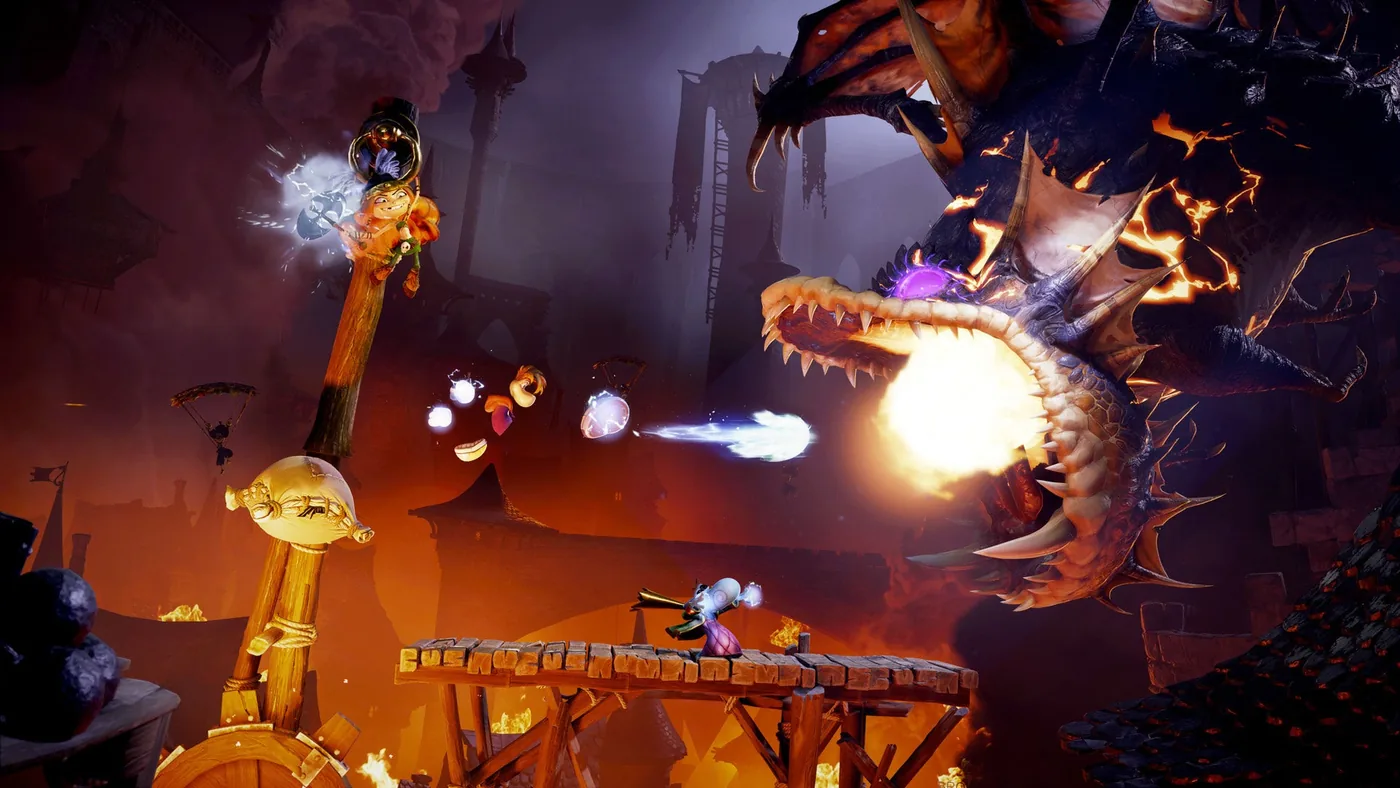
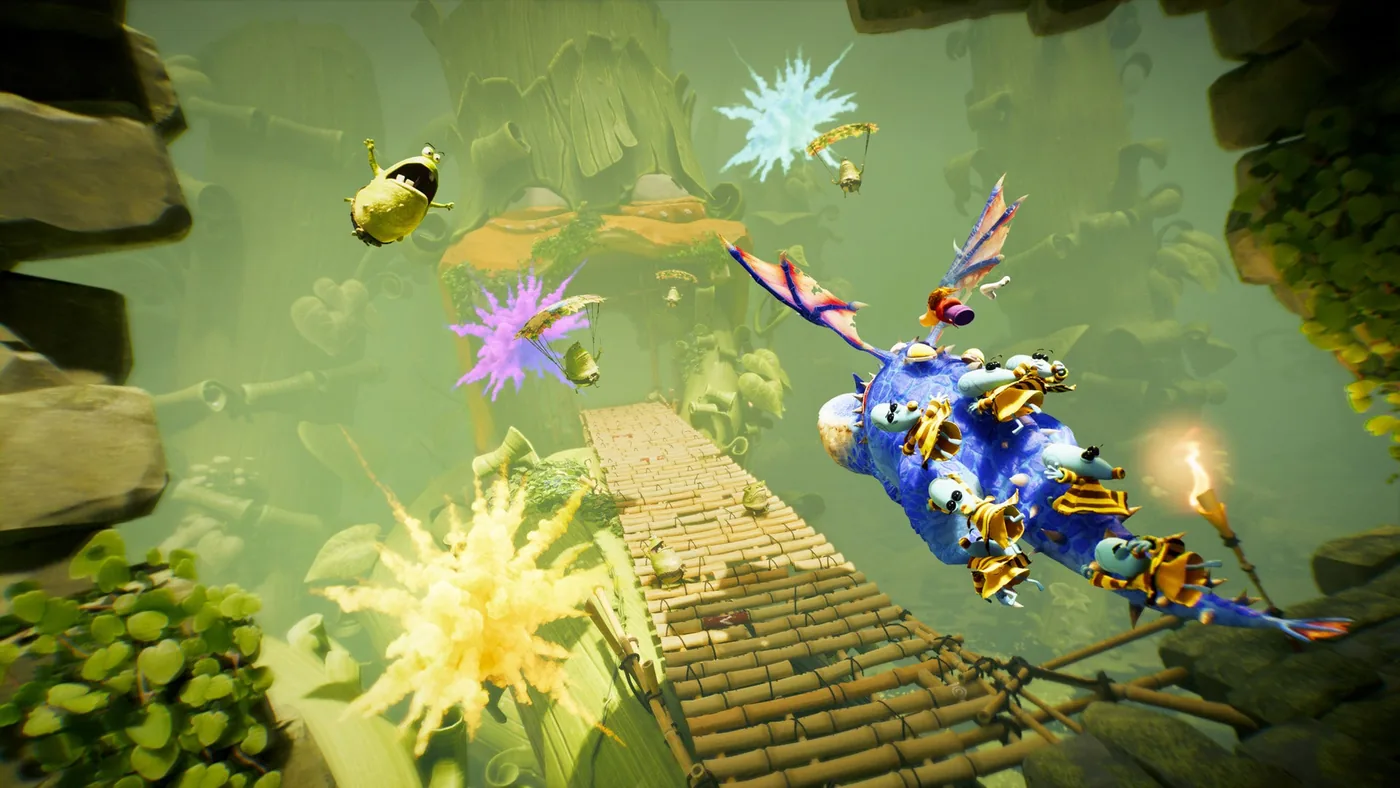
Fresh gameplay additions expand the adventure beyond familiar territory. Ubisoft has incorporated a mysterious sixth realm into the adventure, presenting untamed environments filled with unexpected platforming perils. Players can embark on dragon-riding sequences and test their endurance within the newly revealed Cave of Trials. Narrative presentation receives a noticeable lift through fully voiced cinematic cutscenes that chronicle a shadowy underworld adversary spreading corruption across the Glade of Dreams [2].
Soundtrack composition also sees substantial expansion to match the increased stage variety. Original composer Christophe Héral returns to collaborate with veteran composer Grant Kirkhope, creating orchestral and whimsical pieces that weave fresh melodies into classic auditory motifs. Kirkhope contributed new compositions. Their combined musical arrangements accompany both the narrative cinematics and frantic Lum races across perilous obstacle courses [2].
Production Insights Behind Rayman Legends Remaster
For the leadership team in Montpellier, revisiting Rayman represents a deeply personal creative milestone rather than a routine commercial repackaging. Loïc Gounon recounted starting his journey with the franchise at age twelve on the original PlayStation before later contributing to early prototypes. In 2006, Gounon collaborated with series creator Michel Ancel on a proposed Rayman 4 project that eventually transformed into the Raving Rabbids spin-off series. A subsequent development effort evolved into Rayman Origins, anchoring the property firmly within Ubisoft Montpellier [1].
The dual studio production establishes groundwork for future franchise installments. Gounon clarified that Retold serves as an ambitious foundation intended to introduce classic platforming charm to a new generation of players while exploring broader storytelling possibilities [1]. Ubisoft Milan contributed extensive animation expertise, ensuring character models express comical personality traits during cooperative chaos [3]. Montpellier managed world cohesion and legacy physics systems [1].
Ubisoft Montpellier handles core development. Both production teams continue refining animation passes and background density across all cooperative levels [1].
Launch Schedule and Broader Franchise Ambitions
Ubisoft originally targeted an October 1 launch before rescheduling the title to ensure comprehensive polish across all visual assets and stage designs. The adjustment was previously outlined in our analysis of the Rayman Legends Retold delay to December, where production leads sought extra time to refine cooperative performance. Launch arrives on December 3. By moving into early winter, the platformer avoids dense autumn release windows while giving Montpellier and Milan ample headroom to fine-tune rhythmic inputs [1].
Early skepticism surrounding whether a decade-old platformer warranted a modern reconstruction diminished significantly following the latest six-minute gameplay reveal. Commentators had initially questioned the necessity of a remake given that Rayman Legends: Definitive Edition remains accessible on Nintendo Switch. However, the inclusion of unreleased musical stages, overhauled 2.5D visual depth, and orchestral contributions from Kirkhope and Héral illustrate that Retold functions as a comprehensive reimagining rather than a superficial port [5]. Ubisoft hopes this release rekindles long-term enthusiasm for its limbless mascot [1].
With twelve distinct rhythm gauntlets and expanded cooperative modes ready for testing, the upcoming December release stands as the most feature-complete iteration of Michel Ancel’s platforming universe. Players can jump through musical gauntlets solo or rally three companions on the couch to chase Teensies and discover secret paths across the Glade of Dreams. Six original musical stages return. Whether tackling frantic dragon trials or timing jumps to classic rock anthems, audiences will experience Rayman’s quirky charm when the full game launches worldwide on December 3 [2].
- ONLINE NEWS Peppiatt, D. (2026, September 22). With “a dozen” music levels, Rayman Legends Retold doubles down on the best bit of the original game, and having played it I couldn’t be happier. Eurogamer.net. [Article Link]
- ONLINE NEWS Yoerider. (2026, September 23). Rayman Legends Retold overview trailer released. NintendoSoup. [Article Link]
- ONLINE NEWS Gematsu. (2026, September). Rayman Legends Retold ‘Overview’ trailer. Gematsu. [Article Link]
- ONLINE NEWS Time Extension. (2026, September). Rayman Legends Retold trailer highlights stunning recreation of the Glade of Dreams. Time Extension. [Article Link]
- ONLINE NEWS Nintendo Life. (2026, September). Rayman Legends Retold overview trailer banishes any lingering doubts. Nintendo Life. [Article Link]


