





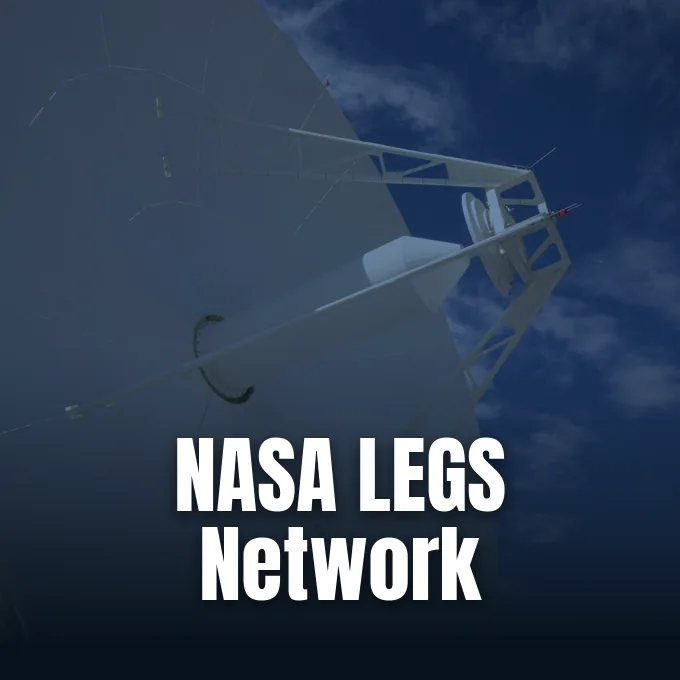
Can existing orbital relays keep pace with the massive flood of data returning from lunar exploration missions? To meet the surging demands of deep space science, the National Aeronautics and Space Administration is establishing a global network of dedicated lunar ground stations known officially as Lunar Exploration Ground Sites (LEGS). Designed to deliver high-availability, direct-to-Earth communications coverage for spacecraft operating between 36,000 kilometers and 2 million kilometers from Earth, the network expands our capacity to capture vital observations without delay [1]. NASA specialists Katrina Lee, Korine Powers, and Kendall Murphy documented this infrastructure initiative on September 22, 2026.
Why Are Lunar Ground Stations Vital for Artemis?
Direct communications between lunar orbit and terrestrial control centers form the operational backbone of modern deep space exploration [1]. Under the Artemis campaign, NASA plans to land astronauts across unexplored lunar regions to carry out groundbreaking scientific research, evaluate potential resource extraction opportunities, and establish durable systems required for the first crewed voyages to Mars. Continuous scientific exploration at this sustained tempo generates gigabytes of high-definition video feeds, planetary surface mapping streams, and spacesuit biomedical telemetry that quickly exhaust standard orbital relay capacity. Deploying dedicated lunar ground stations ensures that research teams receive uncompressed scientific readouts without operational interruptions.
Exploration across the lunar surface also serves as an indispensable technological proving ground for eventual human missions to Mars [1]. Operating long-duration surface habitats, autonomous robotic rovers, and environmental life-support machinery far beyond low Earth orbit requires uninterrupted contact with flight directors. Artemis establishes the necessary operational foundation for deep space navigation. NASA manages these distant communication channels. Distances reach 2 million kilometers. Without dedicated terrestrial infrastructure capable of focusing reception beams exclusively toward cislunar space, returning science data encounters substantial transmission bottlenecks during critical exploration phases.
Coverage Limits of the Near Space Network
The Near Space Network currently provides robust communications and navigation support for missions traveling within 1.25 million miles of Earth [1]. By integrating orbital space relays with a flexible blend of government and commercial antennas, the existing network routinely funnels terabytes of irreplaceable science and flight data from spacecraft operating throughout near-Earth space. Maintaining continuous synchronization across these diverse antennas demands rigorous scheduling protocols, particularly when multiple spacecraft enter ground tracking view during overlapping orbital passes. Because current tracking dishes must divide operating time between satellites orbiting close to the atmosphere and distant planetary probes, dedicated lunar ground stations are essential to manage the massive influx of telemetry produced by prolonged lunar exploration.
Physical geometry establishes strict line-of-sight boundaries for radio reception across interplanetary distances [1]. Terrestrial tracking dishes must maintain steady line-of-sight tracking with spacecraft traversing expansive translunar trajectories. When spacecraft maneuver beyond 36,000 kilometers, standard ground antennas encounter acute signal attenuation and tightly constrained contact windows. Expanding network reception capacity guarantees unbroken coverage across orbital arcs reaching up to 2 million kilometers from Earth. This range spans 2 million kilometers.
How Lunar Exploration Ground Sites Expand Data Flow
Lunar Exploration Ground Sites resolve severe bandwidth constraints by establishing high-capacity direct-to-Earth channels that bypass intermediate relay satellites [1]. Direct transmission minimizes latency, eliminates single points of hardware failure inherent in complex orbital crosslinks, and permits prolonged downlink sessions while spacecraft aim high-gain dish antennas straight toward terrestrial ground receivers. High-availability tracking installations positioned across diverse continents guarantee that as Earth rotates on its axis, incoming tracking stations acquire rising spacecraft well before setting stations lose optical line-of-sight visibility. This operational continuity prevents data blackouts during delicate translunar injection maneuvers.
Station placement requires worldwide geographic diversity to circumvent regional atmospheric moisture and local terrain blockages [1]. Ground facilities distributed across equatorial and temperate longitudes maximize geometric line-of-sight contact with dynamic lunar orbital trajectories. Environmental research published by PerEXP Teamworks evaluates regional atmospheric variations and radio attenuation dynamics across Earth’s tropical zones where sudden precipitation systems and heavy cloud cover routinely disrupt high-frequency radio transmissions. Strategic site distribution ensures that lunar ground stations capture incoming science telemetry even when adverse weather impacts individual ground dishes.


Can Deep Space Terminals Prevent Telemetry Bottlenecks?
Direct-to-Earth architecture reliably prevents communications bottlenecks by transmitting raw, uncompressed observational telemetry directly from lunar surface instruments to terrestrial researchers [1]. Robotic landers and rovers collect spectroscopic imagery, drill core sample profiles, and seismic readings that mirror the intricate data architectures explored in computational analyses of complex information networks across digital research domains. Relaying these massive data packets without lossy compression demands dedicated wideband ground receivers. Direct communication pipelines ensure that planetary scientists access pristine observational findings immediately following collection.
For crewed surface exploration, Artemis requires direct channels [1]. Astronauts rely on real-time links for mission navigation, spacesuit telemetry streams, and emergency communication during surface excursions.
Expanding ground infrastructure also delivers precise radio navigation support for spacecraft operating between 36,000 kilometers and 2 million kilometers from Earth [1]. Vehicles accelerating along translunar pathways experience rapid variations in orbital velocity and relative geometry. Conventional tracking dishes frequently struggle to resolve orbital state vectors across vast distances without dedicated, continuous radiometric signals. High-precision ranging observations gathered by lunar ground stations refine orbital trajectory estimations prior to critical lunar orbit insertion burns. Tracking covers paths beyond 36,000 kilometers.
Procurement Strategy Behind the NASA LEGS Network
To deploy this specialized communication architecture, NASA is partnering with commercial aerospace firms rather than funding, building, and operating government-owned stations exclusively [2]. In May 2026, the agency published a formal Sources Sought Notice through the federal System for Award Management to conduct comprehensive market research across the aerospace industry. The notice evaluated commercial readiness to construct, deploy, and operate high-gain antenna installations optimized for lunar distances stretching past 36,000 kilometers. Engaging private contractors accelerates station deployment and leverages competitive private-sector innovation. May 2026 marked the notice.
Procurement moves to a formal competitive acquisition phase by 2027 [2]. Under this procurement schedule, NASA plans to release a formal solicitation and select one industry partner responsible for constructing, maintaining, and operating the full network of lunar ground stations. The contract delegates long-term operations to a single commercial entity. NASA selects one commercial partner. This procurement model establishes direct operational accountability while allowing NASA to maintain oversight of technical compliance and rigorous federal mission assurance protocols.
Establishing Global Standards for Moon Missions
NASA’s Space Communications and Navigation (SCaN) program office is leading international efforts to create unified technical standards for lunar exploration [1]. By collaborating with global space agencies and private aerospace vendors, SCaN is developing interoperable communications and navigation frameworks intended to support sustainable lunar orbital and surface operations. Standardized transmission frequencies, signal modulation techniques, and telemetry framing structures eliminate the danger of radio interference among competing spacecraft. Without shared operating protocols, multiple orbiters and surface landers working within overlapping frequencies would risk jamming vital transmission channels. SCaN guides these international standards.
Interoperable technical standards guarantee operational resilience across deep space missions [1]. Shared communications parameters enable allied spacecraft to relay telemetry through partner ground dishes whenever primary tracking assets undergo scheduled maintenance or unexpected technical downtime. Establishing common technical baselines allows commercial lunar landers, international space agencies, and university science teams to utilize the LEGS infrastructure without installing separate tracking networks. These shared protocols protect NASA spacecraft. International partners coordinate frequencies before launch.
As humanity moves toward establishing a permanent exploration presence on the Moon under the Artemis campaign, dedicated terrestrial tracking stations provide the indispensable link connecting lunar science directly with research laboratories on Earth [1]. By bridging deep space pathways between 36,000 kilometers and 2 million kilometers from our planet, Lunar Exploration Ground Sites will modernize how science data travels home. Dedicated lunar ground stations ensure that vital astronaut telemetry, high-resolution geology maps, and mission control voice links flow continuously across deep space without encountering transmission bottlenecks. The upcoming 2027 commercial partner selection marks the decisive operational milestone in establishing America’s permanent cislunar communications architecture.
- PRESS RELEASE Lee, K., Powers, K., & Murphy, K. (2026). Lunar Exploration Ground Sites (LEGS). National Aeronautics and Space Administration. [Article Link]
- REPORT National Aeronautics and Space Administration. (2026). Lunar Exploration Ground Sites (LEGS) Sources Sought Notice. System for Award Management. [Article Link]
APA 7: TWs Editor. (2026, September 23). How Lunar Ground Stations Route NASA Artemis Moon Data. PerEXP Teamworks.


1 comment