





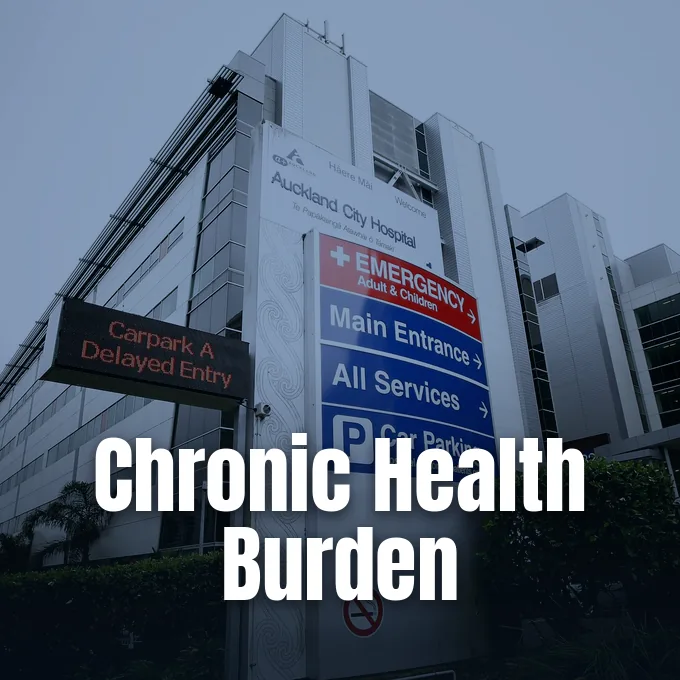
Long-term illness accounts for more than 80% of all healthcare spending in New Zealand, yet official hospital datasets capture only a fraction of this patient population. When researchers combined hospital files with family doctor visits for 374,071 adults in Auckland, the estimated chronic disease burden surged from 14% to 31% [1]. That discrepancy leaves 62,453 people with multiple illnesses invisible to hospital-based planning models. The numbers matter for the entire national budget. Ahead of next month’s general election, Treasury’s Pre-election Economic and Fiscal Update (PREFU) warned that climbing care demands pose a major fiscal challenge for incoming government ministers [2].
Scale of Chronic Disease Burden
Primary health organisation ProCare serves hundreds of thousands of people in Auckland, providing routine medical care through a network of local clinics. To evaluate how well official figures capture long-term illness, researcher Katrina Poppe joined Susan Wells, Honorary Professor at the University of Auckland’s School of Population Health, and Allan Moffitt, Clinical Director at ProCare Health, to examine patient records from January 2014. The group analyzed health files for 374,071 adults enrolled in local ProCare clinics, linking general practice files to national hospitalisation databases to screen for 61 conditions including heart disease, diabetes, cancer, and asthma. In hospital admissions alone, only 14% had multimorbidity. When the researchers added family doctor records into the count, that proportion jumped to 31%, identifying 62,453 additional individuals living with multimorbidity whose ongoing conditions never appeared in inpatient files [1].
The findings indicate that hospital databases capture less than half of all adults living with multiple long-term illnesses. In the study summary, Poppe explained that inpatient archives miss over half of all patients living with multiple chronic illnesses [1]. Because national funding models rely on hospital data to measure community need, this gap conceals how much care occurs outside hospital walls while distorting budget allocations for local clinics [2].
The Gap in Hospital Records
Hospital records overlook long-term conditions because inpatient wards handle acute emergencies rather than ongoing care. Acute trauma demands immediate attention. Clinicians record the trauma that prompted the visit, but they rarely log preexisting conditions that do not affect the hospital stay or alter the daily course of inpatient therapy. Routine problems like high blood pressure, spinal disorders, or mild diabetes go unmentioned on discharge summaries. The hospital registry closes when the patient leaves, leaving their chronic illnesses unrecorded in national databases [1].
The Auckland analysis revealed sharp differences between age groups and between sexes. Hospital data underestimated multimorbidity more for women than for men, with the largest differences appearing between the ages of 55 and 84. Illness climbed with age. Among people aged 65 to 74, more than 60% lived with two or more long-term conditions, a rate that climbed to nearly 80% among patients aged 75 to 84 [1].

These data gaps create real risks when patients enter the hospital for other medical problems. New Zealand lacks a unified digital file that connects general practitioners with public hospitals, meaning hospital teams cannot see full prescription histories, past lab results, or outpatient diagnostic summaries. Without that shared visibility, doctors can’t check for adverse drug reactions. Overlapping prescriptions can lead to complications, extending ward stays and causing preventable readmissions that place added strain on inpatient facilities [1].
Why Community Care Misses the Count?
Why do hospital datasets fail to reflect the bulk of long-term care in New Zealand? Family doctors and community nurses manage diabetes, high blood pressure, spinal disorders, and asthma in local clinics without sending patients to acute hospital wards, meaning that routine management takes place outside inpatient registries. Care for several conditions takes time. Among the 61 long-term conditions examined by the University of Auckland team, community-managed ailments represented the bulk of uncounted cases. In her report, Katrina Poppe explained: “Our findings suggest hospital records capture only part of this workload, leaving much of the care provided in the community unaccounted for when assessing patients’ needs” [1].
Because community clinics absorb the true chronic disease burden quietly, health planning bodies overlook the staff and money needed to sustain it. General practices operate under heavy daily pressure, yet hospital emergency rooms continue to face growing queues of patients seeking help [1]. When state planning relies solely on hospital admissions, community clinics receive insufficient funding to manage complex multimorbidity. Without accurate data on local patient numbers, health authorities cannot distribute resources to match the real volume of community care, leaving family clinics understaffed during peak winter demand [2].


Pressures on General Practice
This hidden burden falls squarely on a primary care workforce that is shrinking year by year. Family doctors manage complex drug regimens for aging patients every day. A 2022 survey by the Royal New Zealand College of General Practitioners showed that 37% of family doctors intended to retire by 2027, rising to 55% by 2032. Staffing gaps will soon widen. Without new medical graduates to replace retiring doctors, suburban and provincial clinics face empty staff rosters that threaten routine access for older patients living with multiple conditions [1].
Workforce constraints have already triggered industrial action among healthcare staff in public hospitals and local clinics. Nurses and doctors have staged strikes over pay and working conditions, rejecting official claims that clinics can absorb extra patients without additional funding. Shortages undermine clinic safety. Robin Gauld, writing in The Conversation, observed that workforce shortages affect all medical professions, meaning that patient access declines regardless of how much capital politicians allocate to baseline hospital budgets [2].
Policy for Chronic Illness Burden
Health authorities face ambitious national targets that remain out of reach. In 2024, the government set targets to deliver faster cancer treatments, raise childhood immunisations, shorten emergency department stays, and reduce delays for initial specialist appointments and elective surgery by 2030. Delivery has lagged. Underfunding and weak long-term planning have left emergency department wait times and elective surgeries falling between 19% and 29% short of their stated goals. As Gauld said, New Zealand’s health system suffers from chronic ailments that temporary budget adjustments can’t cure [2].
To clear waiting lists, the coalition government has turned to private hospitals, contracting out publicly funded elective procedures such as ophthalmology and orthopedics, though critics question whether shifting state funds weakens public hospital infrastructure over time. Public clinics face deep capacity limits. Patients assessed as needing specialist treatment are turned away because public facilities lack staff, leaving families in underserved districts to bear the financial strain of repeated doctor visits while waiting for hospital care [2].
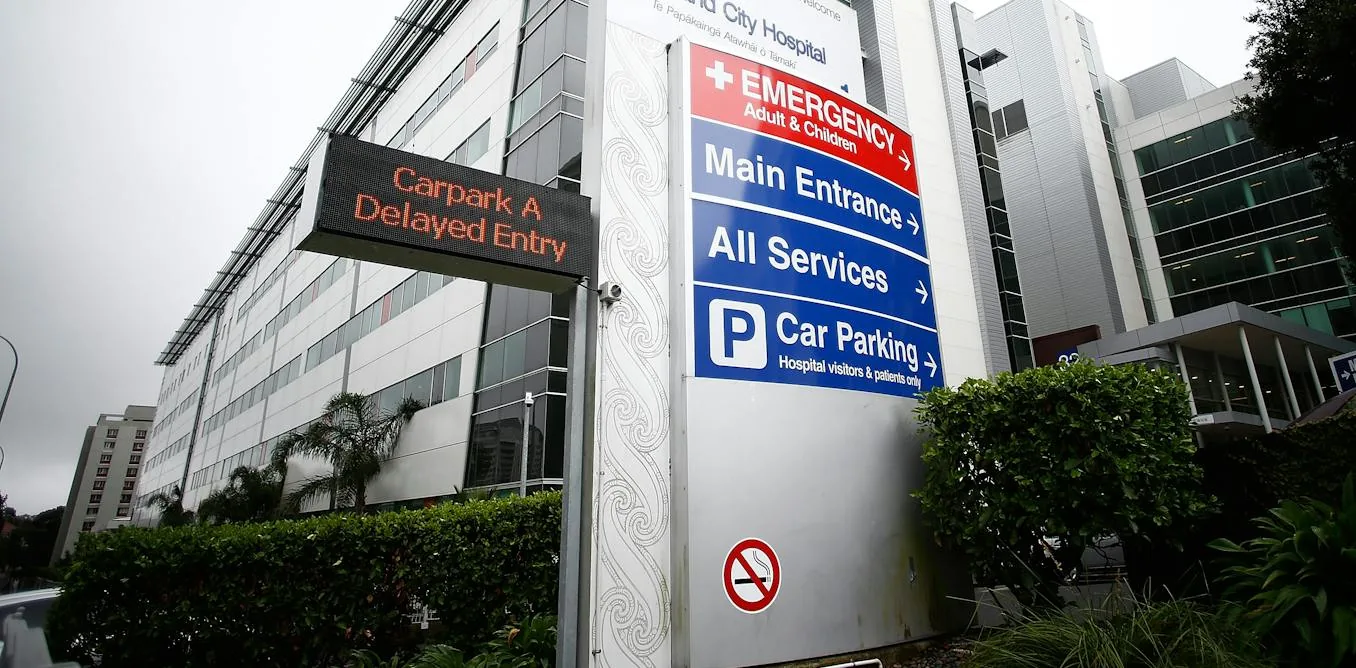
Major organisational shakeups have also failed to fix clinical access. In 2022, reforms created Health New Zealand to coordinate health services on a national scale and reduce bureaucratic duplication. Yet public debate soon shifted from organizational charts to whether patients can see a doctor in reasonable time. Ahead of the election, the National Party has promised to fund more medicines, while the Labour Party has pledged three free visits to family doctors to ease living costs [2]. Neither proposal resolves the core data division between hospitals and local clinics [1].
Political Debates Over Long-Term Funding
Health planners need a funding horizon that extends well beyond typical political cycles. Governments in Wellington operate within three-year parliamentary terms, an election rhythm that encourages ministers to favor short-term announcements over ten-year investments in national healthcare infrastructure. Planning cycles remain short. Gauld argued that tackling chronic conditions needs cross-party consensus, particularly between Labour and National, to agree on long-term goals for workforce development, hospital access, and preventative care. When political priorities shift after every election, planners struggle to construct stable systems that connect community clinics with inpatient hospitals [2].
Although healthcare spending has climbed steadily over several decades, most of that money has merely kept pace with general inflation rather than matching the steep rise of multimorbidity in an aging society [2]. New Zealand needs an integrated medical record. To build an effective health service, Health New Zealand and local primary health organisations must unite community clinic files with hospital databases to measure the true chronic disease burden. A unified record is not just an academic exercise, but a practical necessity for directing clinical funding to the general practices where patients receive ongoing care [1].
- WEBSITE Poppe, K. (2026). NZ’s hidden chronic health burden is even bigger than we thought – new analysis. The Conversation. [Article Link]
- WEBSITE Gauld, R. (2026). NZ’s health system suffers from chronic ailments only cross-party consensus can treat. The Conversation. [Article Link]
APA 7: PerEXP Teamworks. (2026, October 26). New Zealand Chronic Disease Burden Outpaces Official Hospital Data. PerEXP Teamworks. https://perexpteamworks.com/en/chronic-disease-burden-new-zealand/


