






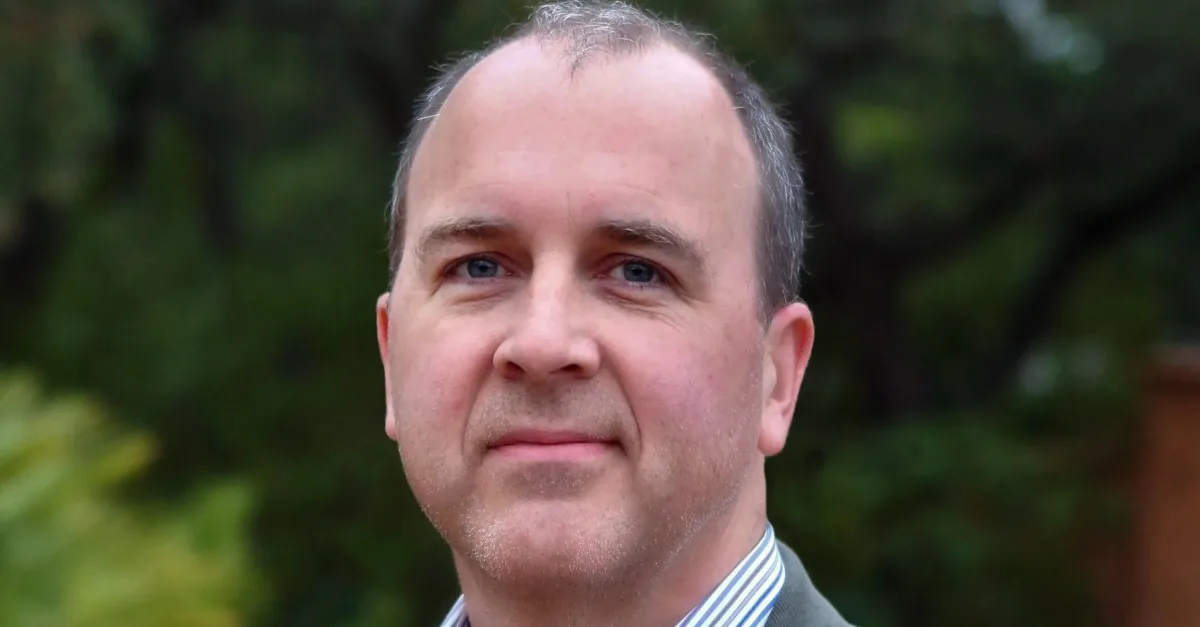
Rivian partner Mind Robotics hired veteran engineer Doug Field as its president on October 13, 2026, putting the former Tesla and Ford leader in charge of scaling industrial automation for vehicle assembly lines. Rivian chief executive RJ Scaringe announced the appointment onstage at TechCrunch Disrupt 2026 in San Francisco, explaining that Field will run product, engineering, and factory operations. Field previously oversaw mass manufacturing programs at major automakers, but his new role focuses on training software models and robotic hardware to build cars with human workers [1, 2]. Testing is already underway [1].
Doug Field Takes Charge at Mind Robotics
The appointment places an experienced hardware leader at the helm of a quiet venture that Scaringe founded in 2025 [1, 3]. Although early reports described the business as a spinoff, Mind Robotics operates as an independent partner where Rivian held roughly a one-third minority stake as of June 30, 2026 [2, 3]. Scaringe serves as acting chief executive and chairman, but he wanted an established operator to manage daily tasks so he could keep his own focus on Rivian’s vehicle production [1, 2]. Scaringe called Field for recommendations before both realized they shared identical manufacturing goals [2].
Scaringe praised his new partner’s background during the announcement, explaining that Field knows how to take complex concepts from a lab and make them work reliably in high-volume production [1, 3]. “He has an incredible ability to foster great teams that take on big, complex ideas and deliver products that reset expectations,” Scaringe said in a statement. “That’s exactly what Mind needs as we deploy robots into real factories and beyond” [1, 3].
Field didn’t hesitate to take on the post, calling the blend of artificial intelligence and physical hardware “one of the most important—and difficult—engineering challenges of our time” [1, 2]. His hiring marks the second time Scaringe has created an independent business alongside Rivian. He previously founded Also, a micromobility company developing high-end electric bicycles, where former Specialized chief product officer Chris Yu serves as day-to-day leader. Field said he’s thrilled to build a team that will redefine domestic manufacturing [2, 3]. He wants to prove that American plants can produce advanced machines at scale [2].

Factory Scale and Live Testing in Normal
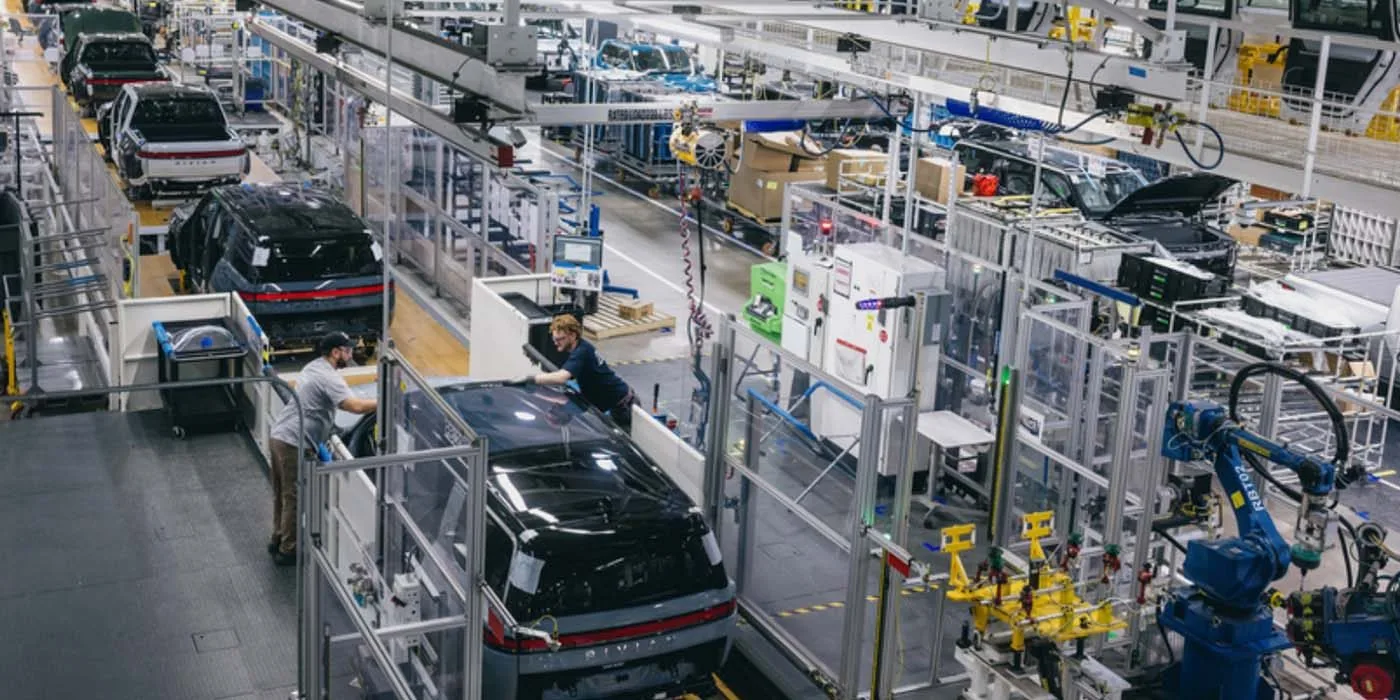
Most robotics startups spend years testing prototype hardware in sterile laboratories without direct access to heavy industrial environments, but Mind Robotics bypasses that bottleneck by plugging straight into Rivian’s factory in Normal, Illinois. Rivian acts as the startup’s launch customer and anchor shareholder, offering an active assembly line where automated systems gather real training data from day one [1, 2]. That plant is busy as workers ramp production of the upcoming R2, and Rivian delivered 19,248 vehicles in the third quarter alone [1]. Field said this living workshop gives his engineering group an unmatched edge over software firms that try to model factory physics purely through simulations, because real assembly lines present unpredictable floor conditions, tight tolerances, and heavy components that demand quick adjustments [2, 3].
Deploying experimental machines inside a high-speed vehicle plant isn’t simple, but it supplies the real-world feedback that machine learning models need [1, 2]. “Mind has assembled an exceptional team and has a unique advantage: the ability to deploy and learn inside a real, high-volume factory from day one,” Field said in a statement [2, 3].
The partnership lets Mind Robotics test robot control systems while Rivian evaluates whether automated tools can lower manufacturing overhead on future models [1, 3]. To support this rapid testing pace, the startup currently lists 32 open positions across its software, hardware, and operational divisions. Scaringe said that keeping the entities legally separate protects both teams. Rivian gains early access to automation tooling, while Mind Robotics develops hardware without facing public quarterly vehicle guidance [1, 3].


A Billion-Dollar War Chest for Mind Robotics
Mind Robotics didn’t spend years scraping together small checks before building hardware. The startup surfaced publicly in Rivian’s third-quarter earnings report in late 2025 with an initial $115 million seed round led by Eclipse. In March 2026, the company closed a $500 million Series A round co-led by Accel and Andreessen Horowitz [1].
Fundraising continued two months later when Kleiner Perkins led a $400 million investment round in May 2026, which Reuters reported valued the business at $3.4 billion. Mind Robotics secured over $1 billion in under a year without ever showcasing a finished robot in public [1, 3]. Beyond venture firms, strategic backers joined the cap table, including the venture arms of automaker Volkswagen and cloud provider Salesforce. Those backers reflect growing industry demand for automated factory tools that can ease labor shortages and stabilize assembly output [2].
Field joins as robotics ventures command broad interest across technology markets, arriving at a moment when Trump unveiled a super intelligence force to steer US AI policy amid discussions over automation [3]. While funding flowed freely into software startups over the past decade, building physical machines that can endure long factory shifts has proven far more difficult. Scaringe recognized that capital alone won’t solve hardware assembly bottlenecks, which is why he recruited Field to turn their $1 billion balance sheet into dependable shop-floor tools [1, 2].
Industrial Automation Without Humanoid Biomechanics
While rivals like Tesla and Hyundai pour resources into bipedal humanoid robots, Mind Robotics is charting a distinctly pragmatic course [1, 2, 3]. Scaringe made it clear at TechCrunch Disrupt that his startup won’t attempt to mimic human biomechanics simply for aesthetic reasons. Instead, the company is building purpose-built robotic hardware engineered around dexterity and physical reasoning, shaping tools to fit specific industrial tasks rather than copying human limbs [1, 2, 3]. Experts note that making a robot walk on two legs is often easier than engineering it to perform reliable, precise work on an assembly line [3].
The startup hasn’t confirmed whether its hardware will look humanoid or resemble articulated arms mounted on mobile platforms [1, 3]. That ambiguity sets Mind Robotics apart from Tesla, which used theatrical demonstrations to promote its Optimus robot. Elon Musk previously forecasted that Tesla would produce about 10,000 Optimus robots during 2025, suggesting approximately 1,000 units would perform productive labor across its plants. By January, Musk admitted none were doing useful work [1].
Tesla subsequently halted assembly of its Model S and Model X lines in Fremont to free up floor space for Optimus, yet the automaker repeatedly delayed unveiling the Optimus V3 hardware while Musk conceded in July that output would start very slowly. Rather than chasing stage demos or setting aggressive unit targets, Mind Robotics is quietly training systems on real assembly work. Field’s mandate isn’t to build a walking machine, but to deliver dependable automation that can handle components on active vehicle lines [1, 2]. Production reliability comes first [1].
Engineering Pedigree from Tesla, Apple, and Ford
Field brings extensive experience leading complex hardware programs through difficult production ramps [1, 2]. Early in his career, he served as employee No. 1 at Segway before moving into consumer hardware as vice president of Mac hardware engineering at Apple. He left Apple in 2013 to become Tesla’s senior vice president of engineering, where he ran vehicle development during the Model 3 launch. That program notoriously pushed the automaker into “production hell” in 2018, but the sedan shipped and became the best-selling electric car in the world [1, 2, 3].
Field returned to Apple in 2018 to lead Project Titan, the company’s autonomous electric car initiative inside its Special Projects Group. That program was canceled in 2024, but Field had already moved on to legacy automotive. In 2021, Ford hired him as chief EV, digital, and design officer to guide its electrification plans [1, 2, 3]. While Ford’s Model e unit struggled financially—losing over $5 billion in 2024 alone—Field’s team developed the low-cost Universal EV Platform and designed a $30,000 midsize pickup planned for Louisville in 2027 [1].
When Field left Ford in April as part of a wider leadership reorganization, the automaker folded his electric division into manufacturing under chief operating officer Kumar Galhotra rather than hiring an outside successor. Five months later, he took the presidency at Mind Robotics [1, 2]. As Scaringe guides Rivian through its R2 launch, Field’s arrival keeps the robotics venture from becoming a neglected side project. He knows how to ship hardware at scale [1].
- ONLINE NEWS Lambert, F. (2026, October 13). Rivian’s Mind Robotics snags Doug Field, ex-Tesla and Ford EV chief. Electrek. [Article Link]
- ONLINE NEWS Korosec, K., & O’Kane, S. (2026, October 13). Exclusive: Rivian’s startup Mind Robotics hires former Ford EV chief Doug Field. TechCrunch. [Article Link]
- ONLINE NEWS Hawkins, A. J. (2026, October 13). Rivian partner Mind Robotics hires Doug Field as president. The Verge. [Article Link]


