






China’s Ministry of Industry and Information Technology joined six partner agencies on September 28 to release a national plan aiming to deploy solid-state batteries in fleet vehicles by 2030. The policy covers the 2026 to 2030 cycle and also targets lithium cells capable of lasting 15,000 charge cycles [1]. While Central Government planners seek fresh chemistry before the decade closes, top cell maker CATL warned that widespread adoption in passenger cars won’t happen quickly [2].
China Sets a 2030 Battery Roadmap
The new policy outlines key goals over the China Five-Year Plan from 2026 to 2030, emphasizing factory quality over simple output growth. Sun Xiaohong, former official at the China Chamber of Commerce for Machinery and Electronic Products, told the Global Times that Chinese factories possess strong assembly lines but still need basic research in core materials [5].
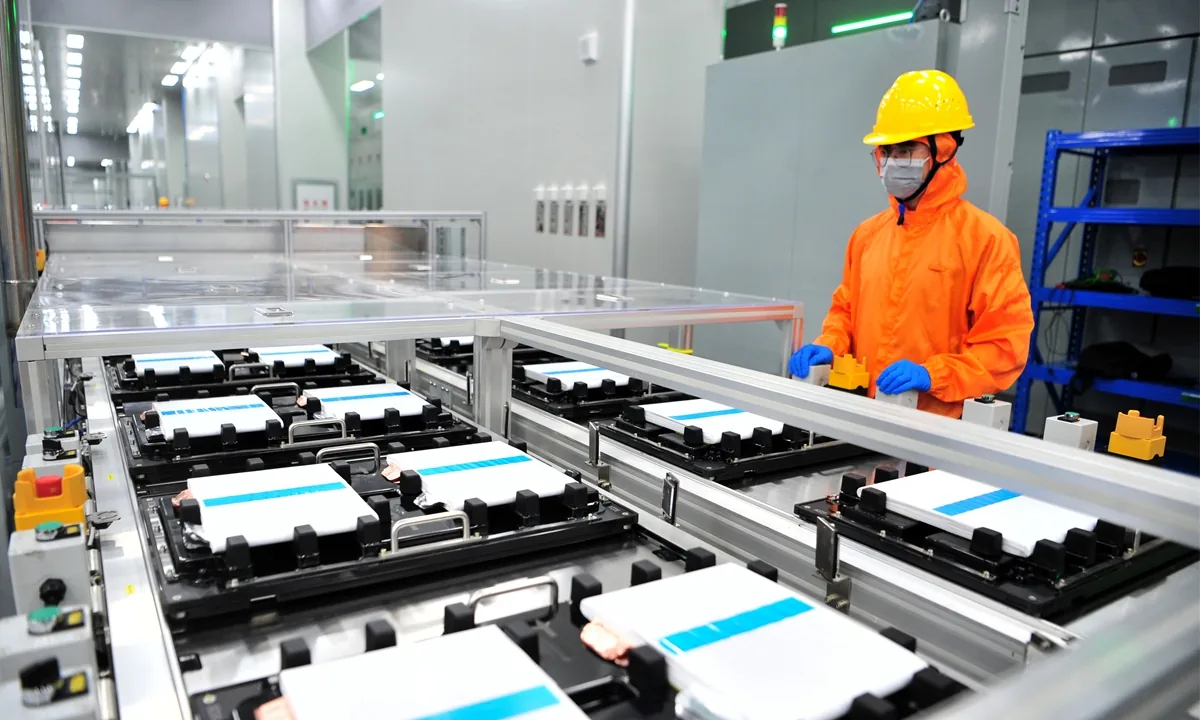
China built its battery lead during the 14th Five-Year Plan from 2021 to 2025, when the country accounted for 70 percent of global electric car output [1]. Official figures cited by Wan Gang, honorary president of the China Association for Science and Technology in the People’s Daily, show that China now supplies about 70 percent of world battery materials and more than 60 percent of power batteries. That factory scale is visible at sites like the second phase of the Cornex New Energy 80-gigawatt-hour battery industrial park in Yichang City, Hubei Province, which came online in August 2026 [5]. Yet expanding current lithium output doesn’t mean solid-state batteries will arrive overnight. Deploying all-solid-state cells in passenger models demands brand-new interface engineering that survives daily driving.
Beyond solid-state chemistry, the Central Government roadmap sets concrete goals for standard and future energy storage systems. It seeks long-life lithium batteries that reach 15,000 charge-discharge cycles while pushing top makers to bring cell defect rates down to parts-per-billion levels. The guidelines describe a supply network centered on lithium-ion cells, joined by sodium and flow batteries [5].
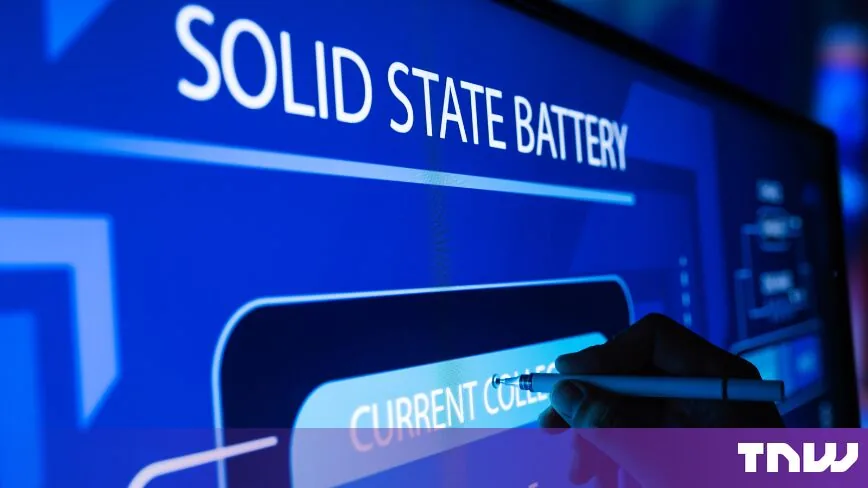
CATL Chief Rates Solid-State Batteries at Level Four
While state officials set national deadlines, factory leaders sound a cautious note about near-term plans. Robin Zeng Yuqun, founder and chairman of CATL, addressed the technology in June during a panel at the World Economic Forum Annual Meeting of the New Champions in Dalian City, Liaoning Province. On a scale from one to nine, where nine indicates readiness for full vehicle assembly, Zeng said the tech sits at level four. “Based on a measure of level one to nine, the technology has only reached level four so far,” Zeng said. He added that an inflection point won’t arrive before 2030, warning that commercial success is far from guaranteed on consumer markets [2].
CATL controls roughly 40 percent of the global electric car battery market, giving Zeng’s view real weight among car makers. “Even if the products are delivered, it remains to be seen whether they will be well received and become a commercial success on the market,” Zeng said [2]. Robin Zeng called early million-vehicle adoption unlikely.
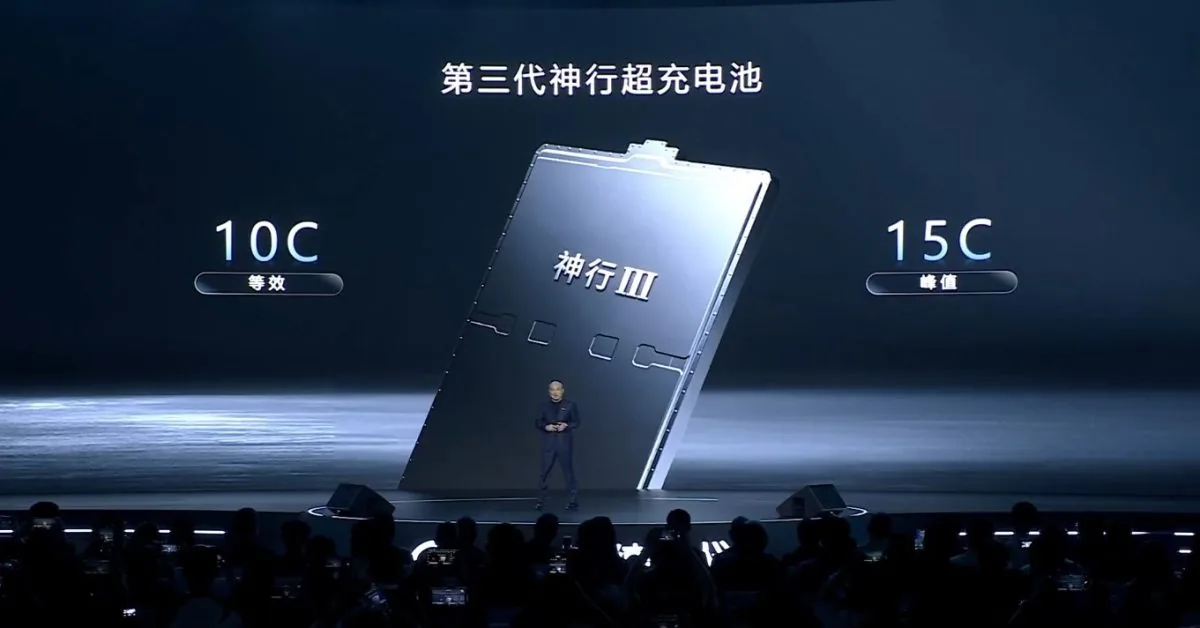
CATL isn’t abandoning the field, but its roadmap points toward small early steps rather than big factory lines. The firm is working toward small-scale builds by 2027, with chief scientist Wu Kai targeting level seven to eight readiness and an early capacity of 5 gigawatt-hours. CATL has already started pilot builds for solid-state prototypes reaching an energy density of 500 watt-hours per kilogram, roughly doubling the storage capacity of today’s best liquid packs. The firm has also teamed up with domestic rival BYD to study solid-state chemistry while building liquid iron-phosphate packs that recharge in just six minutes [2]. Small pilot runs will test the hardware first.


Semi-Solid Packs Versus All-Solid-State Batteries
Much of the confusion surrounding solid-state timelines stems from cars already sold with similar labels. In China, drivers can already buy electric cars marketed with solid-state batteries, but these are actually semi-solid designs that still contain liquid or gel electrolytes. China’s draft national battery standard classifies these systems as mixed liquid-solid batteries rather than true solid-state hardware [2].
Car makers have seen mixed results with these semi-solid packs on public roads. Nio began series builds of a 150 kilowatt-hour semi-solid pack made with WeLion New Energy in April 2024, but pulled the option after building only a few hundred units due to high costs and weak demand. In contrast, IM Motors offers a 130 kilowatt-hour semi-solid Lightyear Pack in its L6 sedan, while SAIC Motor saw its MG4 reach 100,000 units in eight months as the first mass-produced semi-solid vehicle. Semi-solid packs have even appeared in budget electric SUVs in China priced below $15,000 [2]. Automakers find that customer demand depends heavily on pack pricing.
Can car makers simply swap liquid electrolytes for solid ceramics without rethinking the rest of the car? That question overlooks interface resistance, dendrite growth, and contact breakdown under pressure. Research into energy transfer has examined novel battery charging methods in lab setups, but commercial vehicles must hold up through road vibration over ten years and 200,000 kilometers [2].
European Production and the Dunkirk Plant
Chinese and South Korean makers supply most cell output, but European car firms and overseas partners are setting up their own pilot projects. In northern France, Taiwanese battery maker ProLogium Technology started construction in February 2026 on a cell plant in Dunkirk beside the Gravelines Nuclear Station. The Dunkirk Plant is the largest new cell facility in Europe since Swedish cell maker Northvolt went bankrupt after raising $15 billion. French officials agreed to subsidies in 2023 and granted final permits the following year [1]. ProLogium chose Northern France for its clean nuclear grid, giving the site direct access to low-cost electricity for industrial operations.
ProLogium already makes 6,000 packs a year at its Taiwan Plant, equal to half a gigawatt-hour of capacity. Those cells reach an energy density of 381 watt-hours per kilogram on tests from TÜV Rheinland, which is roughly 30 percent higher than the cells found in most electric cars today. The Dunkirk site delivers 0.8 gigawatt-hours in 2028 [1].
Other legacy European brands pursue their own development paths. Volkswagen battery unit PowerCo and luxury maker Mercedes Benz work with American startup Factorial Energy on solid-state designs of their own. But building pilot lines doesn’t quickly solve the broad supply gap. Chinese and South Korean firms supply 90 percent of the batteries used in Europe today. In South Korea, LG Energy Solution expects solid-state tech to reach phones a decade before entering electric cars, with its North America leadership saying that large car cells are where makers face the hardest hurdles [1]. Reaching commercial volume in Europe requires years of sustained investment.
Commercial Hurdles on the Road to 2030
Market forecasts show solid-state revenue will climb from a small base, but volume will stay modest through the end of the decade. Research firm MarketsandMarkets estimates that China’s solid-state battery market will grow from $42.5 million in 2025 to $384.8 million by 2030. That translates to a compound annual growth rate of 44.4 percent [5].
Independent industry forecasts also temper hopes for quick market change. Analysis from BloombergNEF Research projects that solid-state tech will account for only 10 percent of combined global electric vehicle and storage demand by 2035 [4]. Established players outside China target similar timeframes. Japanese automaker Toyota Motor, which holds more solid-state patents than any other car maker, plans to launch electric cars with all-solid-state batteries between 2027 and 2028 with a driving range of 1,200 kilometers. Yet early output will be measured in hundreds of tons of material, meaning packs will go into flagship Lexus Brand models rather than cheap passenger cars [2]. Toyota reserves solid-state chemistry for luxury flagships first.
The reality facing car makers is that mature liquid batteries keep improving, raising the bar that solid-state tech must clear. “Small-scale commercialization is already possible, but large-scale adoption still depends on lowering costs further and improving production processes,” Sun told the Global Times. Cui Dongshu, secretary-general of the China Passenger Car Association, told the Global Times that the plan reflects a strategic shift from simple scale expansion toward high-quality development [5].
- ONLINE NEWS Popa, D. (2026, October 4). China wants solid-state batteries in use by 2030, and CATL rates them four out of nine. The Next Web. [Article Link]
- ONLINE NEWS Lambert, F. (2026, June 25). CATL chief: solid-state batteries at ‘level 4 of 9,’ no leap until 2030. Electrek. [Article Link]
- ONLINE NEWS ChinaTechNews com Staff. (2026, October 5). China wants solid-state batteries in use by 2030, and CATL rates them four out of nine. ChinaTechNews.com. [Article Link]
- ONLINE NEWS Anand, P. (2026, October 3). China Targets Mass Production of Solid-State Batteries by 2030, CATL Warns of Hurdles. EVBytes. [Article Link]
- ONLINE NEWS Global Times. (2026, September 28). China unveils 5-year battery plan targeting large-scale all-solid-state use by 2030. Global Times. [Article Link]


