






Security researcher Abdelhamid Naceri released an unpatched Nightmare Eclipse zero-day proof-of-concept tool called BigDiskBuster over the weekend to block antivirus definition downloads. GitHub hosted the initial release. Published on September 19, the code continuously monitors update paths and fills available drive storage to prevent security signatures from refreshing. While endpoint software continues running, detection capabilities gradually freeze without current threat intelligence [2]. The exploit leaves Windows installations vulnerable to emerging malware campaigns [1].
How the Nightmare Eclipse Zero-Day Works
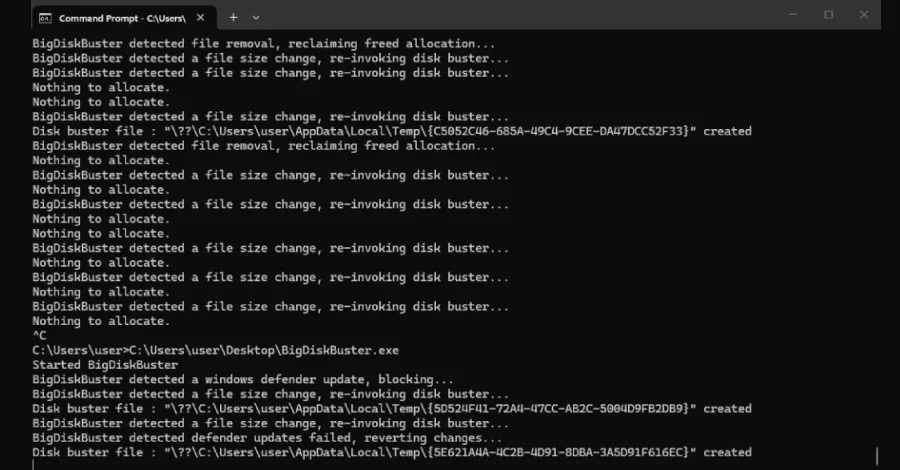
The core mechanics of BigDiskBuster focus on intercepting automated background routines before antimalware engines commit new threat definitions to disk. When active on a target system, the utility watches the primary system drive for newly spawned directories located under the official update staging paths of Microsoft Defender. As soon as the platform initiates a network download to pull an engine or signature package, the exploit generates an expansive hidden temporary file dynamically sized to exhaust all remaining free volume capacity. Because the underlying storage partition lacks space to unpack incoming payloads, the update operation abruptly aborts. Operating system background tasks fail to complete their verification routines against the Nightmare Eclipse zero-day [2].
Cleanup occurs automatically once the installer yields to the artificial storage barrier. After Defender detects the disk write failure and purges its incomplete staging folder, the utility deletes its temporary dummy file and resumes background monitoring to intercept subsequent download attempts. In addition to monitoring update paths, the software secures an open handle on MRT.exe (the Windows Malicious Software Removal Tool). This persistent file lock prevents Windows Update from substituting or upgrading the binary during routine servicing intervals [2].
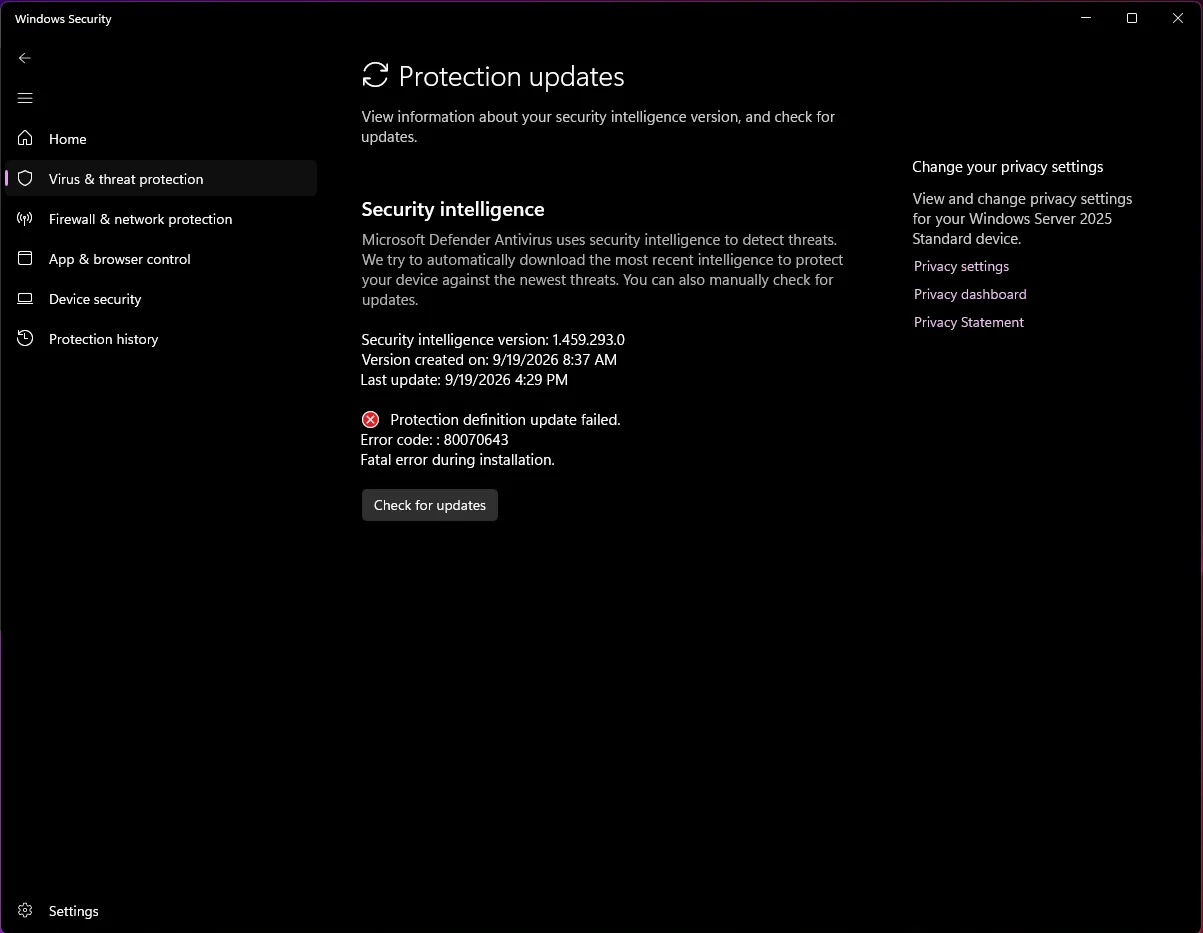
The staging directory vanishes immediately. Defender then records a generic Windows update error without notifying users through automated alerts [2].
BigDiskBuster Exploit Halts Update Directories
Public documentation released by Naceri underscores the deliberate simplicity of the attack. On social channels and repository notes, the researcher highlighted how the tool forces local defenses into an unmaintained state while running silently in user sessions. ‘Made a funny tool, completely denies defender from updating so you’re stuck with your current version if the tool is running in the background,’ Naceri stated during the disclosure. He acknowledged that while the code remains functional across supported Windows versions, the published proof of concept ‘is a bit buggy and needs some rewritting’. The exploit requires continuous background execution to sustain the update barrier [1].
Independent security professionals have not yet verified the reliability of the mechanism under diverse enterprise conditions. The technique differs fundamentally from application bugs like the silent Excel copy paste bug confirmed by Microsoft, where corrupted clipboard routines damaged desktop productivity without subverting security subsystems. Instead, BigDiskBuster weaponizes file system constraints against operating system protection layers [2]. The Register reported that keeping endpoints tethered to obsolete signatures diminishes defense viability over time [3].
Organizations confronting the Nightmare Eclipse zero-day must recognize the subtle nature of antimalware starvation. When updates stall, Microsoft Defender continues to present active status indicators in management dashboards rather than triggering critical failure notifications. Antivirus definitions that fall days or weeks behind current releases fail to recognize polymorphic payloads and rapid modifications produced by modern threat actors. The exploit remains unpatched [2].


UnDefend Ancestry and Past Catalog Additions
The architectural roots of the attack trace directly to an earlier disclosure named UnDefend, which Naceri published in April 2026. UnDefend similarly prevented Defender from downloading and applying signature refreshes, but it achieved that outcome by inducing uncontrolled resource consumption within the antimalware framework. Microsoft resolved that original denial-of-service vector in May by releasing an update for Antimalware Platform version 4.18.26040.7. The May patch was CVE-2026-45498 [2].
Weaponization of Naceri’s research in real-world attacks previously forced federal intervention. His first three published Defender exploit tools—BlueHammer, RedSun, and UnDefend—were all observed in active network intrusions before Microsoft deployed functional remediations. Following evidence of ongoing exploitation, the Cybersecurity and Infrastructure Security Agency added all three entries to its official Known Exploited Vulnerabilities catalog. That regulatory escalation confirmed that update suppression tools provide immediate practical utility for threat groups seeking to extend dwell time inside breached environments [2].
While UnDefend relied on CPU and memory strain, BigDiskBuster shifts the denial-of-service mechanism to host storage allocation. Because Microsoft designed the May update specifically around the process consumption flaw tracked in CVE-2026-45498, technical analysts suggest that previous fixes offer no inherent protection against space-exhaustion routines. By forcing the file system to reject temporary update directories, the Nightmare Eclipse zero-day bypassed the patched processing boundaries without triggering memory corruption defenses [2].
Security Researchers Uncover Long Dispute with Microsoft
The emergence of this Nightmare Eclipse zero-day follows an extensive campaign of public vulnerability drops tied to personnel grievances. Naceri stated that he was dismissed from the Microsoft Security Response Center in 2024, maintaining an ongoing dispute over alleged unfair termination dating to March 2025 [1, 2]. Beginning in April 2026, the researcher adopted an uncoordinated disclosure cadence, publishing approximately one unpatched Windows or Defender vulnerability every month. Naceri was dismissed in 2024 [2].
The disclosure spree has yielded a succession of privilege escalation and evasion exploits targeting core platform components. Two weeks ago, immediately following the rollout of monthly Patch Tuesday updates, Naceri released ShieldCrash, an exploit that yielded full SYSTEM privileges on Windows endpoints. ShieldCrash successfully bypassed ShieldBreak, a Defender elevation-of-privilege flaw patched only days earlier, which had itself bypassed RoguePlanet, a vulnerability disclosed in June and patched in July. Additional zero-days published by Naceri across 2026 include LegacyHive, YellowKey, GreenPlasma, and MiniPlasma, affecting BitLocker and foundational Windows services [1].
Microsoft initially responded to the recurring zero-day releases by issuing stern warnings of prospective legal action. Company representatives stated that legal measures would target parties engaging in ‘malicious activity causing real harm’ to customers, an announcement that sparked widespread debate across the information security community. When BleepingComputer requested comment regarding the release of BigDiskBuster and the potential risks of update suppression, a Microsoft spokesperson was not immediately available to provide a statement. Microsoft offered no immediate comment [1].
Mitigation Steps While Awaiting an Official Patch
Auditing workstations targeted by the Nightmare Eclipse zero-day requires manual administrative verification because no vendor security advisory exists. Can network administrators detect the blockage before security intelligence degrades? To confirm operational health, personnel should open Windows Security, navigate to Virus & threat protection, select Protection updates, and initiate Check for updates. Discrepancies between expected update timestamps and local engine logs reveal whether staging directories encountered premature termination. No CVE identifier exists yet [2].
Enterprise environments can automate verification through scripted PowerShell telemetry. Running Get-MpComputerStatus exposes the active engine and signature values stored in the AMEngineVersion and AMProductVersion fields, allowing security teams to flag hosts falling behind production baselines. Security operations centers should establish alerts tracking sustained disk capacity drops on system volumes, recurring Defender update error codes, and sudden surges of hidden files within temporary directories. Correlating these host anomalies provides actionable early warnings before unpatched machines encounter targeted intrusion vectors [2].
At the boundary level, restricting untrusted software prevents the proof of concept from establishing its monitoring loop. Deploying application allowlisting through WDAC (Windows Defender Application Control) or AppLocker restricts non-privileged accounts from launching unauthorized binaries linked to the Nightmare Eclipse zero-day. Similar to how Microsoft issues emergency patch to stabilize Windows 11 during unexpected system anomalies, infrastructure engineers must enforce proactive local controls until an official security release arrives [2].
- ONLINE NEWS Gatlan, S. (2026, September 22). New Windows Defender zero-day blocks Microsoft antivirus updates. BleepingComputer. [Article Link]
- ONLINE NEWS The Hacker News. (2026, September 22). Researcher Drops BigDiskBuster Zero-Day PoC That Blocks Microsoft Defender Updates. The Hacker News. [Article Link]
- ONLINE NEWS Page, C. (2026, September 22). NightmareEclipse’s latest zero-day leaves Microsoft Defender stuck in the past. The Register. [Article Link]


