





How can deep space probes navigate distant orbits where sunlight is too weak to provide power? NASA and the U.S. Department of Energy answered that challenge on October 8, 2026, by signing an agreement titled “Accelerating American Leadership in Space Nuclear Power and Propulsion” to build fission systems for flight and surface bases. The initiative establishes end-to-end work covering research, fuel production, testing, launch integration, and flight operations. Effective Sunday, November 1, 2026, the partnership directs joint agency resources toward long-duration missions [1].
- What Defines the New Space Nuclear Power Agreement?
- How Space Nuclear Propulsion Moves to Flight Testing
- Powering the Lunar Surface Reactor by 2030
- Radioisotope Systems for Titan and Mars Missions
- Separating Flight Hardware from Ground Testbed Research
- Technical Safety Frameworks and Fuel Supply Pipelines
What Defines the New Space Nuclear Power Agreement?
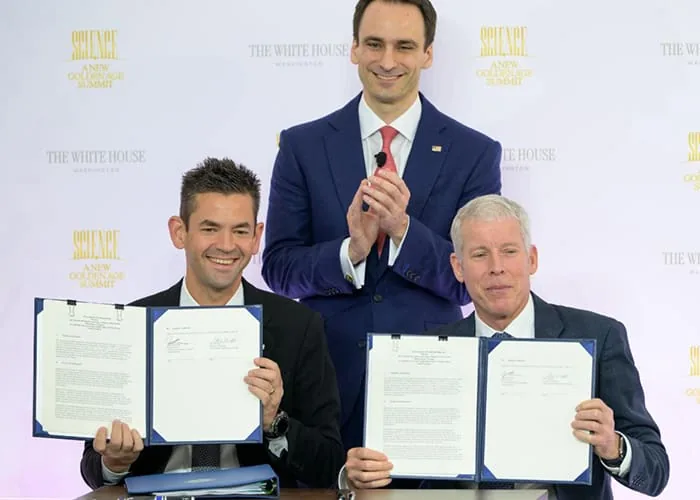
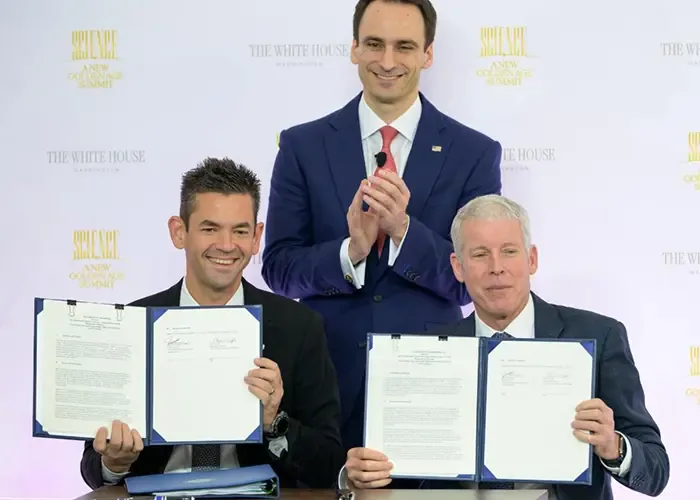
The interagency framework unites the civil space agency and the Energy Department under a shared development structure for space nuclear power. NASA Administrator Jared Isaacman and U.S. Secretary of Energy Chris Wright completed the signing during the Science: A Golden Age Summit, hosted by the White House Office of Science and Technology Policy (OSTP) at the Donald J. Trump Institute of Peace in Washington. Solar arrays cannot deliver enough energy in dark planetary environments. “We are entering the ‘Nuclear NASA-era,’ which represents a major transformation for space exploration,” said Isaacman [1].
Energy Secretary Chris Wright linked the civil space effort to national energy priorities that support next-generation reactors. “Thanks to President Trump, America’s nuclear renaissance is reaching a new frontier,” said Wright, adding that the department will help American space missions reach uncharted territory [2]. The agreement creates formal channels between researchers at national energy laboratories and NASA mission teams who build scientific probes. Both agencies maintain that safety guidelines will govern every phase of development from fuel handling to launch [1].
President Trump issued an Executive Order in December 2025 on Ensuring American Space Superiority. That order directs federal agencies to deliver a launch-ready reactor for the Moon by 2030, establishing a firm timeline for civilian space technology. The memorandum builds on that directive by aligning reactor fuel fabrication with NASA flight schedules so that engineers do not face supply delays during spacecraft assembly [3]. By pooling engineering personnel and research facilities, the two partner agencies intend to design compact fission packages that withstand long voyages without needing continuous maintenance or resupply from Earth.
How Space Nuclear Propulsion Moves to Flight Testing
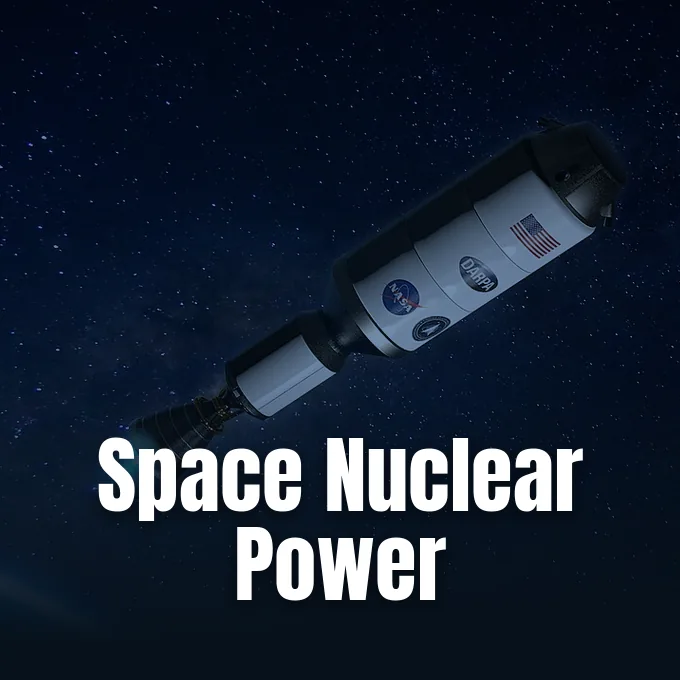
Space Reactor-1 Freedom serves as the pathfinder flight project designed to test space nuclear propulsion during operational deep space missions. Scheduled to launch in 2028, the demonstration craft will move nuclear thermal systems from ground research into active deep space environments [1]. Chemical rockets burn propellant quickly. In contrast, nuclear thermal reactors heat liquid propellant through a fission core to produce higher exhaust speeds, cutting transit times to distant planets by months and protecting crews from prolonged cosmic radiation exposure during future Mars journeys.
NASA engineers view Space Reactor-1 Freedom as the foundation for larger spacecraft that can transport heavy scientific payloads across the solar system without running out of fuel. Isaacman pointed out that reactors give mission planners new flexibility when designing robotic probes or crewed vehicles. “Nuclear power will allow us to go farther, operate longer, and field more capable spacecraft and instruments than ever before,” said Isaacman during the summit [1]. The 2028 flight will measure reactor core stability, coolant circulation, and automated controls during orbit insertion maneuvers.

Earlier nuclear rocketry projects in past decades stayed inside test stands on Earth because funding cycles ended before flight units were assembled. The current agreement avoids that bottleneck by tying the 2028 demonstration to specific payload manifests managed jointly by NASA and the Energy Department [3]. Flight telemetry collected by Space Reactor-1 Freedom will inform the design of larger engines planned for crewed exploration missions to the Red Planet later in the decade.
Powering the Lunar Surface Reactor by 2030
Establishing a permanent Moon Base requires power sources that survive the cold lunar night when solar panels stop producing electricity. Under the interagency plan, engineers are designing Lunar Reactor-1 as a fission surface power system planned to deploy before the decade ends. The reactor will run continuously through darkness and cold shadows at the lunar south pole, keeping life-support machinery, rovers, and communications stations fully energized [1]. Human crews cannot survive on the lunar surface without steady power.
The Lunar Reactor-1 system will supply steady electricity for base habitats and heavy mining equipment tasked with processing local water ice and regolith. In situ resource utilization (harvesting local resources on other worlds) demands steady kilowatts of round-the-clock power. Battery packs cannot sustain heavy industrial extraction. Operating a dependable lunar surface reactor provides the reliable baseload electricity needed to split water into breathable oxygen and rocket fuel [1]. NASA expects this surface hardware to serve as a testbed for the power plants that future explorers will set up on Mars.
Together, Space Reactor-1 and Lunar Reactor-1 form the backbone of a domestic nuclear-space industrial base that connects commercial suppliers with government flight programs. The Energy Department will oversee fuel production and enrichment processes, while NASA integrates the reactor cores into landers and automated deployers [2]. Federal procurement schedules help industrial contractors maintain skilled manufacturing teams, reducing the risk of component shortages when lunar base construction expands in the 2030s.

Radioisotope Systems for Titan and Mars Missions
Beyond high-power fission reactors, the interagency partnership expands the production of radioisotope power systems for robotic planetary missions. These systems generate heat and electricity from the natural radioactive decay of plutonium fuel, making them ideal for small probes operating far from the Sun. The car-sized Dragonfly rotorcraft, scheduled for launch in 2028, will rely on a Multi-Mission Radioisotope Thermoelectric Generator (MMRTG) and 24 Light Weight Radioisotope Heater Units (LWRHU) to explore Saturn’s moon Titan [1].
Titan’s thick atmosphere and dense haze block most sunlight, so photovoltaic panels cannot produce enough energy to charge flight batteries on the surface. The Dragonfly rotorcraft will fly to various locations on Titan to investigate prebiotic chemical reactions and assess whether the icy moon could support habitability [1]. The onboard radioisotope generator will keep instruments warm against the extreme cold on Titan, letting the drone charge its rotors for repeated atmospheric hops across dune fields and crater rims.
International partners will also receive American radioisotope hardware for planetary exploration. NASA and the Energy Department plan to supply 24 heater units to the European Space Agency for its Rosalind Franklin rover mission to Mars [3]. The rover will drill deep beneath the Martian topsoil to search for signs of past or present life, and the American heater units will protect sensitive analytical tools from freezing during bitter winter nights on the Red Planet [1].
Separating Flight Hardware from Ground Testbed Research
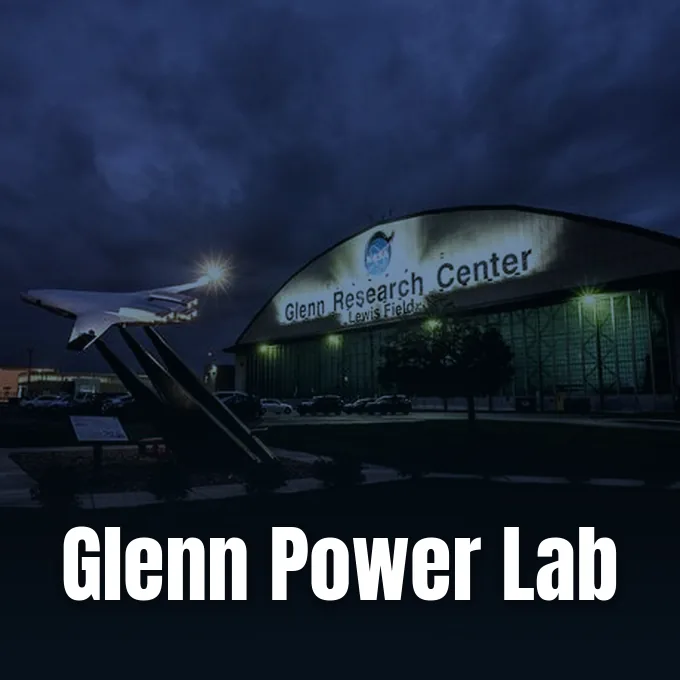
Understanding the scope of this new agreement requires distinguishing flight hardware procurement from earlier laboratory studies conducted at NASA centers. While previous research initiatives invited power laboratory proposals at NASA Glenn Research Center to evaluate small non-nuclear testbeds and Stirling converters on Earth, the October 2026 agreement directly funds launch-integrated fission hardware for space missions. The shift marks a transition from exploratory component testing inside terrestrial vacuum chambers to building space-qualified reactors that will fly aboard actual rockets [1].
Ground simulation facilities at NASA Glenn and national laboratories will continue testing thermal management loops, but their work now feeds directly into Space Reactor-1 Freedom flight schedules. Direct coordination under one memorandum ensures that experimental findings from ground rigs quickly inform flight-ready blueprints [3]. This unified management prevents redundant component studies, keeping civil space spending focused on hardware that meets strict flight certification standards.
The operational split also clarifies how civilian contractors bid on space power projects. University teams and aerospace vendors that previously built lab prototypes can now compete for flight integration contracts that include nuclear payload handling, launch pad safety reviews, and orbital checkout procedures [1]. This transition helps commercial aerospace companies invest in cleanroom facilities and specialized transport containers needed for radioactive space payloads.
Technical Safety Frameworks and Fuel Supply Pipelines
Developing flight reactors depends heavily on securing specialized fuel supplies, linking space exploration to ongoing investments in high-assay low-enriched uranium fuel for next-generation civilian power systems. The Energy Department will manage fuel synthesis and enrichment at federal facilities, ensuring that space reactors receive enriched uranium pellets without disrupting commercial power supplies on Earth [1]. Standardizing fuel forms lowers manufacturing costs across both agencies. It also allows NASA to use existing safety certification protocols developed for terrestrial advanced reactors.
Safety protocols will govern every stage of the nuclear space pipeline, beginning at fuel fabrication plants and continuing through launch integration and flight operations. Space Reactor-1 Freedom and Lunar Reactor-1 will remain completely subcritical and unstarted during ground handling, launch, and ascent, activating their fission cores only after reaching safe operational orbits or landing securely on the lunar surface [1]. Public inquiries regarding the program can be directed to NASA Headquarters in Washington, where project spokespersons Camille Gallo and Elizabeth Shaw coordinate communications through phone line 202-358-1600 as the agencies prepare for the 2028 demonstration launches.
- PRESS RELEASE Dodson, G. Q. (2026, October 8). NASA, Energy Department Advance New Era of Nuclear-Powered Exploration. NASA. [Article Link]
- ONLINE NEWS Mirage News. (2026, October 8). NASA, Energy Department Advance Nuclear-Powered Exploration. [Article Link]
- ONLINE NEWS Space and Defense. (2026, October 9). NASA, Energy Department Sign Nuclear Power and Propulsion Collaboration Agreement. [Article Link]
Cover image: DARPA / Wikimedia Commons, Public domain
APA 7: TWs Editor. (2026, October 9). How Will Space Nuclear Power Transform Deep Space Exploration? PerEXP Teamworks. https://perexpteamworks.com/en/space-nuclear-power-deep-exploration/


