





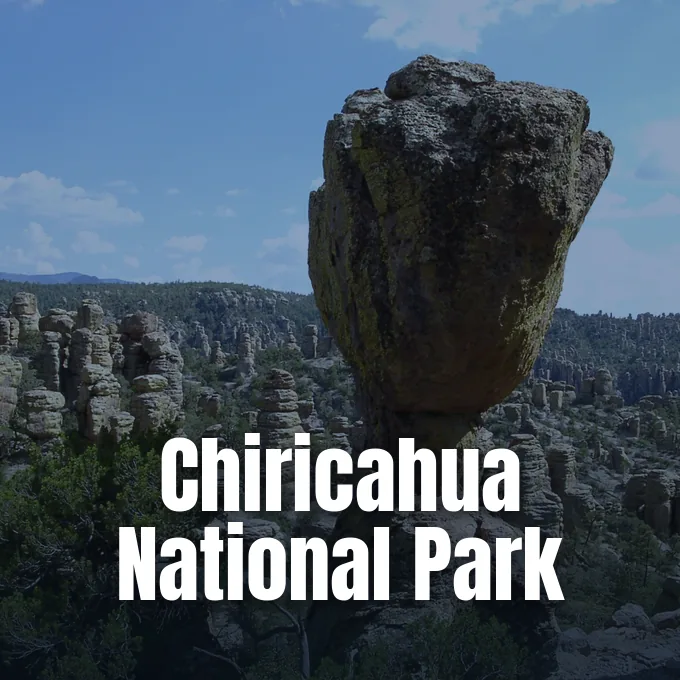
President Donald Trump signed legislation designating Chiricahua National Park as the 64th flagship unit within the National Park Service system. The mountainous reserve was first established as a national monument in April 1924 to protect its tall rhyolite rock spires and surrounding wildlife [1]. Many visitors call this rugged setting a wonderland of rocks. The bipartisan measure changes site branding without providing new federal funding or modifying local park borders [2].
Chiricahua National Park Joins Arizona Roster
Chiricahua joins the Grand Canyon, Petrified Forest, and Saguaro as the fourth national park in Arizona. An act of Congress signed by Trump designated the 12,000 acres (4,860 hectares) of public land as a national park, bestowing the most prominent label in federal conservation while leaving local management borders completely unchanged [1]. Geographer Seth T. Kannarr said in The Conversation that while redesignation raises public status, it brings few changes beyond roadside signs and promotional marketing materials. The property remains under the care of existing federal rangers with the exact same operating regulations. Federal officials will manage the rocky wilderness with the same annual budget allocations as before [2].
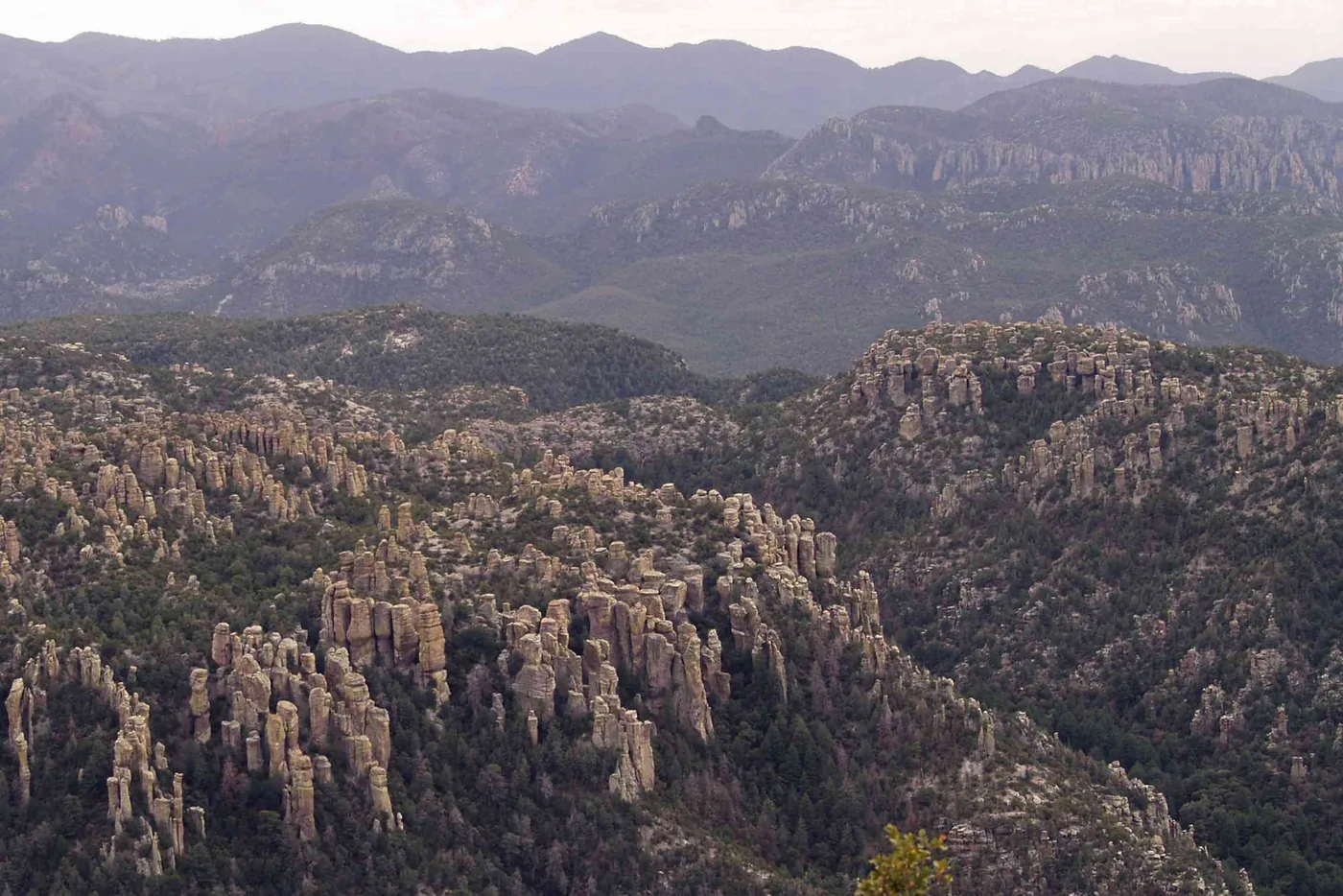
The landscape features tall rhyolite hoodoos that formed through ancient volcanic eruptions and long weathering, leaving thousands of stone spires that rise high above remote desert canyons and shelter diverse wildlife species. Wildlife diversity flourishes among the rocky ravines, providing habitat for animals that depend on the cooler mountain climate [1]. Archaeological evidence reveals long-standing Indigenous use and occupation throughout the canyons, showing human presence long before modern conservation began. Those distinctive geological features and cultural resources match what travelers expect from a flagship national park in America [2].
Congressional Powers and the Antiquities Act
The National Park Service manages 433 properties across 19 separate designations, including national battlefields, scenic trails, and national lakeshores. Only 64 of those units carry the formal title of national park [1]. That flagship status can only be granted by Congress, meaning presidents can’t establish a national park on their own authority [2]. Under the Antiquities Act of 1906, however, the president can directly proclaim national monuments on public land without seeking approval from lawmakers or negotiating with state leaders. This executive mechanism created Chiricahua in 1924, but it also leaves monument boundaries vulnerable to major political shifts between opposing presidential administrations in Washington [1].
Bears Ears National Monument in Utah stands at the center of this decades-long boundary controversy. President Barack Obama established the monument in December 2016 to protect 1.3 million acres (526,000 hectares) of public canyon lands. In 2017, President Trump used the Antiquities Act to shrink the protected area to 200,000 acres (81,000 hectares) [1].

President Joe Biden restored the boundaries of Bears Ears in 2021, reexpanding the site to its original 1.3 million acres (526,000 hectares). In 2026, Trump reduced the protected area once again, cutting the monument down to 121,000 acres (49,000 hectares) [1]. Because national monuments depend on executive authority, protected boundaries can expand or contract whenever political control of the White House shifts between opposing parties, creating decades of uncertainty for local communities. National parks created by Congress offer lasting legal stability because changing their borders requires approval from both legislative chambers. Lawmakers rarely vote to reduce or dismantle a full national park once it achieves that status [2].
Lessons From the Gateway Arch Redesignation
Previous redesignations show that changing a property title does not create new environmental protections. When Congress renamed the Jefferson National Expansion Memorial in St. Louis as Gateway Arch National Park in 2018, the legislation included no extra funding or land resources. Covering less than 200 acres (81 hectares), it is the smallest national park in the country [1].
National Park Service deputy director Robert Vogel testified against renaming the St. Louis site during congressional hearings. Vogel said Gateway Arch “is too small and limited in the range of resources the site protects and interprets to be called a national park” [1]. That designation contradicted the park service’s established declaration that a national park should contain “a variety of resources and encompasses large land or water areas to help provide adequate protection of the resources” across its borders [2]. St. Louis leaders campaigned for the title to help fund an underground visitor center renovation, revitalize the grounds, and attract tourists. The park includes a steel arch, an open lawn, a museum, and a courthouse where one of the Dred Scott trials took place [1].
The Gateway Arch website admits “it is unusual for a national park to have no natural plant life” and describes the urban park grounds as adjacent to the “concrete jungle of downtown St. Louis” [1]. In a master’s thesis investigating how place naming shapes visitor perceptions, Seth T. Kannarr evaluated the public reaction to the Gateway Arch redesignation using an online Qualtrics survey on Facebook alongside published Yelp reviews. The study used NVivo software to code qualitative data across three main themes: environmental characteristics, intrinsic values, and visitor experience. Results showed that respondents associated environmental characteristics most strongly with the national park label, finding that urban landmarks with no natural plant life struggle to fulfill traditional public expectations [3]. Writing on Phys.org, Kannarr observed that Gateway Arch offers no wildlife viewing or sense of wilderness, whereas Chiricahua resembles the traditional park model far more closely [1].

Why Rebranding Matters for Chiricahua National Park
What actually changes for a property after Congress passes a redesignation bill? The most noticeable shifts occur in public marketing rather than in conservation practices. The promotional tagline of “new national park” appeals strongly to outdoor enthusiasts and cross-country road travelers who make a point of visiting every official national park unit in the United States. Park gift shops replace postcards, brochures, and maps to reflect the prestigious new branding [1]. Chiricahua National Park will likely see higher visitor interest from tourists who prioritize official national parks over other public reserves. These promotional adjustments cost little money, but they help regional economies attract outside tourist dollars [2].
Geographer Seth T. Kannarr said that redesignation serves clear political purposes for lawmakers by delivering tangible economic goodwill to nearby communities [1]. The new title gives elected officials a visible achievement to show voters while directing customer spending toward regional hotels and shops without requiring new government budgets [2].
Protected Units Waiting on Congressional Action
Redesignating existing federal land is far more common than bringing entirely new acreage into the National Park Service system. Adding an unmanaged site to the park system takes decades of environmental review, boundary surveys, and costly land purchases, making the redesignation of established properties the preferred strategy for federal lawmakers. By contrast, updating an existing unit simply requires Congress to approve a name change on paper. Lawmakers used this legislative route in 2019 when Indiana Dunes National Lakeshore became Indiana Dunes National Park. Later that same year, White Sands National Monument in New Mexico became White Sands National Park. In 2020, West Virginia’s New River Gorge National River was renamed New River Gorge National Park and Preserve [1].
Several other properties are seeking similar congressional redesignations. Proposals focus on Delaware Water Gap National Recreation Area in New Jersey and Pennsylvania, Apostle Islands National Lakeshore in Wisconsin, and Rock Creek Park in the District of Columbia [1]. Discussions about redesignating Ocmulgee Mounds also surfaced in a Dec. 2025 report [2].

Supporters in each community hope the national park label will draw tourists and raise local business revenues [1]. Yet changing a park’s formal title does not grant the site extra staff, better trails, or increased funding to protect delicate natural features and archaeological resources from heavy visitor wear [2]. For these hopeful reserves, gaining the flagship title remains a waiting game in the halls of Congress. Lawmakers must weigh local enthusiasm against national conservation standards before voting to upgrade any unit [1]. Without congressional approval, these sites will continue operating under their existing monument, lakeshore, or recreation area designations [2].
Tourism Concerns for Local Infrastructure
The legislative effort to redesignate Chiricahua was cosponsored by Arizona U.S. Representatives Juan Ciscomani, a Republican, and Greg Stanton, a Democrat. While the bipartisan bill passed Congress easily, it received opposition from residents who voiced deep concerns about potential overcrowding on narrow access roads. Local infrastructure remains limited in this remote corner of southeastern Arizona [1].
Complaints focused on fears that the national park title will bring heavy crowds into a small unit with narrow roads and few parking areas. The potential influx of new travelers could erode the personal, isolated experience that longtime visitors cherish in the wilderness [1]. Because Chiricahua National Park receives no added federal funding under the redesignation statute, park staff must handle higher visitor numbers using their existing annual budget allocations and maintenance resources. The title will market the wonderland of rocks to millions of travelers, but the physical landscape will depend on the exact same stewardship as before [2].
- ONLINE NEWS Kannarr, S. T. (2026, October 22). Chiricahua is the nation’s newest national park—what does that mean?. Phys.org. [Article Link]
- ONLINE NEWS Kannarr, S. T. (2026, October 21). Chiricahua is the nation’s newest national park – what does that mean?. The Conversation. [Article Link]
- THESIS Kannarr, S. T. (2022). Sense of place and the redesignation of the Gateway Arch National Park. University of Missouri. [Article Link]
APA 7: PerEXP Teamworks. (2026, October 23). Chiricahua Becomes America’s 64th National Park Amid Debates. PerEXP Teamworks. https://perexpteamworks.com/en/chiricahua-national-park-status/


