






Earth plows through an ancient stream of interplanetary dust this week, fueling the annual Taurid meteor shower as pebble-sized debris enters the upper atmosphere. The celestial display does not produce the high hourly counts of major winter showers, but it brings one of autumn’s best opportunities to spot slow, brilliant fireballs [1]. According to NASA, these bright meteors can flare brighter than Venus as they burn up high above the ground [2].
Origin in Comet Encke
The dust trails responsible for the display originate from Comet 2P/Encke, a periodic visitor that travels around the sun once every 3.3 years. Discovered in 1786, the comet has one of the shortest orbital periods of any known comet in the solar system. Jamie Carter of Live Science reported that NASA measurements indicate Encke measures about 2.98 miles (4.8 kilometers) in diameter. Encke spans roughly 3 miles across, forming an icy body that is approximately one-third the size of the massive object thought to have killed the nonavian dinosaurs millions of years ago [1, 2]. Encke completes each solar circuit in 3.3 years [1]. As the icy body follows its path close to the sun, solar heating boils away frozen gases, releasing grit and small pebbles into space along its shared orbital path [2].
Scientists theorize that Comet Encke did not always travel alone through the inner solar system. Planetary researchers theorize that the comet represents just one surviving fragment of a much larger parent comet that broke apart between 20,000 and 30,000 years ago [1]. That ancient breakup left a broad river of rubble scattered across the inner solar system. Earth crosses these drifting trails every autumn, colliding with the dust trail at a velocity of 65,000 miles per hour, equivalent to 104,607 kilometers per hour. Atmospheric friction compresses and heats the air ahead of each incoming speck, generating the bright streaks seen from the ground [2].
Two Streams of the Taurids
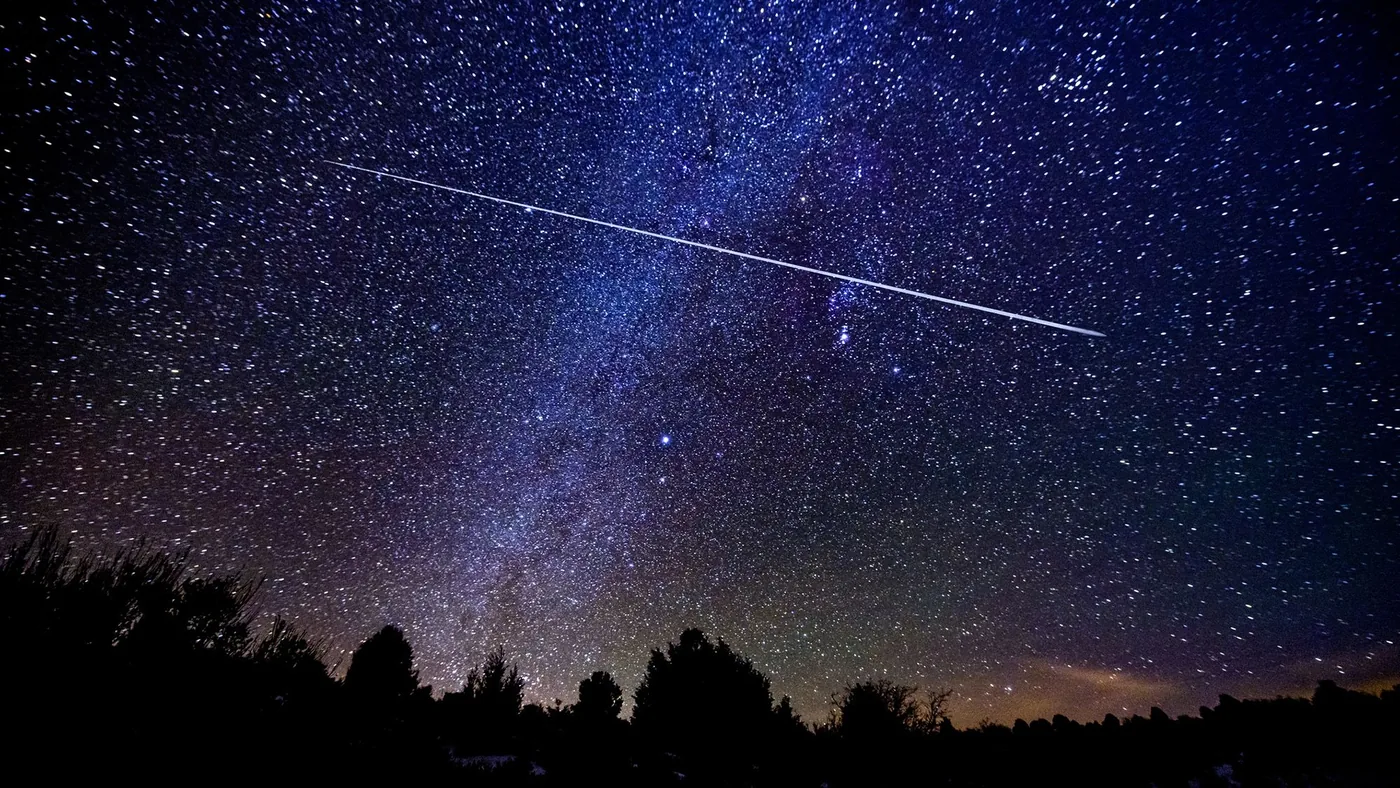
Over thousands of years, the debris complex has separated into two distinct branches known as the Southern Taurids and the Northern Taurids. The southern branch remains active from Sept. 20 to Nov. 20 each year. Anthony Wood reported for Space.com that the Northern Taurid stream runs from Oct. 20 to Dec. 10 as Earth intersects another segment of the stream. The Southern Taurids feature two separate peaks during their yearly run, with an early peak that occurred on Oct. 14 and a second peak overnight on Nov. 4-5 [1, 2]. The Northern Taurid branch will peak overnight on Nov. 11-12 under a dark, near moonless sky. Both branches deliver modest rates of up to five meteors per hour [2].
Unlike major annual showers that peak within a narrow window of hours, the Taurid stream provides a notably broad peak. Skywatchers who tracked the Orionid meteor shower in October encountered a brief peak window, whereas Taurid activity stays steady across several consecutive nights. Observers do not need to step outside at an exact hour to catch activity. The extended duration gives stargazers multiple opportunities to view shooting stars even if local clouds hide the sky on the primary peak night. The display provides a flexible observing window [1].
Taurid Meteor Shower Fireballs
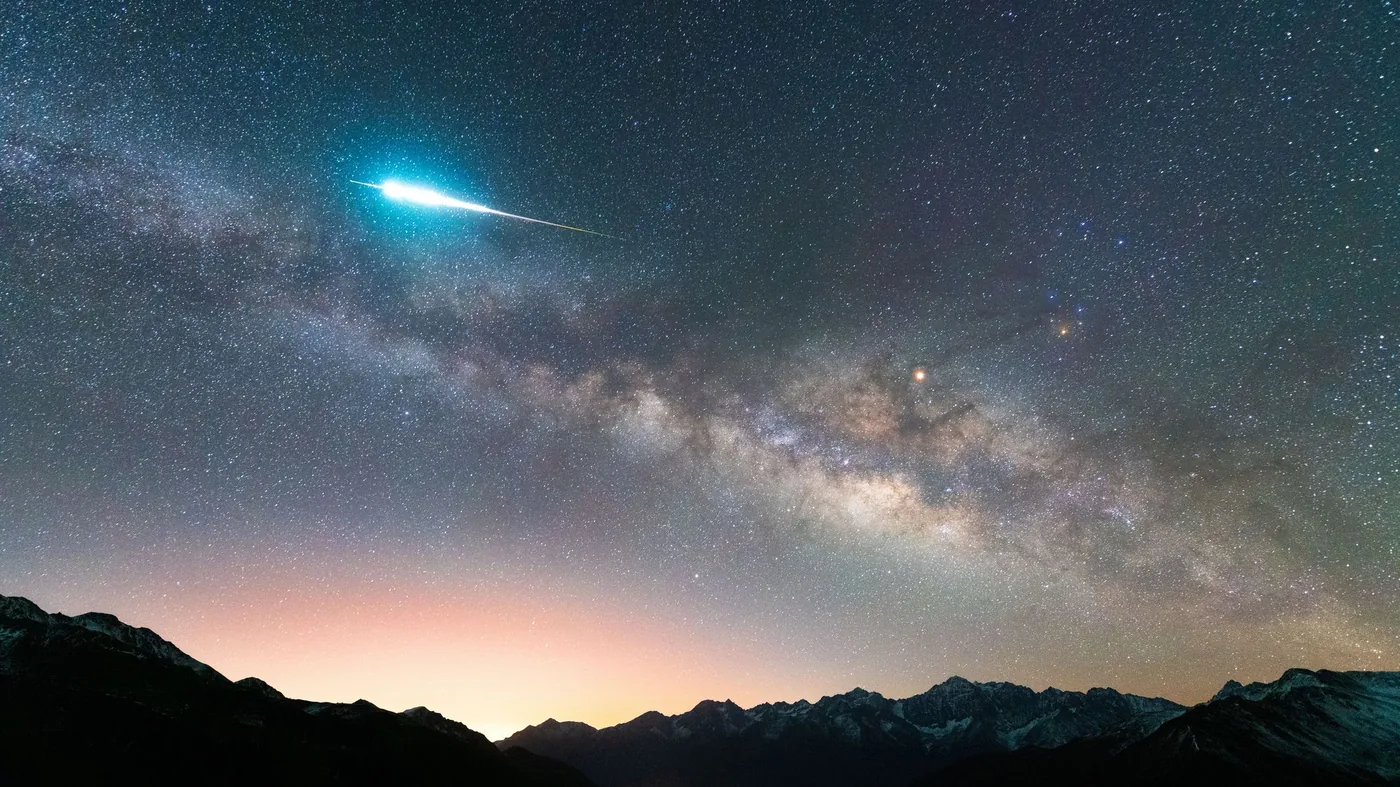
The defining characteristic of the Taurid meteor shower is its ability to produce brilliant fireballs that outshine every planet in the night sky. NASA defines a fireball as any meteor that shines at least as bright as Venus [1]. While most common meteor showers stem from microscopic dust grains that vanish in a fraction of a second, the Taurid stream contains larger pebble-sized fragments that burn with intense brightness. These heavier pieces penetrate deeper into the atmosphere before vaporizing, producing flashes of light that can illuminate ground features [2]. The American Meteor Society expects the fireball swarm component of the stream to reach maximum activity around Nov. 4-5. Venus serves as the brightness benchmark [1].
The entry speed of the Taurid debris helps make these fireballs especially striking to watch from the ground. Debris enters the atmosphere at 65,000 miles per hour, equal to 104,607 kilometers per hour, which is relatively slow for interplanetary material. Because the pebbles travel slower than particles in many other annual displays, their glowing trails linger longer in the upper atmosphere. A single Taurid fireball can streak across a wide arc of the sky, producing a trail of ionized gas that hangs in the air for several seconds [2]. Jamie Carter noted in Live Science that observers often remember one brilliant fireball far longer than dozens of faint shooting stars [1].

Where to Look Near Taurus
Meteors from the stream appear to radiate outward from a central point located in the constellation Taurus. During November evenings, the constellation rises in the eastern and southeastern sky soon after sunset and climbs steadily higher as midnight approaches [1, 2]. Stargazers will find the hours around midnight ideal because the radiant sits high in the sky, maximizing the number of meteors entering the visible hemisphere [2]. Although the streaks seem to trace back toward Taurus, shooting stars can appear in any part of the sky [1]. Observers achieve the best results by scanning broad overhead areas instead of fixating on a single patch of sky. Midnight provides the highest radiant elevation [2].
Experienced skywatchers advise against staring directly at the radiant point in Taurus during observation sessions. Meteors that appear close to the constellation strike the atmosphere nearly head-on, producing short and stubby trails that are easy to miss. In contrast, meteors that ignite some distance away from the radiant enter the atmosphere at an oblique angle, skimming through the air to create much longer and more eye-catching trails. Observers who face roughly forty-five degrees away from Taurus get the best combination of frequency and visual trail length [2].
Viewing Without Telescopes
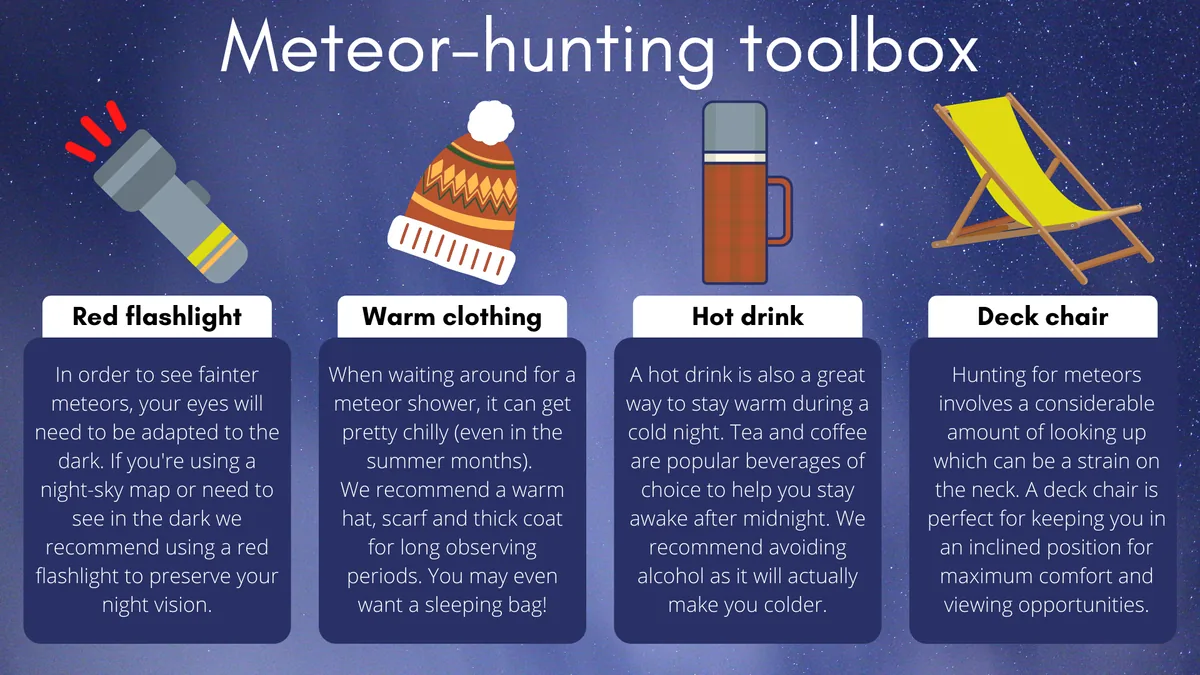
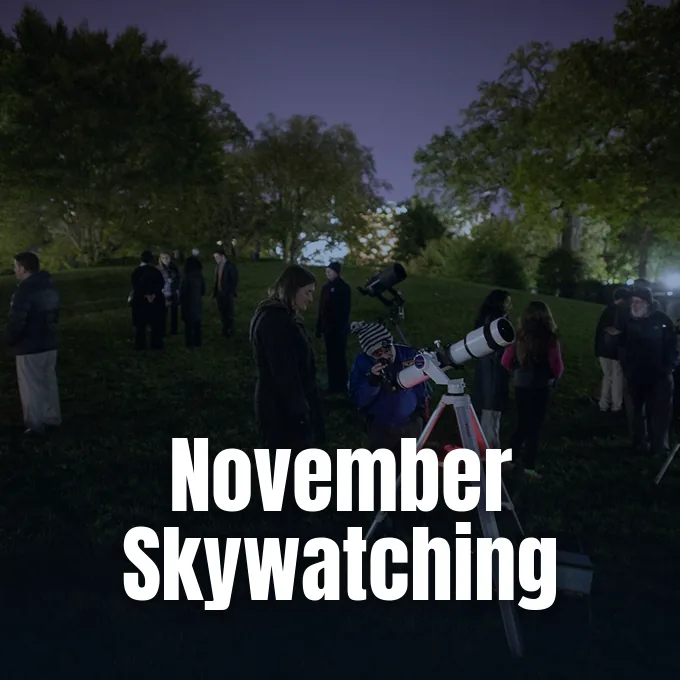
Optical equipment such as telescopes and binoculars should stay packed away during a meteor watch. While telescopes excel at revealing lunar craters and distant planets, their narrow field of view severely restricts how much sky an observer can monitor. Observers need an expansive view of the open sky, which makes the unaided human eye the most effective tool for spotting incoming meteors [1, 2]. Observers preparing for late night viewing sessions can consult NASA skywatching tips for planning evening sky sessions. A reclining deck chair and warm woolly layers help observers endure chilly autumn nights while monitoring large swaths of the overhead sky. Telescopes restrict the observable sky area [2].
Human eyes need sufficient time to adapt to nighttime darkness, representing a fundamental step that casual stargazers often overlook. Astronomers recommend spending at least 20 to 30 minutes in total darkness before expecting to see faint shooting stars. Any exposure to white flashlights or bright smartphone screens resets night vision, requiring observers to wait another twenty to thirty minutes for pupils to dilate fully again. A trip to a dark sky site away from urban light pollution greatly improves the visibility of both faint meteors and lingering fireball trains [2].
Later Autumn Displays
Stargazers who miss the Southern Taurid peak will not have to wait long for a second opportunity. The Northern Taurid stream reaches its peak overnight on Nov. 11-12, offering another round of fireball sightings under a favorable, near moonless sky [1, 2]. Anthony Wood reported that the Northern Taurids produce about five meteors per hour, while the absence of moonlight ensures optimal contrast against the dark celestial backdrop. Stargazers watching the Taurid meteor shower enjoy steady activity across late November, allowing dedicated watchers to spot stray fireballs across the entire month [1, 2].
The November fireball display opens a busy winter season for Northern Hemisphere astronomy enthusiasts. The Leonid meteor shower peaks next on Nov. 17-18 with expected rates of around 15 shooting stars per hour. Activity builds toward the annual Geminid meteor shower, which peaks on Dec. 13-14. The Geminids arrive in mid-December, when observers under dark skies can register up to 120 meteors each hour. That count far exceeds the hourly rates of the Perseids, which peaked back on Aug. 12-13 with comparable summer numbers. In addition to meteor showers, the winter sky will feature four consecutive supermoons between November 2026 and February 2027. The cooling autumn nights provide an inviting start to a season filled with celestial events [1].
- ONLINE NEWS Carter, J. (2026, November 4). Southern Taurid meteor shower could bring fireballs this week — when and where to look. Live Science. [Article Link]
- ONLINE NEWS Wood, A. (2026, November 4). The Taurid meteor shower peaks tonight — and fireballs could steal the show. Space.com. [Article Link]
APA 7: PerEXP Teamworks. (2026, November 5). Taurid Meteor Shower Lights Autumn Skies with Bright Fireballs. PerEXP Teamworks. https://perexpteamworks.com/en/taurid-meteor-shower-peak-fireballs/


