






Hidden references inside operating system code show that iPhone game controllers are under active development at Apple. The code, first uncovered in macOS 26.7 by MacRumors, points to two first-party gaming accessories. Bloomberg reporter Mark Gurman corroborates those findings, confirming that Apple is developing two gamepads designed specifically for the iPhone. While Apple has long sold third-party hardware in its stores, this project positions the company to capture its own share of mobile gaming accessories under its Beats brand. [1, 2]
iPhone Game Controllers Discovered in macOS Code
The discovery began in desktop software. MacRumors reported finding two references to unreleased first-party game controllers in the code of macOS 26.7, sparking fresh interest in hardware rumors that had circulated around Apple for months. Apple designated both items as first-party devices rather than external accessories manufactured by licensed partners. That operating system entry provided the first concrete technical confirmation that Apple engineers were assembling internal controller profiles. [1]
A desktop release raised immediate questions about the intended target. Despite the software markers appearing inside macOS rather than iOS, Bloomberg’s Mark Gurman reported that the hardware is built specifically for iPhones. Code shared across Apple platforms frequently contains references to accessories before their corresponding mobile updates appear. Gurman confirmed that mobile focus. [1]
9to5Mac’s Benjamin Mayo confirmed Gurman’s reporting, noting that the beta code identifies two separate models currently progressing through development. Those devices carry internal model identifiers T6502 and T1057. The existence of two model numbers indicates Apple is testing dual variants, which could represent differing physical sizes or alternate mounting mechanisms for distinct phone dimensions. Apple has kept both hardware identifiers restricted to software references without publishing visual diagrams or operational manuals. [2]
Hardware Components Inside Model T6502 and T1057
The beta code provides specific clues about physical control layouts. According to the code findings reported by 9to5Mac, the firmware includes programming hooks for a D-Pad (directional pad), analog thumbsticks and integrated haptic motors. Haptic motors generate vibrational feedback during gameplay, replicating the tactile sensations common on modern dedicated home game consoles. These components match the baseline configuration expected of standard console gamepads. [2]
Motion sensing also appears in code. The software references evidence of an integrated accelerometer and gyroscope, two sensors that detect spatial orientation and rapid device movement. Why include motion sensors in a handheld gamepad? Mobile games frequently rely on tilt steering, aiming adjustments and positional tracking that physical thumbsticks alone cannot easily reproduce. Integrating an accelerometer and a gyroscope would give developers standard motion inputs without demanding direct screen interaction. [2]
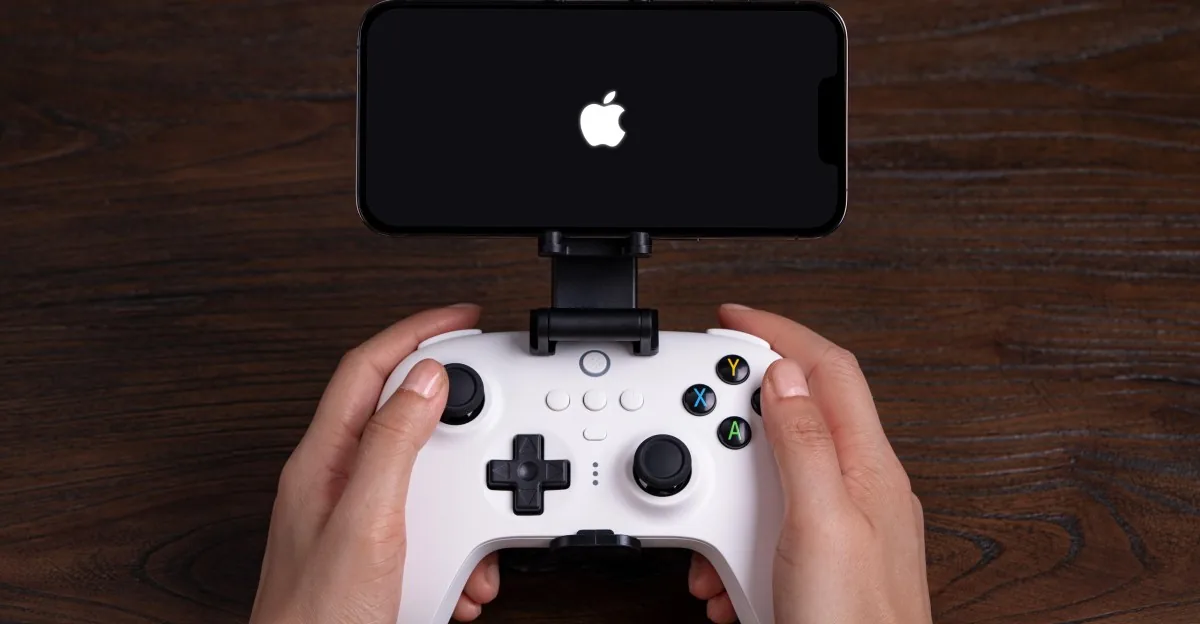
The exact physical form remains unrevealed. Neither the macOS code findings nor Gurman’s report specify whether the controllers attach directly to the sides of an iPhone or operate as standalone wireless gamepads. Apple has not released physical mockups or public design specifications. A split clamp design wrapping around an iPhone chassis requires different mechanical engineering than a standalone wireless controller resting on a table. The code confirms the internal component list while leaving the exterior shape, grip ergonomics and button travel completely unannounced. [1, 2]

Beats Brand Shields Apple From Lower Price Points
Apple plans to position the accessories under its subsidiary label. Gurman reports that Beats executives are leading the project and that the controllers will likely reach retail shelves carrying Beats branding rather than Apple’s corporate logo. The company frequently uses Beats to explore experimental product categories and compete at more affordable retail prices without compromising the premium identity of its primary product catalog. As Gurman noted, reaching a wide gaming audience requires competitive pricing, which demands avoiding some of the costly aluminum finishes and high-end materials typical of Apple hardware. Beats offers an established consumer brand with deep connections to popular culture, lifestyle products and youth demographics. That positioning suits mobile gaming accessories. Apple relies on that cultural reputation to attract players who want dedicated physical buttons. [1]
The accessory strategy follows an established retail pattern. Gurman points out that Beats already sells distinct USB-C cables and colorful phone protection, expanding beyond traditional headphones. Those items complement Apple’s new iPhone cases lineup, giving shoppers functional phone accessories made with alternate design aesthetics and varied plastic materials. Beats products regularly use lighter polymers and bold color palettes. Adopting Beats branding for iPhone game controllers allows the hardware team to focus on practical grip durability, cost-efficient manufacturing and casual consumer styling. [1]
Cost dictates consumer adoption. A controller priced too high risks alienating mobile players who already hesitate to buy dedicated phone attachments. [1]
Challenging Backbone One in the Mobile Gamepad Market
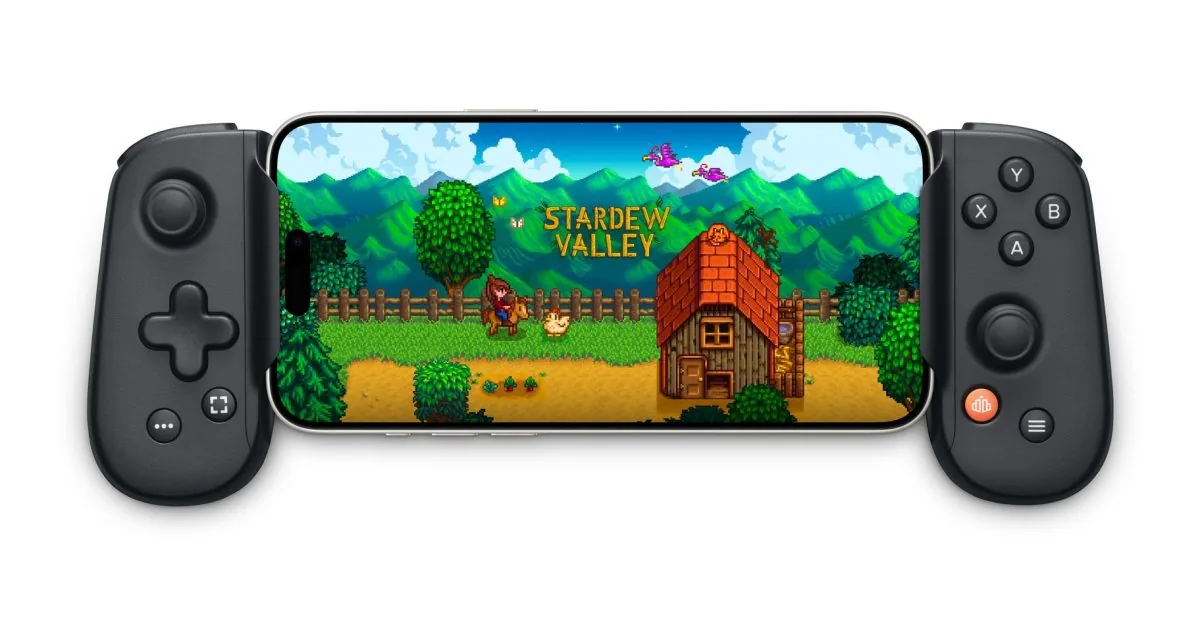
Apple is not starting from scratch in mobile gaming hardware. As Benjamin Mayo highlights for 9to5Mac, the official Apple Store currently stocks well-known third-party controllers, including the Backbone One and the SteelSeries Nimbus+. Selling partner gear proved consumer interest. By developing first-party alternatives, Apple aims to capture sales revenue that currently flows to external accessory makers. [2]
The competitive landscape already supports diverse controller standards. Apple devices feature broad compatibility with MFi (Made for iPhone) controllers alongside traditional console gamepads. Players can pair Sony’s PlayStation DualShock or Microsoft’s Xbox Wireless Controller directly to iOS, iPadOS and macOS through standard Bluetooth connections. Those console controllers provide familiar ergonomics for living room gaming. They remain bulky for daily commuting, leaving a clear opening for compact Beats controllers tailored for mobile portability. [2]
Existing clamp controllers face ergonomic and case compatibility challenges. Third-party gamepads like the Backbone One require precise physical fits, occasionally forcing users to remove protective phone cases before docking their device. First-party hardware engineering could address those physical friction points. An Apple-engineered controller could offer seamless pairing protocols, direct firmware updates through operating system settings and tighter integration with native software menus across supported mobile games. [1, 2]
Ecosystem Expansion Across Apple TV 4K and Mac
The potential utility extends beyond mobile screens. Mayo points out that an Apple or Beats-branded game controller could strengthen the gaming experience on Apple TV 4K. While Apple TV 4K supports modern console gamepads, Apple has never marketed an official first-party gaming controller dedicated to its streaming set-top box. Supplying a branded controller could encourage living room gaming among households that do not own dedicated consoles. [2]
Software ambitions demand dedicated physical inputs. Apple has increasingly secured ports of complex AAA games (high-budget blockbuster video games) for iOS, iPadOS and Mac, bringing console franchises to mobile hardware. Complex titles require multi-button combinations, precise analog aiming and low-latency physical controls that virtual touchscreens fail to deliver comfortably during intense action sequences. High-performance iPhone game controllers ensure players can experience demanding releases without encountering frustrating touchscreen compromises. [1, 2]
Technical hurdles still separate code discoveries from store shelves. Apple has not publicly confirmed the existence of model T6502 or model T1057, and unreleased hardware spotted in early beta software can undergo extensive revisions or complete cancellation. Neither Gurman nor 9to5Mac provided pricing estimates, manufacturing schedules or official retail launch windows. For now, the macOS code confirms that Apple’s hardware labs are actively building physical gamepads, leaving gamers to await the first official demonstration from Beats. [1, 2]
- ONLINE NEWS O’Brien, T. (2026, September 13). Apple is reportedly working on iPhone game controllers. The Verge. [Article Link]
- ONLINE NEWS Mayo, B. (2026, September 13). Apple is designing its own game controllers for iPhone, could be Beats branded. 9to5Mac. [Article Link]


