





Flames swept through an exchange hub in lower Manhattan during February 1975, cutting off phone lines for 175,000 New York City residents over a 23-day period. The prolonged disruption forced local florists, bakeries, and funeral homes to conduct business directly at their doorsteps. Daily urban life depended completely on hidden copper wires [1]. In the late nineteenth century, the emergence of telephone communication replaced slow telegraphic letters with the immediate intimacy of the human voice [2], [3]. Alexander Graham Bell and rival inventors turned sound vibrations into wavy electric currents, moving voice lines from small attic workshops into a city network that linked distant homes and offices [1], [2].
Beginnings of Telephone Communication
Before electric speech existed, long-distance news traveled as coded pulses along iron wires [2]. Samuel Morse introduced the telegraph in the United States between 1837 and 1843 [3], [5]. He proved that electric current could carry signals between cities instantly [3]. Yet telegraphy could not convey the tone or cadence of a living human voice. Every message required translation into Morse code by a specialist, who transcribed it onto paper for hand delivery to homes or shops, leading experimenters to ask whether electric currents could carry acoustic waves without printed text [2], [3].
In New York, Italian inventor Antonio Meucci pursued voice transmission during the 1850s [2],. He was poor [6]. Meucci built a voice device that he called the telectrophone, documenting electromagnetic speech transmission as early as 1856 before financial distress forced his provisional caveat to expire without renewal in 1874 [3], [6].
In Germany, schoolteacher Johann Philipp Reis developed another early sound device. In 1861, Reis showed an apparatus that used a vibrating membrane to open and close an electric circuit, calling his instrument a telephon. His test device carried musical tones with recognizable pitch, but it distorted spoken words because its make-and-break circuit could not maintain the unbroken current needed for continuous human conversation [2].
The 1876 Patent Conflict
Alexander Graham Bell approached acoustic research from a background in speech mechanics and human hearing. Born in Scotland in 1847, Bell grew up assisting his deaf mother and his father, who taught speech elocution to hearing-impaired pupils [3]. Bell moved to Boston to teach deaf students [2], [3]. At night, he experimented with harmonic telegraphy to transmit multiple messages on one wire, realizing that speech pressure waves required an undulating electric current rather than an intermittent pulse [2], [3].
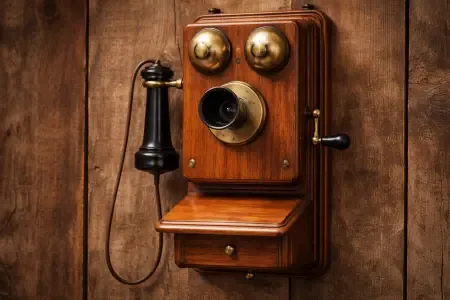
Could electric wires carry the subtle rise and fall of human speech? Bell’s answer took form on February 14, 1876, when his attorney submitted an application to the U.S. Patent Office [2], [3]. That same day, Chicago inventor Elisha Gray filed a caveat for an acoustic transmitter that used variable resistance to alter electric currents [2], [6]. Officials awarded Bell U.S. Patent No. 174,465 on March 7, 1876. Three days later, on March 10, Bell spoke to assistant Thomas A. Watson in an adjacent room: “Mr. Watson — come here — I want to see you” [2], [3].
Business structure soon followed patent approval. In 1877, Bell partnered with Gardiner Hubbard to establish the Bell Telephone Company. Inventor Thomas Edison created a carbon microphone that enhanced sound clarity, and Emile Berliner contributed sensitive transmitter designs. Telegraph firm Western Union also adapted its lines to meet growing telephone competition [6]. In 2002, the U.S. House of Representatives passed a resolution acknowledging Antonio Meucci’s early contributions [2], [5].
Urban Exchanges and Early Directories
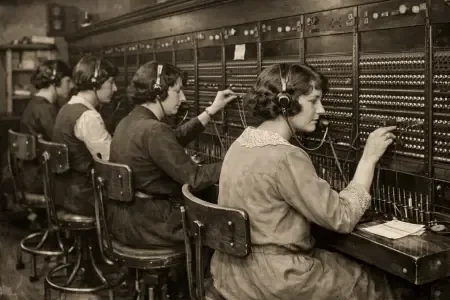
Connecting individual pairs of instruments proved the physics of speech transmission, but building an accessible urban utility required central routing. In 1878, the first exchange opened in New Haven, Connecticut, connecting 21 initial subscribers through a central switchboard [2], [5], [6]. The exchange issued a single-sheet directory that listed 50 customer names without phone numbers, directing early callers to request local line connections through a central operator [5], [6]. Within two years, Bell was shipping 5,000 instruments monthly and held exchange contracts across 988 municipalities [1].
By 1880, approximately 50,000 telephones operated throughout the United States. That year, Bell showed the photophone, an experimental device transmitting voice over light beams. In 1881, engineers completed an early long-distance line connecting Boston and Somerville, Massachusetts [6].
As copper wiring replaced iron conductors, urban telephone communication grew from an experimental novelty into an everyday business network [6]. The United States recorded 150,000 telephones in 1891, which expanded to nearly 600,000 Bell system connections and over 1.4 million total nationwide instruments by 1900 [1], [3], [5]. In New York City alone, connected households and businesses reached 200,000 by 1905. Retail stores, wholesale suppliers, and medical clinics set up phone desks, replacing days of postal transit with direct verbal agreements [1], [2], [6].

Switchboard Operators at the Hub
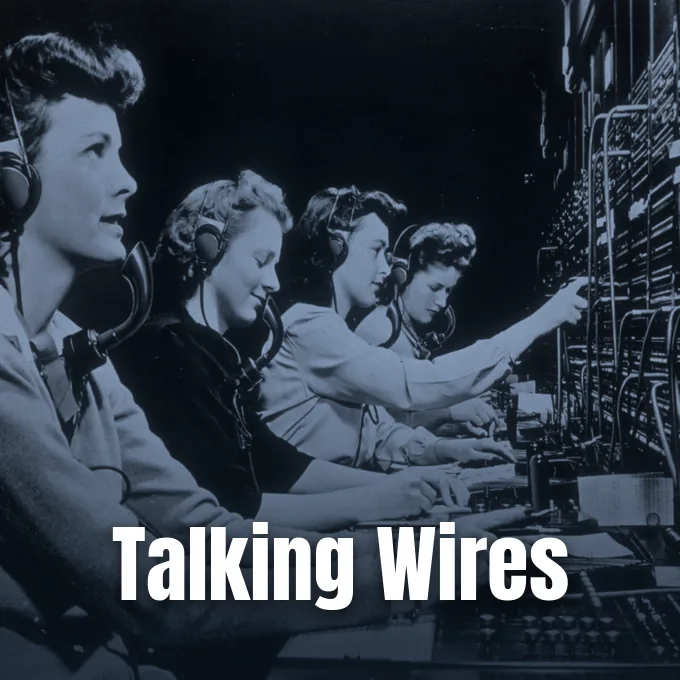
Manual exchanges required operators to route calls by plugging cords into specific jacks on wooden panels [2]. Central offices initially hired teenage boys to handle connections. Exchange managers soon discovered that the young men were rowdy, impatient, and prone to arguing with callers. Phone companies quickly turned to hiring young women, who established a reputation for courteous speech and disciplined concentration [1]. By 1890, nearly 30,000 women worked as telephone operators nationwide [6].
Switchboard employment offered one of the few respectable clerical careers available to women in late nineteenth-century American cities. Known widely as “hello girls,” operators wore metal headpieces and spent long shifts monitoring rows of illuminated switchboard indicators [1], [5]. Author James Gleick noted that companies hired women partly because male callers expected deferential and pleasant service on the line. One operator described her daily routine as working like a “human spider in a mysterious web of talking wires,” manually connecting thousands of circuits each day [1].
Rapid network expansion eventually overwhelmed manual switchboard capacity. In 1891 and 1892, undertaker Almon B. Strowger patented an electromechanical stepping switch that allowed subscribers to route calls by rotating a finger dial, bypassing human intermediaries. Strowger’s automatic exchange reduced eavesdropping concerns and laid the technological foundation for modern direct-dial telecommunications. Manual switchboards remained familiar fixtures in smaller rural communities for decades [2].
Long-Distance Lines and Undersea Cables
Local exchanges had sharp limits. In 1885, the American Telephone and Telegraph Company was organized to build long-distance trunk lines between major American cities, pushing voice service beyond municipal boundaries toward national integration [2]. Telephone adoption continued upward, growing from 2.2 million instruments in 1905 to 5.8 million by 1910 [3]. By 1915, AT&T completed its first transcontinental line, allowing direct coast-to-coast voice conversations that proved two people could speak clearly across the entire North American continent [2].
Wired networks expanded throughout the twentieth century as telephone ownership became standard in residential homes. In 1948, the United States connected its 30 millionth telephone. Voice technology had become a common public utility [3]. Telecommunications engineers introduced three-digit area codes in 1947 to organize long-distance routing. In 1963, push-button telephones introduced electronic tone dialing, gradually phasing out older rotary dial mechanisms [5].
Bridging oceans required overcoming physical obstacles that overland telephone poles never faced. Until the mid-1950s, international calls relied on shortwave radio frequencies that were vulnerable to weather and atmospheric interference. That limitation ended on September 25, 1956, when the TAT-1 undersea cable entered service between Scotland and Newfoundland. Operating with flexible deep-sea submerged amplifiers and heavy armored copper conductors, TAT-1 established the world’s first reliable transoceanic telephone cable system between North America and Europe. This transatlantic line provided an essential base for modern global telecommunications [2].
Telephone Communication in Daily Routines
Beyond business balance sheets, voice networks transformed municipal governance and public safety. In 1937, the United Kingdom introduced the world’s first dedicated 999 emergency service in London, allowing citizens to summon police, fire, or ambulance crews in seconds [2],. On urban sidewalks, the distinctive red telephone kiosk designed in 1924 gave the public reliable communication access [5]. Doctors and rescue squads could mobilize within minutes [2].
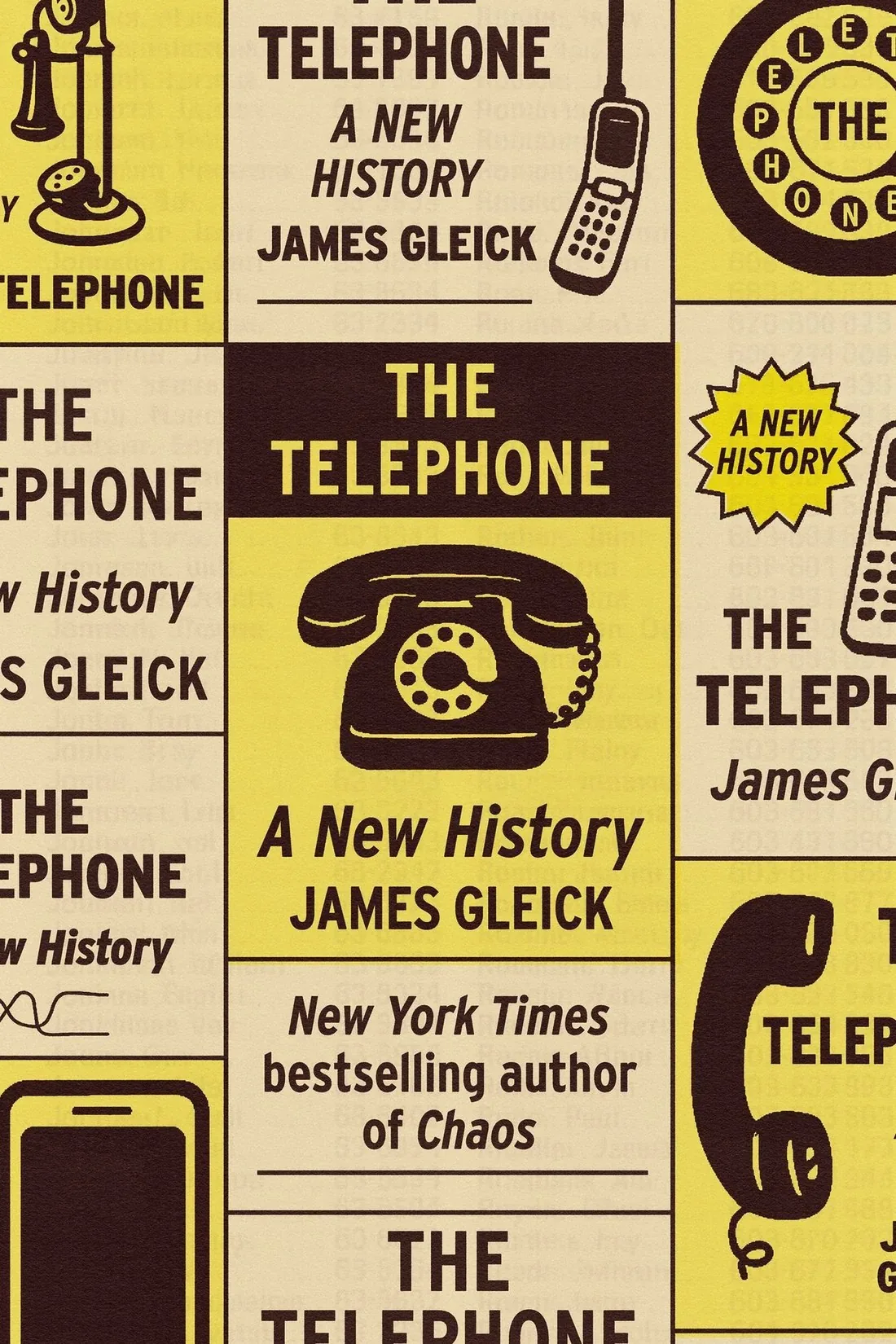
In private life, the telephone altered domestic architecture and personal relationships. In his study The Telephone: A New History, author James Gleick wrote that the ringing telephone disassembled personal solitude, turning quiet household moments into something provisional and interruptible at any moment. Telephone calls reshaped courtship, family routines, and neighborhood gossip. Teenagers spent evening hours talking into handsets, while stage comedies featured actors taking imaginary calls on stethoscopes and bananas [1].
The journey from nineteenth-century switchboards to wireless networks reached a defining moment in New York City. On April 3, 1973, Motorola engineer Martin Cooper placed the first public handheld cellular call while walking along Sixth Avenue near the Hilton Hotel in Manhattan. Cooper dialed his research counterpart Joel Engel at competitor Bell Labs using a 2.5-pound prototype known as the DynaTAC. That original handset provided approximately half an hour of voice conversation before requiring ten hours of recharging. Motorola later launched the commercial DynaTAC 8000x in 1983 for $3,995 [3]. James Gleick, who followed the telephone’s historical path while writing for The Crimson at Harvard, said that while newer generations have no memory of party lines or operator switchboards, modern connected life remains entirely rooted in this nineteenth-century infrastructure [1].
- ONLINE NEWS Boles, S. (2026). Hello? How the telephone transformed human connection. The Harvard Gazette. [Article Link]
- ONLINE NEWS History Prime. (2025). The Telephone: Invention and Global Impact. History Prime. [Article Link]
- WEBSITE Kumar, P. (2025). The Evolution and Impact of Telephone Communication. Gender Studies. [Article Link]
- WEBSITE Chloe. (2025). The Invention of the Telephone: A Revolutionary Moment in Communication. Moments Log. [Article Link]
- WEBSITE Admin. (2026). The Origins of the Telephone: A Breakthrough in Communication. Mellonpost. [Article Link]
- WEBSITE Grove, S. (2025). The Evolution of Communication – 19th Century Telephone. 19Th Century. [Article Link]
APA 7: PerEXP Teamworks. (2026, November 10). Alexander Graham Bell Built Early Telephone Communication Networks. PerEXP Teamworks. https://perexpteamworks.com/en/telephone-communication-connected-distant-cities/


