






The successful reactivation of the Guam Remote Station represents a decisive milestone in safeguarding continuous communication for low Earth orbit astronaut operations. Located strategically across the western Pacific Ocean, this vital tracking facility ensures that astronauts aboard the International Space Station maintain round-the-clock voice coordination, vital telemetry reception, and command connectivity with controllers on Earth. When Category 4 Super Typhoon Mawar devastated the tracking complex in May 2023, orbital communications suffered severe disruptions. Can space missions navigate prolonged blackouts without unacceptable operational peril? Ground controllers averted blackouts through rapid field repairs before completing a comprehensive rebuild on July 1, 2026 [1].
The Vital Role of Guam Remote Station
Operating directly under NASA’s Space Communications and Navigation division (a dedicated program directing agency-wide communications architectures), the facility serves as a primary ground anchor for the Near Space Network. Orbital geometry dictates this necessity. Satellites belonging to the Tracking and Data Relay Satellite constellation orbit 22,000 miles above Earth in geosynchronous positions to relay scientific findings and guidance commands between orbiting spacecraft and ground facilities [1]. The Guam Remote Station alone closes what orbital trajectory planners designate the Zone of Exclusion, an orbital corridor where spacecraft lose contact with other relays [4]. Without this Pacific Ocean outpost, flight controllers cannot establish direct line of sight with spacecraft traversing that specific geographic zone [1].
Communication blackouts pose grave hazards. During every 90-minute orbit completed by the International Space Station, an unmonitored Zone of Exclusion can sever ground communication for up to 20 minutes, presenting intolerable risks during critical operational phases [4]. That recurring gap prevents flight directors from issuing emergency trajectory adjustments, monitoring vital astronaut medical telemetry, or streaming real-time experiment data from laboratory modules [1]. Constant telemetry remains indispensable.
For nearly three decades since 1998, the Guam facility prevented these blind spots from threatening low Earth orbit missions [1]. Routine tracking data across NASA networks previously tracked impact craters on the Moon, as documented by Lunar Reconnaissance Orbiter scientist Robert Wagner in analysis of how the NASA moon orbiter mission found a rare lunar crater [5]. Rebuilding ground infrastructure became an urgent priority when catastrophic weather breached the Pacific installation in 2023 [1].

How Typhoon Mawar Crippled Pacific Links
The vulnerability of remote ground tracking infrastructure became starkly apparent when Super Typhoon Mawar struck the island of Guam on May 24, 2023 [1]. The Category 4 storm battered the naval and communications installation with sustained winds reaching 185 mph and torrential rainfall exceeding 28 inches during hours of relentless meteorological fury [4]. Violent gusts sheared structural supports and tore sensitive tracking equipment directly from exposed antenna mounts [1]. Structural trauma crippled multiple sectors.
Destruction swept through specialized antenna fields. The tempest completely demolished two 16.5-meter parabolic antennas and inflicted severe structural damage upon an 11-meter north antenna dish. Floodwaters and debris infiltrated the Inter Facility Link building (critical communications equipment linking antennas with internal signal processors), compromising delicate electronics that convert microwave signals into digital telemetry. With tracking instruments disabled, the orbital Zone of Exclusion reopened for the first time in twenty-five years. Orbital tracking network coverage plummeted to roughly 85 percent of each spacecraft pass across the Pacific Ocean [1].
Severe Pacific weather abruptly severed crucial satellite links, demonstrating how planetary storms disrupt orbital communications infrastructure [4]. The margin was razor thin [1].
Temporary Shields and Military Terminals
NASA emergency response teams mobilized immediately to establish baseline telemetry services and prevent long-term tracking outages across low Earth orbit [4]. Technicians conducted rapid triage on the least-damaged 11-meter dish, clearing hazardous debris while securing compromised electrical power distribution feeds [1]. Engineering teams collaborated with local contractors on Guam to stabilize compromised concrete footings around surviving communications hardware [4]. To augment reduced reception capacity, NASA borrowed two mobile transportable terminals from the United States Army [1].
Deploying military mobile terminals allowed field specialists to establish an interim communication bridge within months of the disaster [1]. These transportable tactical assets provided sufficient signal redundancy to support critical flight operations while the complex rebuild moved through rigorous environmental reviews, structural engineering designs, and congressional funding approvals [4]. Ground teams worked under grueling field conditions to calibrate signal alignment with orbiting Tracking and Data Relay Satellites operating 22,000 miles above the equator [1]. Restoring provisional capability proved essential for human spaceflight safety when Expedition crew members conducted an Extravehicular Activity (a scheduled spacewalk outside the pressurized hull) in November 2023. Continuous radio contact provided by this patchwork configuration ensured that spacewalkers and mission controllers maintained essential voice coordination throughout the hazardous extravehicular operation [4].
Temporary measures prevented total blackout. Could temporary antenna units sustain demanding orbital schedules indefinitely [4]? Operational planners recognized that transportable military assets represented only an expedient emergency stopgap during crisis recovery [1]. Permanent restoration required extensive structural redesign and resilient environmental hardening to withstand future severe tropical typhoons across the western Pacific operational theater [4].


Congressional Funding Drives Complete Modernization
Federal intervention provided the necessary financial foundation for long-term reconstruction. In early 2025, the United States Congress passed a dedicated disaster-relief appropriation package to fund the full reconstruction and storm-hardening of the Guam Remote Station. This legislative measure also allocated resources to modernize infrastructure at three additional Near Space Network ground stations, reinforcing global communications resilience. Construction crews initiated intensive on-site reconstruction during the summer of 2025 [1].
Engineering management spanned several NASA centers. Programmatic oversight and funding flowed from the Space Communications and Navigation division within the Research and Technology Mission Directorate at NASA Headquarters in Washington, directing agency-wide resources to the remote Pacific territory. Network operations fell under the operational direction of NASA’s Goddard Space Flight Center in Greenbelt, Maryland, coordinating daily communications schedules. Meanwhile, technical project execution and antenna reconstruction oversight were managed directly by NASA’s Glenn Research Center in Cleveland, Ohio, ensuring structural integrity against extreme wind shear [1]. This cross-center collaboration ensured that modern engineering standards guided every phase of the rebuild.
Reconstruction culminated on July 1, 2026, when engineers officially returned the central antenna dish to operational status [1]. Advanced structural shielding and enhanced wind-resistant mounts now protect sensitive electronics from corrosive maritime air and tropical storms across the Marianas. The completed installation restores 100 percent communications coverage for space station orbits, successfully closing the Zone of Exclusion once again for operational flights [4]. Reliable communication networks similarly underpin deep space operations, such as why the Artemis 3 mission crew toured Kennedy booster stacking [1].
Atmospheric Perturbations and Signal Transmission
Restoring high-frequency microwave communications across tropical latitudes introduces substantial technical complexity. Signals travelling between ground dishes and geosynchronous relays must pass through dynamic, turbulent layers of Earth’s atmosphere and ionosphere during every transmission cycle [1]. How significantly do atmospheric perturbations disrupt signal fidelity? Recent radio science research detailed in an unreviewed preprint paper on the LOFAR Decametre Sky Survey underscores how ionospheric turbulence distorts electromagnetic wave propagation. That academic investigation, which has not yet undergone formal peer review, demonstrates that fluctuating electron densities alter wave arrival times and degrade signal clarity across satellite paths [6].
Ground tracking stations mitigate these atmospheric distortions through advanced digital signal processing and robust receiver design [4]. The Guam Remote Station utilizes specialized phase-tracking algorithms and high-gain antenna reflectors to maintain stable microwave links despite tropical humidity, heavy rain attenuation, and turbulent upper atmospheric plasma conditions. Flight controllers at Goddard Space Flight Center receive telemetry streams that have been filtered and corrected in real time [1]. Advanced digital filtering compensates for ionospheric phase shifts before mission data enters orbital control centers.
Similar high-precision tracking methodologies support planetary research and astrophysics across the Milky Way and Carina Nebula. At the Dale Reed Subscale Flight Research Laboratory at Armstrong Flight Research Center in California, researchers Derek Abramson, Justin Hall, and Justin Link apply radio control principles to advance aerodynamic testing. Their grassroots experimentation informs flight systems. Whether guiding subscale research aircraft or maintaining orbital links with crewed space laboratories, precise telemetry and resilient ground communications remain foundational to contemporary aerospace engineering and astronomical discovery [5].
Safeguarding Future Crewed Spaceflight
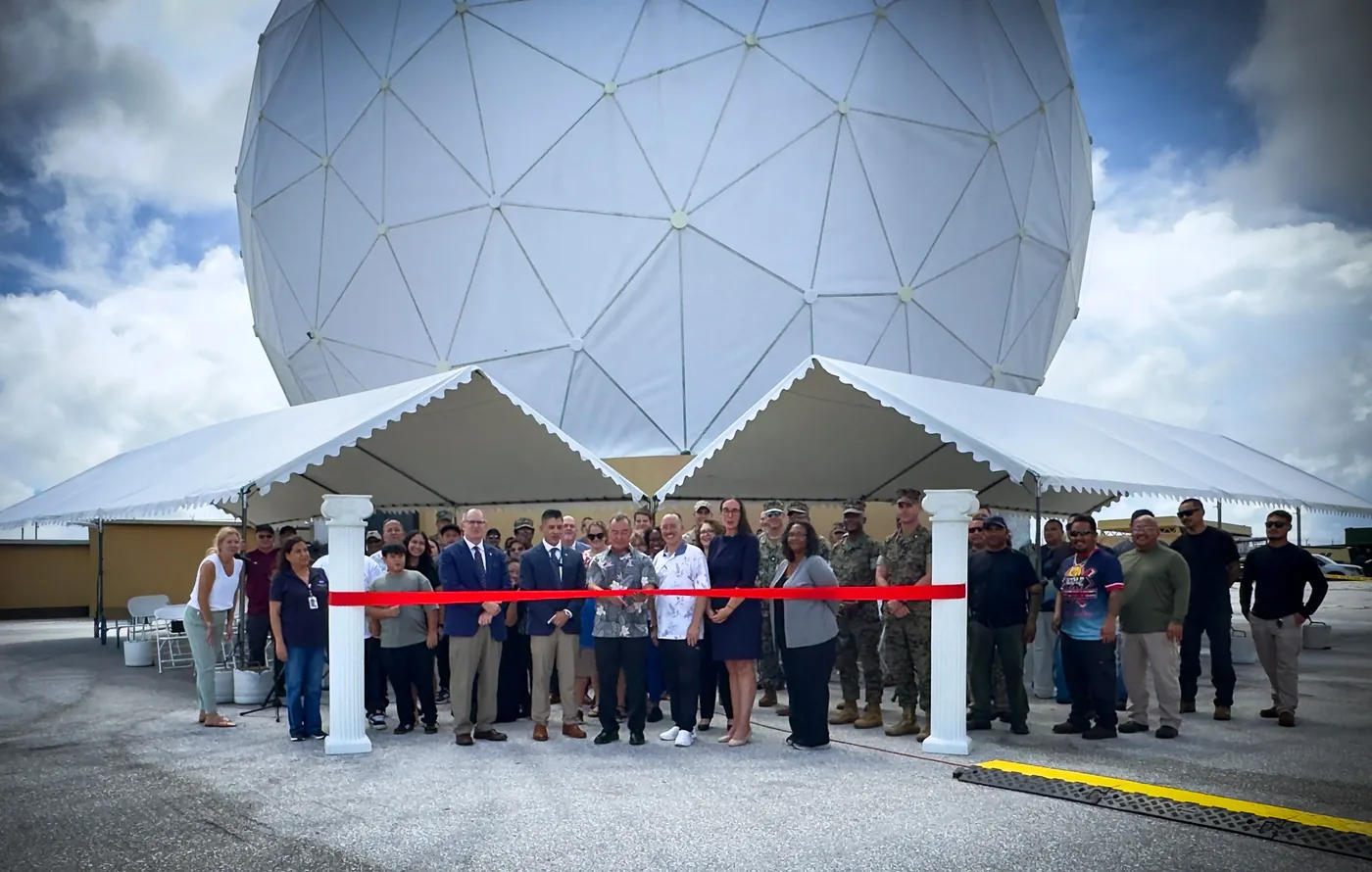
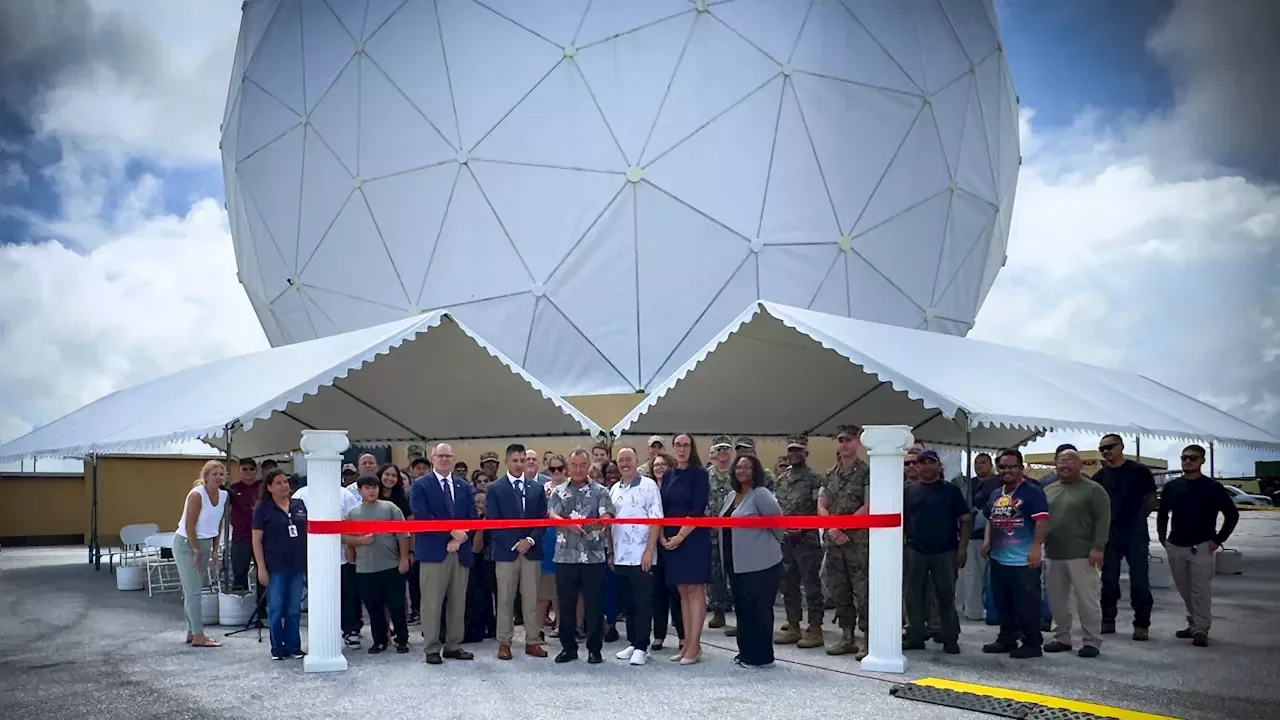
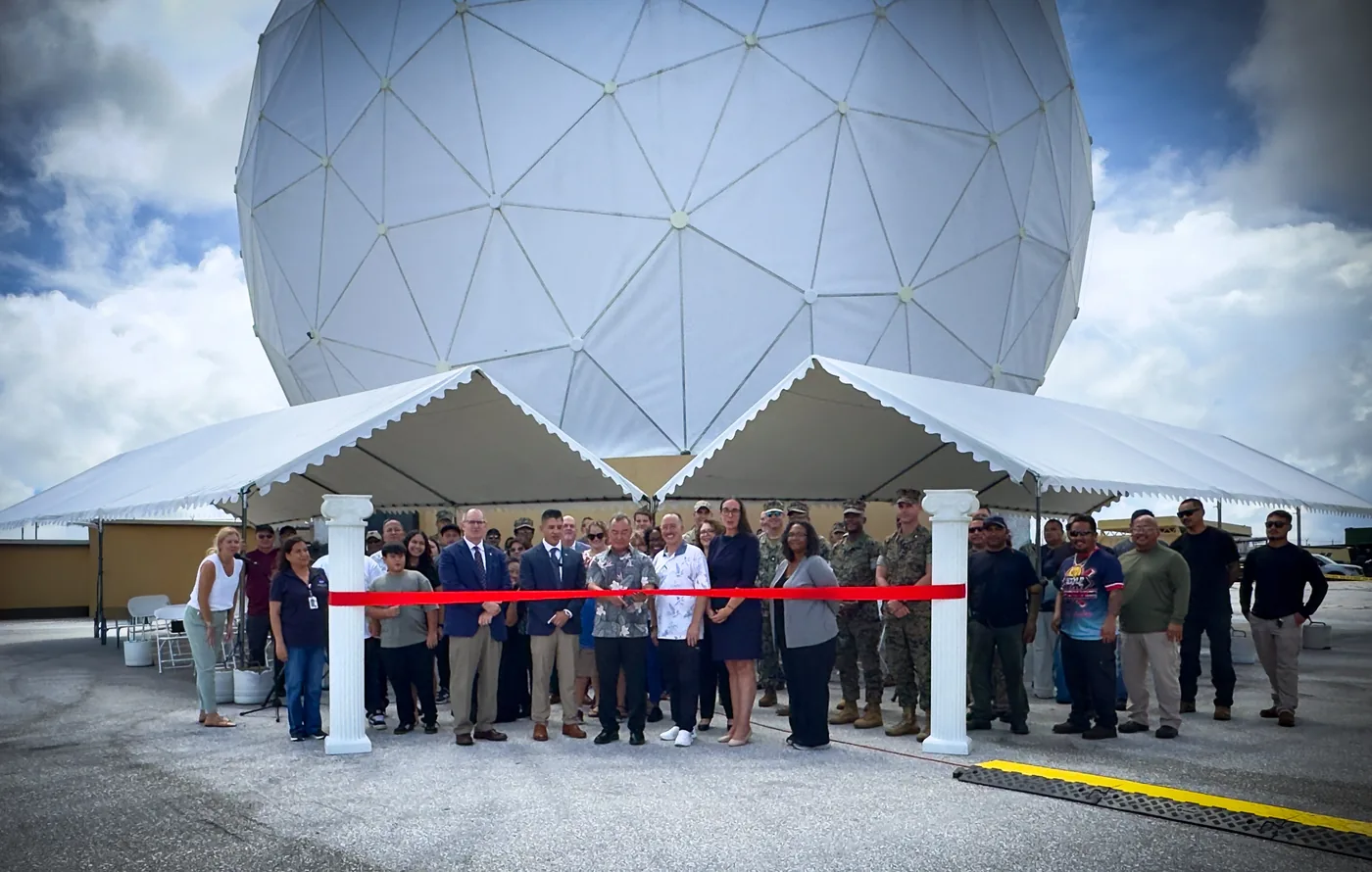
NASA officially commemorated the completed recovery on September 10, 2026, hosting a formal ribbon-cutting ceremony on Guam. Representatives from NASA’s Space Communications and Navigation division joined on-site personnel and territorial leaders to celebrate the station’s operational return, as detailed by Korine Powers in official reporting. Deputy Program Manager Jena Garrahy praised the dedication of local personnel who led debris removal and site security [1]. Garrahy presented a certificate of recognition to Site Manager Kristopher Copple, honoring the perseverance of the Guam workforce throughout reconstruction [4].
A simultaneous ceremony at NASA’s White Sands Complex in Las Cruces, New Mexico, recognized off-island engineering personnel who supported system integration, microwave calibration, and telemetry testing. Garrahy emphasized that returning the central antenna to service demonstrates extraordinary institutional resilience. In her address, Garrahy stated that the accomplishment represents far more than the restoration of infrastructure, calling it a testament to the dedication, resilience, and ingenuity of the diverse teams involved [1]. The facility has already weathered subsequent severe tropical storms without sustaining functional disruptions or structural damage [4].
As human spaceflight expands toward long-duration lunar exploration, dependable ground infrastructure remains vital to mission success [1]. Uninterrupted orbital communication protects crew safety during routine laboratory science, dynamic spacecraft docking maneuvers, and high-risk extravehicular activities across low Earth orbit. The three-year rebuilding of the Guam Remote Station demonstrates how space infrastructure can be successfully adapted and hardened against increasingly volatile Pacific climate conditions [4]. Continuous contact with Earth ensures that exploration throughout low Earth orbit and beyond continues with unwavering confidence [1].
- PRESS RELEASE Powers, K. (2026, September 16). NASA Celebrates Restoration of Guam Station Damaged by Typhoon Mawar. NASA. [Article Link]
- ONLINE NEWS Linxi News Editorial System. (2026, September 16). NASA restores Guam Remote Station after Typhoon Mawar. Linxi News. [Article Link]
- ONLINE NEWS CWME News Desk. (2026, September 17). NASA Restores Guam Remote Station After Super Typhoon Mawar Damage. Cyber Warriors Middle East. [Article Link]
- ONLINE NEWS Headlines Orbit AI Desk. (2026, September 16). NASA Reopens Guam Remote Station After Typhoon Rebuild. Headlines Orbit. [Article Link]
- ONLINE NEWS ShortSingh. (2026, September 16). NASA Restores Guam Tracking Station Three Years After Typhoon Mawar Damage. ShortSingh. [Article Link]
- PREPRINT Assessing ionospheric effects on image quality in the LOFAR Decametre Sky Survey. (2026). arXiv [Preprint – not yet peer-reviewed]. [Article Link]
APA 7: TWs Editor. (2026, September 17). How Guam Remote Station Restores Crucial Space Station Links. PerEXP Teamworks. https://perexpteamworks.com/en/guam-remote-station-restoration/


