





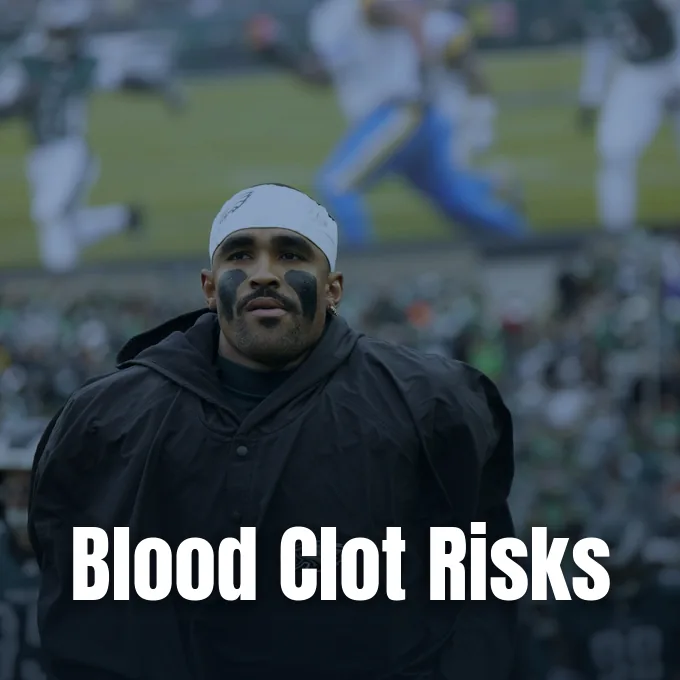
Philadelphia Eagles quarterback Jalen Hurts, a 28-year-old Super Bowl MVP, developed blood clots in his leg and both lungs in October 2026 after what seemed like a routine calf bruise. His medical diagnosis drew national public attention to venous thromboembolism, a circulatory condition that affects hundreds of thousands of people in the United States every single year. Pulmonary vascular disease specialist Ali Ataya pointed out that the case provides a valuable teaching lesson showing that prompt clinical detection changes survival odds when clots spread [1].
How Jalen Hurts Developed Blood Clots
On October 4, 2026, Jalen Hurts took a hard cleat to his left calf during a regular season game against the Los Angeles Rams in the National Football League. A transatlantic team flight to London followed soon after the game. An ultrasound evaluation revealed a superficial vein thrombosis, which is a blood clot forming in a vein near the skin of his left calf [1].
A follow-up ultrasound scan showed that the clot had traveled into a deeper vein, leading doctors to diagnose a deep vein thrombosis (DVT) in the Philadelphia Eagles quarterback. By October 19, medical staff confirmed a bilateral pulmonary embolism, showing that dangerous pieces of the thrombus had broken free and reached both of his lungs. Hurts began taking blood thinners right away. His medical prognosis was described as “very good” in a joint public announcement released by the Philadelphia Eagles and his agent, but the diagnosis will keep Hurts off the playing field for the remainder of the football season while doctors monitor his circulatory recovery in the United States [1].
In a clinical review published in Jornal Vascular Brasileiro, researcher Almeida and colleagues reported that superficial vein thrombosis affects 3% to 11% of the general population. Their findings showed that deep vein thrombosis occurs in 6% to 40% of cases, while asymptomatic pulmonary embolism appears in 20% to 33% and symptomatic pulmonary embolism affects 2% to 13% [3].
Virchow’s Triad in Vascular Trauma
Medical specialists evaluate vascular clot development using three core physiological elements described as Virchow’s triad. The first factor is injury to the vein wall, which damages delicate tissue and triggers local clotting cascades in the vessel. The second factor is slow or stagnant blood flow, which allows clotting proteins to accumulate in one region rather than dispersing safely through the circulatory system. The third factor involves changes in blood chemistry that cause blood to clot more easily, often driven by systemic inflammation, dehydration, or inherited traits that elevate thrombotic vulnerabilities in vulnerable patients [1].
Jalen Hurts faced every single element of Virchow’s triad following the blow to his calf against the Los Angeles Rams in early October. Sitting for hours on the team flight from Philadelphia to London and on the return trip caused blood pooling in his leg. Stagnant circulation accelerated clot growth [1].
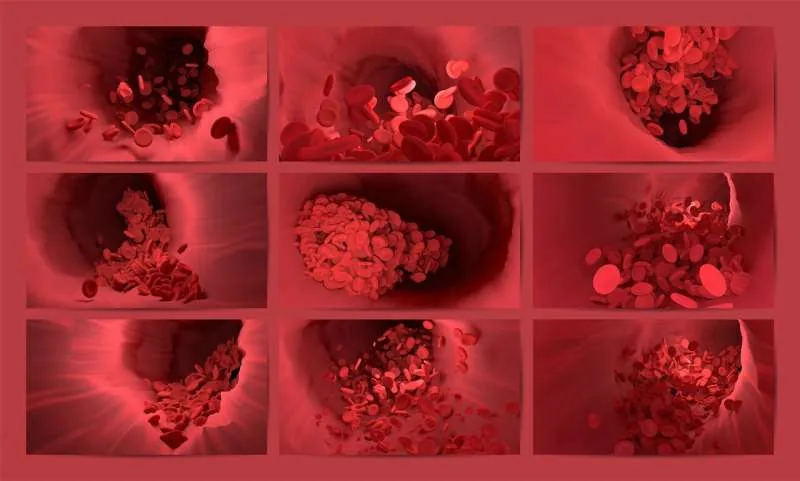
Severe physical exertion during NFL competition provoked dehydration, while the blunt muscle trauma triggered an inflammatory cascade in his injured calf tissue. Crossing time zones to London produced jet lag that added further strain to his vascular system. Pulmonary specialist Ali Ataya said that when tissue inflammation and fluid loss combine with a bruised vein and long immobility, the human body provides an ideal setting for rapid thrombus expansion. Under these compromised conditions, a small clot that begins in a superficial calf vein can migrate into deeper circulatory pathways and reach the pulmonary system [1].
Venous Thromboembolism Risks for Patients
Deep vein thrombosis and pulmonary embolism belong to one shared clinical category known as venous thromboembolism (VTE), which poses grave hazards to patients throughout the United States. When a deep vein clot fragments, loose pieces travel through the heart into pulmonary arteries where they block essential oxygen exchange. Large pulmonary embolisms can kill within hours [1].
Annual health statistics show that venous thromboembolism strikes up to 900,000 people in the United States every single year. Between 60,000 and 100,000 Americans die from pulmonary complications each year, making the disorder one of the leading causes of preventable deaths in modern medical facilities. Many people assume that vascular clots occur only in elderly or bedridden hospital patients, but clinicians emphasize that athletic adults remain vulnerable after suffering blunt leg trauma during competitive play. Physicians estimate that one quarter of patients with superficial vein clots also harbor an unseen deep vein clot, which is why Philadelphia medical teams use follow-up ultrasound scans to protect players from sudden embolisms [1].
Survivors of pulmonary embolisms often face persistent leg swelling, chronic breathlessness, recurrent clots, or chronic thromboembolic pulmonary hypertension, which causes high blood pressure inside the pulmonary arteries of the lungs [1]. In a health analysis published by The Conversation covering medical trends in Pennsylvania, researchers noted that timely diagnosis provides the only reliable defense against these debilitating chronic vascular disorders [2].


Hospital Prevention Protocols
Hospital admissions and major surgical operations represent the single largest setting for blood clot development across the adult population in the United States and other developed nations. More than one third of all venous thromboembolism cases occur during an inpatient hospital stay or during the immediate recuperation period that follows discharge from an acute care facility. Inpatient surgeries carry elevated risks, especially extensive orthopedic operations like joint replacements and major abdominal procedures that require patients to remain immobile in bed for prolonged periods following anesthesia [1].
Lower-limb fractures, leg casts, cancer, pregnancy, and inherited clotting disorders significantly increase blood thickness in patients. Estrogen in birth control pills adds another well-documented clotting risk. Clinical studies show that up to 70% of hospital-associated clots can be prevented using blood thinners or inflatable compression devices [1].
According to surveillance records from the Centers for Disease Control and Prevention (CDC), fewer than half of hospitalized patients at risk receive recommended preventive interventions during their stay. Unprotected surgical and medical patients face significant clinical hazards each year because of these missed hospital prevention opportunities. For individuals taking long automobile trips or flights, medical specialists recommend simple habits that protect lower-limb circulation. Travelers should take frequent walking breaks, drink plenty of water, and wear graduated compression socks to keep blood moving steadily through the veins of their calves [1].
State Laws Addressing Venous Thromboembolism
Jalen Hurts received prompt medical care from Philadelphia Eagles physicians who caught his clot before permanent injury occurred. Average hospital patients rarely enjoy that level of continuous diagnostic scrutiny. In 2025, Florida became the first state in the nation to enact legislation targeting this public health disparity through the Emily Adkins Family Protection Act [1].
The Florida law honors Emily Adkins, who died in 2022 at age 23 from a fatal pulmonary embolism after a blood clot traveled from her leg into her lungs. Her family campaigned for legislation that established the state’s pioneering advisory panel on blood clot prevention standards. That group drafted the policy recommendations that lawmakers enacted into statute [1].

Under the statute, Florida hospitals must train clinical staff to recognize venous thromboembolism symptoms and implement formal risk-assessment protocols alongside the nation’s first statewide blood clot reporting registry. Oklahoma followed in 2026 by passing the Blake Burgess Blood Clot Prevention Act, while Mississippi lawmakers introduced similar legislative measures backed by the National Blood Clot Alliance [1]. A public health bulletin on Substack noted that standardized reporting gives providers in Pennsylvania and across the country the data needed to reduce preventable patient deaths [2].
Early Warning Signs for Patients
Recognizing early warning signs of a deep vein clot can prevent a localized leg injury from developing into a dangerous pulmonary crisis. Anyone experiencing new calf swelling, focal tenderness, redness, or unexplained warmth in a lower limb should seek a medical evaluation, especially following long travel or bodily trauma. If a clot reaches the lungs, warning symptoms include sudden shortness of breath, sharp chest pain, and lightheadedness that require immediate emergency intervention [1].
Jalen Hurts is expected to make a full recovery over the next few months as anticoagulants dissolve his clots and restore normal circulation. Philadelphia doctors caught the issue before permanent lung damage took place. For thousands of everyday patients, survival depends on whether doctors ask the right questions and spot warning signs before complications turn fatal [1].
Public health advocates point out that venous thromboembolism is one of the few leading killers where risk assessment, prevention, early diagnosis, and prompt treatment can alter the final outcome. Medical reporting in Medical Xpress emphasized that raising public awareness helps people recognize subtle symptoms before they progress into life-threatening emergencies in both athletic and everyday settings. By spreading awareness through sports news and passing hospital mandates in Florida and Oklahoma, health leaders hope to prevent tragedies like those of Emily Adkins and Blake Burgess [1].
- ONLINE NEWS Ataya, A. (2026). If Philadelphia Eagles quarterback Jalen Hurts can get dangerous blood clots, so can you. Medical Xpress. [Article Link]
- WEBSITE Ataya, A. (2026). If Philadelphia Eagles quarterback Jalen Hurts can get dangerous blood clots, so can you – here’s how some states are trying to reduce the risk. The Conversation. [Article Link]
- ACADEMIC JOURNAL Almeida, M. J. d., Guillaumon, A. T., Miquelin, D., Joviliano, E. E., Hafner, L., Sobreira, M. L., Geiger, M. A., Moura, R., Raymundo, S., & Yoshida, W. B. (2019). Diretrizes de conceito, diagnóstico e tratamento da trombose venosa superficial. Jornal Vascular Brasileiro, 18. [Article Link]
APA 7: PerEXP Teamworks. (2026, October 27). Jalen Hurts Diagnosis Prompts Venous Thromboembolism Warnings. PerEXP Teamworks. https://perexpteamworks.com/en/venous-thromboembolism-risk-jalen-hurts/


