






Nintendo producer Eiji Aonuma described redesigning the Water Temple as “overdue homework” ahead of the release of The Legend of Zelda: Ocarina of Time on Nintendo Switch 2. Speaking in an Ask the Developer interview published on Nintendo’s website, Aonuma explained that he wanted to revisit the dungeon he built 28 years ago to fix its persistent navigation troubles [1]. The upcoming release arrives on November 5, 2026, bringing rebuilt visuals, updated controls, and rebalanced dungeon layouts to the 1998 adventure [5].
Origins of the Water Temple
When Aonuma created the original Water Temple for the Nintendo 64 release in 1998, very few 3D games allowed players to do anything underwater. As a hobbyist freediver, he wanted the area to reflect the sensory shift of diving beneath the surface, where audio changes and movement feels completely different. In practice, the dungeon became infamous for its confusing layout. Link had to raise and lower water levels across three floors to open flooded doorways, forcing players to keep track of several interconnected chambers at once. Missing a single small key or overlooking the hidden chest beneath the central tower’s floating platform often meant repeating the entire drainage cycle from scratch, turning simple exploration into an exhausting chore [3].
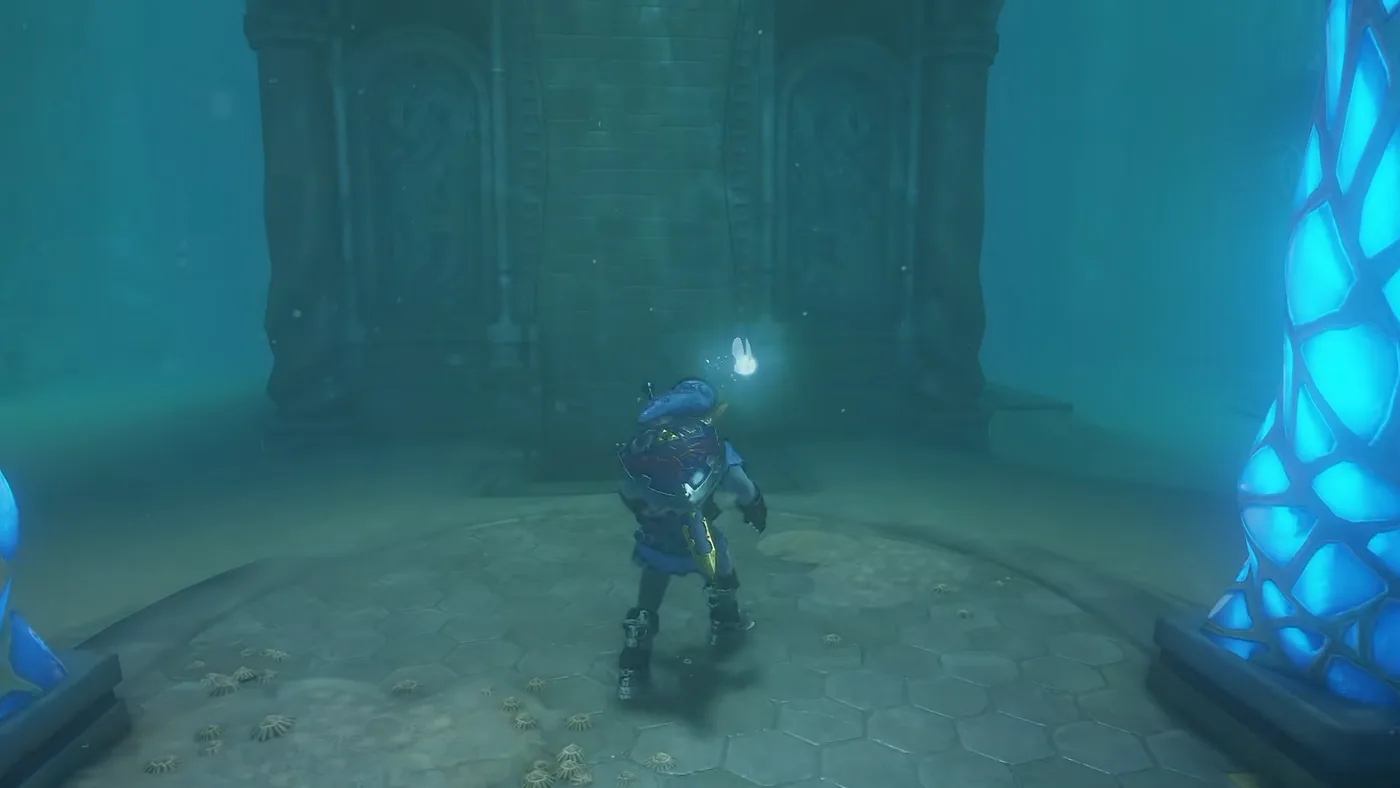
The biggest headache stemmed from equipment management. Link couldn’t swim underwater in the original game, so sinking to sunken doors meant strapping on heavy Iron Boots. Taking them off floated him up. Doing that meant pausing, opening the gear screen, and toggling footwear every few steps [3].
Aonuma admitted that the complaints stayed with him for decades. During a 2011 Iwata Asks discussion with late Nintendo president Satoru Iwata, he acknowledged that hearing fans talk about the dungeon made fixing it a longstanding wish during the 13 years after the original release. While the 2011 Nintendo 3DS edition assigned the boots to a touchscreen button and adjusted a cutscene for the hidden chest, Aonuma felt the Water Temple still needed deeper revisions [2]. He wanted the underwater environment to feel fun rather than tedious. The repetitive menu chime had annoyed an entire generation of players [1].

How the Remake Changes the Water Temple
The Nintendo Switch 2 version gave Aonuma another chance to tackle the problem directly. “I had some overdue homework: I wanted to do something about the Water Temple I created 28 years ago,” he said in the developer interview. Repeated menu pauses had ruined player orientation for decades [1].
Remake director Hokwai Ng stressed that the team avoided making the dungeon flat-out easier. The core puzzle mechanisms, room functions, and water-level switches stay intact to preserve what made the 1998 challenge memorable [1]. What changes is how smoothly players interact with the space. Switching equipment no longer requires pausing the game, so equipping the boots happens on the fly without breaking concentration [2]. Furthermore, Link can now swim underwater with full movement precision, using the Iron Boots to sink and anchor himself on the floor when solving puzzles. The boots now serve a clear puzzle purpose instead of acting as a barrier to simple swimming [3].
These adjustments remove friction without trivializing the dungeon’s multi-tiered layout. Players still need to calculate how water heights alter accessible doorways, but they spend far less time wrestling with menus [3]. Aonuma explained that the goal was simply to make the experience more playable and user-friendly [1].


Lattice Walls for Clearer Navigation
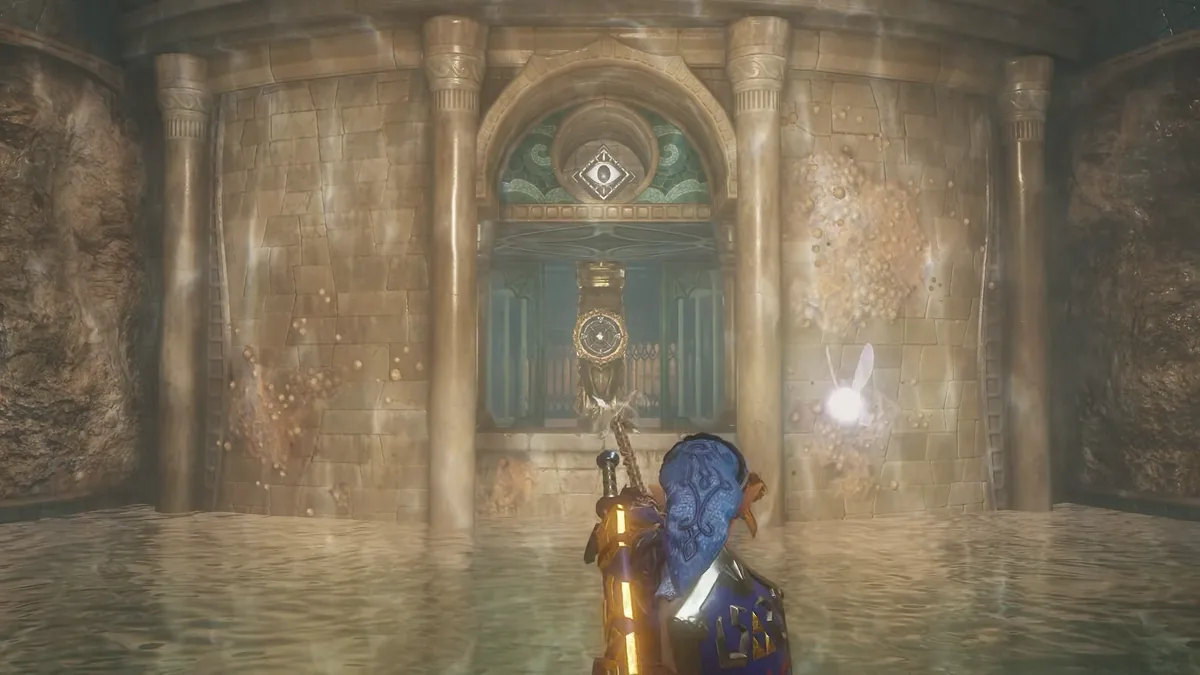
The most visible architectural change inside the Water Temple involves replacing solid barriers with open structures. Ng explained that the team changed several stone walls to lattice patterns that let players see adjoining chambers [1]. In the original release, closed walls made it easy to lose your sense of direction [2].
By opening views into neighboring rooms, the new geometry gives players constant visual cues to understand where they stand relative to the rest of the complex. Signposting has also been shifted in key spots to help the overall flow of exploration. Visual updates elsewhere in the adventure complement these spatial tweaks, as Zelda remake screenshots show how rebuilt lighting and sharper textures clarify dungeon paths without altering the geometry that fans remember. Players can now spot major landmarks through the grates and plan their route before swimming into a new corridor [1].
Ng added that he hopes the differences will spark inter-generational conversations among families. He imagined a father telling his child how often he got stuck in the dungeon years ago. Aonuma laughed and replied, “Then kids playing this version might say, “Come on, it’s not that hard.” Poor old Dad might end up feeling deflated [1].”
Free Jumping and Modern Controls
Beyond dungeon layouts, the remake rebuilds Link’s fundamental movement across Hyrule. Nintendo eliminated the automatic jumping system from 1998, introducing a jump button similar to Breath of the Wild and Tears of the Kingdom. Because players can now jump freely, the team had to adjust environments across the world to handle greater movement freedom. Areas originally shaped around fixed jumping points now account for player-initiated leaps, preventing unintended sequence breaking while giving players direct control over traversal [5].
Movement physics also account for Link’s different ages. Young Link and Adult Link have different jumping distances, so the team tested platforming challenges separately for both forms. Players can dash by holding the roll button, although rolling repeatedly across Hyrule Field stays fully possible [5].
Jump attacks can be triggered using the original single-button shortcut or by jumping before swinging. Dual-stick camera controls give players full control over their viewpoint, replacing the fixed angles that occasionally hid enemies in the Nintendo 64 release. Boss fights received similar readability improvements. For example, Queen Gohma now uses the arms above its head to protect its weak point when it can’t take damage, making the correct attack timing obvious to recognize [5]. In exploring travel systems, earlier coverage noted how Nintendo cut fast travel from early portions of the journey to preserve the feel of overland travel.
Orchestral Score and Voiced Cutscenes
Audio has been rebuilt under music lead Masato Ohashi. The game includes more than 150 background tracks recorded with orchestral instrumentation, while smaller arrangements retain the simpler sound of the original music. Some songs incorporate recreated sounds based on the Nintendo 64 release’s original audio sources to preserve their nostalgic character. Environmental audio features location-dependent effects such as running water, rustling leaves, and wildlife, all presented in 5.1-channel surround sound. Even the acoustic tone of Link’s ocarina changes dynamically depending on whether he plays in an open meadow or a stone chamber [5].
The remake also introduces fully voiced cutscenes for key story moments. Nintendo held blind auditions to find actors whose voices matched the cast, reportedly bringing back one actor from the 1998 release for their original role. A new story feature called Threads of Time adds extra narrative context [5].
The Legend of Zelda: Ocarina of Time launches for Nintendo Switch 2 on November 5, 2026, carrying an ESRB rating of Everyone 10+ for animated blood and fantasy violence. By pairing dual-stick camera controls and orchestral audio with long-overdue fixes to the Water Temple, Nintendo aims to resolve nearly three decades of navigational debate without sacrificing the spirit of the original adventure [1].
- ONLINE NEWS Trock, D. (2026, November 3). Aonuma Calls the Water Temple His ‘Overdue Homework’ for Ocarina of Time Remake. DualShockers. [Article Link]
- ONLINE NEWS McCrae, S. (2026, November 3). Zelda Dev Responsible for Ocarina of Time’s Infamous Water Temple Used the Remake to Atone for His Sins: “I Had Some Overdue Homework”. GamesRadar+. [Article Link]
- ONLINE NEWS Valentine, R. (2026, November 3). Zelda: Ocarina of Time Producer Calls Water Temple ‘Overdue Homework’. Kotaku. [Article Link]
- ONLINE NEWS Nintendo Life. (2026, November 3). “I Had Some Overdue Homework” – Ocarina of Time Remake Features More Water Temple Tweaks. Nintendo Life. [Article Link]
- ONLINE NEWS Joshua, O. (2026, November 3). Zelda: Ocarina of Time Remake Details Free Jumping, Water Temple Changes, Fully Voiced Cutscenes, and More. Noisy Pixel. [Article Link]


