





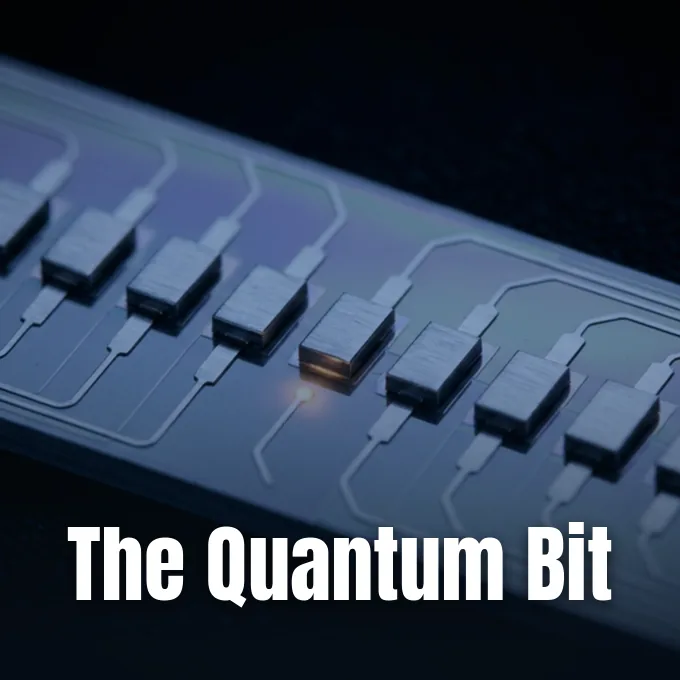
A qubit, or quantum bit, serves as the basic unit of data in quantum computing, representing the physical counterpart to the standard binary digit. Readers asking what is a qubit find that while a conventional bit remains locked into either a zero or a one, a quantum bit can exist in a superposition of both states at the same time. This capability allows collections of quantum units to process complex configurations of data before an irreversible readout collapses their state. Standard computers rely on billions of transistors that switch between distinct voltage levels to encode data, but quantum chips control microscopic quantum systems to solve problems beyond the reach of conventional hardware. Emerging devices explore diverse platforms to realize these quantum states [14].
What Is a Qubit?
How does this quantum unit depart from the mechanics of standard digital hardware? In binary computing, data resides in digits where low direct current voltage levels define either zero or one while passing through a forbidden zone during transitions. A qubit, by contrast, is a two-state quantum system that holds an arbitrary coherent superposition of both computational states. It breaks binary limits. Theoretical physicist Benjamin Schumacher coined the term qubit in his 1995 paper after discussing the concept with William Wootters [14].
Data capacity expands when multiple quantum units combine within a register. A set of standard bits holds only one specific value among two to the power of n options at any instant. An n-qubit register needs 2n complex numbers in Hilbert space to describe its state vector. Through superdense coding, a single qubit carries up to two standard bits under Holevo’s theorem [14]. Reporter Charles Q Choi wrote in IEEE Spectrum that a 300-qubit processor running in entanglement could handle more simultaneous operations than all atomic particles contained in the observable cosmos. Such scaling makes quantum hardware fit for complex chemical modeling [9].
Hardware platforms rely on diverse degrees of freedom, from electron spin states pointing up or down to single-photon polarization measured along linear axes. While a standard bit stays robust, stray forces destroy quantum states [14]. Binary logic permits no middle ground.
Superposition and the Bloch Sphere
The mathematical rules of a qubit rely on linear combinations of two orthonormal basis vectors, denoted in Dirac bra-ket notation as |0⟩ and |1⟩. A pure state is expressed as |ψ⟩ = α|0⟩ + β|1⟩, where the complex amplitudes α and β govern the likelihood of observing either state. According to the Born rule, readout yields zero with chance |α|2 and one with chance |β|2. Because probabilities sum to one, the amplitudes satisfy the normalization constraint |α|2 + |β|2 = 1 [14].
Physicists visualize these complex superposition states through a geometric tool called the Bloch sphere. Normalization and the removal of unobservable global phase reduce the state description to two angles, θ and φ, using Hopf coordinates. On this sphere, a standard bit can only sit at the North Pole at |0⟩ or the South Pole at |1⟩. A pure quantum state can occupy any point across the spherical surface. The balanced state (|0⟩+|1⟩)/√2 sits on the equator along the positive X-axis (positive X-axis). Continuous phase shifts let quantum chips run interference gates that have no analog in binary circuits [14].
Noise causes a qubit to lose coherence, degrading from a pure state into a mixed state. This state represents an incoherent statistical mixture mapped to points strictly inside the Bloch ball. The mixed state needs two angles and a radial length r [14].
Why Do Qubits Collapse When Measured?
What happens to fragile phase relationships when an external meter measures a quantum system? Readout is a one-way step that extracts data while destroying quantum coherence. Before readout, the qubit holds probability amplitudes whose relative phase factor eiφ enables quantum interference. Observation forces the state to yield |0⟩ with a chance of |α|2 or |1⟩ with a likelihood of |β|2, permanently erasing the phase factor [14].
When qubits interact, they form entangled states that show correlations with no counterpart in standard physics. A canonical example is the Bell state (|00⟩+|11⟩)/√2, where two particles share an equal superposition of joint states (entangled pairs). If two separated observers, named Alice and Bob, measure their entangled qubits, neither can predict whether their individual readout will produce a zero or a one. Yet when Alice observes a result, Bob gets the identical value upon reading his qubit [14].
Readout also resets quantum circuits before algorithms run. Chips reset a register to |0⟩ by combining projective readout with a Pauli-X gate whenever the sensor detects a one. Superconducting circuits achieve reset by relaxing the device to its lowest ground state [14]. In a 2018 survey in Quantum, physicist John Preskill at Caltech said that managing these state transitions without introducing stray noise is vital for NISQ hardware [1].
Major Quantum Bit Hardware Platforms
Engineers build quantum hardware by isolating two discrete energy levels in a physical medium. In superconducting chips, teams build circuits from tiny islands coupled by Josephson junctions [6, 15]. The Cooper-pair box, or charge qubit, was described theoretically by Alexander Shnirman in 1997 and demonstrated experimentally by Vincent Bouchiat at Saclay in 1997 and Yasunobu Nakamura in 1999. Fabrication uses electron beam lithography and shadow evaporation to deposit aluminum layers separated by aluminum oxide (Al/AlOx/Al). In 2007, Robert J. Schoelkopf, Michel Devoret, and Steven M. Girvin at Yale University introduced the transmon qubit, modifying junction parameters to cut charge noise sensitivity and push coherence times toward 100 μs. These circuit architectures form the core of superconducting processors [6, 15].
Another superconducting design, the flux qubit proposed in 1999 by Terry P. Orlando at MIT, relies on circulating supercurrents inside a loop interrupted by Josephson junctions. When an external magnetic flux threads the ring, clockwise or counter-clockwise currents of 300 nA form the two lowest computational states. Dr. Shcherbakova’s team fabricated flux qubits with niobium contacts and aluminum oxide junctions [16].
Semiconductor platforms offer an alternative path by trapping electron or hole spins in quantum dots. In a survey in Reviews of Modern Physics, Burkard and colleagues documented how lithographically defined dots support long coherence times and high gate fidelities [5]. Dimi Culcer at UNSW and FLEET, Sven Rogge at CQC2T, and Joe Salfi at the University of British Columbia showed that germanium hole qubits resist charge noise at sweet spot operation points [4]. At Tsinghua University in Beijing, Luming Duan achieved dual-type trapped-ion qubits in Yb-171, holding crosstalk below 0.06% [10].


The Challenge of Environmental Decoherence
Preserving quantum data remains difficult because thermal and magnetic fluctuations disrupt fragile states. In superconducting transmons, microscopic defects in circuit substrates behave as two-level systems that cause telegraphic frequency jumps. Researcher Fabrizio Berritta and colleagues from MIT, the University of Regensburg, Leiden University, NTNU, Qolab, and Quantum Machines studied a transmon whose 5.10 GHz transition frequency jumped by 374 kHz. Without active correction, error rates shifted across a range spanning 1.4 × 10⁻³ to 2.8 × 10⁻³ during defect switching [11].
The team used an OPX1000 controller at the Israeli Quantum Computing Center to implement real-time feedback from a single measured bit. By detecting the qubit’s frequency state in a single Ramsey measurement before applying subsequent gates, the controller retuned parameters on the fly, cutting average gate errors by more than half [11]. In solid-state systems, researchers analyzed noise correlations in silicon spin architectures to understand environmental fluctuations. Decoherence limits operational fidelity across physical devices.
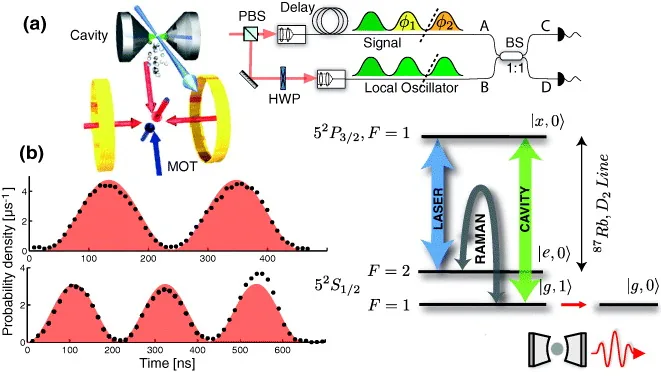
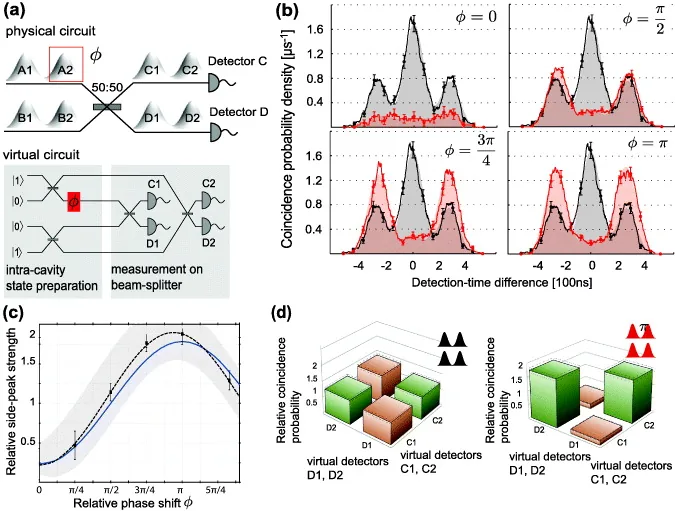
Optical qubits also encounter temporal coherence limits during photon emission and routing. In an atom-cavity system producing narrowband photons, Peter B. R. Nisbet-Jones, Jerome Dilley, Annemarie Holleczek, Oliver Barter, and Axel Kuhn achieved an emission efficiency of 85% with a repetition rate of 1 MHz. The coherence time of these single photons reached 500 ns, verified in an earlier 2012 non-peer-reviewed preprint before formal publication in New Journal of Physics [2, 3]. Drift in cavity resonance frequencies and background magnetic fields set the temporal ceiling on photonic coherence [2].
Error Correction and Logical Architecture
Because physical qubits suffer from noise, practical computing combines many faulty components into error-protected logical units. In 2018, John Preskill described the current technology era as Noisy Intermediate-Scale Quantum, or NISQ, where machines operate with 50 to 100 qubits without full error correction. Although NISQ devices explore many-body physics, gate noise limits circuit depth. Engineers need redundant qubits to detect errors without destroying encoded quantum states [1].
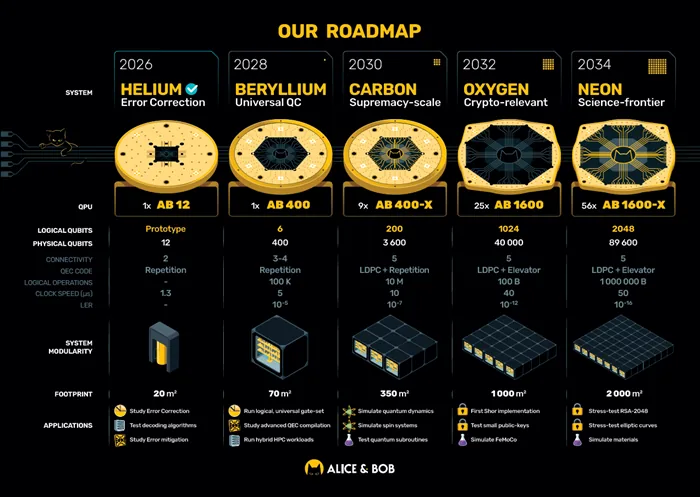
French quantum startup Alice & Bob unveiled an accelerated modular roadmap targeting 200 logical qubits from 3,600 physical cat qubits by 2030 in a system named Carbon. Cat qubits are superconducting devices designed to suppress bit-flip errors (bit-flip errors) at the hardware level, lowering the physical qubit overhead needed per logical unit. CTO Raphaël Lescanne said that cat qubits give the company an advantage by needing far fewer physical components for equivalent logical performance. Modularity allows linking separate cryostats to bypass single-chamber scaling bottlenecks. Hardware bit-flip suppression lets engineers concentrate error correction on phase-flip noise, simplifying overall decoding in multi-qubit clusters [13].
The roadmap outlines progressive milestones including Helium in 2026, Beryllium with 6 logical units in 2028, Oxygen with 1,024 in 2032, and Neon with 2,048 in 2034. Firmware vice president Jérémie Guillaud said that useful quantum computing will emerge from improving hardware while reducing the computational resources that real algorithms need. Under France’s PROQCIMA program, Alice & Bob operated three independent QPUs, observing logical error rates approaching the fault-tolerance threshold for simulating spin models like Hubbard and Ising systems [13].
High-Dimensional Encoding with Qudits
While standard quantum computers restrict data to binary spaces, physical carriers naturally possess multi-level energy spectra. Systems encoding d discrete states are called qudits (qutrits and ququads), which encompass three-state qutrits and four-state ququads [2, 8]. In a study published in Nature Physics, Michael Ringbauer, Thomas Monz, Rainer Blatt, Philipp Schindler, Lukas Postler, Michael Meth, and Roman Stricker demonstrated a universal processor using trapped ions with local Hilbert-space dimensions up to seven. This multi-level approach enables native simulation of quantum chemistry while executing qubit algorithms with fewer ions [8].
Photonic chips also harness high-dimensional states to expand data capacity. At INRS in Varennes, Quebec, researchers Michael Kues and Roberto Morandotti used a 270-micrometer micro-ring resonator to emit entangled photon pairs. The team encoded states across 1534 to 1566 nanometers to create two 10-state qudits with 100 total dimensions, exceeding what six entangled qubits can generate [9].
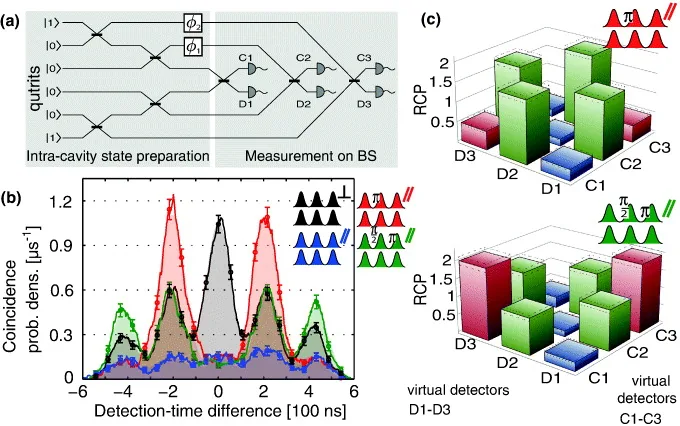
Joseph Lukens at Oak Ridge National Laboratory in Tennessee said that commercial telecommunications gear manipulated these multi-level photons over a 24.2-kilometer optical fiber network. In related work, researchers at Oak Ridge, Purdue University, and EPFL in Switzerland generated pairs of 8-level qudits, forming a 64-dimensional quantum space [9]. Axel Kuhn’s group demonstrated time-bin encoded qudits in atom-cavity setups, achieving state preparation fidelities above 95% [2].
Scaling Toward Practical Quantum Computing
Practical deployments integrate chips directly into supercomputing centers. Under the €35 million Q-STAR.NRW project funded by the Coal Regions Investment Act, ARQUE Systems, a spin-off from Forschungszentrum Jülich and RWTH Aachen University, is building a 200-qubit semiconductor processor by the end of 2029. The system will join the Jülich UNified Infrastructure for Quantum Computing (known as JUNIQ), where 7,250 staff members develop scientific computing workflows in North Rhine-Westphalia. Board chair Astrid Lambrecht and state minister Mona Neubaur pointed out that connecting semiconductor qubits with supercomputers creates a practical testbed for industrial chemistry and logistics [12].
The ARQUE architecture tackles wiring density through an electron-shuttling technique across silicon and silicon-germanium structures. Instead of running separate control lines to every individual qubit, the system shuttles electrons across the chip to designated interaction zones. ARQUE CEO Markus Beckers and Jülich Supercomputing Centre director Kristel Michielsen said that shuttling eliminates control line bottlenecks, laying the groundwork to integrate over ten million qubits on a two by two centimetre chip. The design avoids permanent physical proximity between neighboring quantum units [12].
As processor architectures advance toward thousands of physical units, exemplified by how IBM unveiled its first 1,000-qubit processor, the demand for scalable interconnects grows urgent. Large-scale quantum processors will eventually solve complex molecular structures and optimization problems, but their computing power will also challenge current public-key cryptography. Securing digital networks against future quantum attacks means using post-quantum cryptography protocols across telecommunications infrastructures [13]. Integrating robust hardware with resilient software will define the future of quantum technology.
- ACADEMIC JOURNAL Preskill, J. (2018). Quantum Computing in the NISQ era and beyond. Quantum, 2, 79. [Article Link]
- ACADEMIC JOURNAL Nisbet-Jones, P. B. R., Dilley, J., Holleczek, A., Barter, O., & Kuhn, A. (2013). Photonic qubits, qutrits and ququads accurately prepared and delivered on demand. New Journal of Physics, 15(5), 053007. [Article Link]
- PREPRINT Nisbet-Jones, P. B. R., Dilley, J., Holleczek, A., Barter, O., & Kuhn, A. (2012). Photonic qubits, qutrits and ququads accurately prepared and delivered on demand. arXiv:1203.5614. [Article Link]
- ACADEMIC JOURNAL Wang, Z., Marcellina, E., Hamilton, A. R., Cullen, J. H., Rogge, S., Salfi, J., & Culcer, D. (2021). Optimal operation points for ultrafast, highly coherent Ge hole spin-orbit qubits. npj Quantum Information, 7(1), 54. [Article Link]
- ACADEMIC JOURNAL Burkard, G., Ladd, T. D., Pan, A., Nichol, J. M., & Petta, J. R. (2023). Semiconductor spin qubits. Reviews of Modern Physics, 95(2), 025003. [Article Link]
- ACADEMIC JOURNAL Kjærgaard, M., Schwartz, M. E., Braumüller, J., Krantz, P., Wang, J. I., Gustavsson, S., & Oliver, W. D. (2019). Superconducting Qubits: Current State of Play. Annual Review of Condensed Matter Physics, 11(1), 369-395. [Article Link]
- ACADEMIC JOURNAL Krantz, P., Kjærgaard, M., Yan, F., Orlando, T. P., Gustavsson, S., & Oliver, W. D. (2019). A quantum engineer’s guide to superconducting qubits. Applied Physics Reviews, 6(2), 021318. [Article Link]
- ACADEMIC JOURNAL Ringbauer, M., Meth, M., Postler, L., Stricker, R., Blatt, R., Schindler, P., & Monz, T. (2022). A universal qudit quantum processor with trapped ions. Nature Physics, 18(9), 1053-1057. [Article Link]
- ONLINE NEWS Choi, C. Q. (2017). Qudits: The Real Future of Quantum Computing? IEEE Spectrum. [Article Link]
- ONLINE NEWS Fadelli, I. (2022). Researchers realize two coherently convertible qubit types using a single ion species. Phys.org. [Article Link]
- ONLINE NEWS The Quant. (2026). Bistable Qubit Feedback Cuts Gate Errors By Half In New Tests. Quantum Zeitgeist. [Article Link]
- ONLINE NEWS Rehman, M. U. (2026). ARQUE Systems and Forschungszentrum Jülich Plan 200-Qubit Quantum Computer. The Quantum Insider. [Article Link]
- ONLINE NEWS Alice & Bob. (2026). Alice & Bob Unveils Accelerated Roadmap on Modular Architecture: 200 Logical Qubits From 3,600 Physical Qubits by 2030. AZoQuantum. [Article Link]
- WEBSITE Wikipedia contributors. (2026). Qubit. Wikipedia, The Free Encyclopedia. [Article Link]
- WEBSITE Wikipedia contributors. (2026). Charge qubit. Wikipedia, The Free Encyclopedia. [Article Link]
- WEBSITE Wikipedia contributors. (2026). Flux qubit. Wikipedia, The Free Encyclopedia. [Article Link]


