





Open-source developers saw major policy and software shifts during October 2026 as Linux kernel AI tools entered mainline patch debates and Microsoft ported Defender to the Linux desktop. While Linus Torvalds tested code bots on core kernel subsystems, high-severity bug reports accidentally reached public lists [5]. The month also brought the arrival of Linux 7.3, new distribution updates from Canonical, and early data on a record Linux 7.4 merge window tracked by Michael Larabel at Phoronix [1].
Linux Kernel AI Patch Rules
Linus Torvalds tested Claude Code during October to draft an input-output patch for the Linux kernel, writing the core logic alongside a dedicated test program to check system speed across local disks. He said the model helped make old patches easier to read while spotting bugs that human coders had missed for years. The test showed that smart coding bots now offer real help to kernel leads who spend long hours reading daily patch mail. Torvalds ran the code locally [3].
The rise of AI-made code is pushing kernel hackers to rethink project rules. Current kernel policy instructs authors to add an “Assisted-by:” tag whenever an AI tool helps write a patch, but team leads now debate whether to drop that rule completely because tracking machine assistance has grown impractical on high-volume lists. Because authors use language models so often to clean up diffs and catch syntax slips, tracking the credit line has grown hard to enforce across busy lists [3]. Recent debates over sound drivers showed similar strains, as seen in the Linux sound subsystem patch flow where Takashi Iwai sorted high volumes of machine-made pull requests.
Downstream distributions like Red Hat, Debian, and Ubuntu watch these policy talks closely to see how upstream leads will verify incoming code trees. The core questions center on who bears the burden of checking generated lines and where blame falls when a bot introduces a silent flaw into a driver. Hong Kong Linux User Group analysts noted that if kernel leads tighten patch review rules, distribution teams must update their own vendor checks. Upstream standards directly shape vendor release cycles [4].
Kernel Bug Leaks on Public Lists
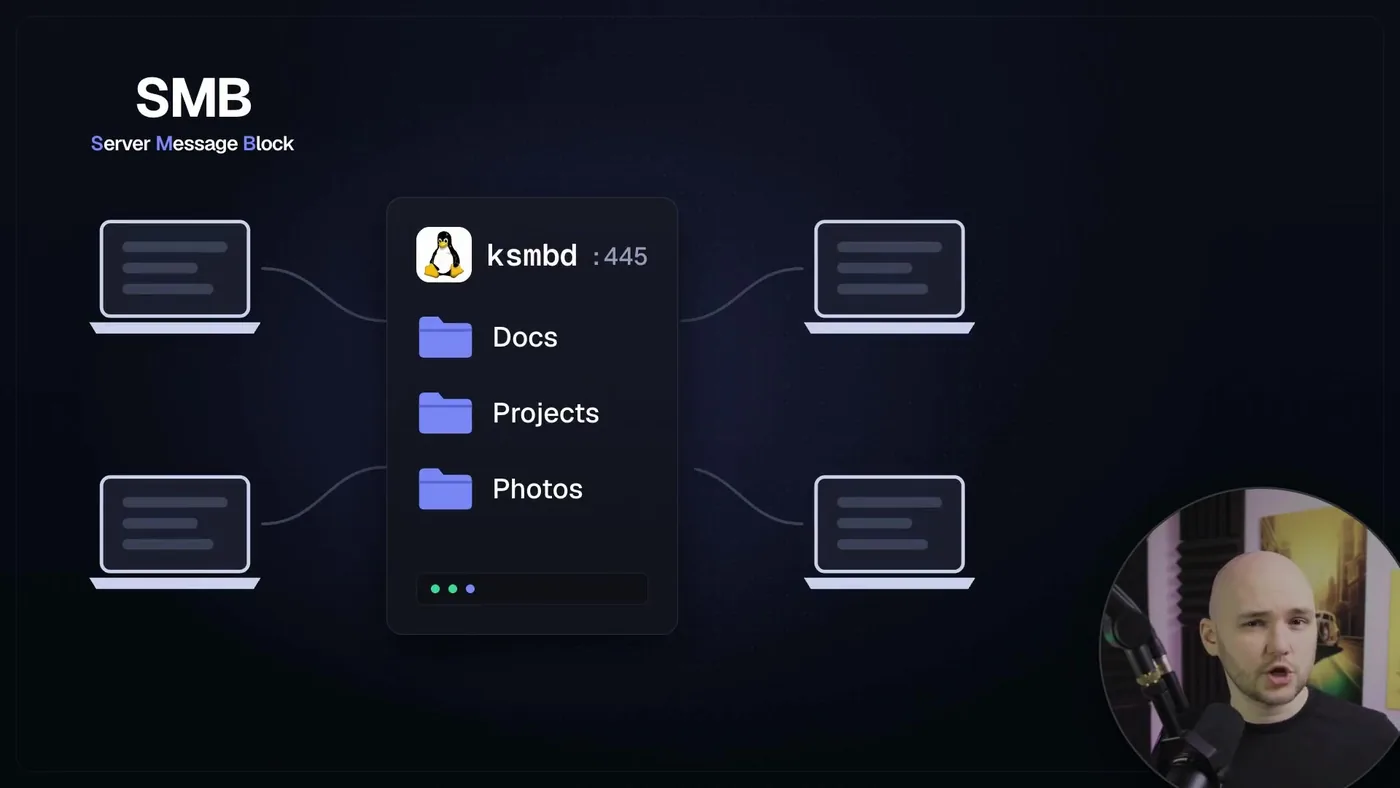
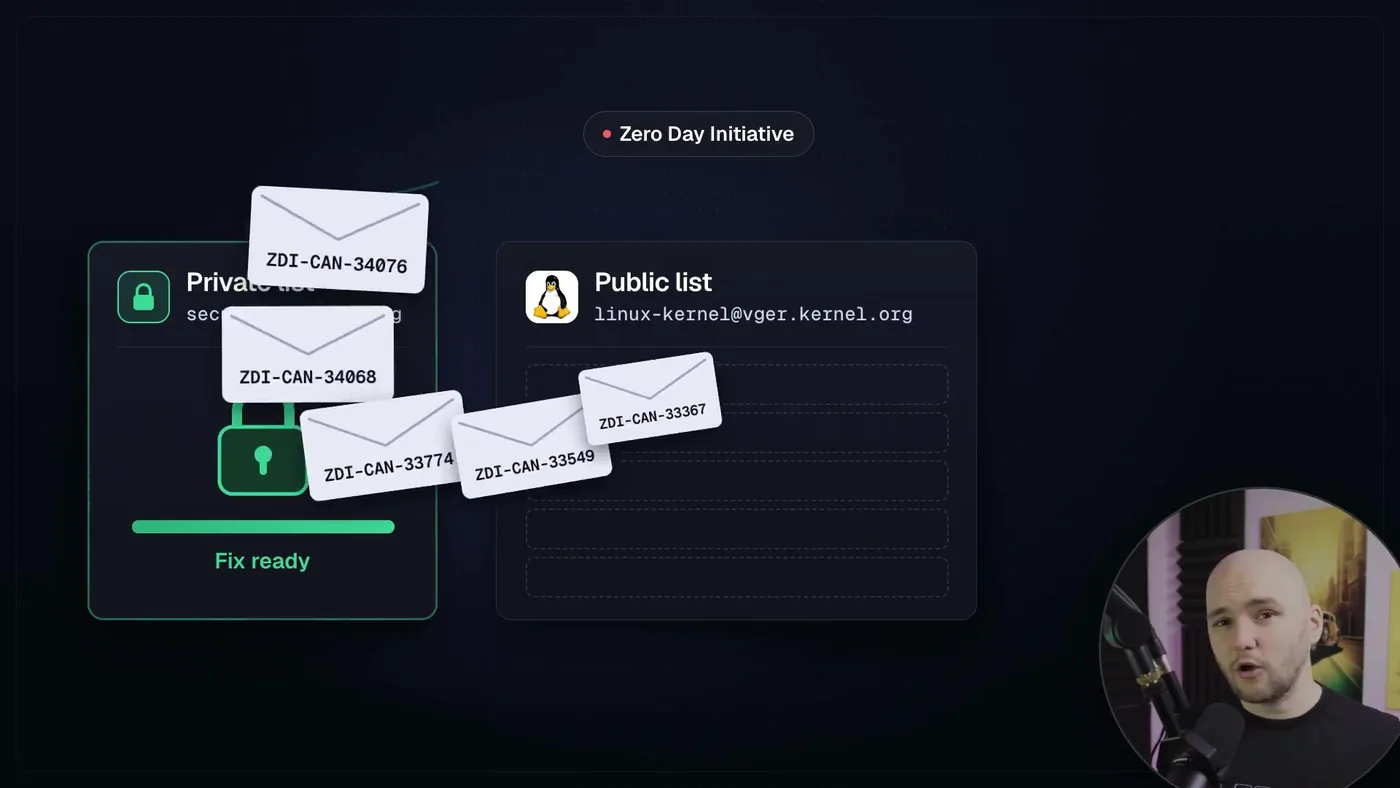
Kernel security broke down on October 22 when bug reports from Trend Micro’s Zero Day Initiative (ZDI) landed on an open mailing list instead of the private security@kernel.org inbox. The leak exposed details on ksmbd, the in-kernel Server Message Block (SMB) network file server. Maintainer Greg Kroah-Hartman asked why unpatched flaws were sent to an open list before coders could build and test fixes. The messages exposed live flaws [5].
The leaked reports covered two bugs with Common Vulnerability Scoring System ratings of 9.0, tracked as ZDI-CAN-33549 and ZDI-CAN-33774. The first flaw involved an integer underflow in SMB Direct network handling, where subtracting one from zero in unsigned 32-bit arithmetic wraps around to 4294967295 during length calculations and causes memory copy overruns across network buffers. The second issue was a race condition in protocol dispatch that causes use-after-free corruption when one thread frees a session struct while another thread still reads it. Automated Linux kernel AI scanners help researchers find flaws quickly, yet spotting bugs fast does not mean that working patches are ready for distribution. Other reports hit the vmwgfx graphics driver and the NVMe target subsystem. Mainline trees lacked fixes when the reports leaked [5].
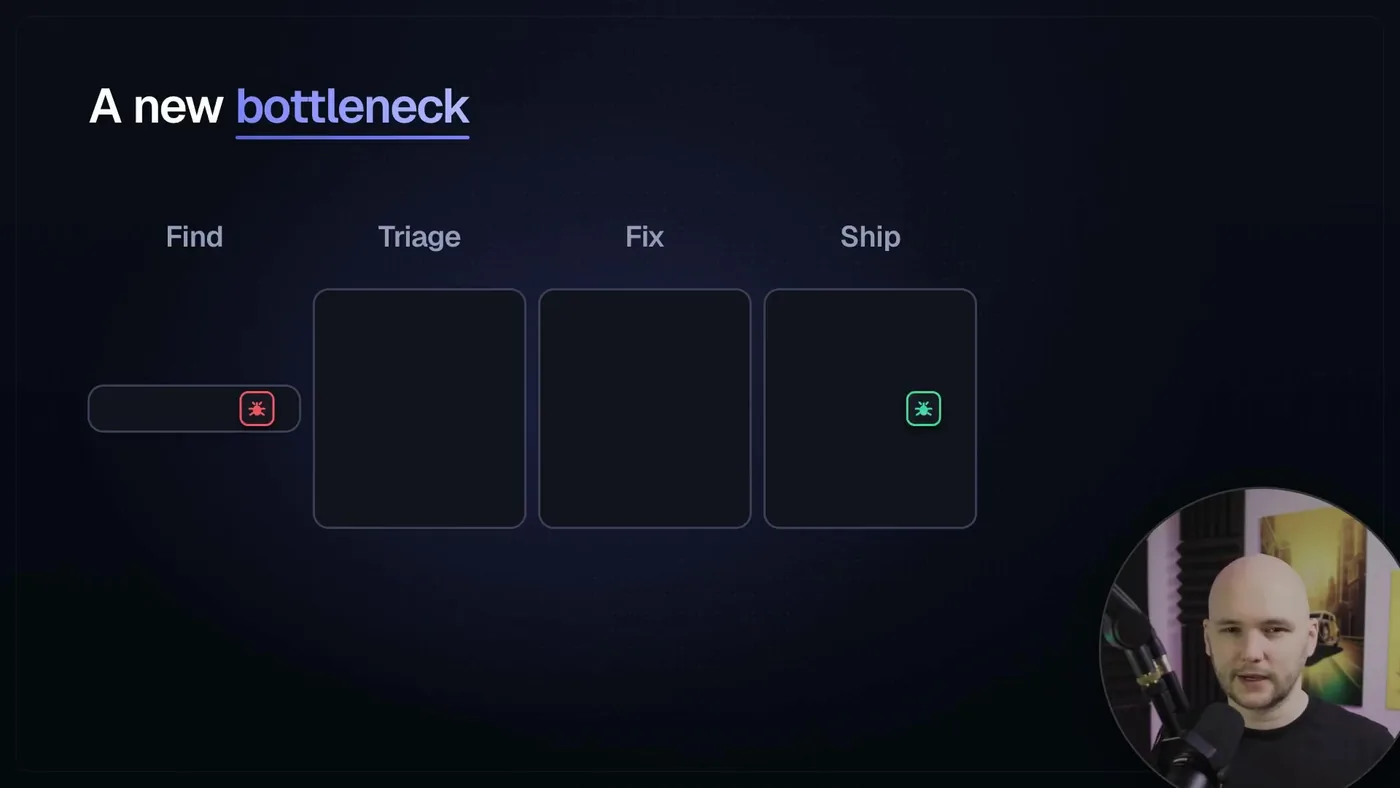
Better Stack security researchers stressed that bug handling spans four distinct steps: find, triage, fix, and ship. Automated hunting tools can uncover dozens of memory bugs in minutes, but human engineers must still verify root causes, write regression tests, and coordinate backports to stable releases. When bug hunting speeds up without more review time from leads, raw bug alerts pile up in the open. Public patches also speed up patch diffing by third parties [5].


Defender on Linux Workstations
Microsoft expanded its reach during October by porting Microsoft Defender to Linux desktops, moving past its prior focus on Linux server hosts. Richard Speed reported for Theregister that putting Defender on Linux workstations gives corporate IT groups a single security tool for mixed computer fleets [2]. For office teams running Microsoft 365, the client port brings endpoint checks into one cloud dashboard [4].
Putting Defender on Linux workstations helps audits, yet IT leads face several practical questions before rollout. System teams must check how much telemetry the agent sends to Redmond servers and log its memory load on developer boxes and continuous integration runners. On mixed fleets, administrators must also check that the scan tool works with existing AppArmor and SELinux policies without overriding local system profiles. Early testing will run on staging machines [4].
Firms with mature endpoint detection tools will not swap agents right away, but the release gives IT managers a native choice for dual-boot shops. A single agent for Windows and Linux systems cuts the chore of buying separate vendor licenses and running twin update setups. Systems teams in mixed shops gain unified audit logs across desktop seats [4].
Linux Kernel AI and the 7.4 Window
The Linux 7.4 merge window opened in late October and quickly turned into the largest in kernel history, with the main source tree nearing 42 million lines of code. Maintainers noted a surge in patch counts, driven in part by authors using Linux kernel AI helpers to draft code updates. Torvalds merged commits daily [1].
Beyond sheer line count, Linux 7.4 added code updates that bring fast gains for daily tasks. A merged tweak for the old FAT32 file system delivered up to a 265x speed boost for directory reads on flash memory cards. The new tree also included a speed fix for the memblock memory allocator, cutting boot delay on multi-socket server motherboards. While code bots help clean up rough functions, human reviewers must still check that generated loops do not mask subtle memory leaks [3]. As kernel source lines pass historic marks, testing limits rather than code writing remain the true bottleneck [1].
High pull request counts prove that AI tools are expanding the volume of code sent upstream to Linus Torvalds. Reviewers now track whether bot-assisted diffs increase review debt across subsystem trees. Open-source projects must balance rapid code intake against stable regression testing [1].

October Linux Releases
October also delivered stable platform releases, led by the debut of Linux 7.3 as the latest stable kernel tree [1]. Distro teams began testing the kernel in staging environments, though enterprise vendors like Red Hat usually wait for long-term support builds before updating production clusters [4].
Canonical published Ubuntu 26.10 as an interim release for hardware tests and developer setups [4]. Desktop users also gained KDE Plasma 6.8, which fixed long-standing bugs on Wayland graphics sessions [1]. Staging tests showed that the new desktop manages multi-monitor setups and 3D games smoothly under Wayland compositors on modern GPU hardware [4]. In contrast, Siemens confirmed it closed its open-source OpenRadioss crash simulation project, ending public code updates. That shutdown showed that corporate-backed open-source projects remain vulnerable to business shifts [3]. Meanwhile, community developers showcased AlpineBSD, combining Alpine Linux with NetBSD, while FreeBSD saw rapid ports of Omarchy [2].
Together, these October updates show an open-source world adapting to shifts in tooling and governance. From Linus Torvalds testing code bots to Microsoft shipping Defender for Linux desktops, kernel teams are setting new lines between human review and AI output [3]. Upcoming merge windows will test how well these new community policies hold [5].
- ONLINE NEWS Larabel, M. (2026, November 1). AI Use In The Linux Kernel, Microsoft Defender On Linux & Other October Highlights. Phoronix. [Article Link]
- ONLINE NEWS Speed, R. (2026, October 16). Microsoft bringing Defender to Linux desktops. Repeat: Microsoft bringing Defender to Linux desktops. Theregister. [Article Link]
- ONLINE NEWS daily.dev. (2026, November 1). AI Use In The Linux Kernel, Microsoft Defender On Linux & Other October Highlights. [Article Link]
- WEBSITE Hong Kong Linux User Group. (2026, November 1). Microsoft Defender enters Linux desktop, AI in kernel controversy spreads: October open-source highlights. [Article Link]
- WEBSITE Better Stack Community. (2026, October 26). Black October: Linux Kernel Vulnerability Leaks and the Rise of AI-Assisted Bug Hunting. [Article Link]
Cover image: Steven H. VanderLeest / Wikimedia Commons, CC BY-SA 4.0


