




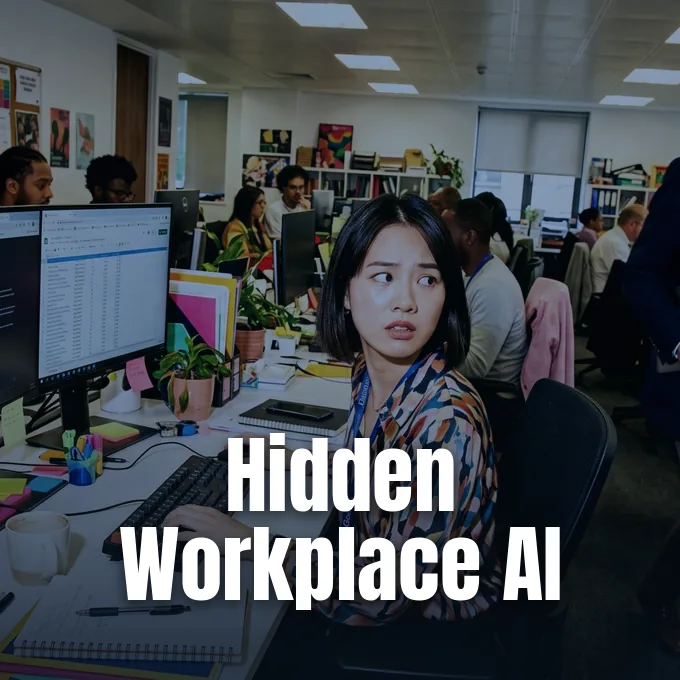
A growing share of younger employees are quietly turning to workplace AI tools to finish daily assignments, keeping their prompts secret from managers while trying to protect their jobs [1]. Recent workplace surveys show that between 29% and 42% of Gen Z workers use generative software without telling their employers, even as companies list software skills among top hiring goals [3]. While early career staff use chatbots to draft messages and analyze data, many report deep worries about being caught (engineering and finance teams show similar patterns) [4]. Instead of celebrating efficiency gains, young workers report persistent anxieties about losing their jobs or facing harsh peer judgment [2].
The Spread of Workplace AI
Research from Imperial Lifelong Learning, a division of Imperial College London, shows that 29% of Gen Z employees use automated assistants without telling bosses. That adoption rate sits 11 percentage points higher than the figure recorded for Millennials and more than doubles the rate seen among Gen X staff. The study tracked employees across five major industries: engineering, financial services, technology, energy, and healthcare. Among respondents, 59% stated that their field suffers from a noticeable skills gap. “Our findings point to trepidation amongst UK workers around the use of AI and how it will impact the economy,” said Heather Haseley, Chief Lifelong Learning Officer at Imperial Lifelong Learning [1].
Findings from Employment Hero in a report titled The AI Paradox confirm that trend across 5,454 workers and 3,290 business leaders in the UK, Australia, Canada, and New Zealand. In that study, 42% of Gen Z workers admitted to unapproved AI use, and an identical 42% said they turn in AI outputs as their own work [3].
Around 64% of UK employers place AI competence in their top five hiring criteria. Market data from PwC shows AI skills command a 34.2% wage premium in the UK, tripling within twelve months [3]. Although 37% of Gen Z workers see AI listed on entry-level ads, 23% feel unprepared for workplace AI adoption, echoing discussions that surfaced when tech leaders like Sam Altman urged Gen Z to pursue new roles in the AI era.
Why Staff Hide Their Prompts
Academic research explains why employees keep their tools private. A 2025 study led by J. A. Reif, R. P. Larrick, and J. B. Soll from Duke University, published in the Proceedings of the National Academy of Sciences, tested social evaluations with 4,439 participants. The authors found that workers who use AI face penalties regarding perceived competence and motivation. Managers who do not use AI themselves showed lower willingness to hire candidates who relied on automated tools. The social penalty affects workers of every age and gender, giving employees a concrete reason to mask their habits from supervisors who might view automation as unearned assistance [8].
Worker testimonies mirror those academic findings. Ria Kaur, a university student and jobseeker, explained that the discomfort stems from existing stereotypes about young professionals in entry-level positions. “If a young person uses AI at work, it can feel like people assume they are offloading the task or taking the easy way out,” Kaur said. In the Employment Hero poll, 52% of Gen Z respondents said using automated assistance feels like cheating [3]. Similarly, Imperial Lifelong Learning found that 35% of Gen Z workers feel dishonest when opening an AI prompt, while 26% worry about disappointing managers [1].
Career survival and peer competition also motivate secrecy. In a survey by Ivanti (an IT software company), 36% of workers kept AI tools hidden to maintain a “secret advantage” over colleagues, while 30% feared disclosure could cost them their jobs [2]. Data from Cox Business revealed that 47% of young staff worry automation could replace their roles [4].

Training Gaps in Workplace AI
The rise of unapproved workplace AI reflects a lack of office training rather than deliberate rule breaking. According to the CIPD Autumn 2025 Labour Market Outlook, 61% of UK employers allow generative AI use, but only 35% provide formal instruction or guidance. Left without structured company direction, 81% of young employees teach themselves daily AI workflows through tutorials and social media channels. “When half of Gen Z feel guilty using AI at work, and more than four in 10 are doing so without their employer’s knowledge, it shows that workplace norms have not yet caught up with employee behaviour,” said Kevin Fitzgerald, UK Managing Director at Employment Hero [3].
Survey data from Cox Business highlights an identical disconnect in the United States. Around 30% of young workers reported having no defined AI policy or being unfamiliar with existing rules. More than 60% admitted to using personal applications for work tasks, expanding shadow IT inside their companies. Jeff Breaux, executive vice president at Cox Communications, said businesses must align investments with younger staff [4].
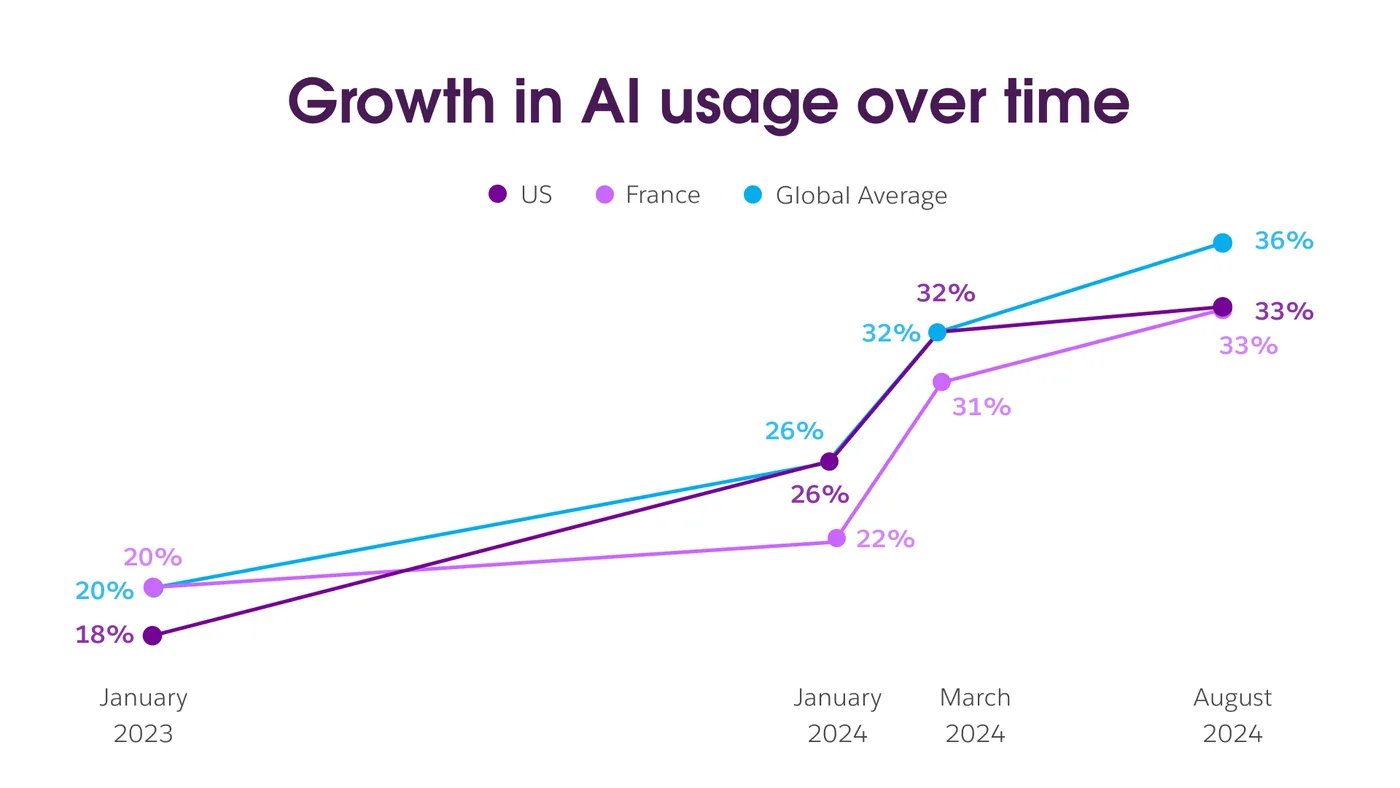
A separate UKG study noted that 70% of Gen Z workers taught themselves digital skills, while 90% believe automation saves time [4]. Slack’s Workforce Index found that 61% of desk workers have spent fewer than five hours learning AI tools (leaving them unprepared for complex tasks), even as 76% identify skill-building as an urgent personal goal [7].

Data Security and Output Errors
Secret tool use creates operational vulnerabilities when staff integrate unapproved workplace AI into daily workflows. In a study conducted by KPMG with the University of Melbourne involving 48,000 respondents in 47 nations, 57% of employees admitted hiding AI use from managers. Nicole Gillespie, a professor at the University of Melbourne, warned that pressure to hit targets tempts staff to bypass limits. The report revealed that 66% of workers do not verify AI outputs, 48% feed sensitive company data into public systems, and 56% have made work errors from AI misuse. Sam Gloede, KPMG trusted AI leader, said hidden use leaves companies vulnerable to data leaks, compliance risks, and lasting reputational damage when mistakes slip into customer materials [5].
Resistance inside organizations has turned into active pushback in some offices. A survey by San Francisco AI firm WRITER reported that 44% of Gen Z employees have pushed back against internal AI initiatives, compared to 29% across all age groups. Some staff entered proprietary data into unapproved tools or created poor outputs to make automated systems look flawed. Lilly Irani, faculty director at the UC San Diego Labor Center, told Newsweek that while AI won’t take every job, it opens the door for a major rearrangement of daily work [6].
According to WRITER, 56% of C-suite executives said AI is creating internal friction, and 28% of employees have watched software generate dangerously inaccurate material. Tommy Shaffer Shane, a researcher studying AI safety, warned that blind trust in unverified models creates systemic risks for employers [6].

Steps Toward Open Adoption
Experts emphasize that fixing hidden tool usage needs explicit office policies rather than employee discipline. Brooke Johnson, chief legal counsel at Ivanti, said businesses must assume employees are already using generative tools to boost personal output. “To mitigate these risks, organizations should implement clear policies and guidelines for the use of AI tools, along with regular training sessions to educate employees on the potential security and ethical implications,” Johnson said. When leadership establishes open communication and transparent governance, staff no longer feel compelled to conceal their daily workflows. Without clear guardrails, employees will continue turning to personal devices, creating security vulnerabilities while trying to meet aggressive production deadlines [2].
To bring automated assistance into the open, Employment Hero partnered with consultancy NoCodeLab to outline practical guidelines for business leaders. Their framework advises managers to map where knowledge lives and give staff explicit permission to experiment with approved workplace AI tools. Instead of purchasing generic software packages, organizations should target high-friction tasks and train existing teams. For employees, the guide recommends asking for clear rules, treating AI as an assistant, and maintaining full responsibility for final deliverables [3].
Slack’s Workforce Lab recommends introducing short training sessions (which Slack terms microlearning) delivered in ten-minute increments to help staff build confidence [7]. Providing safe testing environments allows employees to learn without fear of appearing unqualified to peers [5]. By replacing secrecy with structured support, companies can protect sensitive data while helping young workers thrive [3].
- ONLINE NEWS Cawley, C. (2026, November 13). Younger workers are hiding AI usage from bosses as they try to hold on to jobs. TechRadar. [Article Link]
- ONLINE NEWS Braun, S. (2025, May 29). Employees are using AI at work but hiding it from their bosses because they think it gives them a ‘secret advantage’ over their peers. Fortune. [Article Link]
- WEBSITE Shand-Baptiste, K. (2026, July 7). Almost Half Gen Z Workers Are Hiding Their AI Use. Employment Hero. [Article Link]
- ONLINE NEWS Crist, C., & Christ, G. (2025, August 11). Younger employees use AI at work but don’t want to tell their bosses, survey shows. HR Dive. [Article Link]
- ONLINE NEWS Enrico, J. (2025, April 29). Workers Are Hiding Their AI Use—Study Reveals Why That’s a Big Problem for Employers. Tech Times. [Article Link]
- ONLINE NEWS Westerholm, T. (2026, April 11). Gen Z’s AI sabotage: How young workers are rebelling out of job loss fear. Newsweek. [Article Link]
- ONLINE NEWS Rajkumar, R. (2024, November 14). Employees are hiding their AI use from their managers. Here’s why. ZDNET. [Article Link]
- ACADEMIC JOURNAL Reif, J. A., Larrick, R. P., & Soll, J. B. (2025). Evidence of a social evaluation penalty for using AI. Proceedings of the National Academy of Sciences, 122(19). [Article Link]


