





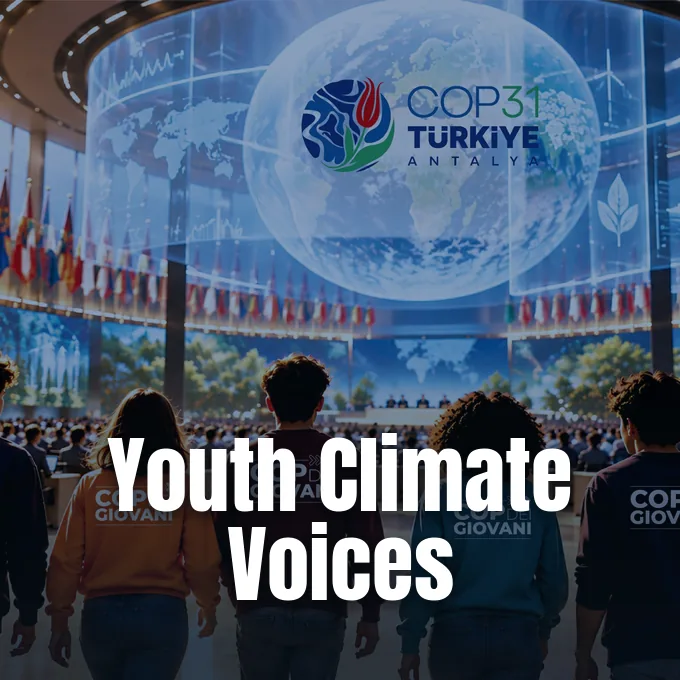
Student delegates from fourteen schools met at the Kingston Maurward campus near Dorchester to draft local environmental plans ahead of international negotiations. Organized as the first Dorset-wide Youth COP, the event brought pupils together with local leaders to connect classroom ideas with decisions facing diplomats at the COP31 summit in Antalya, Turkey. Delegates reviewed clean energy jobs and explored ways to protect community ecosystems before ecological damage grows harder to manage [1].
How Dorset Schools Organize Youth COP Sessions
Fourteen Dorset schools sent student delegations to Kingston Maurward. Maria Clarke, representing the Dorset Local Nature Partnership, said that young people must help shape policies that affect their future. “Young people are inheriting the climate and ecological emergencies that previous generations have created and need to be given a voice in jointly developing and implementing the solutions to these issues,” Clarke said during the discussions [1]. She added that the main aim was to inspire early civic participation so students do not feel powerless about global warming. Pupils compared rural bus emissions and assessed flood risks in nearby agricultural fields to give district planners concrete recommendations. Working in committee rooms, student teams drafted proposals on food resilience, tree planting, and river pollution that local councillors agreed to review.
Discussions also introduced students to emerging career paths within renewable energy and conservation projects. Giles Watts, chair of the community group Dorset CAN, said the focus stayed on building lasting local improvements. “We want to bring people together, listen to different perspectives and energise local communities and politicians to act more quickly on the pressing challenges we face,” Watts said as more than thirty local organisations set up exhibits to guide the youth delegates [2].
Simulation Frameworks and the Youth Charter
In Dorset, pupil delegations focused on county projects, whereas Italian institutions tested structured diplomatic simulations to prepare young delegates for multilateral bargaining. Fondazione CIMA organized the Italian simulation. Working with ARPA Valle d’Aosta and Fondazione Montagna Sicura, the research group created an educational model that mirrors United Nations negotiations, guiding students through formal debate and consensus building toward a joint Youth Charter [4]. Organizers avoided informal discussion and set clear debate protocols. Coastal pupils negotiated water preservation pacts with alpine classmates facing glacier loss, discovering how industrial demands clash with municipal emissions caps. These structured sessions forced participants to compromise on resource management targets before submitting final documents to regional officials.
Samuel Avalle, a student at Liceo Della Rovere in Savona who joined the Italian simulation, observed that speaking limits helped quieter participants share valid insights. “I thought giving us a time limit to present our proposals was a brilliant idea, because it really pushed us to work on being direct and concise. It was a valuable exercise in shaping our ideas and making them part of a shared discussion,” Avalle said when describing the negotiation exercises [4].
Connecting Youth COP Initiatives to COP31 Diplomacy
Italian organizers took their project straight to the Italy Pavilion at COP31 in Antalya. The joint session, titled “From Local Communities to COP31: Youth at the Core of Climate Action,” brought together representatives from UNICEF, Save the Children, WeWorld, and Hubzine Italia. Fondazione CIMA President Luca Ferraris and researcher Francesca Munerol accompanied Avalle to present findings from Italian towns alongside development workers from Kenya and Uganda [4]. Diplomats listened to regional youth clauses.
Similar efforts took root through the Youth 4 COP initiative, which launched its third session with roughly 400 participants from 110 nations. Run with The Climate Reality Project and the University of the South Pacific, the programme trained advocates ahead of the Blue Pacific Climate Leadership Summit in Suva, Fiji. Sanjay Vashist of the Climate Action Network South Asia (CANSA) and Aditya Pundir delivered policy training on the 1.5°C Paris target [3].
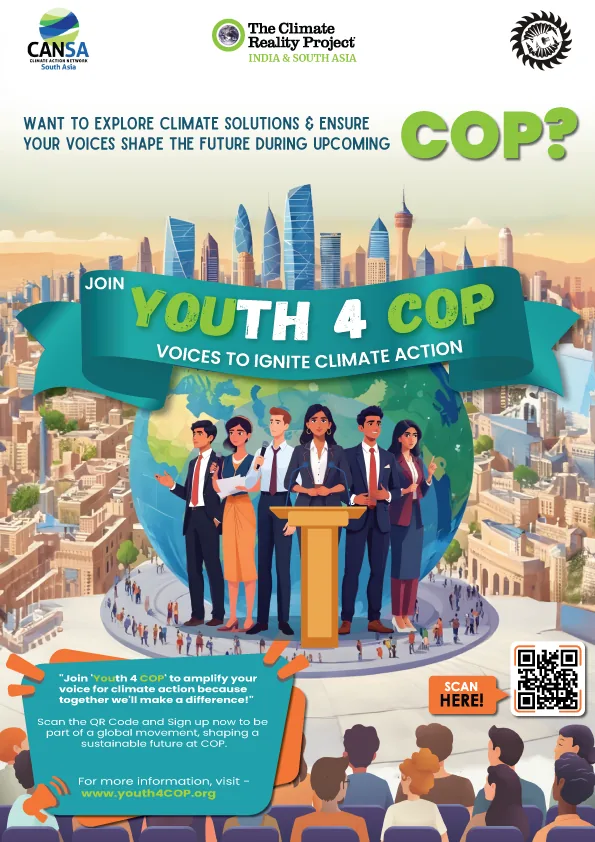
Four study modules linked climate risks to international negotiations. Speakers including Aurelie Kalinga Njimngou from the African Climate Reality Project, Thalison Correa from Brazil, Karen Aguilera from Australia, and Ari Adipratomo Wijanarko from Indonesia shared lessons on building diplomatic alliances. Geetika Srivastava led interactive training so students could track treaty texts independently [3]. These sessions prepared youth delegates to evaluate official carbon pledges with critical technical understanding.

Barriers to Influence in Global Negotiations
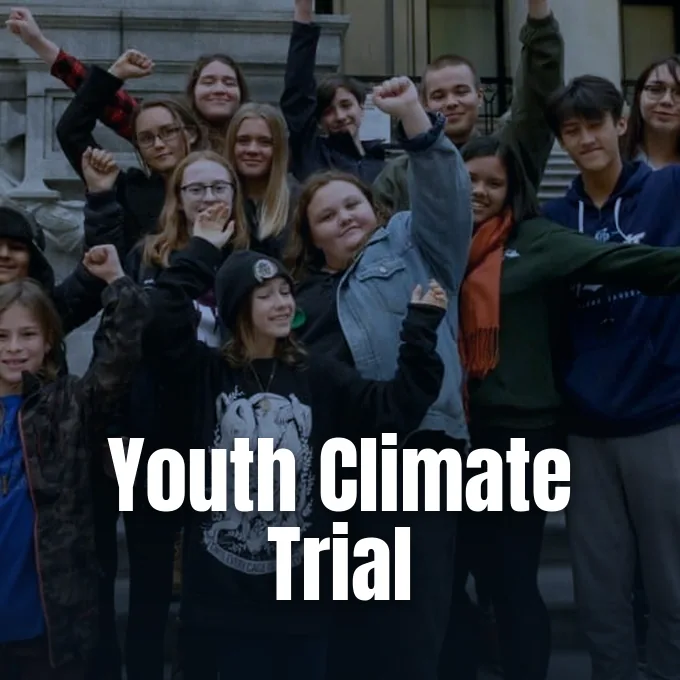
Young delegates face bureaucratic barriers when trying to change treaty language. Although Article 6 of the 2015 Paris Agreement recognized non-state actors as partners in climate governance, official decision-making stays guarded by national governments. Earlier gatherings, from COP3 in Kyoto in 1997 to COP15 in Copenhagen in 2009 and COP29 in Baku, showed that intergovernmental bargaining rarely yields ground to informal observer groups [5]. State delegates negotiate binding financial rules behind closed doors. Ministers often praise youth passion during public photo opportunities but exclude civil society delegates once confidential emission quotas are drafted, providing symbolic visibility without granting real policy influence. Without official negotiating seats, student delegations struggle to embed community priorities into the final declarations adopted by world leaders.
Youth coalitions experienced these limits during talks on the Lima Call for Climate Action, where proposed wording on human rights was mostly discarded before the vote. The United Nations Framework Convention on Climate Change (UNFCCC) operates through complex legal phrasing and fixed schedules that favor permanent state delegations. Because student delegates cycle through meetings on short rotations, youth associations struggle to build the institutional memory that seasoned diplomats rely on during treaty disputes [5].
The Risk of Performative Activism
Public interest grew significantly after Greta Thunberg started the Fridays for Future strikes, encouraging thousands of young people to demand accountability outside summit venues. Street demonstrations prompted international agencies to open youth pavilions and invite student speakers to ceremonial plenary sessions. Researchers question whether such appearances produce measurable environmental results or merely offer convenient publicity for host governments [5]. Digital alter-activism relies heavily on social media and horizontal direct action, habits that contrast with the cautious compromises of ministerial bargaining. When youthful energy is channeled into background clerical duties or celebratory stage panels, delegates lose the independent leverage required to challenge slow decarbonization schedules.
Assessments published by the World Resources Institute and the United Nations Environment Programme indicate that government pledges consistently fail to match necessary emissions cuts. In that setting, inviting youth delegates without granting voting power can degenerate into youth washing, where institutions celebrate diversity while dodging binding commitments. Constituency networks like YOUNGO attempt to equip young participants with negotiation training, but professionalizing youth voices inside diplomatic forums carries risks of political co-option [5].
Can student delegates overcome these political traps while remaining true to grassroots environmental goals? Youth delegations experience friction every year over whether to pursue official accreditation or independent activism. While some delegates believe that learning insider jargon helps them influence text amendments, others argue that working within polite protocol blunts public urgency [5].
From Local Projects to Measurable Outcomes
For young citizens, turning climate worry into action needs practical municipal work. Samuel Avalle said that while many teenagers understand planetary heating, few receive guidance on concrete tasks they can carry out in their home towns. “I often see that people my age are aware of this problem, but do not really take action,” Avalle said when evaluating the Savona workshops [4]. He pointed out that although young people hear about the climate crisis constantly, schools rarely teach the municipal budgeting and zoning skills needed to intervene in district planning decisions. By studying river catchments and building energy use directly, students learn how to convert general ecological concern into specific council resolutions that local officials must answer.
Shifting attention back to local adaptation allows student groups to achieve tangible gains regardless of diplomatic impasses in conference halls. When grassroots organizers in Dorset bring fourteen schools together to review local food security and river runoff, the resulting targets can be monitored by district councils directly. Similar community initiatives in Italy, Fiji, Kenya, and Uganda prove that bottom-up data collection influences municipal budgets faster than global treaty declarations [5]. Through these practical hometown projects, young delegates transform symbolic presence into durable, community-level environmental protection.
- ONLINE NEWS Stafford, S. (2026, November 13). Schools discuss climate change at Dorset Youth COP meeting. BBC News. [Article Link]
- ONLINE NEWS Stafford, S. (2026, November 13). Climate action discussed at youth COP meeting. Yahoo News Canada. [Article Link]
- WEBSITE Youth 4 COP. (2026, March 27). Voices to Ignite Climate Action. Youth 4 COP. [Article Link]
- WEBSITE CIMA Research Foundation. (2026, November 9). From local experiences to COP31: the Youth COP at the climate conference. CIMA Research Foundation. [Article Link]
- ONLINE NEWS Manisha. (2024, December 7). Youth Activism at COPs – Symbolism vs Real Climate Action. The Geostrata. [Article Link]
APA 7: PerEXP Teamworks. (2026, November 14). Young Climate Delegates Bring Youth COP Proposals to COP31. PerEXP Teamworks. https://perexpteamworks.com/en/youth-cop-climate-proposals-cop31/


