





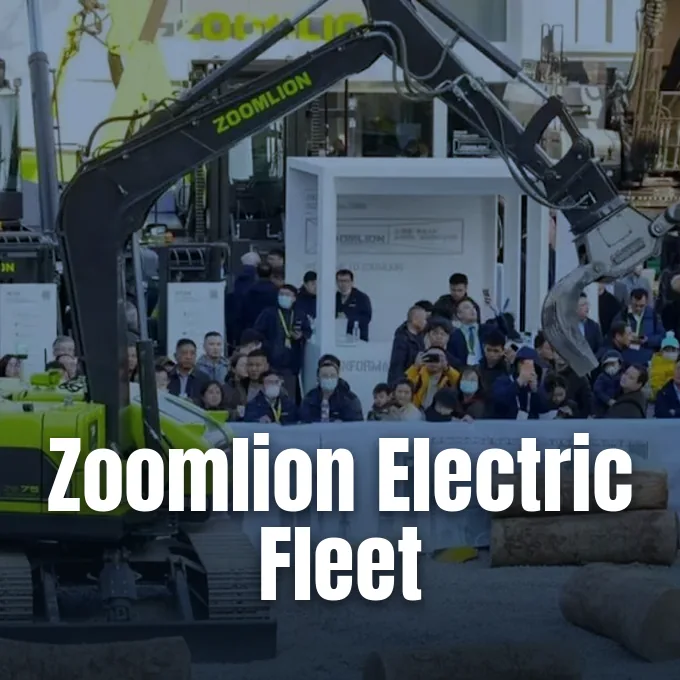
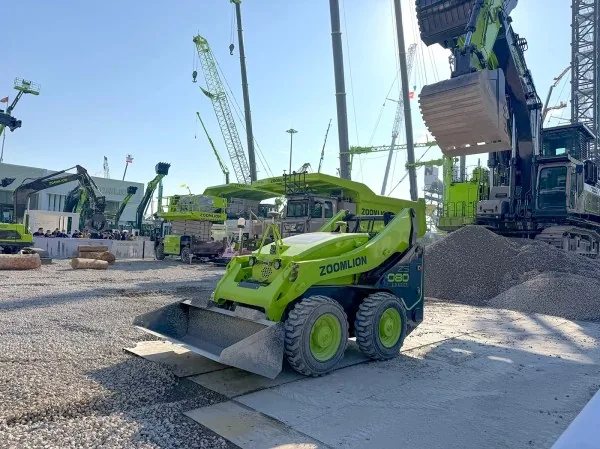
Zoomlion showed more than 60 electric and smart heavy machines at the bauma China 2026 trade fair, bringing cabless loaders, hybrid haulers, and driverless diggers to Shanghai [1]. The maker brought these units to test what it calls “physical AI” on active job sites. By pairing battery power with self-driving code, Zoomlion electric machinery aims to finish standard digging tasks without human drivers sitting inside a cab.
New Models at Bauma China
The showcase at bauma China 2026 closed out a busy year for the brand, presenting heavy machines across eight product categories. Reporter Jo Borrás wrote for Electrek that the outdoor display drew large crowds to watch robotic diggers move next to hybrid haulers. Zoomlion shared images through Plant and Equipment. That model carries no cab [1].
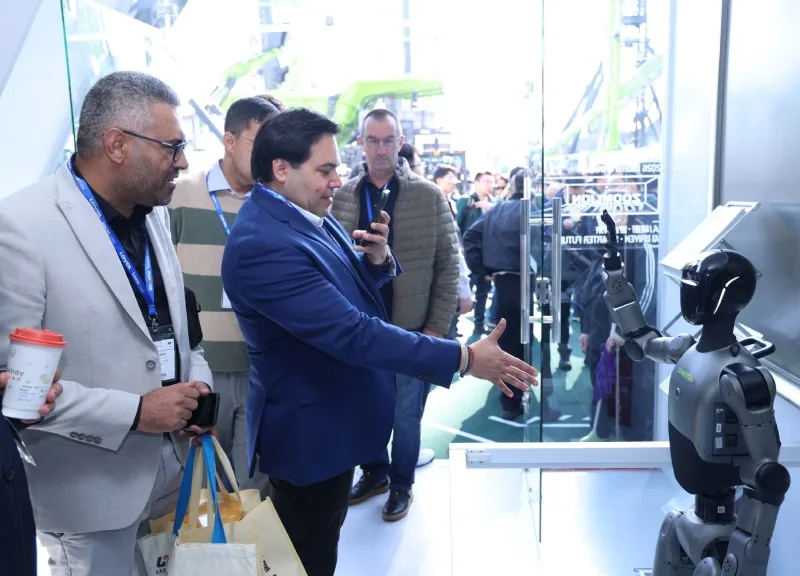
Zoomlion also brought bipedal robots to walk among the heavy diggers. The company said that its Z01 and Z03 humanoid units already work inside its factories, assembling a complete machine asset every six minutes on assembly lines. On the show floor, the Z01 robot walked past heavy loaders to greet visitors and show how plant robotics tie into field rigs. It remembers visitors through facial recognition code [1].
The headliner of the display was a cabless digger that relies on electric motors and remote computer controls. Dropping the cab cuts weight and alters the frame of the chassis, allowing the vehicle to balance heavy lithium battery packs low between the steel tracks. Because human drivers do not sit inside the vehicle, contractors can assign the driverless rig to hazardous quarry slopes, trenching jobs near unstable ground, or contaminated demolition zones without putting crew members in direct danger. Remote teams track work from a distance while the digger clears trenches and shapes berms. The design prevents roll-over injuries on steep grades [1].
Zoomlion Electric Machinery Vision and Sensors
The cabless digger relies on an embodied operating system called RobotOps, which runs a vision-language-action (VLA) model to direct movements. Zoomlion said the hardware setup provides what it terms “a 540-degree view” of the surrounding job site through an array of digital sensors. While that phrasing sounds like promotional jargon for better views than standard cameras, the onboard hardware combines optical lenses, laser scanners, and depth sensors to build a three-dimensional map of the worksite in real time. This sensor suite lets the robotic system spot obstacles, measure distances, and classify dirt piles in dust, heavy rain, or harsh midday sun without any human help. It tracks nearby rigs to avoid crashes on crowded ground [1].
Spatial data flows into the company’s Zbrain platform, which translates raw point clouds into bucket and boom coordinates. It calculates the exact position, orientation, and dimensions of workpieces before the bucket teeth touch the ground. If a haul truck backs up or a worker approaches, the software recalculates its swinging arc within fractions of a second [1].
Human drivers often struggle to see behind counterweights when steering large diggers across busy job sites. The robotic vision system eliminates those blind spots by maintaining an unbroken perimeter around the chassis. The machine can work steadily through dark night shifts without powerful floodlights blinding other drivers on the site. Sensors gauge depth and distance accurately in thick dust [1].

Autonomous Digging and Task Workflows
Moving soil efficiently on job sites needs practical digging experience instead of simple route planning. Zoomlion trained its Zbrain system on millions of hours of field data gathered from thousands of real construction jobs. The software absorbed tens of thousands of field scenarios, learning how different soil types shift when a steel bucket cuts into wet clay, loose sand, or packed river gravel. By analyzing these past jobs, the model chooses the right digging angle to fill the bucket on the first pass [1].
Field workers do not have to write code or input manual coordinates to assign tasks. The cabless machine can interpret plain natural-language job instructions given by site managers, such as opening a foundation trench or grading a hillside slope. The system autonomously deconstructs complex assignments into simple step-by-step workflows, scans the surrounding terrain, classifies the soil, and selects optimal digging and gripping paths. Deploying Zoomlion electric machinery in this manner allows a single supervisor to oversee multiple driverless diggers at once [1].
Automated task handling extends beyond basic earthmoving. The system can execute loading jobs, slope dressing, brick paving, and material handling without human steering. Electric motors deliver instant torque to the hydraulic pumps, allowing smooth bucket control that reduces component wear and extends battery life over long shifts. Quiet electric drives also allow round-the-clock digging near city streets [1].
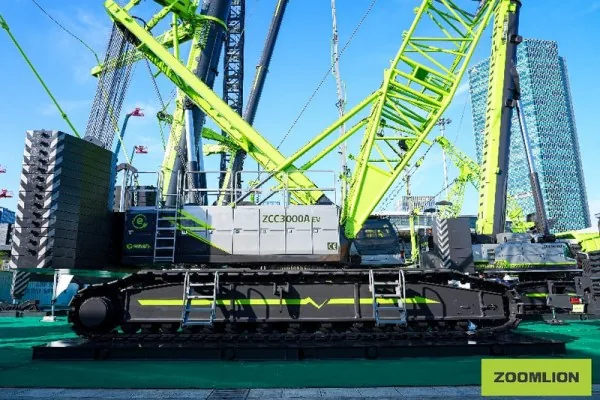
Producing Zoomlion Electric Machinery at Scale
Backing these driverless concepts is one of the largest industrial builders in the world. Zoomlion Heavy Industry Science and Technology Co., Ltd. operates its global headquarters from the Zoomlion Science Park in Changsha, Hunan. The maker ranks as China’s largest and the world’s fifth largest construction machinery enterprise. It ranks fifth globally [2].
The assembly of Zoomlion electric machinery relies on automation inside its Chinese plants. Factory lines use Z01 and Z03 bipedal humanoid robots to assemble equipment assets at a pace of one unit every six minutes. During live demonstrations at the trade show, the Z01 biped moved around hall visitors by adjusting motor torque on contact and steering around nearby crowds in real time. It used facial recognition to remember individuals while greeting onlookers with hand waves and fist bumps [1].
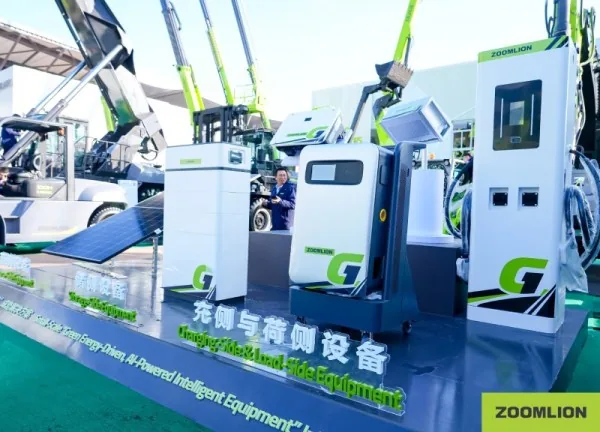
This manufacturing capacity supports a wide catalog of heavy earthmoving and municipal vehicles. Zoomlion produces bulldozers, truck-mounted concrete pumps, mobile cranes, tower cranes, asphalt pavers, pile foundation rotary drilling rigs, and heavy road rollers. The company also supplies city fleets with garbage compactor trucks, street sweepers, snowplows, and fire apparatus. In agricultural sectors, it manufactures farm tractors, sugarcane harvesters, and combine harvesters. Outside its main name, the enterprise sells machinery under brand labels including Puyuan and Zhongbiao, while divisions like Hunan Machine Tool Works and Hunan Zoomlion International Trade Co Ltd handle production and exports [2].
Corporate Roots and Global Expansion
Zoomlion did not start as a robotics firm. The company was founded in 1992 as Changsha Hi-tech Development Area Zoomlion Construction Mechanical Industry Company, focusing its early manufacturing on concrete pumps. The firm grew out of a government subsidiary founded in Beijing in 1956 as part of the Ministry of Machinery Industry and the Ministry of Construction. Early growth involved merging smaller state institutions, including the former Concrete Machinery Research Office and parts of the Changsha Construction Machinery Research Institute, into a unified industrial producer under the central government [2].
The maker shifted to public ownership when it completed an initial public offering on the Shenzhen Stock Exchange on October 12, 2000, shortly after acquiring ISO9001 certification. The IPO took place in 2000. Foreign expansion began soon after, when Zoomlion purchased the British firm Powermole in the early 2000s. In 2008, the company completed another foreign purchase by acquiring Italian concrete machinery maker Compagnia Italiana Forme Acciaio SpA (Cifa) with Goldman Sachs, Mandarin Capital Partners, and Hony Capital [2].
Global operations grew further when Zoomlion entered the Turkish market in 2007, opening a branch in 2018 and setting up an office in Tuzla, Istanbul, in October 2022 before expanding to Ankara, İzmir, and Adana. In August 2014, the firm bought 60 percent of Chery Heavy Industry for 2.08 billion yuan to modernize its farm equipment business. The business also faced challenges, including a 2013 dispute with Chinese newspaper New Express after reporter Chen Yongzhou alleged fraud, which caused a 9 percent drop in stock price. Later, to recover from a 929 million yuan deficit reported in the 2015/16 period, company leadership divested the environmental sanitation group in May 2017 for 11.6 billion yuan, roughly 1.7 billion in US dollars [2].
- ONLINE NEWS Borrás, J. (2026, November 27). Zoomlion shows off SIXTY electrified, AI equipment assets at bauma 2026. Electrek. [Article Link]
- WEBSITE Wikipedia contributors. (n.d.). Zoomlion. Wikipedia, The Free Encyclopedia. [Article Link]


