




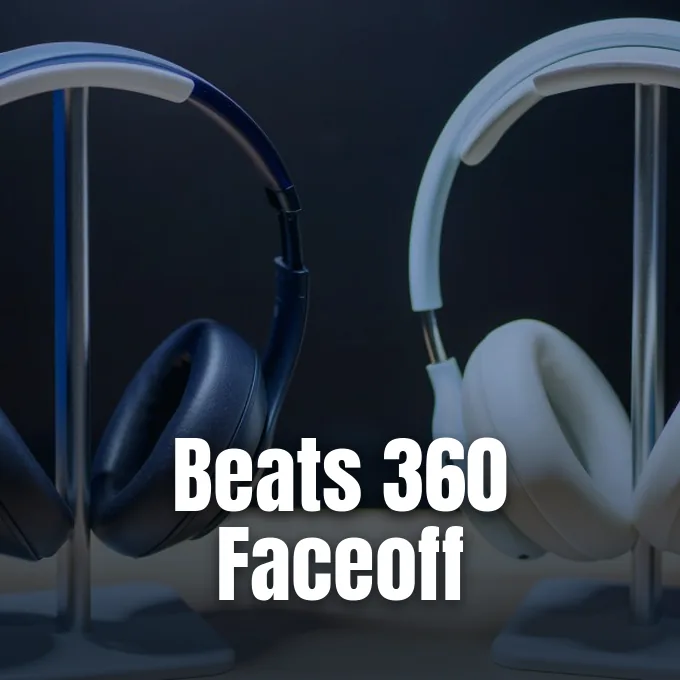
Apple introduced the Beats 360 on September 22, 2026, marking the first over-ear release from Beats since the Beats Studio Pro arrived in 2023 [1]. Beats decided not to retire the older model, choosing to keep both headphones in stores while retailers slashed prices on the earlier hardware [3]. Shoppers face a clear choice: pay full retail for modular parts and stronger active noise cancellation, or save money on a proven set of cans that still handles wired playback better than the newcomer [1].
Beats 360 Pricing and Studio Pro Discounts
The Beats 360 arrived at a launch price of $349.99 in the United States and £299.95 in the United Kingdom, selling without discounts in Black, Cloud, Pink, and Sky. To make space on store shelves, Apple dropped the official UK list price of the older Studio Pro to £249.95. The shift established two distinct pricing tiers within the lineup [2].
Retailers cut prices even deeper on major storefronts. Writing for 9to5Mac, Michael Burkhardt reported that Amazon dropped Studio Pro prices to between $199 and $249 depending on the colorway. Black, Deep Brown, and Sandstone options fell to $199, Navy dropped to $216, while Khaki, Light Blue, and Sand Gray stayed at $249 [1]. Fazlur Rahman pointed out on Tutorsbot that having the newer pair land at $349.99 while the older version lists higher on paper creates an unusual pricing dynamic, but online discounts flip the math for budget shoppers who can pocket up to $150 in savings at checkout [5].
Those savings make the Studio Pro an easy alternative for price-sensitive buyers [1]. Apple sells the older model in four standard finishes, keeping it widely stocked for holiday shoppers [3].
Noise Cancellation Performance
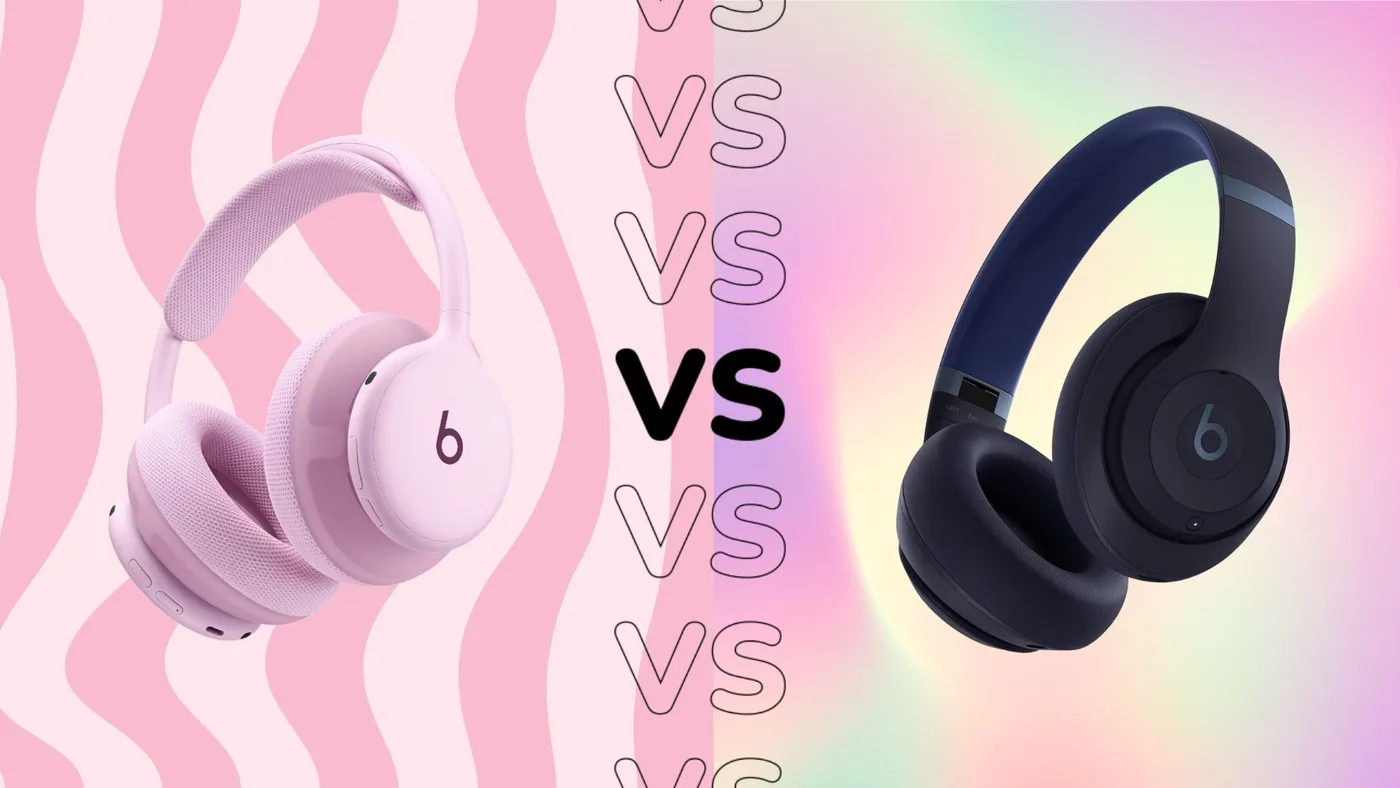
Beats built the newer pair around an 8-microphone system, claiming the acoustic hardware delivers up to 1.75 times stronger active noise cancellation than the Studio Pro. Mark Folksman reported for Sound Mavericks that listening tests showed clear gains on higher-frequency sounds (such as cooling fans and office chatter) where the older pair often fell short [3]. The multiplier reflects an average gain across the entire frequency band rather than a uniform doubling at every pitch [5].
Outdoor tests exposed further differences in how both pairs handle changing environments. Jessica Gorringe of Trusted Reviews reported that the Studio Pro struggled to suppress wind gusts during outdoor testing, an issue the revised acoustic housing on the Beats 360 aims to cut down [2]. Both pairs provide a Transparency mode to let outside sound pass through, but the execution differs between them. Michael Burkhardt noted during his tests that voices sounded muffled through the Studio Pro, forcing him to take the cups off to hold conversations, while the newer pair let speech pass through naturally without needing removal [1].
Sound balance also splits the two generations. Adam Levell reported on iTech Level that SoundGuys gave the Beats 360 a 7.3 out of 10 score, cautioning that sound turns noticeably bass-heavy when noise cancellation runs [4]. Listeners who want a flatter response can stick with the custom 40 mm active drivers inside the older model. Both options include Personalized Spatial Audio with dynamic head tracking for compatible media [3].


Hardware Design and Sweat Resistance
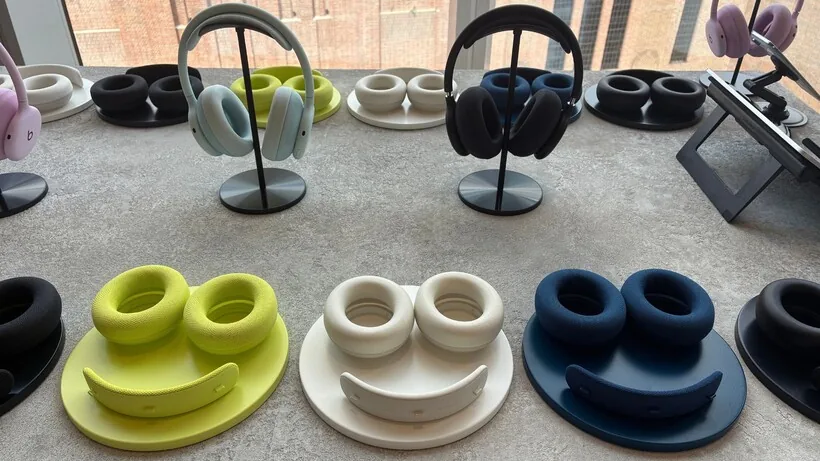
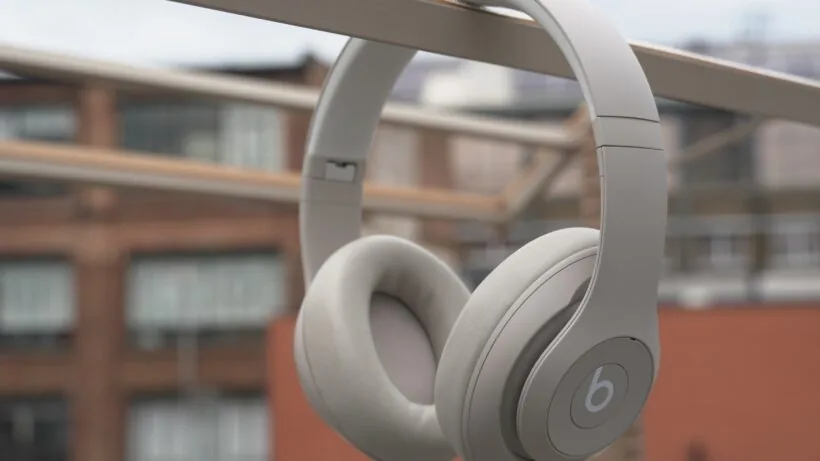
Physical hardware marks a sharp divergence between the two generations. The older pair features fixed UltraPlush engineered-leather cushions mounted on a folding frame with metal sliders, allowing the cups to collapse into a compact carrying case for travel [3]. The Beats 360 skips folding hinges completely, using a solid headband that takes up more space in a backpack [1]. In return, it introduces tool-free modular pads on both the earcups and headband [3]. Apple sells replacement Cushion Kits for £9.95 at launch, though prices will rise to £49.95 later [2].
The modular setup opens up customization possibilities across the product line [3]. Buyers can choose breathable Performance Knit cushions in six colors, including Volt (a vibrant yellow), or opt for UltraPlush kits in Black or Cloud [2]. Internal sensors inside the cups detect which cushion is attached, automatically adjusting the sound tuning and noise cancellation profile to match the seal [3]. When pads wear down or crack after years of use, owners can swap them out in seconds without buying new headphones [1].
Durability during exercise adds another practical dividing line. Fazlur Rahman pointed out that an IPX4 rating protects the newer cups against water splashes from any direction for up to ten minutes, making them resilient against sweat during heavy workouts [5]. The Studio Pro carries no water-resistance rating, meaning moisture can damage internal parts [3]. While official specs list both headsets at about 260 grams, SoundGuys weighed the newcomer at 295 grams [4]. That extra weight accommodates separate chips and batteries inside each cup, with an internal cable used only for power delivery [2].
Wired Audio for In-Flight Listening
Wired connections give the Studio Pro a clear advantage over its newer sibling [3]. The older headset keeps a 3.5 mm jack that plugs into airplane seat-back screens without requiring wireless adapters. It also plays audio through the analog cable even when the battery is completely flat. In addition, a built-in DAC supports lossless USB-C playback up to 24-bit at 48 kHz [4]. Listeners can cycle through three dedicated sound profiles: Beats Signature for music, Entertainment for movies, and Conversation for podcasts [3].
The Beats 360 drops wired listening entirely, adopting a wireless-first approach. Its USB-C port handles charging alone, meaning it can’t transmit digital music from a computer or phone [4]. Travelers who want to watch in-flight movies must purchase a third-party Bluetooth transmitter to connect to seat screens. The omission forces users to rely exclusively on wireless signals wherever they go [1].
Gaming reinforces that functional divide across platforms. Adam Levell noted on iTech Level that the Studio Pro plugs into PlayStation 5 and Xbox controllers through its 3.5 mm cable, while the USB-C link provides latency-free sound and microphone input on computers. The newer pair connects only through Bluetooth, leaving users with an estimated delay (roughly 150 to 200 milliseconds) that hurts competitive play. While Game Mode cuts latency on supported Apple devices, the newer pair can’t link to home console controllers at all [4].
Why Beats 360 Fits Mobile Listeners
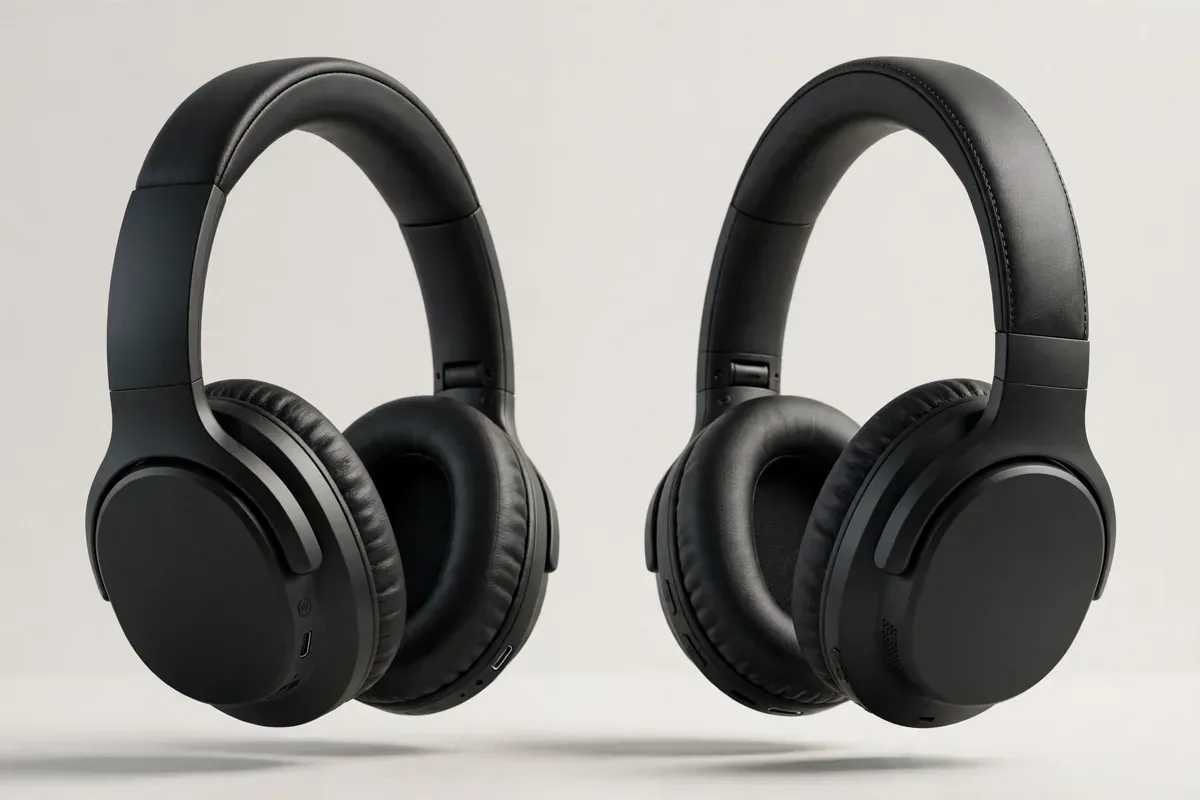
Battery specs tell two different stories depending on whether active noise cancellation stays on during listening sessions. Beats rates the Studio Pro at up to 40 hours with processing turned off, but that rating drops to about 24 hours when cancellation runs. In contrast, the Beats 360 promises up to 32 hours with active cancellation running, delivering longer stamina in the mode most buyers use daily [3]. During real-world travel tests, SoundGuys found that a six-hour flight with cancellation used only 14 percent of the battery capacity [4]. For quick top-ups, the Studio Pro delivers up to four hours of playback from a ten-minute charge, while the newcomer returns one hour from five minutes on a USB-C cable [2], [3].
Ecosystem features also tilt toward the newer flagship for Apple users [1]. Both headphones run Class 1 Bluetooth 5.3, providing one-touch pairing and Find My integration on Apple hardware, as well as Google Fast Pair on Android [3]. The Beats 360 adds automatic switching across iCloud accounts, allowing sound to move seamlessly between an iPhone, iPad, and Mac as tasks change. The older pair lacks that automated switching, requiring manual connection steps when switching between devices [1].
Does the older model still justify a purchase in late 2026? Michael Burkhardt concluded that buyers who value modern ecosystem creature comforts and the best noise cancellation should pick the newer hardware. The sweat-resistant build and modular cushions make it far more capable for daily commutes and fitness routines. Yet frequent travelers who want analog jacks for seat screens or gamers who need zero latency will find the discounted Studio Pro a smarter buy. Saving up to $150 seals the deal for anyone who still values a reliable cable [1].
- ONLINE NEWS Burkhardt, M. (2026, November 14). Beats 360 vs Studio Pro: Here’s which Beats headphones you should buy. 9to5Mac. [Article Link]
- ONLINE NEWS Gorringe, J. (2026, September 22). Beats 360 vs Beats Studio Pro: What’s new? Trusted Reviews. [Article Link]
- WEBSITE Folksman, M. (2026, October 22). Beats 360 vs Beats Studio Pro: Which should you buy? Sound Mavericks. [Article Link]
- WEBSITE Levell, A. (2026, October 4). Beats 360 vs Studio Pro (2026): Which to buy, side by side. iTech Level. [Article Link]
- WEBSITE Rahman, F. (2026, October 31). Beats 360 vs Beats Studio Pro: ANC, battery, build test. Tutorsbot. [Article Link]


