





What drives scientific inquiry when familiar theories reach their limits? In October 2026, a group of 100 prominent scientists identified the biggest science questions confronting modern labs in a survey compiled by researchers at The New York Times. Their answers span cosmic geometry, biological beginnings, artificial intelligence, and the inner workings of conscious thought. Rather than treating these unsolved puzzles as distant enigmas, research teams view them as practical guides for global funding priorities [1].
What Are the Biggest Unanswered Questions in Science?
The most pressing unsolved problems center on cosmic matter, biological origins, and conscious thought, leaving core mechanisms unexplained in multiple fields [1]. Century-old frameworks explain how stars burn and how genetic code copies itself, but they cannot show how lifeless matter turned into self-replicating cells or why ninety-five percent of the universe emits no light [2]. When Christopher Clark reported on the survey for Techawave, he explained that experts in various fields agreed on several urgent hurdles. These challenges include uniting conflicting physical laws, discovering how memory stores experience, and setting ethical guardrails for machine intelligence before artificial systems outpace human oversight. Each unsolved problem tests the boundary where current tools fail [1].
Basic questions also touch daily human life and survival. Researchers want better treatments for presently incurable conditions like cancer and Alzheimer’s disease, while biologists search for cellular pathways that govern aging. Progress on these fronts could extend human lifespan and ease heavy medical burdens [1].
Research bodies treat these unanswered puzzles as a shared roadmap for the coming decades. Dr. Hannah Lindqvist observed in Unanswered that stubborn unsolved problems offer the greatest chance for scientific breakthroughs because they expose deeper flaws in standard models. Instead of discouraging students, stubborn mysteries show that vast territories of nature still await further study [3].

How Do Cosmic Forces Hide Missing Matter?
Invisible mass and cosmic acceleration hide from direct detection because dark matter and dark energy interact almost exclusively through gravity rather than light. All the luminous matter that telescopes see—including planets, stars, gas clouds, and cosmic dust—makes up less than 5% of the universe. The rest divides into two vast components: dark matter (about 27%) acts as an invisible web holding galaxies together, while dark energy (about 68%) accelerates cosmic expansion. Glanze Patrick reported in Science Times that galaxies spin much faster than visible mass predicts, proving that unseen gravity keeps outer stars from flying into deep space. Without this gravitational glue, spiral galaxies could never have formed or kept their familiar shapes [2].
Physicists propose three main candidates to account for this missing mass. These proposals include Weakly Interacting Massive Particles (WIMPs), tiny light particles called axions, and Massive Compact Halo Objects (MACHOs) such as faint primordial black holes. Decades of searches have not yet confirmed any candidate particle [2].
Underground detectors and collider facilities continue searching for these elusive particles, reflecting ongoing efforts in particle physics and laboratory experiments aimed at testing proposed matter candidates. Deep buried tanks wait for rare particle collisions shielded from cosmic rays, while space telescopes track gravitational lensing to map unseen cosmic structures. Discover Magazine noted that finding dark matter particles would reshape modern cosmology and rewrite core gravitational laws [2].
Top Science Questions in the Search for Life
Solving how living cells emerged from non-living chemicals stands among the top science questions occupying modern biologists and chemists. Geological evidence indicates that simple chemical compounds formed the earliest self-replicating molecules roughly four billion years ago, yet the exact steps from chemistry to biology remain missing. One camp of researchers argues that life began in warm volcanic pools rich in minerals, whereas rival experts point to meteorites striking primordial waters. Lab experiments have recreated amino acids and basic organic units since the mid-twentieth century, but assembling functional genetic polymers like DNA inside protective membranes without biological enzymes remains an unsolved challenge [3]. Science has not yet observed the sudden birth of a living cell [2].
More than half a century after the classic primordial soup experiments, researchers still lack a consensus pathway showing how simple chemistry organized into early metabolic cycles. Some chemists consider organic reactions under ancient air conditions the hardest puzzle in chemistry [3]. Without a working model on Earth, identifying alien life signatures elsewhere in the cosmos becomes far harder [1].
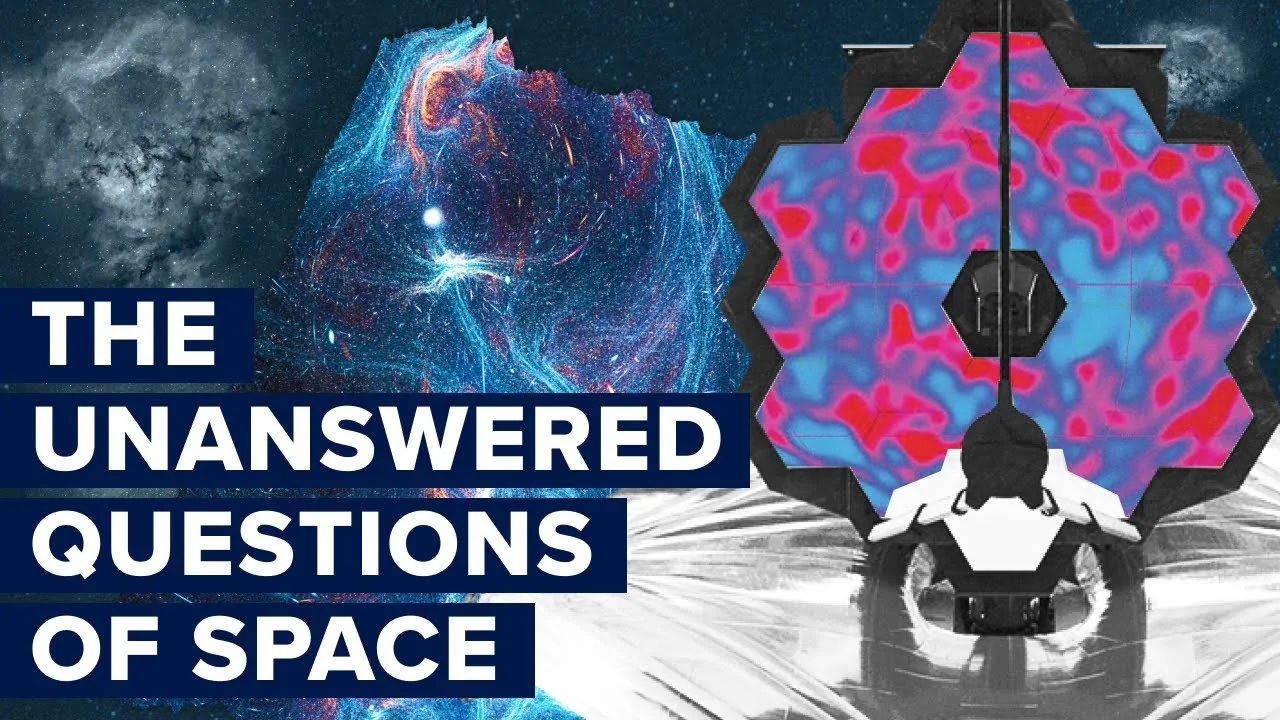
Biologists look toward distant planets and moons to discover whether biology needs very narrow planetary settings. The survey showed that finding microbial life outside Earth would reveal whether our biochemistry is unique or an inevitable cosmic outcome [1]. Every discovery of organic molecules on comets and planetary surfaces refines these ongoing planetary origin models. Until direct evidence emerges, our planet remains the only known home for living organisms [2].


How Do Brain Circuits Generate Human Awareness?
Distributed neural networks produce conscious experience by coordinating signals between separate brain regions, though researchers still cannot pinpoint how subjective awareness arises [3]. Brain scans reveal electrical activity and blood flow changes in precise detail, but they do not explain how physical impulses transform into subjective thoughts, personal memories, or vibrant emotions. Glanze Patrick said that cognitive scientists and philosophers continue to debate the biological basis of mind, asking why human experience feels like anything at all. Even common mental phenomena resist easy explanation, as researchers still do not understand why humans dream or what biological purpose nighttime dreams serve during restorative sleep cycles [2]. The boundary between electrical firing and felt sensation remains open to ongoing study [3].
Basic questions about brain shape also continue to puzzle neurological experts. For instance, researchers admit they have no definitive answer for why the human brain developed two distinct hemispheres. Similarly, neuroscientists still debate whether cognition and emotion operate as separate mental systems or deeply linked networks [3].

Investigators use advanced imaging and cellular studies in mammalian brain cells to trace how synaptic damage contributes to advanced cognitive decline. Understanding these neural pathways helps doctors develop targeted treatments against Alzheimer’s disease and other brain conditions that rob patients of memory. Insights into human neural circuitry also inform computer science, guiding researchers who build artificial intelligence models meant to mimic biological reasoning [1].
Biggest Science Questions Facing Quantum and Cosmic Models
Reconciling the subatomic laws of quantum mechanics with general relativity forms another of the biggest science questions confronting modern theoretical physics. These two pillars describe different realms with mathematical precision, yet their equations clash badly inside black hole centers and at the earliest instant of the Big Bang [1]. In Unanswered, Dr. Hannah Lindqvist pointed to another profound cosmological mystery: the puzzling survival of matter after cosmic creation. Standard physical models predict that equal amounts of matter and antimatter were forged in the Big Bang, meaning they should have completely canceled each other in a flash of pure energy. Instead, a slight asymmetry allowed matter to endure, forming every galaxy, planet, and living creature in our visible cosmos [3].
Particle physicists search for the mechanism behind this matter bias at international centers like the Large Hadron Collider. Leading hypotheses explore concepts like supersymmetry and neutrino properties, but experimental proof remains incomplete. Researchers still do not know what tipped the scales [3].
Physicists also struggle to explain why physical constants seem finely tuned to allow stars, chemistry, and life to exist at all. If fundamental values like gravitational strength or electromagnetic force varied even slightly, atoms could never hold together to form stars, planetary systems, or complex living matter. Many physicists consider multiverse hypotheses, where countless alternate universes contain different physical rules, though no measured data currently confirms the concept. The multiverse idea remains an unproven model rather than an established scientific fact [3].
Research Agendas and Environmental Challenges for 2026
Scientific inquiries extending beyond cosmic theories also demand concrete practical answers to environmental crises threatening global people. The survey of one hundred scientists showed that climate change mitigation and transitioning energy grids to fully renewable sources by mid-century represent urgent targets. Researchers must also design effective strategies to preserve global biodiversity against habitat loss and pollution. Meanwhile, computer scientists evaluate the ethical implications of artificial general intelligence, asking how autonomous reasoning systems will reshape human labor and scientific discovery itself. Addressing these environmental and digital dilemmas needs coordinated global action across academic centers and government agencies [1].
Academic bodies and funding agencies worldwide plan to use these survey findings to guide long-term grants. By directing financial resources toward stubborn problems, groups hope to accelerate breakthroughs in physics, medicine, and computing. Clear targets keep research teams focused on shared global priorities [1].
Dr. Evelyn Reed, a theoretical physicist at Stanford University who took part in the survey, framed these grand inquiries as an open invitation for early-career researchers. “These aren’t just abstract puzzles; they are the frontiers of human knowledge,” Dr. Reed said. “By identifying these grand challenges, we hope to inspire a new generation of researchers and foster the international cooperation necessary to tackle them.” Solving even a fraction of these questions could unlock new technologies and help shape our collective future [1].
- ONLINE NEWS Clark, C. (2026, October 5). 100 Scientists Name Top Unanswered Science Questions for 2026. Techawave. [Article Link]
- ONLINE NEWS Patrick, G. (2025, November 3). The Biggest Unanswered Questions in Science (That Still Baffle Researchers). Science Times. [Article Link]
- WEBSITE Lindqvist, H. (2026, August 12). Hardest Unsolved Questions in Science Today. Unanswered. [Article Link]
- ONLINE NEWS The New York Times. (2026, October 5). What Are the Biggest Questions in Science Today? 100 Scientists Weigh In. [Article Link]
APA 7: TWs Editor. (2026, October 6). Researchers map the biggest science questions facing modern labs. PerEXP Teamworks. https://perexpteamworks.com/en/biggest-science-questions-facing-researchers/


