






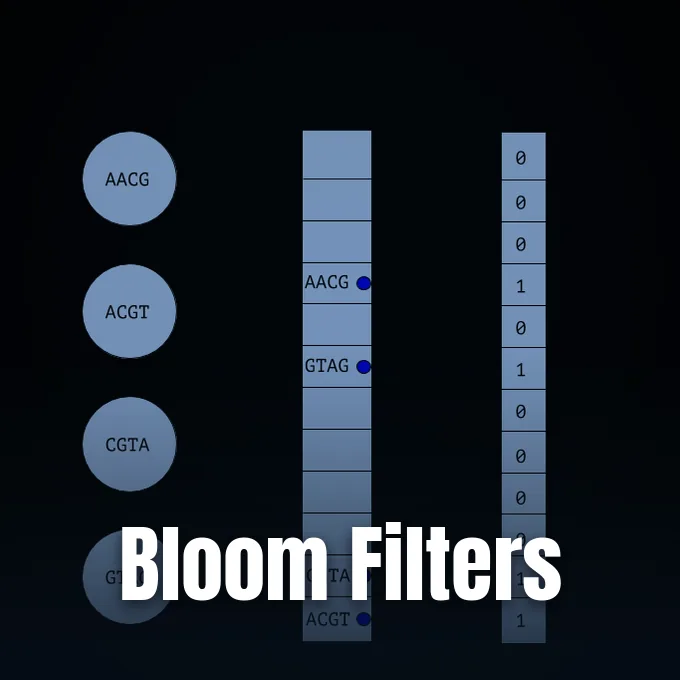
A Bloom filter provides rapid membership testing for large collections while keeping memory demands exceptionally small across modern networked systems. When a program queries the filter, the routine passes the search key through multiple hash tools and inspects whether every corresponding bit in an array is set to one. If even a single bit remains zero, the queried item is definitely not in the collection. When every inspected bit equals one, the key is probably present, though rare false positives can still happen. Computer scientist Burton Howard Bloom conceived this approach in 1970 to replace bulky lookup tables in memory-constrained computers [9].
- What Is a Bloom Filter?
- Mathematical Trade-Offs in False Positive Rates
- How Hash Functions Guide Bit Vector Operations
- Handling Deletion with Counting or Cuckoo Variants
- Real-World Systems Adopting Bloom Filter Architecture
- When Systems Abandon or Replace Probabilistic Arrays
- Genomics and Biometrics Applications
- Key Architectural Lessons from Bloom Filter Design
What Is a Bloom Filter?
Burton Howard Bloom published the concept in 1970 to solve dictionary lookup bottlenecks during hyphenation tasks. In his paper entitled Space/time trade-offs in hash coding with allowable errors, Bloom addressed dictionary storage constraints. A hyphenation routine for 500,000 words needed quick checks because nine out of ten entries followed regular rules, while the remaining tenth needed disk reads [9].
While standard error-free hash tables demanded far more random-access memory than early computer designs could supply, Bloom realized that accepting rare false positive errors enabled huge memory savings without causing false negatives. Under this trade-off, an allocation using only 18% of the space needed by an ideal hash table eliminated 87% of unnecessary disk accesses. Engineers often examine how Bloom filters work to balance fast query speeds against limited memory allocations. Deterministic tables cannot match these compact savings because exact storage designs must retain entire key strings or explicit collision pointers to resolve inevitable hash conflicts [9].
The base mechanism combines a single bit array of length m with k independent hash routines, keeping every array spot cleared at zero until new items enter the collection. Inserting an item hashes the value k times, mapping output numbers to specific array spots that immediately flip from zero to one. A broad literature survey by Lailong Luo, Deke Guo, Richard T. B. Ma, Ori Rottenstreich, and Xueshan Luo in IEEE Communications Surveys & Tutorials categorized more than sixty filter variants that optimize these baseline operations [1].
Mathematical Trade-Offs in False Positive Rates
The false positive rate depends on three linked variables: the total bit array size m, the number of inserted items n, and the total count of hash routines k [7], [9].
Standard setups require fewer than 9.6 bits per element to guarantee a false positive probability below one percent. Adding roughly 4.8 bits per entry reduces that error rate by a factor of ten, dropping the expected false positive rate to one in one thousand. The classical formula models this rate as the quantity one minus e to the power of negative kn divided by m, raised to the k-th power. Michael Mitzenmacher and Eli Upfal proved through the Azuma-Hoeffding inequality that the proportion of cleared bits concentrates tightly around its expected value. The true mathematical probability of a false positive without assuming independent bit events involves Stirling numbers of the second kind, summing over distinct partitions of keys into array bins. Because the hash outputs choose bit spots across the vector without storing raw strings, external observers cannot reconstruct original keys from the filter alone [9].

Achieving the lowest error rate for a fixed bit allocation requires selecting an optimal count of hash routines, which calculus sets to m divided by n multiplied by the natural logarithm of two. Peter C. Dillinger and Panagiotis Manolios examined these mathematical dependencies in Formal Methods in Computer-Aided Design, showing how hash correlation impacts verification systems. If an engineer uses too few hash routines, the filter fails to discriminate between entries, but using too many hash routines saturates the bit array prematurely [3], [9].
How Hash Functions Guide Bit Vector Operations
When querying an item, the system computes k offsets using the original hash routines and immediately reports that the element is absent if even a single target bit in the vector reads zero. Because no item that was properly inserted could ever produce a zero at its designated coordinates, the Bloom filter guarantees zero false negatives across its entire operational lifespan [7], [9].
Both insertions and lookups complete in constant time O(k), entirely independent of how many millions of items reside in the filter. Because the k hash calculations operate independently, modern hardware setups can execute the evaluations in parallel across separate execution lanes. In their FMCAD analysis, Peter C. Dillinger and Panagiotis Manolios showed that double hashing and triple hashing let systems generate k indices with negligible error increases, speeding up verification in their 3SPIN model checker [3]. Maciej Ceglowski noted on Perl.com that uniform hash tools remain vital because clustered bit collisions from uneven hashing degrade statistical independence and inflate false positive frequencies far beyond predicted theoretical baselines [7], [9].
Standard filters cannot delete stored items because bits frequently overlap between unrelated keys. If a program attempts to remove a key by setting its computed bits back to zero, it risks clearing flags that represent other stored entries. Researchers Bin Fan, David G. Andersen, and Michael Kaminsky at Intel noted in ACM CoNEXT that clearing shared bits ruins the negative guarantee that defines the data structure [6].

Handling Deletion with Counting or Cuckoo Variants
To overcome the deletion barrier, a counting Bloom filter replaces single bits with small array counters, incrementing values upon insertion and decrementing those same counters when an item is removed from the set [8], [10].
However, counting filters consume three to four times more memory than standard bit vectors, sacrificing the compact space efficiency that originally made Burton Bloom’s design attractive. Cuckoo filters provide a more compact alternative that supports dynamic additions and removals without inflating memory consumption. Introduced by Bin Fan, David G. Andersen, and Michael Kaminsky in their paper Cuckoo Filter: Practically Better Than Bloom, the structure relies on cuckoo hashing. Instead of setting raw bits, the filter stores short variable fingerprints inside small multi-entry buckets. When two target buckets fill up, the insertion method kicks existing fingerprints into alternate spots calculated using exclusive-or hash offsets. The data structure keeps fast lookup latencies while permitting safe removals [6], [11].
Bin Dupras documented that cuckoo filters achieve table load factors up to 95.5% while checking at most two memory buckets per query. At false positive rates below three percent, cuckoo filters often require less space per key than space-optimized bit arrays. Invertible Bloom filters offer another path by maintaining element checksums and hash sums, enabling systems to list remaining contents when difference sets remain small. Maciej Ceglowski highlighted in Perl.com that selecting among these alternatives depends on whether an architecture prioritizes dynamic deletion or minimal memory usage [6], [7], [8], [10].
Real-World Systems Adopting Bloom Filter Architecture
High-volume web services frequently place compact filters ahead of databases and key-value stores. In an early demonstration for digital music catalogs, Maciej Ceglowski showed that a music catalog Bloom filter configured with 1.87 kilobytes of memory handled 1,000 song titles at a one percent error rate (roughly 1.9 bytes per key). At a stricter 0.01% error rate, storing 10,000 keys needed 37.4 kilobytes, scaling to 374 kilobytes for 100,000 keys while keeping usage at 3.7 bytes per entry. The application evaluated incoming title searches in memory, instantly bypassing ninety-nine percent of expensive disk lookups. By intercepting nonexistent keys before queries reach disk controllers, back-end servers maintain low latency under heavy traffic spikes [7].
When a read request arrives at a storage engine, the system queries an in-memory filter to verify whether the target row key could reside within a specific data file, skipping multi-megabyte block reads whenever the filter returns false [8], [9].

A survey by S. Tarkoma, C. E. Rothenberg, and E. Lagerspetz reviewed more than twenty distributed applications using probabilistic filters for routing, peer-to-peer content discovery, and cache sharing. Denis Xavier Charles and Kumar Chellapilla published research analyzing Bloomier filters, which generalize the concept to map static function values in linear construction time. Because the bit vector uses one-way hash transformations, systems can share membership digests with external network peers without transmitting complete lists of sensitive internal keys [1], [2].
When Systems Abandon or Replace Probabilistic Arrays
Despite their advantages, compact filters occasionally prove unsuitable when application requirements evolve toward dynamic updates. The Chromium browser project illustrated this shift in 2012 under code review Issue 10896048. When tracking malicious web addresses through Google Safe Browsing, the Chromium team originally stored URL hash prefixes inside a local Bloom filter file, which required downloading extensive diffs and reconstructing array states whenever malware definitions changed [4].
Chromium developer documentation for bug 71832 showed that committed revision 155543 replaced the filter with sorted 32-bit hash prefixes, which permitted immediate binary searches, enabled clean incremental disk updates, and removed hundreds of lines of complex management logic [4].
Bitcoin encountered a similar transition regarding light client privacy. Although lightweight Simplified Payment Verification wallets under BIP 37 sent probabilistic filters to full nodes to mask transaction balances, security researchers demonstrated that full nodes could easily deduce true addresses by analyzing overlapping queries. Modern Bitcoin node software subsequently deprecated client-side filtering to safeguard financial anonymity [5].
Genomics and Biometrics Applications
Bioinformatics has become a demanding proving ground for space-saving probabilistic algorithms. Because de novo DNA assembly constructs whole genomes from billions of short sequencing reads, storing de Bruijn graphs in ABySS 1.0 formerly demanded hundreds of gigabytes of memory across distributed server clusters [8].
Researchers S. D. Jackman, B. P. Vandervalk, H. Mohamadi, J. Chu, S. K. Yeo, S. A. Hammond, G. Jahesh, H. A. Khan, L. Coombe, R. L. Warren, and İ. Birol redesigned the assembler in ABySS 2.0, replacing distributed message-passing with a Bloom filter representation of the de Bruijn graph. Publishing their benchmarks in Genome Research, the authors proved that probabilistic bit arrays could track k-mer adjacency graphs with minimal memory overhead. The streamlined implementation enabled researchers to assemble complete human genomes on a standard multi-core desktop workstation rather than requiring expensive supercomputing clusters [8].
Biometric security systems also employ probabilistic arrays to compress and protect sensitive biometric templates. C. Rathgeb, F. Breitinger, C. Busch, and H. Baier demonstrated in IET Biometrics using the CASIA-v3 database that adaptive filters could transform binary iris codes into rotation-invariant feature representations, compressing templates down to 20% to 40% of their initial size while cutting required bit comparisons below 5%. In network hardware, Y. Qiao, T. Li, and S. Chen introduced Fast Bloom Filters like Bloom-1, checking membership in a single memory access, while H. Lim, J. Lee, and C. Yim developed complement filters that reduce off-chip table lookups to an order of 10 to the negative fifth power [8].
Key Architectural Lessons from Bloom Filter Design
The enduring relevance of the architecture of the Bloom filter stems from its predictable trade-offs. Applications gain deterministic negative query responses and constant O(k) complexity in exchange for a tunable false positive margin [7], [9].
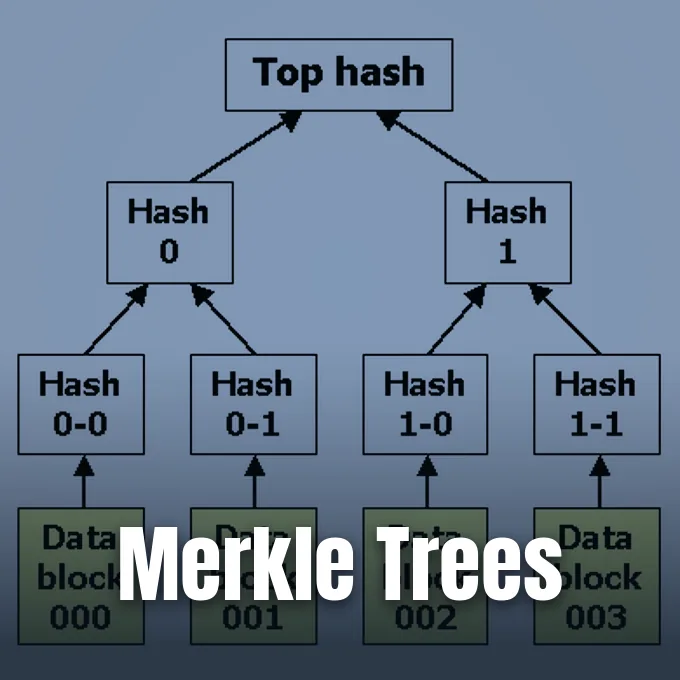
Information theory proves that the theoretical lower bound for set membership filters requires log2(1/epsilon) bits per element, while space-optimal Bloom filters achieve 1.44 log2(1/epsilon) bits per key [9], [11]. When systems handle high read volumes against slow external disks or remote network nodes, filtering queries in memory provides massive throughput gains. Engineers can calculate exact memory requirements beforehand by aligning bit array lengths and hash counts with their desired tolerance for false positive errors. However, system architects must recognize the structural boundaries of probabilistic bit arrays. Once the number of inserted elements n exceeds designed capacity, the array saturates with ones and the false positive probability climbs rapidly toward one hundred percent. Standard arrays cannot shrink or delete stale entries without being rebuilt from scratch. While probabilistic filters summarize set contents without exact verification, cryptographic structures like Merkle trees provide deterministic integrity proofs for distributed datasets [6], [8], [9].
- ACADEMIC JOURNAL Luo, L., Guo, D., Ma, R. T. B., Rottenstreich, O., & Luo, X. (2018). Optimizing Bloom Filter: Challenges, Solutions, and Comparisons. IEEE Communications Surveys & Tutorials, 21(2), 1912-1949. [Article Link]
- ACADEMIC JOURNAL Charles, D. X., & Chellapilla, K. (2008). Bloomier Filters: A Second Look. Lecture Notes in Computer Science. [Article Link]
- CONFERENCE PAPER Dillinger, P. C., & Manolios, P. (2004). Bloom Filters in Probabilistic Verification. Formal Methods in Computer-Aided Design. [Article Link]
- WEBSITE Chromium Code Review. (2012). Transition Safe Browsing from Bloom Filter to Prefix Set (Issue 10896048). [Article Link]
- WEBSITE River. (2026). Bloom Filter. River Financial Glossary. [Article Link]
- WEBSITE Fan, B., Andersen, D. G., & Kaminsky, M. (2013). Cuckoo Filter: Practically Better Than Bloom. GitHub. [Article Link]
- WEBSITE Ceglowski, M. (2004). Using Bloom Filters. Perl.com. [Article Link]
- WEBSITE Dupras, B. (2014). Probabilistic Filters by Example. GitHub Pages. [Article Link]
- WEBSITE Wikipedia. (n.d.). Bloom Filter. [Article Link]
- WEBSITE Wikipedia. (n.d.). Counting Bloom Filter. [Article Link]
- WEBSITE Wikipedia. (n.d.). Cuckoo Filter. [Article Link]


