





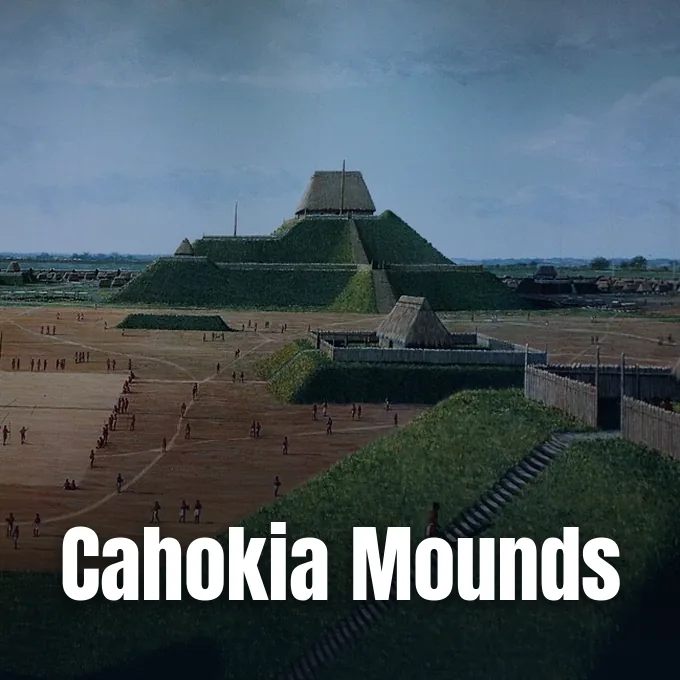
More than 800 years ago, Mississippian families living near modern St. Louis began leaving their homes after unusual weather upended local agriculture. At its height around 1100 CE, Cahokia Mounds was home to roughly 20,000 residents who farmed rich bottomland along the Mississippi River [1]. Anthropologists AJ White and Sissel Schroeder recently evaluated how environmental pressures reshaped this ancient urban center, publishing their findings in the Journal of Anthropological Archaeology [6]. Their investigation compares the ancient city with modern Centreville, Illinois, where repeated drainage failures and rising rainfall now push 21st-century families away from their homes [2].
Monks Mound and the Mississippian City
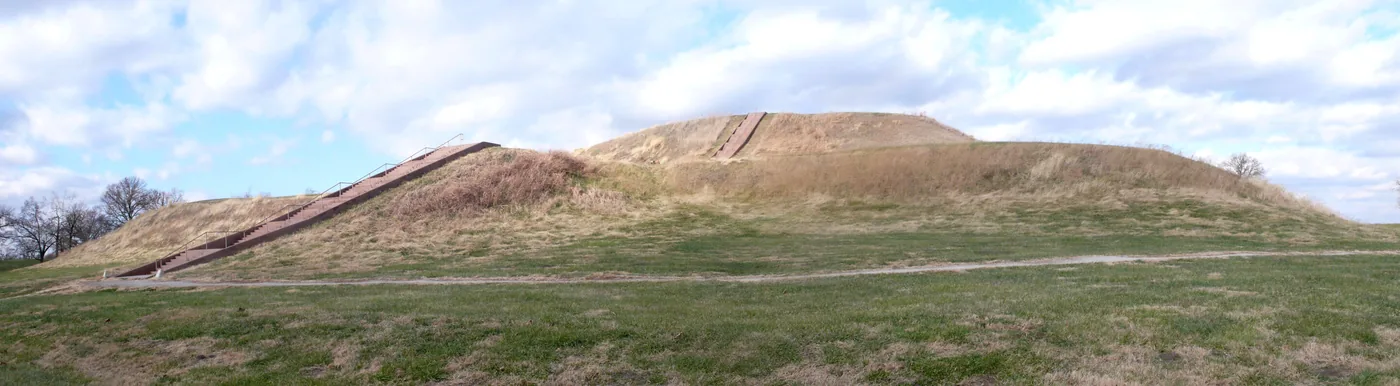
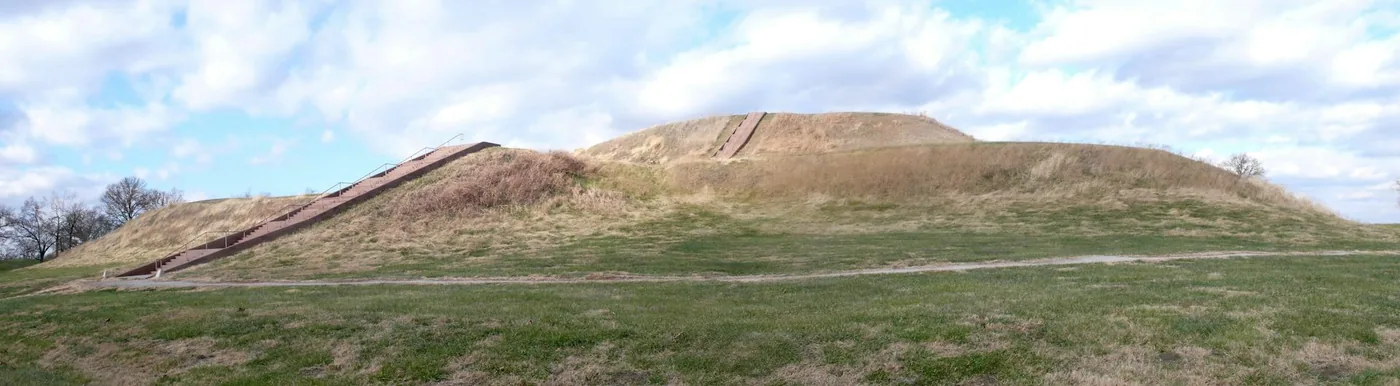
Nine centuries ago, central Cahokia occupied the lower floodplain of the Mississippi River, where over 100 earthen mounds supported civic and ceremonial life over the valley floor [2]. The settlement was anchored by Monks Mound, which endures as the largest prehistoric earthwork in the Americas. It measures 950 feet (290 meters) long and 775 feet (236 meters) wide, with an earthen platform that rises 100 feet (30 meters) above the surrounding floodplain [1]. Broad plazas accommodated public athletic contests. Participants played chunkey, described by AJ White as “something like bocce ball with spears,” while circular timber monuments stood nearby for tracking seasonal astronomical events [2].
Excavations in borrow pits near the central plaza uncovered layered debris from large single-event dumping episodes. Archaeologist T. R. Pauketat and colleagues showed that these stratified deposits contained cooking vessels, animal bones, plant remains, and craft waste left behind by feasting events. The scale of this refuse indicates that building the early order of the city was a participatory process that brought thousands of people together to eat and celebrate [4].
Surplus maize sustained public building. Mississippian leaders mobilized labor from neighboring farming settlements, drawing families together for communal mound construction and shared public rituals [4]. These cooperative traditions helped integrate incoming populations during the early growth of Cahokia Mounds, turning separate farming hamlets into a unified urban polity [1].

Why Did Cahokia Decline?
Archaeologists have long debated what triggered the depopulation of the city before Europeans arrived. Up to 20,000 residents lived at Cahokia around 1100 CE, yet by the late 12th century, population numbers were dropping steadily [1]. This downward trend continued for nearly 200 years through the 13th and 14th centuries [2].
Sediment layers from nearby Horseshoe Lake demonstrate that the valley experienced heavy environmental disruptions during the Medieval Climatic Anomaly, a centuries-long warming interval. Around 1150 CE, surging river waters submerged low-lying fields, which was soon followed by multi-decade summer droughts that parched regional crops. In a 2019 report in the Proceedings of the National Academy of Sciences, AJ White and colleagues measured fecal stanols preserved in lake mud to reconstruct population trends. Fecal stanol concentrations dropped sharply when river flooding and summer droughts collided, demonstrating that demographic decline synchronized with environmental stress [3]. AJ White said the historical shift bore little resemblance to cinematic cataclysms such as “The Day After Tomorrow,” because excavations show no mass casualties or burning, confirming that families departed in small waves over several generations [2].
Drought altered that dynamic. Rather than fleeing a single catastrophe, residents adjusted through a sequence of small adaptations [1]. Families weighed agricultural risks year after year as rainfall patterns grew unpredictable [2]. When localized hardships mounted, moving to other river valleys offered a practical alternative to staying in an increasingly stressed regional center [1].
How Cahokia Mounds Faced Unequal Weather
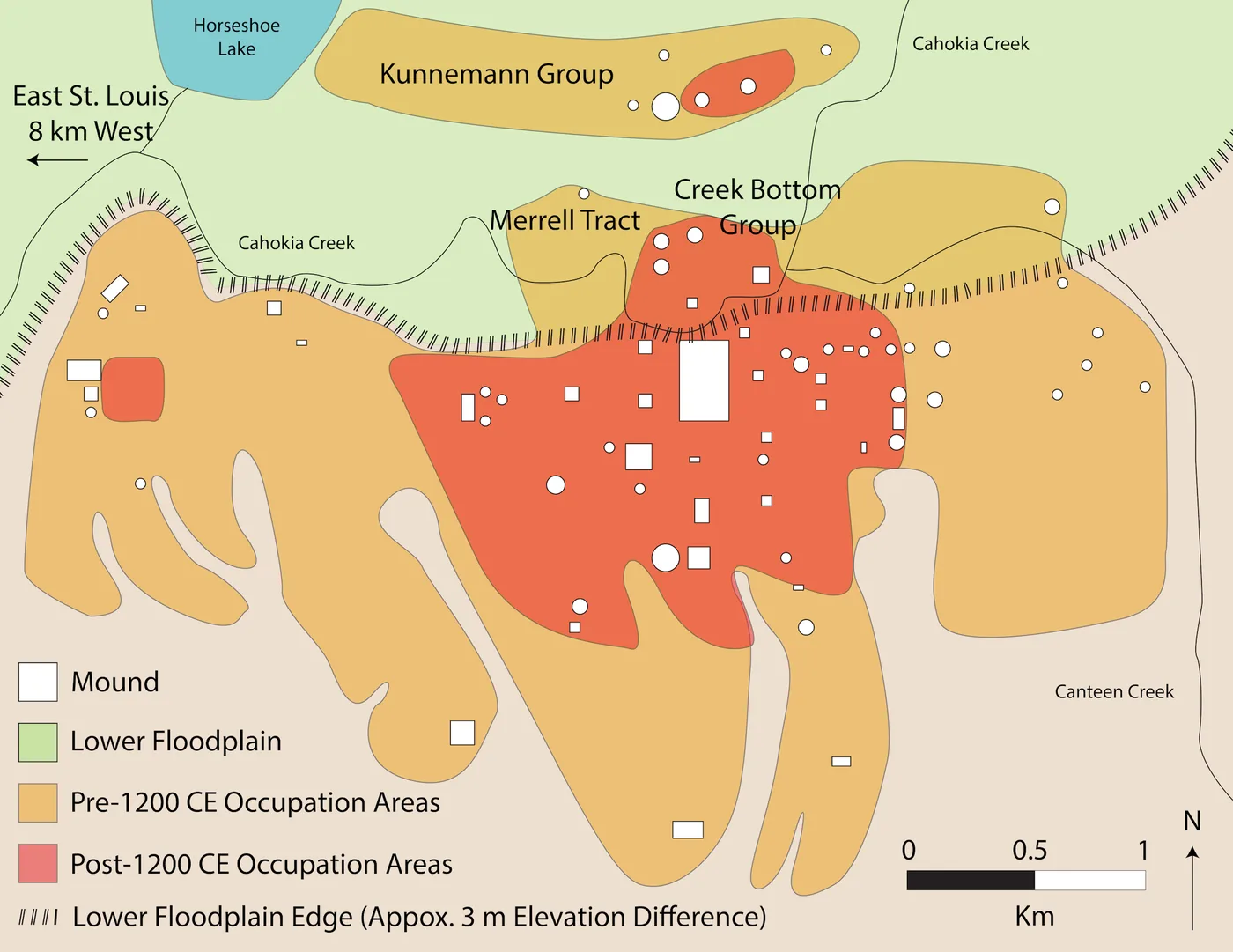
Environmental disruptions rarely affect everyone in the same way. At Cahokia Mounds, local topography created sharp differences in how farming households experienced erratic weather during the 12th century [1]. Upland fields escaped the floods. While low-lying farms lost their entire harvest to rising waters, families working higher ground kept their crops intact [2].
Farms situated in the lower floodplain suffered heavy damage whenever Mississippi River floodwaters spilled over the bottomland, washing away vital maize crops [2]. In contrast, plots located on higher upland ground avoided flood damage entirely. Soil drainage also reversed fortunes when summer droughts arrived. Fields with sandy soils dried out rapidly under hot sun, leaving crops parched, while plots with poorly drained soils held scarce moisture far longer [1]. Farmers who lost their crops repeatedly could no longer contribute grain to shared storehouses or community celebrations [2]. AJ White suggests that struggling households may have fallen into debt to neighbors whose fields remained productive, driving social strain that prompted many families to abandon the city [1].
Disparities widened year after year. When poorer households could no longer repay borrowed seed or contribute to common granaries, reciprocal food-sharing networks began breaking down [6]. Social tensions grew between families that maintained stable harvests and neighbors facing persistent crop failure, weakening the civic solidarity that had sustained Cahokia Mounds for generations [1].


Social Shifts After Floods and Drought
As families began departing after 1200 CE, everyday life at Cahokia Mounds underwent noticeable social changes [1]. Residents scaled back the construction of new earthen mounds and stopped hosting large communal feasts in the main plaza [2]. Instead of storing agricultural surplus in public granaries, families began keeping food in private storage spaces, altering the communal sharing networks that had bound the settlement together [1].
Inequality deepened. Archaeological indicators from this era reveal a growing divide between wealthy elites and ordinary households as excavations documented larger residential structures alongside dwindling public mound construction. In a detailed study of the Moorehead phase (1200 to 1275 CE) published in American Antiquity, archaeologist M. B. D. Trubitt analyzed shifts in craft production and leadership. Trubitt determined that elite households increasingly centralized the crafting of prestige goods like marine shell ornaments, transitioning from communal building projects toward individual displays of status [5].
Trust eroded. As elite families focused on private prestige rather than civic unity, common households found fewer reasons to stay [5]. The loss of cooperative grain storage left farming families vulnerable to bad harvest years. Over several generations, this breakdown in community support made relocation the most viable option for struggling residents, accelerating the depopulation of the valley [1].
Modern Parallels in Centreville
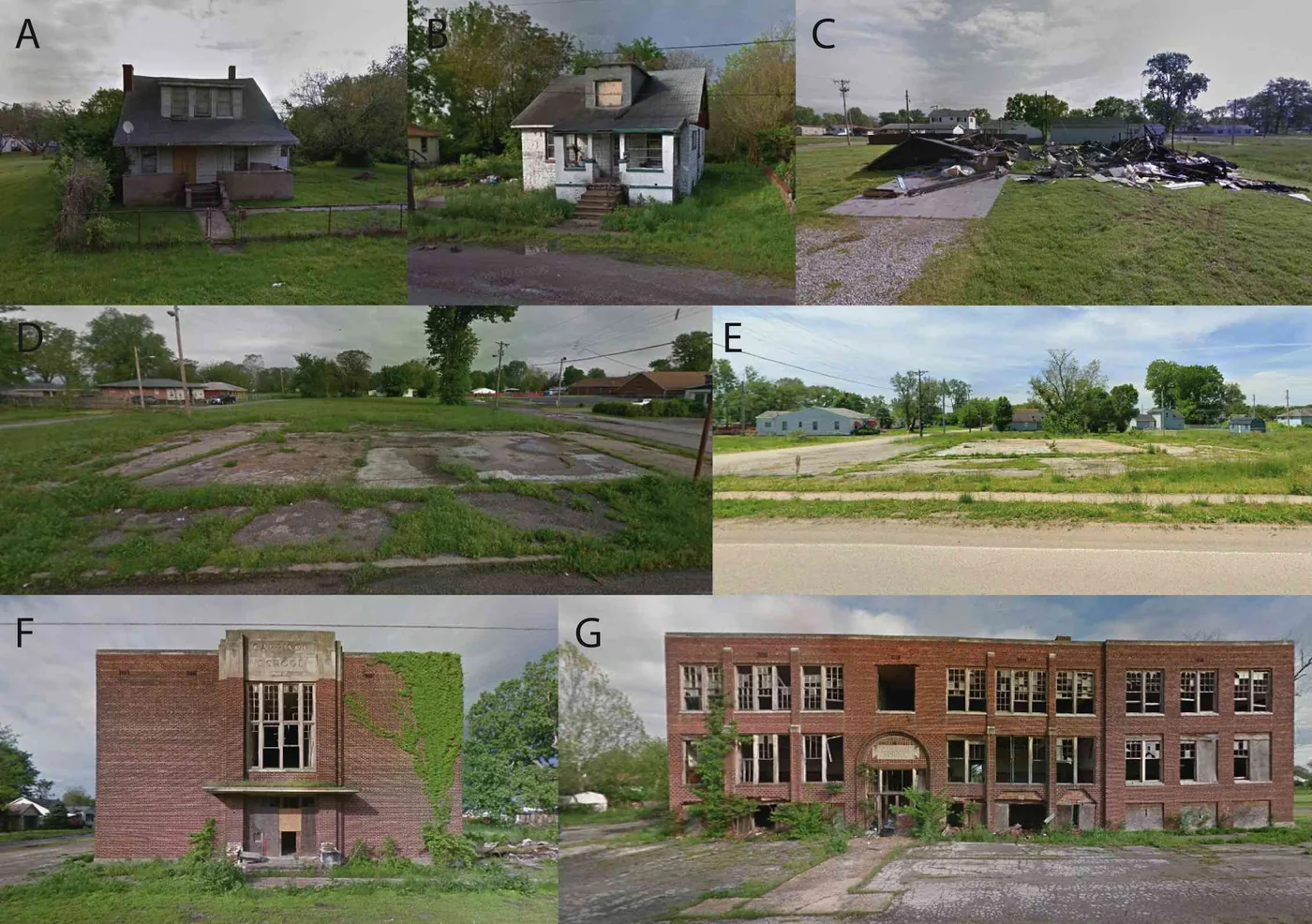
Just south of the ancient city, another community is slowly becoming an archaeological site under similar environmental strain [2]. Centreville sits in that floodplain. During the 1960s and 1970s, economic shifts and white flight transformed Centreville into a majority-Black community that inherited deteriorating public utilities. Drainage pipes and sewage systems installed in the 1960s were never adequately maintained or updated by municipal authorities [1].
From the 1960s through the 2020s, average annual precipitation across the St. Louis area rose by 10 inches (25 centimeters), reaching 44 inches (112 cm) annually [1]. Outdated infrastructure cannot handle the runoff, causing chronic floods that back raw sewage into kitchen sinks and push contaminated water over lawns, sidewalks, and streets [2]. Residents who have the financial resources to relocate gradually leave, leaving behind an aging population and dozens of demolished or vacant houses [1]. Others stay. Resident William McNeal told a local news outlet, “I’m not going to abandon my house. It’s all I got.” [2] AJ White argues that this unequal burden mirrors the gradual departures that emptied ancient settlements centuries earlier [1].
Interviews with local residents reveal that daily life remained stable for decades until severe flooding overwhelmed neighborhood ditches [1]. Rising water tables now saturate home foundations, producing mold and decay that lower property values [2]. Because low-income homeowners cannot easily finance expensive structural repairs, families face the painful choice between living in damaged properties or walking away from their lifelong investments [1].
Lessons from Ancient Cahokia for Today
Comparing past and present reveals that environmental disruption is experienced unequally between different neighborhoods [6]. While computer models project future rainfall and heat extremes, they cannot predict how human communities will react to persistent environmental stress [1]. In both ancient Cahokia and modern Centreville, environmental degradation did not produce an instant cataclysm [2]. Instead, years of recurring water problems altered the social balance, leaving some households with intact resources while forcing others into crisis [1].
Gradual impacts deceive. When water problems accumulate quietly over decades, societal changes develop that are far harder to spot than the wreckage of a single severe storm [1]. At Cahokia Mounds, prolonged droughts and river floods reshaped political bonds, disrupted communal feasting, and widened the wealth gap until residents gradually moved away [2]. In Centreville today, failing drainage pipes and rising regional rainfall create identical pressures for vulnerable families [1]. Unless future city planning addresses these underlying inequalities, ongoing climate stress may quietly empty more neighborhoods, leaving behind only the quiet stillness of an archaeological landscape [6].
Studying how ancient populations responded to changing climates offers valuable perspective for contemporary municipal leaders [6]. As environmental pressures mount along floodplains and coastal zones, the most severe impacts fall on communities with outdated infrastructure and limited wealth [1]. Long-term adaptation depends on strengthening community safety nets and repairing shared infrastructure before social divisions become permanent [2].
- ONLINE NEWS White, A. J. (2026, November 25). Ancient Cahokia transformed amid droughts and flooding—climate change is reshaping modern communities in similar ways. Phys.org. [Article Link]
- ONLINE NEWS White, A. J. (2026, November 25). Ancient Cahokia was transformed amid droughts and flooding – climate change is reshaping modern communities in similar ways. The Conversation. [Article Link]
- ACADEMIC JOURNAL White, A., Stevens, L. R., Lorenzi, V., Munoz, S. E., Schroeder, S., Cao, A., & Bogdanovich, T. (2019). Fecal stanols show simultaneous flooding and seasonal precipitation change correlate with Cahokia’s population decline. Proceedings of the National Academy of Sciences, 116(12), 5461–5466. [Article Link]
- ACADEMIC JOURNAL Pauketat, T. R., Kelly, L. S., Fritz, G. J., Lopinot, N. H., Elias, S., & Hargrave, E. (2002). The Residues of Feasting and Public Ritual at Early Cahokia. American Antiquity, 67(2), 257–279. [Article Link]
- ACADEMIC JOURNAL Trubitt, M. B. D. (2000). Mound Building and Prestige Goods Exchange: Changing Strategies in the Cahokia Chiefdom. American Antiquity, 65(4), 669–690. [Article Link]
- ACADEMIC JOURNAL White, A., & Schroeder, S. (2026). The archaeology of climatic and sociocultural change: Past and present insights from Cahokia and Centreville, Illinois. Journal of Anthropological Archaeology, 84, 101797. [Article Link]
Cover image: Thank You / Wikimedia Commons, CC BY 2.0
APA 7: PerEXP Teamworks. (2026, November 26). Cahokia Mounds Weathered Shifting Rains and Unequal Floods. PerEXP Teamworks. https://perexpteamworks.com/en/cahokia-mounds-flood-drought-transformation/


