





Ubisoft has renamed its Creative House 2 business unit as Massive Entertainment, consolidating its high-profile Tom Clancy production pipelines under the veteran Swedish studio [1]. The reorganized division takes direct ownership of Tom Clancy’s The Division, Tom Clancy’s Ghost Recon, and Tom Clancy’s Splinter Cell, in addition to the original strategy project March of Giants [3]. Starting immediately, international development teams across Montreal, Paris, Sweden, and Toronto operate under this unified banner to coordinate technology and franchise growth [1].
Unifying Creative House 2 Under Massive Entertainment
The corporate rebranding elevates a studio identity established twenty-nine years ago in Sweden into the primary operational label for several of Ubisoft’s largest development facilities [3]. Rather than functioning merely as a regional outpost in Malmo, Massive Entertainment now assumes formal responsibility for co-development groups based in Paris, Montreal, and Toronto [1]. Ubisoft structured the unit to ensure distinct creative autonomy across its shooter portfolio [3]. The publisher confirmed that all projects created under the label will continue to be published and distributed through Ubisoft without altering existing player commitments [1].
General Manager Christoph Hartmann framed the consolidation as an essential step toward pooling specialized technical resources across North America and Europe [1]. In an official statement, Hartmann emphasized that uniting the disparate locations under one shared identity accelerates game production while sharpening technical craft [2]. ‘Massive Entertainment has always been defined by passion, ambition and incredible talent, and our focus now is on what comes next,’ Hartmann stated regarding the transition [1].
Hartmann elaborated further on the cross-studio workflow required to sustain modern blockbusters, highlighting the operational synergy across the four cities. ‘Bringing our teams together under one identity gives us the opportunity to combine the creative energy and expertise across Montréal, Paris, Sweden and Toronto to shape the next generation of these iconic franchises, create new games and IPs, and push our craft and technology forward,’ Hartmann explained [1]. Paris and Montreal house supporting teams. The four regional offices receive clear accountability for overarching franchise milestones rather than remaining isolated in fragmented secondary support roles. By establishing a singular command hierarchy under Massive Entertainment, Ubisoft intends to eliminate redundant overhead while accelerating production cycles across long-running action titles [3].

Tom Clancy Franchises and March of Giants
The reorganized unit centers around three military action properties: The Division, Ghost Recon, and Splinter Cell [1]. Historically managed across separate branches, these intellectual properties represent some of the most recognizable tactical gameplay experiences in Ubisoft’s catalog [2]. Unifying their engineering teams allows shared gameplay mechanics, network infrastructure, and art pipelines to pass between active projects with minimal friction [3]. Shared proprietary tools will support each team as development expands [1].
Creative House 2 was initially scoped strictly around competitive and cooperative shooters before expanding its remit to encompass fresh intellectual property. The strategic scope widened substantially when Ubisoft secured March of Giants following its acquisition from Amazon. Amazon originally held March of Giants. Incorporating this original title introduces tactical strategy elements into the studio’s established live-service shooter roster, diversifying the portfolio under Hartmann’s leadership [3].
Ubisoft Toronto continues hiring for the Splinter Cell remake under this reorganized leadership. Montréal and Toronto co-develop key franchises [1].


Christoph Hartmann and Global Studio Alignment
Executive leadership at Massive Entertainment rests with Christoph Hartmann, who joined Ubisoft as General Manager of Creative House 2 in June 2026 after leaving Amazon Game Studios. Hartmann possesses extensive industry pedigree, having previously founded and directed 2K Games through decades of major commercial releases. Christoph Hartmann previously led 2K Games. His hiring signaled Ubisoft’s intent to instill veteran commercial discipline into production schedules that had suffered repeated delays across recent fiscal quarters [3].
To reinforce local studio governance at the Swedish flagship, Ubisoft appointed Natalie Francis as studio manager of the Malmo office. Francis joined the organization after holding senior leadership roles at Avalanche Studios and DICE, bringing deep regional production expertise to the Nordic headquarters. Her appointment ensures that day-to-day operations in Malmo maintain stability while Hartmann coordinates global franchise strategy with studio directors situated across Paris, Montreal, and Toronto [3].

Harmonizing development across four cities requires continuous technical collaboration between software architects [1]. While previous Ubisoft matrix structures frequently distributed asset creation without clear centralized authority, this consolidation grants Massive Entertainment unambiguous control over production roadmaps. Engineers in Paris contribute specialized rendering components, whereas designers in Montreal and Toronto build level geometry and narrative encounters under Hartmann’s consolidated mandate [3]. The operational shift aims to prevent cross-studio miscommunication and deliver stable milestone deliveries for core Tom Clancy communities [1].
Snowdrop Engine Roots at Ubisoft Massive
The roots of the Massive studio trace back to Malmo, Sweden, where the development house was founded in 1997. The Malmo studio opened in 1997. During its early independent era, the studio garnered critical acclaim for tactical real-time strategy titles, notably Ground Control and World In Conflict. Following Activision’s acquisition of Vivendi Universal Games, the studio was sold off and subsequently purchased by Ubisoft in 2008. Ubisoft acquired Massive in 2008. Over the ensuing eighteen years, the Swedish group evolved into one of the publisher’s premier technical powerhouses [3].
Massive cemented its international reputation by originating The Division, while simultaneously architecting the proprietary Snowdrop engine (the graphics and physics framework powering modern Ubisoft productions). Engineered to deliver high-fidelity volumetric lighting, dynamic destruction, and responsive multiplayer network replication, Snowdrop quickly became a foundational technology adopted across multiple Ubisoft franchises. The Malmo team subsequently deployed the engine to ship open-world adaptations including Avatar: Frontiers of Pandora and Star Wars Outlaws. Beyond shipping commercial blockbusters, the Swedish branch was actively developing an unannounced innovative technology project when corporate restructuring prompted staff layoffs at Massive and Ubisoft Stockholm in January 2026. Retaining ownership of this core proprietary engine ensures that Massive Entertainment maintains direct control over the technical pipelines powering its upcoming tactical releases [3].
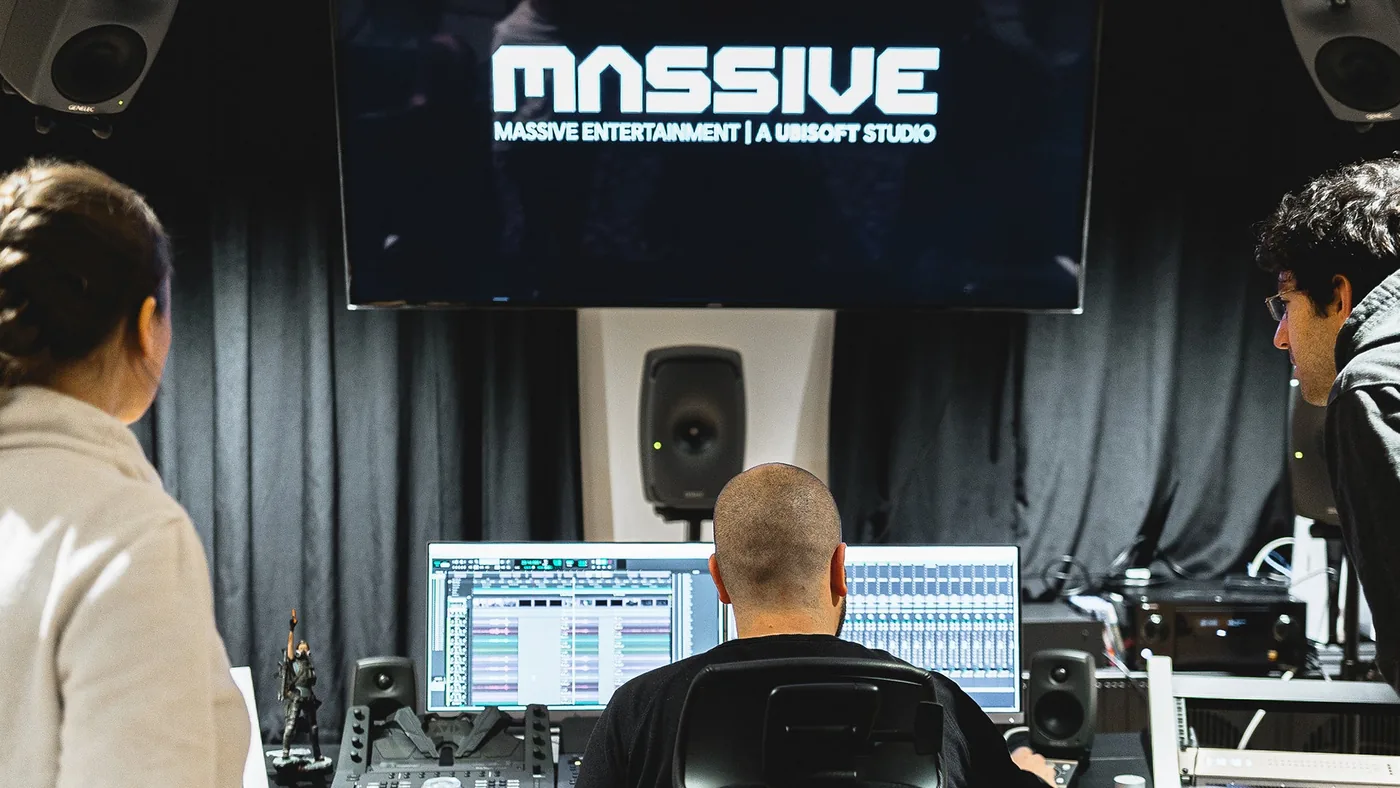
Preserving Snowdrop within Creative House 2 protects development momentum across the portfolio [3]. Because engineering teams in Montreal, Toronto, and Paris already possess practical familiarity with Snowdrop rendering pipelines, shared asset creation can proceed without expensive engine transitions [1]. Hartmann’s group leverages this mature toolset to accelerate prototyping for unannounced projects in addition to core live-service obligations [3]. The technical continuity gives the expanded studio a robust foundation [1].
Ubisoft Restructuring and the Creative Houses Model
The elevation of Massive Entertainment occurs amid widespread publisher cost reductions. Ubisoft entered what management described as the ‘third and final phase’ of its multi-year turnaround plan, targeting an additional 180 million euros in expenditure cuts. The restructuring cuts 180 million euros. While corporate executives initially signaled cost-reduction targets of 200 million euros, revised financial frameworks adjusted the final figure to 180 million euros [1]. The protracted reorganization follows consecutive fiscal periods of commercial underperformance, game cancellations, and production delays across core brands [3].
Ubisoft first announced its reorganization into autonomous Creative Houses in late 2025 before finalizing operational parameters in January 2026. Under this broader umbrella, Vantage Studios operates as a joint venture with Tencent (holding co-ownership in several key franchises) under Co-CEOs Christophe Derennes and Charlie Guillemot, governing Assassin’s Creed, Far Cry, and Rainbow Six across locations in Quebec, Montreal, Barcelona, and Sofia. Creative House 3 and Creative House 5 operate under General Manager Julien Bares, overseeing competitive titles including Brawlhalla, For Honor, and The Crew, in addition to mobile holdings. Meanwhile, central production resource Creative Network functions under General Manager Thomas Andrén to supply shared technical assistance from international hubs in Annecy, Berlin, Reflections, and Bucharest [3].
Industry reorganizations have similarly shifted major shooter franchises between corporate branches, mirroring changes where Activision took over the next Halo project amid restructuring across Xbox. For Ubisoft, the transition follows severe operational contraction that shuttered regional studios in Belgrade, Halifax, Leamington, Stockholm, and Winnipeg while executing worldwide workforce layoffs [3]. Although Ubisoft declined to confirm whether its workforce reductions are entirely complete, establishing sovereign identity under Massive Entertainment for Creative House 2 cements Hartmann’s leadership over the publisher’s most lucrative military shooters [1], [3].
- ONLINE NEWS Henderson, T. (2026, September 30). Massive Entertainment Now Leads Splinter Cell, Ghost Recon, and The Division at Ubisoft. Insider Gaming. [Article Link]
- ONLINE NEWS Takahashi, D. (2026, September 30). Ubisoft renames creative house as Massive Entertainment. GamesBeat. [Article Link]
- ONLINE NEWS Hicks, J. (2026, September 30). Ubisoft renames Creative House 2, home of The Division, Ghost Recon and Splinter Cell, as Massive Entertainment. GamesIndustry.biz. [Article Link]


